A Quick Guide to Manufacturing Asset Management

Effective manufacturing asset management is critical for minimizing downtime, improving asset utilization, and maximizing the lifespan of your equipment. Predictive maintenance typically reduces machine downtime by 30 to 50% and extends machine life by 20 to 40%, demonstrating the benefits of a data-driven approach to asset management.
Amid rising operating costs, every minute of downtime and every unplanned maintenance expense can significantly reduce profitability. Poor asset visibility and underutilized equipment can make it harder to maintain efficient production operations.
This guide defines manufacturing asset management, outlines its essential components and best practices, and offers actionable strategies to improve asset performance throughout its lifecycle.
What Is Manufacturing Asset Management?
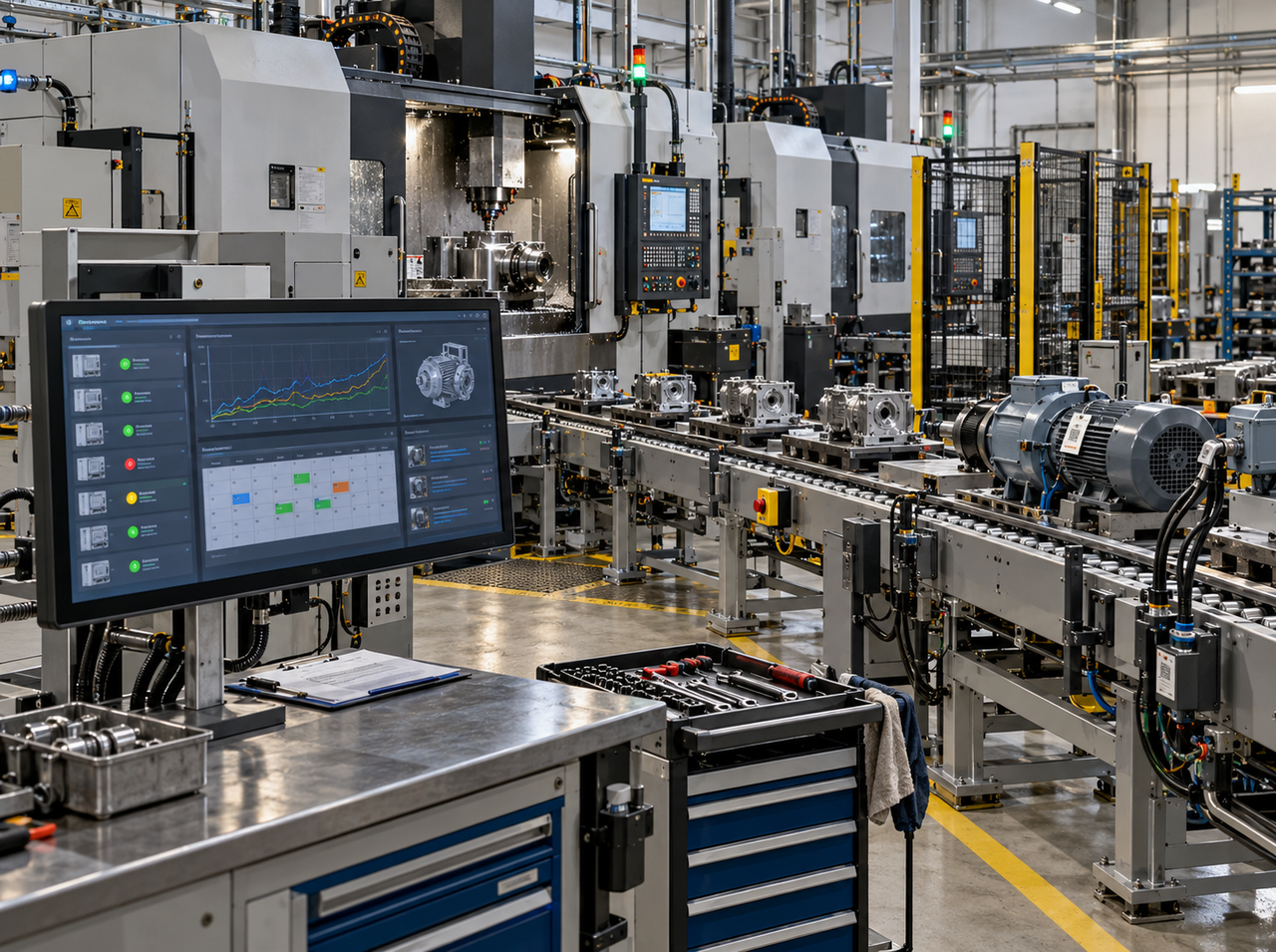
Manufacturing Asset Management (MAM) is the systematic process of acquiring, operating, maintaining, and disposing of physical assets throughout their lifecycle in a manufacturing environment. These assets include equipment, tools, infrastructure, and manufacturing machines that are essential to production processes.
Managing these assets involves tracking their location and condition, scheduling maintenance, monitoring performance, and deciding when to repair, replace, or dispose of machinery. This approach to equipment lifecycle management helps manufacturers maintain equipment reliability and make informed decisions about their industrial assets.
Types of Manufacturing Assets
Manufacturing companies manage different types of assets to support production and business operations. These include physical assets (machinery and equipment), technological assets (manufacturing software and monitoring systems), and financial assets (cash and accounts receivable).
While all three support business operations, manufacturing asset management primarily focuses on physical assets that require regular maintenance, performance monitoring, and lifecycle planning. Common examples include:
- Production machinery and equipment: CNC machines, injection molding machines, industrial robots, and assembly line equipment used to manufacture products.
- Material handling equipment: Forklifts, conveyor systems, pallet jacks, and automated guided vehicles (AGVs) used to move materials and finished goods.
- Tools and maintenance equipment: Cutting tools, welding equipment, diagnostic instruments, and repair tools used in production and equipment maintenance.
- Facility infrastructure and supporting systems: HVAC systems, air compressors, electrical distribution systems, and industrial boilers that support manufacturing operations.
Key Components of Asset Management In Manufacturing
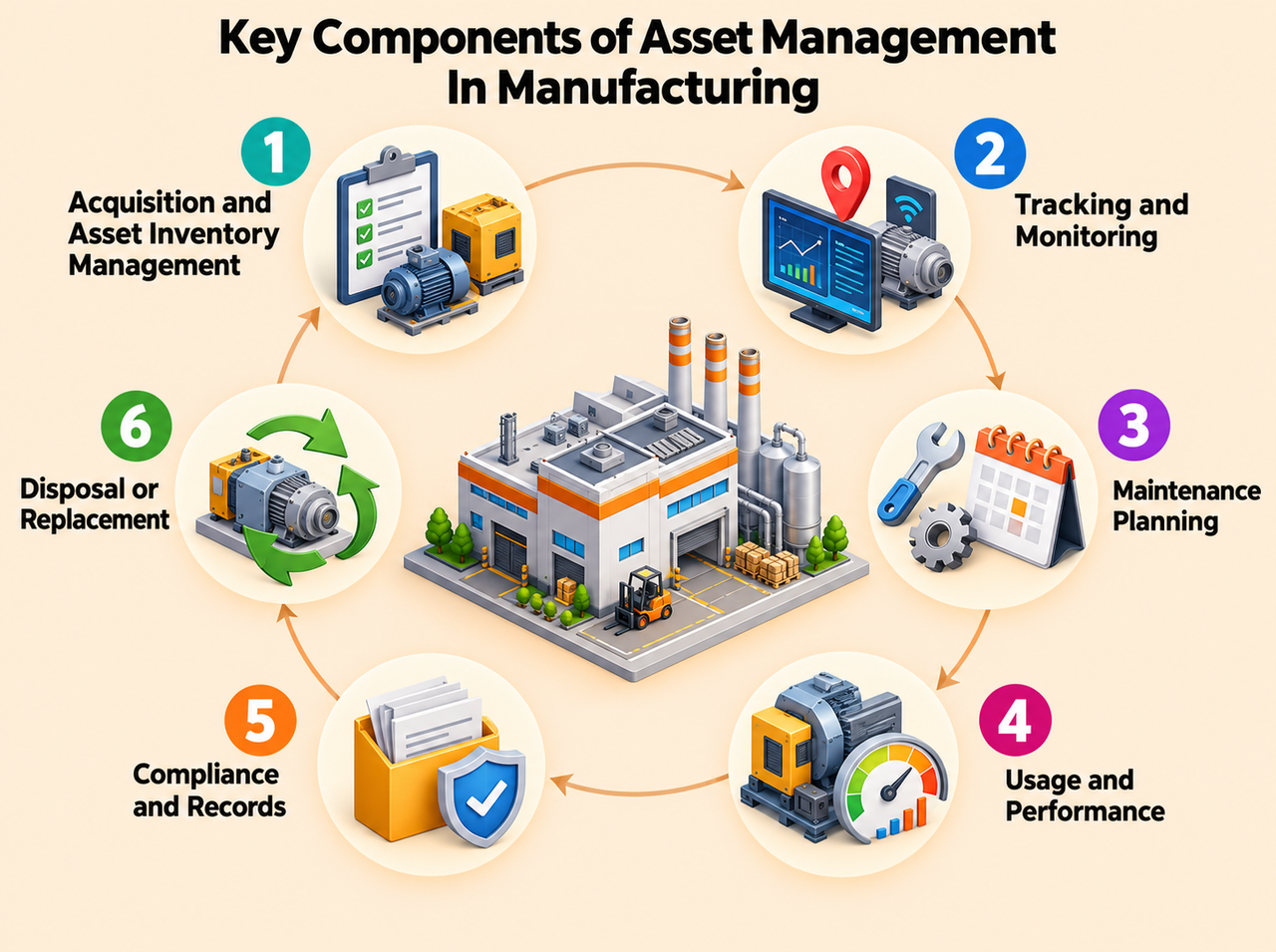
Effective asset management is essential for enterprise manufacturers to maximize operational efficiency and minimize costs throughout the lifecycle of industrial assets. Below are the core components of a structured manufacturing asset management strategy:
1. Acquisition and Asset Inventory Management
Establish clear procedures for procuring and registering all industrial assets. Every piece of equipment should be recorded in a centralized asset inventory system with details such as asset ID, serial number, manufacturer, purchase date, location, and technical specifications.
These manufacturing asset inventory records help you track equipment across facilities, prevent duplicate purchases, and identify missing or underutilized assets. Accurate records also provide a reliable foundation for maintenance planning and asset lifecycle decisions.
2. Tracking and Monitoring
Use real-time tracking solutions to monitor equipment location, condition, and performance across manufacturing facilities. These systems provide visibility into asset utilization, operating hours, and unexpected downtime while helping detect potential equipment issues before they lead to costly breakdowns.
With accurate monitoring data, you can identify underutilized machinery, prioritize maintenance needs, and make informed decisions about equipment allocation across production lines. This helps keep assets aligned with operational requirements.
3. Maintenance Planning
Develop a proactive maintenance schedule based on equipment usage, condition, and performance data. Preventive maintenance involves routine inspections, servicing, and replacing worn components at planned intervals. Predictive maintenance uses sensor data and equipment performance trends to identify potential failures before they occur.
Combining these approaches helps manufacturers reduce unplanned downtime, avoid costly emergency repairs, and extend equipment lifespan. A structured maintenance plan also reduces production disruptions and protects your investment in industrial assets.
4. Usage and Performance
Measure asset utilization and performance consistently to identify opportunities for improvement. Key metrics, such as overall equipment effectiveness (OEE), operating hours, and capacity utilization, help manufacturers assess equipment performance, identify underutilized and idle equipment, and highlight operational inefficiencies.
Using these findings, manufacturers can improve equipment utilization by adjusting production schedules, reallocating underused machinery, or redeploying idle assets across facilities. These actions support manufacturing asset optimization by making better use of existing equipment and improving production efficiency.
5. Compliance and Records
Maintain accurate documentation of each asset’s performance, maintenance history, and regulatory compliance. These records should include equipment inspections, repairs, safety certifications, and relevant compliance reports.
Proper documentation is essential for audits and provides transparency in financial and operational reporting. It also helps manufacturers demonstrate compliance, identify potential gaps, and make informed asset management decisions.
6. Disposal or Replacement
Establish clear criteria for disposing of or replacing excess and obsolete (E&O) or underperforming assets. Evaluate equipment condition, maintenance costs, remaining useful life, and operational needs to determine if machinery should be repaired, redeployed to another facility, replaced, or sold.
When equipment no longer meets operational requirements, a systematic approach to machinery liquidation helps manufacturers recover value from surplus assets and free up storage space. Planning equipment replacement and disposition strategically also helps reduce unnecessary expenses and recover capital from machinery that is no longer needed.
Why Asset Management in Manufacturing Matters
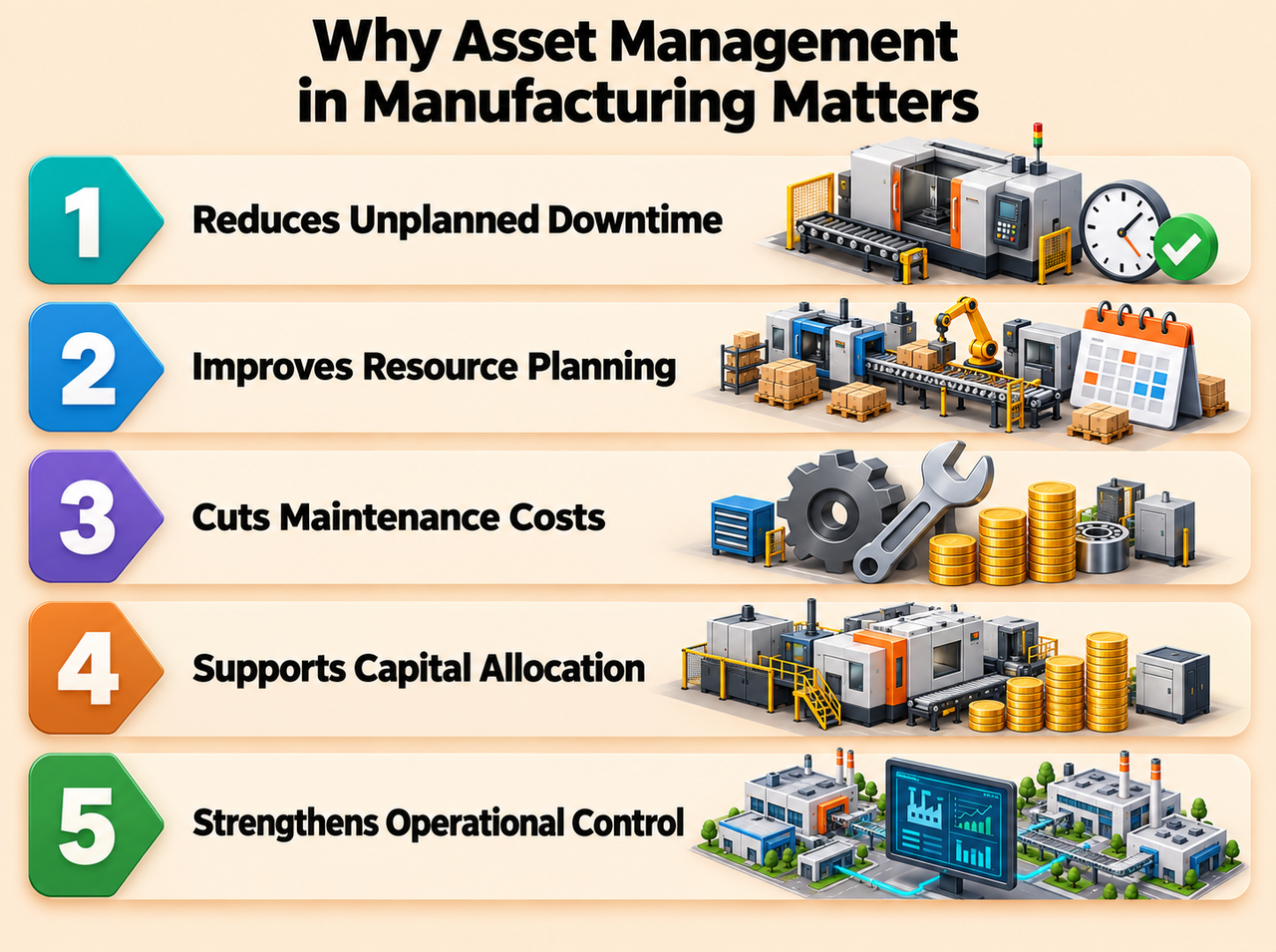
Effective manufacturing asset management is crucial for minimizing production disruptions, controlling costs, and improving equipment utilization. Below are the key benefits that make asset management an important operational priority.
1. Reduces Unplanned Downtime
Unexpected equipment failures can bring production to a standstill, resulting in significant revenue loss. According to MaintainX's 2024 State of Industrial Maintenance Report, unplanned downtime costs approximately $25,000 per hour on average, with costs exceeding $500,000 per hour for larger organizations. A structured asset management process supports regular maintenance and early issue detection, helping reduce downtime, limit production delays, and meet customer delivery schedules.
2. Improves Resource Planning
Without real-time visibility into asset conditions and reliable methods for tracking inventory across facilities, manufacturers risk duplicate purchases, excessive inventory, and inefficient equipment allocation. A structured asset management strategy improves resource planning by helping you identify available machinery, assess equipment needs, and allocate existing assets where they are needed most. This allows manufacturers to plan production schedules more accurately and make better use of available resources.
3. Cuts Maintenance Costs
Reactive maintenance strategies often lead to unexpected expenses and emergency repairs that drain your budget. By implementing preventive maintenance schedules and using equipment condition data to identify potential issues early, you can reduce costly breakdowns and extend the lifespan of your equipment. This proactive approach helps control maintenance costs and improve the return on your capital investments.
4. Supports Capital Allocation
Accurate tracking of asset performance provides the insights needed to determine when equipment should be repaired, replaced, upgraded, or repurposed. This data-driven approach helps prevent over-investment in redundant assets and optimizes capital allocation toward strategic growth initiatives. Proper capital allocation helps direct funds toward projects that support operational efficiency and long-term profitability.
5. Strengthens Operational Control
A standardized manufacturing asset management process delivers consistency across multiple sites by providing a unified view of asset performance. This consistency helps minimize reporting discrepancies, streamline maintenance activities, and improve overall operational control. Better visibility across facilities also supports coordinated decision-making and more efficient management of industrial assets.
Common Challenges in Asset Management in the Manufacturing Industry

Despite its benefits, manufacturers face several challenges when implementing effective asset management practices.
1. Manual Tracking
Relying on spreadsheets or paper-based logs may lead to inefficiencies and errors in asset management. Without a centralized digital system, teams lack accurate, up-to-date information about equipment location, condition, and maintenance history. This often results in missed updates, delayed maintenance decisions, and operational disruptions.
2. Data Silos
When departments manage assets independently, records become fragmented and inconsistent. The absence of coordination between departments prevents a unified view of asset status, usage, and location. This disconnect slows decision-making and increases the risk of duplicate efforts or conflicting actions, reducing overall asset control.
3. Low Adoption of Technology
Resistance to new digital systems often stems from unfamiliarity and perceived complexity. Without clear, role-specific training and proper integration into existing workflows, technology remains underutilized. This limits the effectiveness of modern asset management solutions and slows long-term improvements in equipment management.
4. Cost Barriers
High upfront investments in asset management systems can deter immediate adoption, particularly for budget-conscious operations. However, delaying technological upgrades often leads to higher long-term costs due to unplanned repairs, downtime, and lost productivity. Over time, these cumulative inefficiencies can outweigh the initial cost savings.
5. Unstructured Asset Disposal
A lack of clear protocols for retiring obsolete assets poses significant challenges for enterprise manufacturers. Without standardized asset disposition processes, excess equipment often remains stored unnecessarily, leading to increased costs and potential regulatory issues. Establishing clear procedures for evaluating and selling excess industrial inventory helps manufacturers reduce storage costs and recover value from unused assets.
Best Practices for Asset Management in Manufacturing

An effective asset management strategy reduces operational risk, increases visibility, and supports long-term performance objectives. The practices below provide a foundation for successful implementation:
1. Conduct a Comprehensive Asset Audit
Performing regular, thorough asset audits is crucial. These audits help you identify missing, underutilized, aging, or obsolete equipment by reviewing asset records and assessing equipment condition. The findings support informed decisions about equipment maintenance, replacement, or disposal.
2. Implement a Centralized Asset Management System
Centralize all asset data into one unified platform to improve visibility. A centralized system streamlines equipment tracking across facilities, supports maintenance planning, and improves inventory records and reporting. This helps manufacturing teams coordinate asset management activities, reduce data errors, and maintain better control over equipment across multiple locations.
3. Implement Preventive & Predictive Maintenance
Adopt maintenance strategies based on equipment data and performance analytics. Preventive and predictive maintenance help reduce unplanned downtime and extend equipment lifespan. Effective maintenance management helps teams schedule maintenance activities, monitor equipment condition, and address potential issues before they disrupt production.
4. Use Asset Performance Data to Inform Decisions
Utilizing real-time data and asset performance metrics is essential for strategic decision-making. A study by Emerald demonstrates that top managers actively employ business analytics to monitor performance against targets and promptly take corrective actions, while also integrating insights from stakeholder and expert feedback for future planning. This data-driven approach helps manufacturers identify performance gaps, improve asset utilization, and make informed decisions about equipment maintenance and resource allocation.
5. Develop an asset disposition strategy
A well-defined asset disposition strategy is essential for managing the redeployment, retirement, resale, liquidation, or responsible removal of industrial assets. Engaging a trusted partner like Amplio helps manufacturers address relevant regulatory requirements while improving opportunities for value recovery. Through expert handling of asset liquidation and disposal, organizations can recover remaining value from retired equipment and reduce unnecessary storage costs.
Case Study
A multinational food manufacturer partnered with Amplio to recover value from discontinued production equipment. Amplio developed a disposition plan and used targeted sales channels to generate $450,000 in gross revenue, exceeding the manufacturer's initial recovery projections by 20%.
Final Thoughts
Effective manufacturing asset management strikes a balance between operational efficiency, cost control, and long-term strategy. By auditing your equipment, tracking performance, scheduling preventive maintenance, and planning for end-of-life disposition, you safeguard cash flow, prolong machine life, and reduce production disruptions.
Make proactive manufacturing asset management part of your long-term strategy. When equipment no longer supports operational needs, Amplio can help you evaluate options for asset redeployment, resale, or liquidation.
Amplio’s manufacturing asset disposition services help you manage unused industrial equipment and recover its remaining value.
Contact us to discuss your surplus industrial equipment and asset disposition needs.