The top 10 manufacturing machines you should know about
.png)
Manufacturing involves the use of various machines to produce goods and materials on a large scale. These machines support the manufacturing process, from preparing raw materials to delivering finished goods. Understanding how these industrial machines work is essential for those in the manufacturing industry, as automation continues to expand across U.S. facilities.
This shift toward automation is already visible in current data. According to the International Federation of Robotics, U.S. manufacturing companies installed 44,303 industrial robots in 2023, a 12% increase from the previous year. These machines operate across different stages of the production process and help improve speed and consistency.
In this blog post, we'll take a look at the top 10 manufacturing machines that you should know about.
1. CNC Machine

A CNC machine, also known as a Computer Numerical Control machine, is an automated manufacturing machine that uses computer programs to control its movements. In automotive production, CNC systems are among the key automotive machines used to mill, drill, and cut engine components, transmission parts, brackets, molds, and fixtures. CNC milling machines are a core part of modern industrial machinery and rely on an integrated cooling system to maintain accuracy during long production runs.
Key Benefits:
Produces parts with high precision and consistency
- Reduces human error during machine production
- Operates faster than manual labor
- Supports efficient and repeatable production lines
- Helps manufacturing companies reduce labor costs
Common Industrial Applications:
- Automotive industries for engine and body components
- Electronics manufacturing for small components
- Aerospace industry for complex and high-tolerance parts
- Medical device manufacturing for precision instruments and components
- Industrial equipment manufacturing for machined parts and tooling
2. 3D Printer
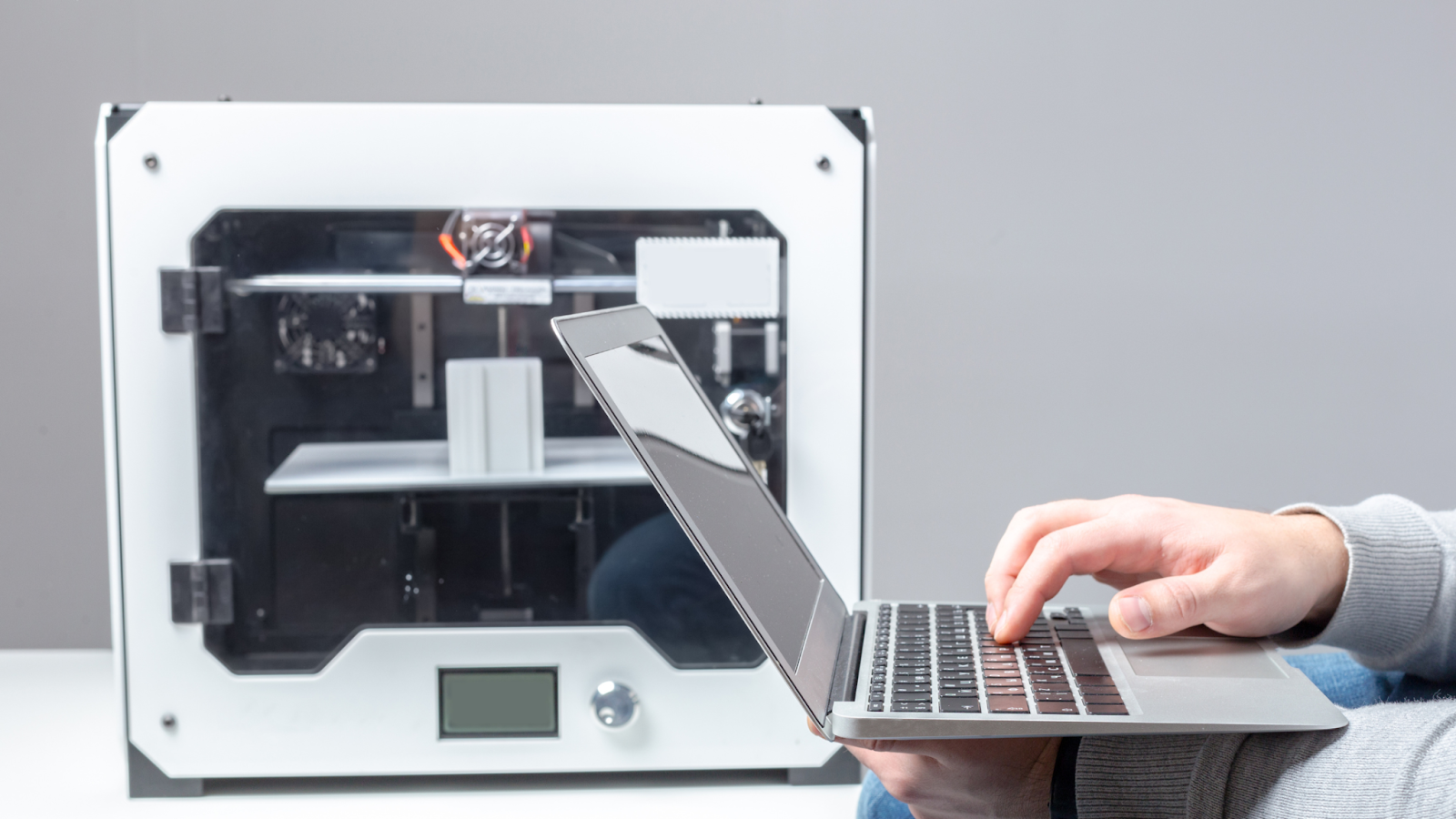
A 3D printer is a type of machine that uses additive manufacturing techniques to create three-dimensional objects. It works by depositing layers of material, such as plastic or metal, until the final shape is formed. These production machines support the manufacturing process by enabling precise control during object creation.
Key Benefits:
- Enables the production of complex and custom shapes
- Reduces the need for tooling and mold creation
- Speeds up prototyping during the production process
- Lowers material waste compared to traditional methods
- Supports small-batch production with fewer setup steps
Common Industrial Applications:
- Automotive industries for prototyping and custom components
- Aerospace industry for lightweight and complex part development
- Medical device manufacturing for patient-specific models and tools
- Tooling and fixtures manufacturing for jigs and production aids
- Electronics prototyping for enclosures and component testing
3. Automated Guided Vehicle (AGV)

An Automated Guided Vehicle (AGV) is a type of robot that is used to move materials within a manufacturing facility. AGVs are equipped with sensors and navigation systems that allow them to move along predetermined paths without direct human control. AGVs support the manufacturing process by handling material movement between different stages of production, often alongside conveyor belts in structured production layouts.
Key Benefits:
- Automates repetitive material handling tasks
- Reduces the need for manual labor
- Improves worker safety by limiting heavy equipment use
- Lowers the risk of accidents and injuries
- Supports smooth movement across production lines
Common Industrial Applications:
- Automotive manufacturing for parts movement across assembly lines
- Electronics manufacturing for component transport between workstations
- Warehousing and distribution centers for internal material flow
- Food and beverage manufacturing for pallet and container movement
- Pharmaceutical manufacturing for controlled material handling
4. Robotic Arm

A robotic arm is a type of machine that is designed to mimic the movements of a human arm. Robotic arms are commonly used in manufacturing to perform tasks that require precise movements and high speed, such as welding, painting, and assembly.
Key Benefits:
- Performs tasks with high precision and repeatability
- Operates at high speed across production lines
- Reduces human error in repetitive tasks
- Works continuously without breaks
- Helps manufacturing companies reduce labor costs
Common Industrial Applications:
- Automotive manufacturing for welding, painting, and assembly tasks
- Electronics and semiconductor manufacturing for component placement and inspection
- Metal fabrication for welding, machine loading, and repetitive forming operations
- Packaging (FMCG) manufacturing for sorting, packing, and palletizing
- Appliances and consumer durables manufacturing for assembly and material handling
5. Injection Molding Machine

An injection molding machine is used to create plastic parts and products. Injection molding works by injecting molten plastic into a mold, where it cools and solidifies into the desired shape. These machines are often referred to as injection molders in high-volume manufacturing environments.
Key Benefits:
- Produces high volumes of consistent parts
- Supports fast and repeatable production cycles
- Handles complex shapes and small components
- Works with a wide range of plastic materials
Common Industrial Applications:
- Automotive industries for interior and exterior plastic parts
- Medical manufacturing for precision components
- Consumer goods manufacturing for high-volume plastic products
- Electronics manufacturing for plastic housings, connectors, and enclosures
6. Laser Cutting Machine

A laser cutting machine is a type of machine that uses a high-powered laser beam to cut and engrave materials such as metal, plastic, and wood. Laser cutting machines make precise cuts with minimal material waste by directing a tightly focused beam onto the work surface. As a result, they are widely used in high-precision industries such as aerospace manufacturing, where advanced aerospace machines support the production of tight-tolerance components.
Key Benefits:
- Delivers high precision and consistent cutting results
- Reduces material waste during production
- Supports detailed and complex cutting tasks
- Works with a wide range of materials
- Optimizes efficiency across manufacturing workflows
Common Industrial Applications:
- Sheet metal fabrication for precision cutting of flat parts and panels
- Automotive components manufacturing for brackets and structural parts
- Aerospace sheet metal manufacturing for lightweight and tight-tolerance components
- Signage and architectural manufacturing for decorative and structural elements
- Electrical enclosures and switchgear fabrication for panels and cutouts
7. Lathe

A lathe is a type of machine that is used to produce cylindrical parts with high precision. Lathes work by rotating a workpiece, such as a piece of metal or wood, and using a cutting tool to remove material and shape the part.
Key Benefits:
- Produces precise and consistent cylindrical parts
- Maintains high symmetry during the production process
- Supports repeatable results across production runs
- Works with different materials used in manufacturing
- Reduces human error during shaping tasks
Common Industrial Applications:
- Automotive industries for shafts, axles, and rotating components
- Aerospace manufacturing for precision cylindrical parts
- Medical manufacturing for precision components and instruments
- Maintenance, repair, and operations (MRO) for part repair and replacement
- Toolrooms and prototyping environments for custom and one-off components
8. CNC Lathe

A CNC lathe is a type of machine that combines the capabilities of a lathe with those of a CNC machine. Like a standard lathe, it produces cylindrical parts with high precision. Unlike a traditional lathe, a CNC lathe uses computer programs to control its movements and machining operations.
Key Benefits:
- Produces precise and consistent cylindrical parts
- Maintains high accuracy across repeated production runs
- Reduces human error during machining
- Supports complex shapes and detailed machining tasks
- Improves efficiency across production lines
Common Industrial Applications:
- Automotive manufacturing for high-volume precision shaft and rod production
- Aerospace manufacturing for tight-tolerance cylindrical components
- Medical device manufacturing for repeatable precision parts
- Industrial equipment manufacturing for complex machined components
- Energy and power generation manufacturing for rotating and load-bearing parts
9. Press Brake

A press brake is a type of machine that is used to bend and form sheet metal into complex shapes. Press brakes work by applying a force to the sheet metal, which causes it to bend along a predetermined line or shape.
Key Benefits:
- Creates accurate bends and angles in sheet metal
- Supports custom metal part design without new tooling
- Delivers repeatable results across multiple bends
- Handles both simple and complex forming tasks
- Reduces rework caused by bending errors
Common Industrial Applications:
- Sheet metal fabrication for custom and repeatable formed components
- Automotive manufacturing for brackets, panels, and structural parts
- HVAC and ducting manufacturing for formed sheet metal assemblies
- Electrical enclosures and switchgear manufacturing for panels and housings
- Appliances and consumer durables manufacturing for formed metal components
10. Grinding Machine

A grinding machine is a type of machine that is used to produce very smooth and precise surfaces. Grinding machines work by using an abrasive wheel or belt to remove material from a workpiece, resulting in a smooth, uniform surface.
Key Benefits:
- Produces smooth and uniform surface finishes
- Achieves tight dimensional tolerances
- Removes small imperfections left by earlier machining
- Improves part fit and performance
- Reduces variation in finished components
Common Industrial Applications:
- Automotive manufacturing for precision finishing of engine and drivetrain components
- Aerospace manufacturing for tight-tolerance and high-finish parts
- Medical manufacturing for precision components and instruments
- Tool and die manufacturing for surface finishing and accuracy control
- Industrial equipment manufacturing for wear-critical and fitted components
Conclusion
The top 10 manufacturing machines discussed in this post are just a few examples of the many tools and technologies used in the industry. Understanding and using these machines effectively can help manufacturers improve productivity, reduce costs, and produce high-quality products.
If you’re looking to liquidate or repurpose older automation assets, our machinery liquidation guide covers best practices.
If you're interested in learning more about manufacturing asset management and technologies, our expert team at Amplio can provide valuable information and insights. Whether you're a seasoned professional or just starting out in the field, continuing to learn and stay up-to-date on the latest advancements in manufacturing is key to success in this dynamic and evolving industry.