Inventory Visibility: What It Is and Why It Is Important

Efficient manufacturing starts with knowing exactly which materials, components, and finished goods are present across every facility. Inventory visibility provides that clarity by showing current inventory levels, where stock is located, and how it moves through production and distribution. When teams have accurate data, operations stay coordinated, and they can make better use of working capital.
Yet many manufacturers still lack this level of visibility. Zebra Technologies reported that only 16% of manufacturing leaders globally have real-time work-in-progress monitoring across the full manufacturing process. When visibility is limited, idle stock can build up while other production lines face shortages, delaying production and tying up working capital.
This article explains what inventory visibility means, how it works, and why it matters to industrial performance.
What Is Inventory Visibility?

Inventory visibility is the ability to access accurate, real-time information about the materials, parts, and finished goods held within an organization, where they are located, and their current status. It gives teams a clear view of inventory as it moves from suppliers and production floors to warehouses and customer delivery points.
Real-time inventory visibility connects inventory records with the physical inventory held across facilities. For manufacturing and logistics teams, this clarity helps production, procurement, distribution, and redistribution functions work from the same reliable inventory data.
Why Inventory Visibility Is Important

Inventory visibility plays a critical role in how manufacturing operations function day to day. The following areas highlight where visibility delivers the greatest impact.
1. Operational Efficiency
Strong inventory visibility supports operational efficiency in manufacturing. When teams have accurate, real-time information about materials and parts, they can keep operations running smoothly and reduce interruptions caused by missing or misplaced items.
It allows planners to compare actual stock levels with production requirements. This helps prevent shortages that halt operations and excess materials that consume valuable storage space.
Clear stock availability also helps teams match production schedules with available supply, plan equipment use, and allocate resources where they are needed most. Every stage of the workflow, from procurement to assembly, benefits from fewer disruptions and more predictable outcomes.
2. Cost Control
Effective inventory visibility helps manufacturers reduce carrying costs by limiting unnecessary storage, handling, insurance, and inventory management expenses.
When companies know exactly how much inventory they have and where it sits, they can make better purchasing decisions and maintain optimal stock levels rather than overinvesting in materials that take up space and tie up capital.
By reducing waste and improving material turnover, inventory visibility helps manufacturers get rid of excess inventory and free up working capital. They can then redirect that capital toward production or process improvements.
| Case Study
A global paper and forest products manufacturer partnered with Amplio after an MRO audit identified more than $30 million in excess inventory across dozens of sites. Amplio added secondary-market pricing and liquidity data, helping the company decide what to keep, redeploy, resell, or dispose of. This clearer inventory view helped clear stock from 20 sites, generate more than $2 million in gross sales, and remove about $3 million in quarterly carrying costs.
3. Inventory Obsolescence
Inventory visibility allows manufacturers to identify slow-moving or aging materials before they lose value. Real-time information supports demand forecasting by helping teams analyze usage trends, compare stock with future production needs, and act before inventory becomes obsolete.
When teams detect potential inventory obsolescence early, they can reallocate, return, or liquidate excess items rather than letting them sit idle and turn into aged stock. This helps preserve capital, reduce waste, and keep inventory aligned with current production needs and demand shifts.
By addressing obsolescence early, manufacturers can improve asset utilization and reduce the amount of capital tied up in unused inventory.
4. Shortage Management
Inventory visibility is essential for preventing material shortages that interrupt production flow. Real-time data allows planners to track consumption rates, anticipate upcoming needs, and use automated alerts to trigger replenishment before stockouts occur. This proactive approach keeps production stable and reduces costly downtime.
One cause of shortages is component obsolescence, where critical parts become unavailable due to design changes or supplier discontinuation. Early detection and lifecycle tracking help teams identify at-risk components and secure alternatives before supply gaps affect production schedules.
By combining accurate inventory data with component monitoring, manufacturers can maintain supply continuity and protect operations from material shortages.
5. Maintenance and Spare Parts Availability
Inventory visibility plays a key role in keeping maintenance operations reliable and efficient. When Maintenance, Repair, and Operations (MRO) and spare parts inventories are accurately tracked, maintenance teams can locate needed components quickly and plan service tasks without delays.
Real-time visibility helps keep preventive maintenance on schedule, reducing the risk of unplanned equipment failures. This keeps production uptime high and avoids costly interruptions caused by waiting for critical parts.
By maintaining inventory accuracy and monitoring spare parts levels and usage trends, manufacturers can extend equipment life, sustain productivity, and avoid emergency purchases that strain both time and budget.
6. Waste and Idle Asset Reduction
Lastly, inventory visibility helps manufacturers identify unused, duplicate, or idle materials and tools across multiple locations. With accurate tracking, these assets are no longer hidden in storage or lost in outdated records. They become visible opportunities for action.
Once identified, idle materials can be redeployed within the organization or liquidated through suitable sales channels. This not only recovers value but also prevents unnecessary new purchases, diverts waste, and reduces excess inventory buildup.
Operationally, this visibility minimizes waste, frees up valuable space, and supports circularity.
How Inventory Visibility Works

Inventory visibility works by collecting inventory data across your supply chain and making it available through connected systems.
Here is how the process works.
1. Inventory Data Collection
The process begins when a business records inventory as it enters, moves through, or leaves a facility.
Businesses may capture this information through barcode scanning, RFID tags, IoT devices, manual counts, and inventory management software. These methods track changes during receiving, storage, production, transfers, and shipping.
2. System Integration
After inventory data is collected, it must be shared across the systems your teams use.
Enterprise Resource Planning (ERP) platforms, Warehouse Management Systems (WMS), Computerized Maintenance Management Systems (CMMS), procurement software, and asset management systems exchange information about quantities, locations, usage, purchase orders, and inventory status. This connection gives teams a more consistent view of inventory across departments and facilities.
3. Inventory Tracking Across Locations
With connected systems, businesses can track inventory as it moves among plants, warehouses, distribution centers, and storage areas. Real-time tracking captures changes in quantity, location, and status when teams receive, use, transfer, or ship stock.
This gives planners a clear view of inventory transfers and goods in transit. It also supports inventory allocation by showing what is available at each site, what is moving between facilities, and when transferred items should arrive.
4. Data Access and Reporting
After inventory movements are recorded, procurement, operations, finance, maintenance, and warehouse teams can access shared inventory data, dashboards, and reports.
Dashboards show quantities, locations, availability, usage, and aging stock in one place. These reports help teams review changes, identify issues, and make faster decisions about purchasing, production, maintenance, and transfers.
What Are the Effects of Poor Inventory Visibility?

Poor inventory visibility makes it difficult for teams to confirm what stock is available, where it is stored, and how quickly it is being used. These visibility gaps can affect purchasing, production, inventory planning, and order fulfillment.
1. Material Shortages
Inaccurate or delayed inventory records can prevent planners from identifying low stock before production begins. Missing materials or components may stop production, delay maintenance work, and affect delivery timelines.
2. Duplicate Inventory Purchases
When teams cannot see inventory held across other facilities, they may order materials or parts the business already owns. These duplicate purchases tie up working capital, increase storage needs, and result in excess stock beyond current operations.
3. Higher Operating Costs
Poor inventory data can increase storage, handling, emergency purchasing, and transportation costs. Teams may also spend more time locating items, correcting records, and resolving inventory discrepancies.
4. Inventory Inaccuracies
Poor visibility can create differences between inventory records and physical stock. Teams may rely on incorrect quantities, locations, or item status, which weakens planning and creates more manual work during audits and stock checks.
5. Order Fulfillment Problems
Inaccurate stock information can cause teams to accept orders they cannot complete or overlook available inventory at another facility. This may lead to late shipments, missed sales, and difficulty meeting customer expectations.
Common Inventory Visibility Challenges
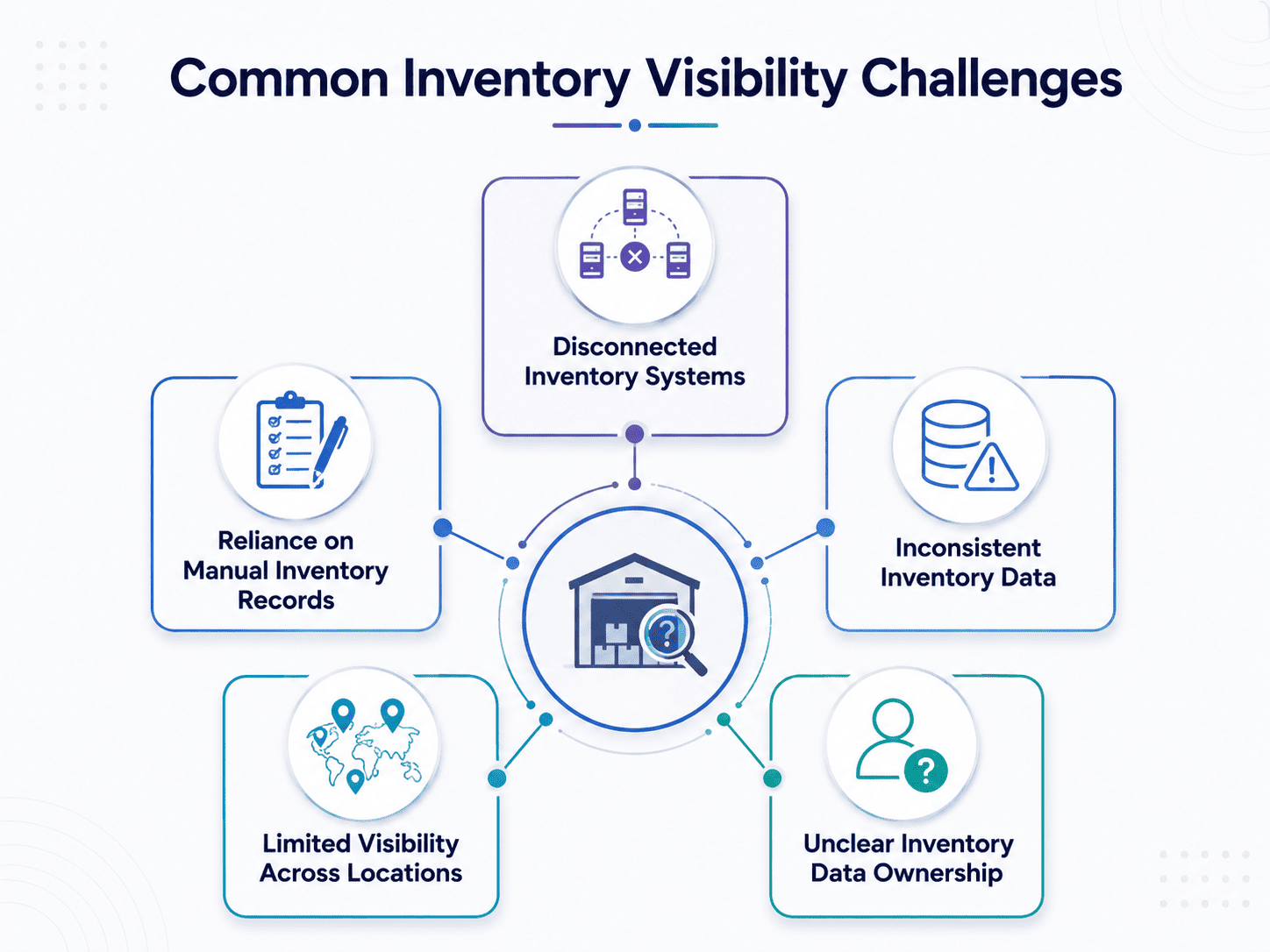
Businesses often struggle to maintain a clear inventory view when data, systems, and responsibilities are not aligned. These issues can create visibility gaps across departments and facilities.
1. Disconnected Inventory Systems
Inventory information may sit across ERP platforms, warehouse tools, maintenance software, spreadsheets, and external systems that do not exchange updates. As a result, teams may work from different quantities, locations, and item statuses.
2. Reliance on Manual Inventory Records
Manual entry takes time and increases the risk of missing, duplicated, or incorrect information. Paper records and spreadsheets can also become outdated when teams do not record inventory movements promptly.
3. Inconsistent Inventory Data
Different facilities may use separate part numbers, descriptions, units of measure, or status labels for the same item. These inconsistencies make inventory harder to search, compare, and manage across the business.
4. Limited Visibility Across Locations
Teams may have a clear view of stock at their own facility but limited access to inventory held elsewhere. This can prevent planners from finding available materials before placing new orders or arranging transfers.
5. Unclear Inventory Data Ownership
Inventory records can lose accuracy when no person or department is responsible for maintaining them. Clear ownership helps establish data standards, update processes, and regular checks across each facility.
How to Improve Inventory Visibility

Improving inventory visibility requires accurate records, connected systems, and clear processes across every facility. The following steps help businesses create a more reliable view of inventory and strengthen inventory control.
1. Centralize Inventory Data
Bring inventory information into one shared platform or connected data environment. This gives teams a consistent view of quantities, locations, status, and movement instead of relying on separate spreadsheets or outdated systems.
2. Standardize Item Information
Use consistent part numbers, item names, descriptions, units of measure, and status categories. Standardized records reduce duplicate entries and make it easier to search, compare, and report on inventory.
3. Connect Inventory Systems Across Locations
To enable inventory visibility across plants and warehouses, link your ERP, warehouse management, maintenance, procurement, and asset management platforms. Connected systems help teams share updates and view stock across different sites without waiting for manual reports.
4. Use Automated Inventory Tracking Tools
Barcode scanners, RFID tags, IoT sensors, and inventory visibility software can help capture stock movements as they happen. These tools reduce manual entry and help teams maintain accurate inventory visibility.
5. Conduct Regular Inventory Audits
Compare system records with physical stock through regular cycle counts and scheduled audits. This helps identify missing items, incorrect quantities, and outdated location details before they affect planning.
6. Monitor Slow-Moving Inventory
Track items with limited or declining usage and review them against current production needs. Early identification gives teams more time to redeploy, return, resell, recycle, or dispose of stock before it loses more value.
KPIs for Inventory Visibility
Inventory visibility Key Performance Indicators (KPIs) help businesses assess the reliability, speed, and reach of their inventory data. The five most useful measures include:
- Inventory Accuracy Rate: This KPI shows how closely system quantities match the stock physically held across your facilities.
- Inventory Record Completeness: This measures how many records include the required item details, such as quantity, location, condition, and status.
- Inventory Update Time: This tracks how quickly receiving, usage, transfer, and shipping activity appears in the inventory system.
- Stockout Rate: This measures how often materials, components, or finished goods are unavailable when teams need them.
- Cross-Location Inventory Visibility: This shows how much inventory your teams can view across plants, warehouses, and storage sites.
How Amplio Brings Inventory Visibility to Unlock Capital Value
AI Agents for Intelligent Optimization
Amplio’s AI agents go beyond simple inventory tracking — they transform visibility into actionable intelligence.
By connecting across ERP systems and analyzing inventory data from multiple sites, these agents automatically identify idle or underutilized assets, forecast internal demand, and classify items for redeployment or liquidation.
When redeployment isn’t viable, the same AI agents trigger asset valuation and listing through Amplio’s private marketplace, ensuring that every surplus item follows the most profitable recovery path.
This structured, data-driven approach helps enterprises convert static industrial inventory into working capital while maintaining full traceability and operational control.
Connect with us today to gain real-time visibility into your assets and recover capital through AI-driven optimization and enterprise-grade resale channels.