What Is MRO in Manufacturing and How To Manage It
MRO in manufacturing plays a critical role in keeping operations running, yet it often receives less attention than direct production materials. These everyday supplies, spare parts, and tools are essential for maintenance, repair, and smooth production but they’re frequently managed without a structured strategy.
This article explains what MRO in manufacturing is, why it matters, and how to manage it effectively. You’ll learn how to structure MRO processes to reduce waste, control costs, and strengthen supply chain resilience.
What Is MRO in Manufacturing
MRO stands for Maintenance, Repair, and Operations. It refers to the materials, parts, tools, and supplies used to keep manufacturing equipment, facilities, and supporting infrastructure running efficiently. These items don’t become part of the final product but are essential for maintaining day-to-day operations.
In manufacturing, MRO supports everything that happens around the production line — from keeping machines in working order to ensuring workers have the right protective equipment and facilities are maintained to standard.
MRO is technically different from direct materials.
Direct materials are the physical components that go into the finished product, like the metal casing of a pump or the motor inside it. MRO materials, on the other hand, support the process rather than the product. They ensure production can continue smoothly by preventing breakdowns, reducing unplanned downtime, and enabling routine maintenance and repairs.
Types of MRO in Manufacturing
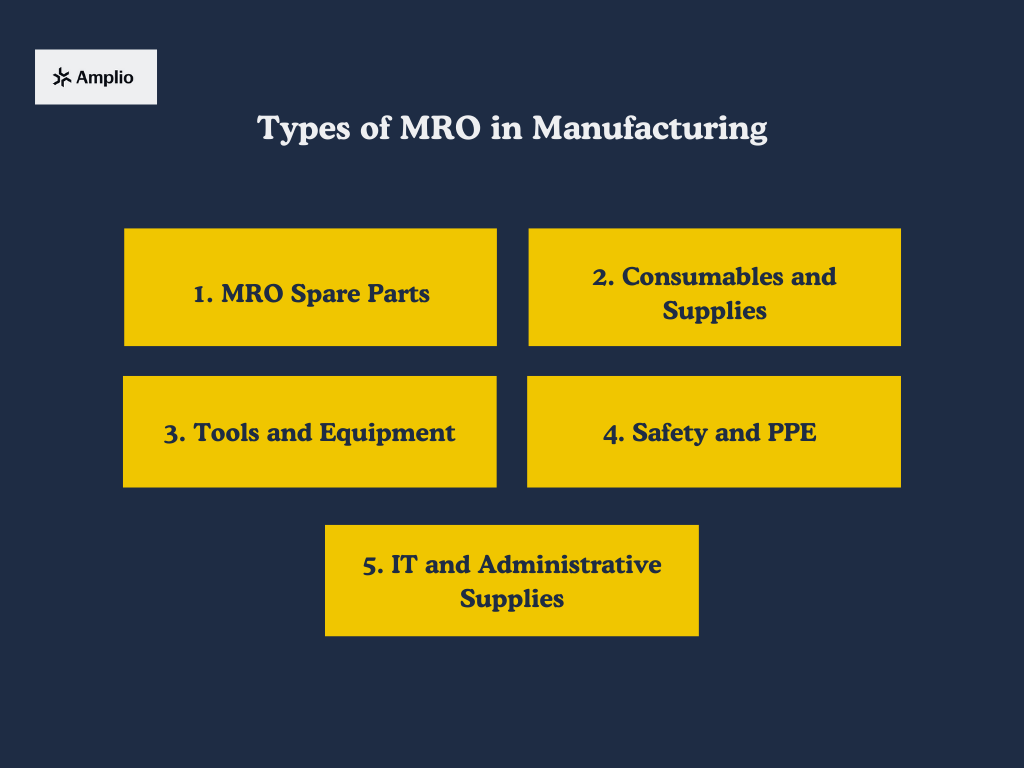
To manage MRO effectively, it’s important to understand the different categories it covers. Each type plays a specific role in keeping manufacturing operations stable and efficient.
1. MRO Spare Parts
These are the critical components required to keep machinery and equipment running. Typical examples include bearings, filters, gears, motors, and valves. They are essential for repairs, preventive maintenance, and minimizing equipment downtime. If these parts aren’t available when needed, production can stop, leading to costly delays.
2. Consumables and Supplies
These are items that support daily operations but are consumed during use. Common examples include lubricants, oils, fasteners, adhesives, and cleaning agents. They may seem minor, but without them, maintenance work and equipment operation can’t be carried out properly.
3. Tools and Equipment
This category includes the instruments, maintenance tools, and calibration equipment needed to perform repairs and upkeep tasks. These tools enable maintenance teams to service production lines effectively and ensure equipment performance remains within required tolerances.
4. Safety and PPE
Safety gear and personal protective equipment (PPE) are mandatory in manufacturing environments. Items like helmets, gloves, protective eyewear, respirators, and safety clothing keep workers safe and help companies comply with regulatory standards.
5. IT and Administrative Supplies
While not directly tied to production lines, IT peripherals, office supplies, and communication tools are essential for scheduling, maintenance planning, and documentation. Reliable IT support ensures maintenance activities are tracked, materials are reordered on time, and production workflows remain coordinated.
Why MRO Management Matters in Manufacturing
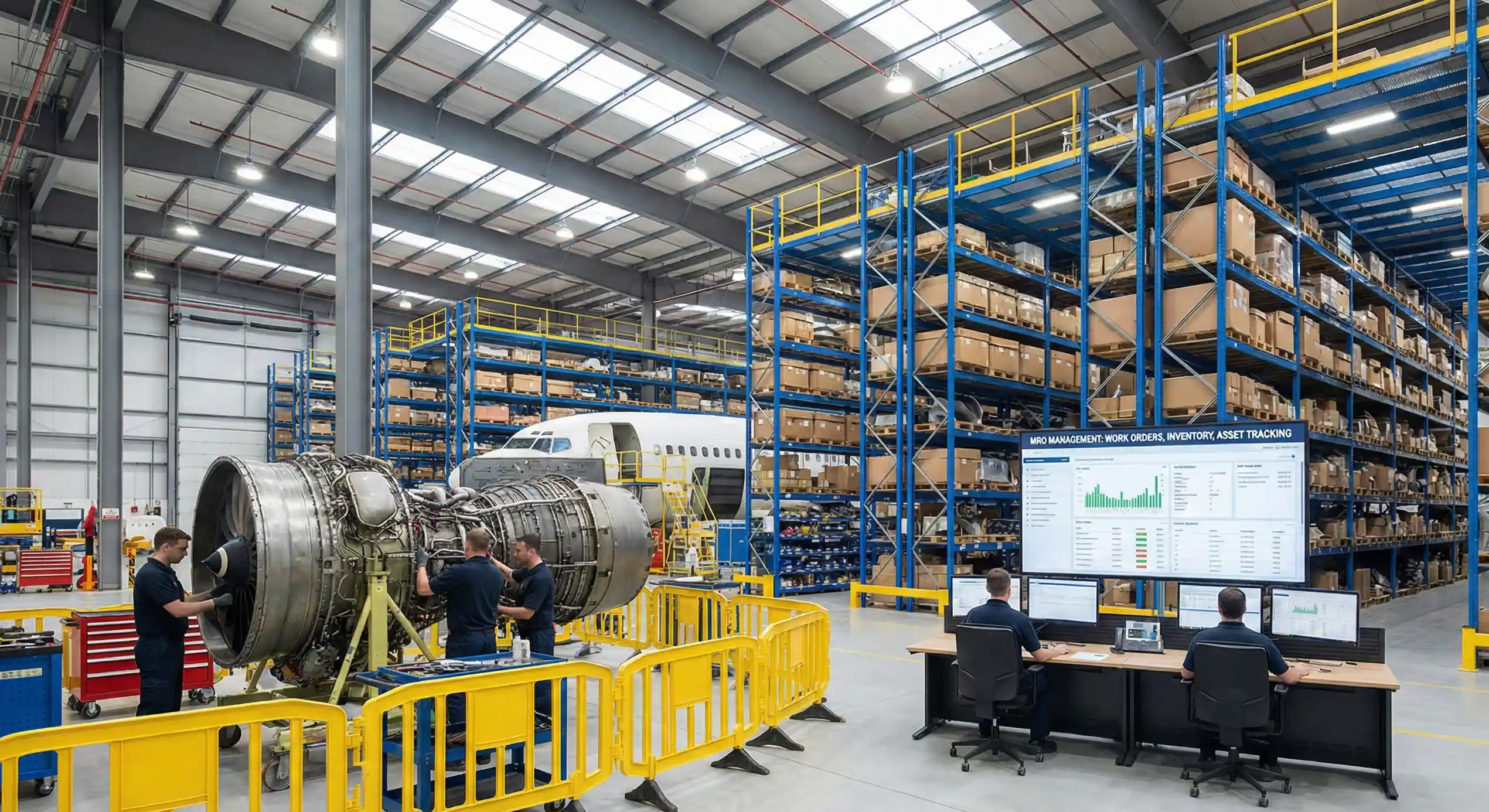
MRO management in manufacturing is a strategic priority for the following key reasons:
1. Downtime Prevention
In manufacturing, downtime is one of the most immediate and expensive consequences of poor MRO management. When critical spare parts aren’t available at the right time, production lines stop. Even short delays can cost thousands of dollars per hour in lost output.
Most downtime incidents can be traced back to gaps in spare parts planning, low visibility into stock, inaccurate forecasting, or failure to flag long-lead components.
MRO items may seem secondary, but their absence can halt operations just as effectively as a machine failure.
2. Sustainability
Effective MRO management in manufacturing supports sustainability by keeping valuable resources in circulation. When parts are tracked, redeployed across facilities, or sold through secondary channels, fewer items end up as waste.
Redeployment ensures idle components are put back to use instead of sitting in storage. Disposition through trusted surplus networks extends the lifecycle of usable equipment and reduces the need for new production. Both approaches cut landfill contributions and lower the environmental impact of manufacturing operations.
3. Supply Chain Resilience
Strong MRO management in manufacturing improves supply chain resilience by reducing dependence on a single source.
By building relationships with multiple suppliers and tapping into secondary channels, manufacturers can secure critical spares even during disruptions. This approach minimizes the risk of production delays and keeps operations stable when primary supply lines are strained.
Best Practices to Manage MRO in Manufacturing

Effective MRO management goes beyond procurement. It requires structured processes, accurate data, and clear ownership across the organization. Below are best practices that help manufacturers reduce waste, control costs, and maintain operational continuity.
1. Centralize MRO Data and Classification
Disorganized and fragmented MRO data is one of the biggest barriers to effective management. Start by centralizing all MRO information in a unified ERP system. Standardize naming conventions, part numbers, and classifications across all sites to eliminate duplication and confusion.
With a centralized database, procurement and maintenance teams gain real-time visibility into available stock, usage trends, and reorder points. It also enables smarter sourcing decisions by identifying which parts can be redeployed internally before buying new ones.
By consolidating data and applying consistent classification, you create a strong foundation for every other MRO initiative — from procurement to inventory optimization.
2. Forecast and Set Accurate Reorder Points
Accurate forecasting is essential to prevent both stockouts and excess inventory.
Start by analyzing historical consumption data, including seasonal patterns, usage frequency, and criticality of each item. Combine this with supplier lead times to determine realistic reorder points that align with actual operational needs.
Critical spares, especially those with long lead times, should have higher safety stock levels to avoid production disruptions. For low-use or non-critical items, leaner reorder thresholds help reduce carrying costs.
By aligning reorder points with real demand and supply timelines, manufacturers can maintain reliable availability of essential MRO materials while minimizing idle inventory and unnecessary storage expenses.
3. Define Ownership and Clear Policies
Effective MRO management in manufacturing also requires clear accountability across functions. Ambiguity in responsibilities often leads to overstocking, stockouts, or poor data quality.
Start by defining ownership across procurement, maintenance, and finance:
- Procurement manages supplier relationships, sourcing strategies, and contract terms.
- Maintenance teams track usage, define criticality levels, and flag reorder needs.
- Finance oversees budget alignment, cost tracking, and capital recovery.
Establishing formal policies for classification, approval workflows, and replenishment rules ensures consistency across sites. With clear roles and documented procedures, manufacturers can streamline decision-making and avoid operational gaps that drive inefficiency.
Note: Appointing a Manufacturing MRO Manager helps centralize oversight and ensures that sourcing, inventory control, and maintenance practices are coordinated effectively. This role is especially critical in multi-site operations where fragmented responsibilities often lead to supply gaps and inefficiencies.
4. Adopt Vendor Managed Inventory (VMI)
Vendor Managed Inventory (VMI) is an effective way to control the carrying costs and improve MRO availability. Under this model, trusted suppliers take responsibility for monitoring stock levels and replenishing inventory based on agreed-upon thresholds.
By shifting replenishment responsibilities to vendors, manufacturers reduce the amount of inventory they need to hold on-site. This cuts costs related to storage, handling, insurance, and obsolescence.
VMI also improves supply reliability. Vendors track real-time consumption and lead times, ensuring that critical MRO materials are available when needed without overstocking. This structured approach streamlines procurement, improves cash flow, and frees up internal teams to focus on production and maintenance priorities.
5. Leverage Secondary Supplier Sources Hard-To-Find MRO
Relying on a single supplier for critical and hard-to-find MRO materials creates unnecessary risk.
Build secondary supply chains to ensure continuity when primary suppliers face delays, shortages, or price fluctuations.
This involves identifying and prequalifying alternative suppliers, including surplus marketplaces, authorized distributors, and specialized industrial liquidators. These secondary channels can provide access to hard-to-find or discontinued components, helping avoid unplanned downtime.
6. Audit and Rationalize Regularly
Regular audits are essential to keep MRO inventory accurate, lean, and aligned with operational needs.
This involves reviewing stock data to identify obsolete items, slow-moving inventory, and critical spares that directly support production uptime.
By auditing regularly, manufacturers can remove truly obsolete stock, adjust reorder levels for low-usage items, and prioritize critical spares. This prevents unnecessary capital from being tied up in non-productive assets while ensuring that essential materials remain available when needed.
Note: MRO inventory in manufacturing often includes slow-moving items that are still critical for operations. These should not be eliminated blindly during audits. Instead, categorize them carefully to strike the right balance between cost control and operational readiness.
7. Leverage Secondary Markets for Disposition
Disposition is a key part of manufacturing MRO management. When surplus MRO inventory builds up, it’s important to recover value instead of letting it sit idle.
Manufacturers can tap into asset recovery specialists and surplus marketplaces to liquidate excess MRO materials efficiently and free up working capital.
Specialized industrial marketplaces, liquidation partners, and asset recovery platforms connect manufacturers with verified buyers actively seeking spare parts, tools, or equipment. This ensures that surplus items are reused within the industrial ecosystem rather than written off or scrapped.
How Amplio Helps Manufacturers Manage MRO Better
Managing MRO in manufacturing requires more than good intentions — it needs structure, visibility, and execution at scale. Amplio gives manufacturers the tools to address these challenges strategically.
AI-Powered Visibility Across Sites
Amplio connects with your existing ERP systems to give you a clear view of MRO inventory across all facilities. Our AI-powered agents identify redeployment opportunities, ensuring slow-moving or excess stock is utilized where it’s needed most. This reduces unnecessary purchases, cuts idle time, and improves inventory efficiency.
Liquidation of Excess MRO Stock
When redeployment isn’t possible, Amplio helps you recover value through structured liquidation. Assets are appraised at the SKU level and listed on our secure private marketplace — a trusted network of vetted industrial buyers and liquidators. This allows manufacturers to clear surplus efficiently while ensuring transparency and compliance.
Contact us today to see how Amplio can help you manage manufacturing MRO with precision and confidence.