Circular Supply Chain: Challenges and Strategies
Introduction
According to EY’s C-suite Insights: Sustainability and Environmental, Social and Governance (ESG) Trends Index of 2023, 50% of executives reported that their organizations are actively developing sustainable supply chains. This reflects a broader shift in how companies approach long-term supply chain design and signals that adopting circular supply chains is becoming a strategic priority for enterprise leaders.
As we move through 2026, the transition to circular supply chains becomes increasingly important amid tightening ESG regulations, evolving sustainability goals, and dynamic market demands across global supply chains. In response, more companies are exploring a circular economy supply chain model to move beyond the traditional linear economy and improve long-term resilience.
In this blog, we examine what a circular supply chain entails, the challenges it faces, and actionable circular strategies for large manufacturers and industrial enterprises.
What Is a Circular Supply Chain?
A circular supply chain is a system designed to keep products, materials, and resources in use for as long as possible while reducing environmental impact and protecting natural systems. It is a sustainable business model built around minimizing waste, maximizing resource use, and improving efficiency across the end-to-end supply chain.
Unlike a traditional linear supply chain definition that follows a “take-make-dispose” model, a circular supply chain management approach is grounded in core principles focused on extending asset life. It uses reuse, recycling, and responsible sourcing to eliminate waste and build a continual use of resources.
In practice, this means designing circular processes that recover used products, reintegrate recyclable and recycled materials, and reduce dependence on finite resources. Instead of extracting new materials at every production cycle, companies preserve existing resources and keep value circulating within circular systems.
Why Circular Supply Chains Matter in Industry
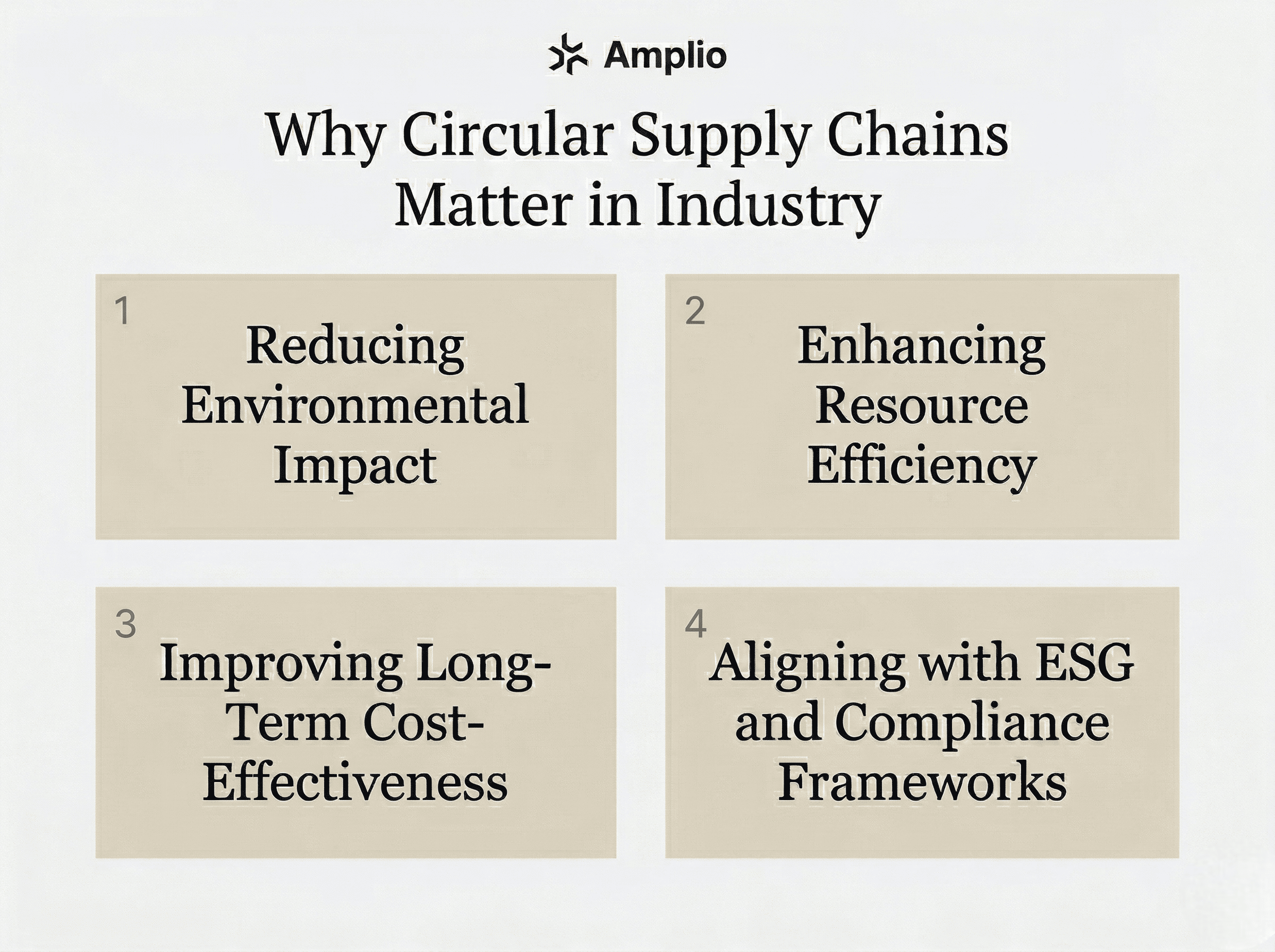
Let’s explore why transitioning from traditional linear supply chains to circular models is essential for modern industry and long-term competitiveness.
1. Reducing Environmental Impact
By reusing, recycling, and repurposing materials, circular supply chains significantly lower the environmental footprint of industrial operations, including measurable reductions in carbon footprint across production networks.
They minimize raw material extraction, drive measurable waste reduction, and decrease energy consumption across production cycles—key factors for meeting regulatory requirements and corporate sustainability targets. This helps protect natural habitats and supports environmental preservation goals aligned with sustainable practices.
2. Enhancing Resource Efficiency
Circular supply chains enable companies to maximize the value of every resource. By recycling, reusing, and repurposing machinery, equipment, and materials, businesses can boost operational agility. This provides flexibility in capital allocation, allowing companies to redirect investment toward higher-value initiatives.
Through materials recovery and structured reuse planning, companies can reduce reliance on new materials and preserve existing resources. This circular approach can deliver substantial cost savings by lowering replacement spend and keeping more value in use across the entire supply chain.
3. Improving Long-Term Cost-Effectiveness
Adopting a circular supply chain model significantly enhances long-term cost-effectiveness by reducing reliance on new raw materials and lowering waste management expenses.
It also enables the strategic disposition of surplus industrial inventories to other potential buyers, converting idle assets into recovered value. This reduces operational losses and strengthens overall supply chain operations efficiency.
4. Aligning with ESG and Compliance Frameworks
Shifting to a circular supply chain fosters ESG alignment by reusing, recycling, and repurposing resources across business processes. Companies lower their environmental impact, reduce carbon emissions, and meet regulatory requirements while mitigating non-compliance risks.
This strengthens a sustainable business model and embeds sustainable business practices across the organization. As regulatory expectations increase, circular economy practices provide a structured way to align internal stakeholders around shared sustainability goals while reinforcing compliant operations.
Key Challenges in Implementing Circular Supply Chains
Here are the key challenges large enterprises face when transitioning from traditional linear models to circular supply chains.
1. Fragmented Data and Lack of Visibility
Fragmented data and poor tracking of materials, inventory, and asset lifecycles hinder effective decision-making and disrupt circular supply chain processes.
Without integrated, real-time visibility to track materials across the entire supply chain, companies miss opportunities to recycle and repurpose assets efficiently, leading to operational inefficiencies and increased costs.
2. Limited Industrial Linkages
Misalignment among value chain stakeholders across industries prevents the effective sharing of surplus and idle equipment. Without strong industrial linkages and coordination across reverse logistics networks, companies struggle to move surplus assets efficiently.
Limited collaboration between logistics providers and industrial circular suppliers further reduces opportunities to repurpose excess and unused equipment, limiting value creation and increasing costs.
3. High Upfront Costs and Uncertain ROI
Implementing circular supply chain practices often requires significant initial investments in digital technologies, infrastructure, and process redesign. These high upfront costs and uncertain returns can make companies hesitant.
Long-term savings and efficiency gains typically outweigh the initial expenses when companies leverage technology and apply circular practices across operations.
4. Regulatory Complexity
Navigating diverse cross-border regulations for waste management, recycling, and product compliance creates significant challenges. This regulatory complexity can increase operational costs and uncertainty.
It can also make it difficult for companies to transition to or fully implement circular supply chain practices across jurisdictions and align circular initiatives with evolving compliance frameworks.
5. Product Design Limitations
Many industrial products are designed for single-use applications without considering reuse, refurbishment, or easy disassembly.
This lack of design foresight limits opportunities for repurposing or recycling at the end of life, resulting in higher waste volumes and continued dependence on traditional linear production models.
6. Cultural Resistance and Organizational Inertia
Implementing circular supply chain practices often faces internal challenges, as traditional mindsets and short-term performance metrics discourage long-term transformation.
Overcoming this resistance requires strong leadership, consistent communication, and phased implementation strategies to build confidence, accountability, and alignment across the organization.
Practical Circular Strategies for a Circular Supply Chain Economy
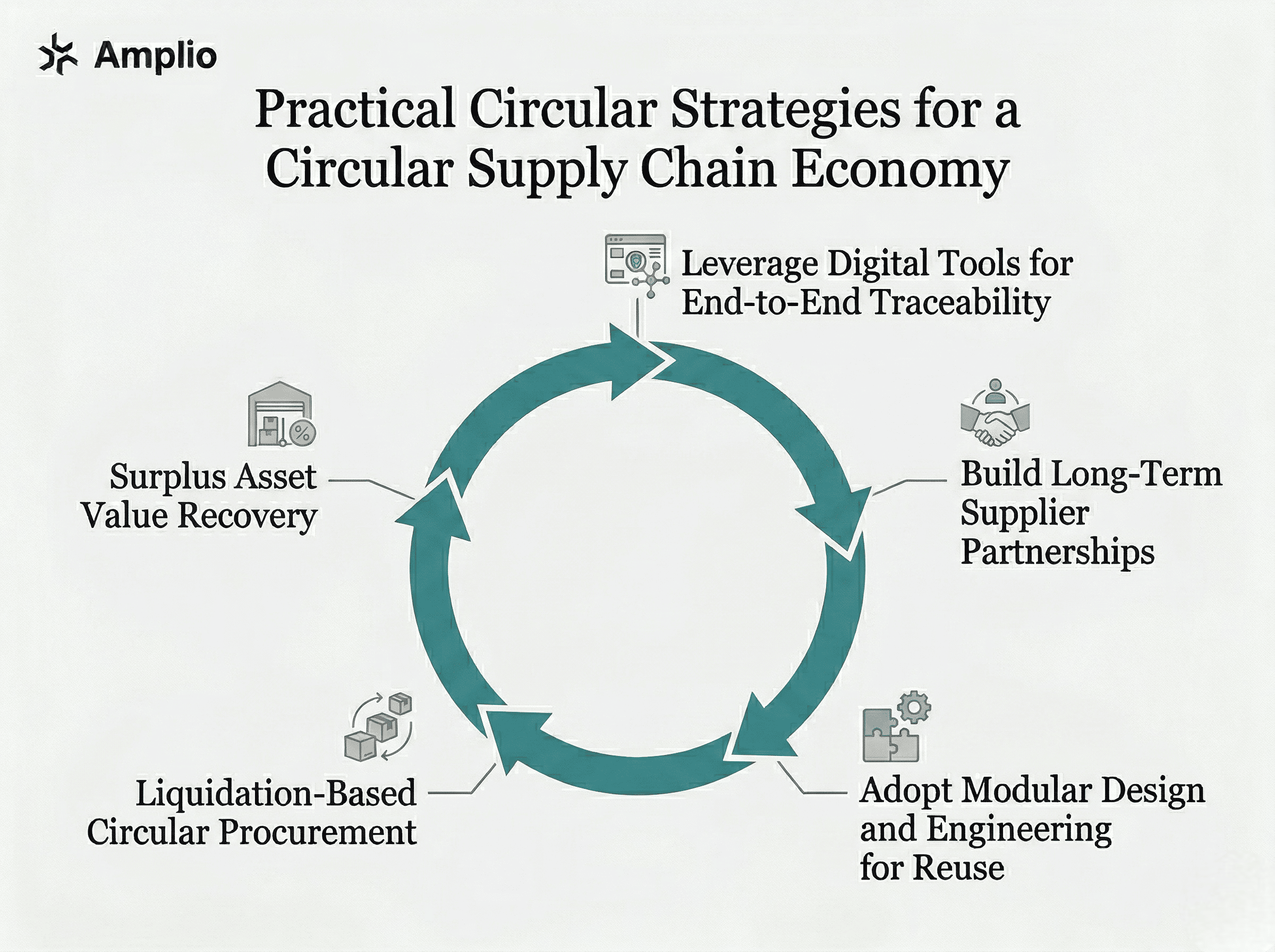
1. Leverage Digital Tools for End-to-End Traceability
Implementing digital technologies such as IoT sensors, blockchain, and AI-powered ERP systems provides end-to-end visibility across supply chain operations. Real-time tracking of inventory, material flows, and asset lifecycles enables companies to identify inefficiencies, improve resource efficiency, and minimize waste while ensuring transparency across circular systems.
This level of traceability supports applying circular economy principles and helps organizations manage products and materials more effectively.
Real-World Example
Global brewer Heineken implemented a Connected Brewery Ecosystem that leverages IoT sensors, data analytics, and digital twin modeling to simulate and analyze a virtual replica of a typical Heineken brewery. Analytics from the digital twin identified measures to curb energy waste and is projected to save 15–20% in energy consumption and approximately a 50% reduction in CO₂ emissions at its production sites on average.
2. Build Long-Term Supplier Partnerships
Long-term supplier partnerships are vital for creating a circular supply chain and gradually transitioning toward regenerative supply chain models that help decouple economic growth from resource consumption. By collaborating through co-innovation and aligning on shared sustainability goals, companies can source sustainable materials, integrate recycled and renewable materials, and build greater supply chain resilience.
Strong collaboration across the entire supply chain also enables partners to share surplus capacity, improve material recovery flows, and coordinate more effectively with logistics providers and upstream stakeholders.
Real-World Example
Renault (automaker) teamed up with waste management firm SUEZ to create Indra, a joint venture dedicated to recycling end-of-life vehicles (ELVs). This long-term supplier partnership (established in 2008) built France’s leading dismantling network for ELVs, ensuring materials like metals, plastics, and valuable minerals are recovered and fed back into new car production.
3. Adopt Modular Design and Engineering for Reuse
Adopting modular design principles enables industries to extend product lifecycles, minimize waste, and improve component-level recoverability. By designing products with standardized, interchangeable parts that can be easily disassembled, repaired, or upgraded, manufacturers reduce full product replacements and increase the reuse of recyclable materials, including recycled plastic where feasible.
This approach strengthens circular business models by retaining more value within products and materials over time.
Real-World Example
Caterpillar Inc., the construction and mining equipment manufacturer, has embraced design for refurbishment. Heavy machinery is composed of large modules that Caterpillar designs to be rebuilt multiple times. When a Cat engine or part wears out, customers can return the used component to Caterpillar. The component is then disassembled, cleaned, and remanufactured to original specifications with any updated engineering improvements, and they re-enter the supply chain as Cat Reman products with like-new quality, including a same-as-new warranty.
4. Liquidation-Based Circular Procurement
Building on circular principles, liquidation-based procurement transforms surplus industrial assets into working capital and strengthens a closed-loop supply chain. By acquiring idle machinery and excess materials from companies looking to liquidate, businesses conserve finite resources and promote industrial symbiosis.
This circular procurement approach supports circular initiatives and reinforces a closed-loop system by redeploying industrial assets into productive use instead of sending them to disposal or long-term storage.
Real-World Example
In 2022, Amplio helped Hayden overcome a key component shortage by helping them source the component from their trusted secondary network of industrial sellers. Amplio helped Hayden overcome the issue of component obsolescence and turned idle assets into vital production inputs for them.
5. Surplus Asset Value Recovery
Transforming idle equipment and surplus inventory into valuable resources is a key strategy for enhancing supply chain sustainability and strengthening materials recovery efforts. Liquidating tangible assets by manufacturers generates measurable value creation and makes used products available to other industries.
This approach helps eliminate waste, reduce storage costs, and convert potential liabilities into strategic investments that support circular processes across the industrial ecosystem. Circular supply chains play a critical role in enabling structured surplus asset recovery at scale.
Real-World Example
A Fortune 500 paper manufacturer faced mounting surplus equipment and materials across over 90 mills, which tied up valuable capital and warehouse space. Rather than scrapping these functional assets, the company partnered with Amplio to execute a structured liquidation strategy. In just six months, Amplio’s dedicated team cleared surplus from 21 sites and doubled asset recovery rates compared to previous methods. By selling idle machinery to other industrial users, the manufacturer unlocked significant capital that was reinvested in new production initiatives while advancing circular economy practices through the productive reuse of assets.
How Amplio Facilitates an Industrial Circular Supply Chain
Amplio’s AI-powered, data-driven platform transforms idle industrial assets into strategic resources, strengthening circular execution across surplus recovery and procurement workflows. Our services bridge industrial buyers and sellers while reducing waste and unlocking value from underutilized equipment. Our circular services focus on providing:
- Streamlined Liquidation and Redeployment
We streamline surplus workflows through AI-based appraisal, classification, and redeployment matching. By analyzing asset data across facilities, our system identifies internal reuse opportunities before initiating external liquidation. This ensures idle assets remain in productive use and shortens recovery timelines.
- Marketplace for Surplus Assets
When internal reuse is not viable, assets transition into structured liquidation through Amplio’s private marketplace. Each item is appraised, categorized, and positioned within a closed network of verified industrial buyers, liquidators, and resellers to optimize recovery outcomes.
- Enabling Circular Procurement from Industrial Idle Sources
Amplio empowers procurement teams to source high-quality surplus equipment directly from verified idle inventories. By providing structured visibility into available assets, we help enterprise buyers reduce procurement costs and optimize capital allocation while advancing circular objectives.
- Obsolescence Management and Inventory Recovery
We manage obsolescence through structured appraisal and liquidation workflows before equipment loses value. Each transaction is supported by a complete digital audit trail, converting potential waste into working capital while strengthening overall supply chain performance.
Conclusion: Moving from Linear to Circular
Transitioning to circular supply chains is no longer just about sustainability—it’s a strategic move that improves operational efficiency, reduces costs, and strengthens resilience.
Starting with practical steps like asset recovery or procurement audits helps organizations identify untapped value and embed circular practices into day-to-day operations, accelerating progress toward circularity. Well-defined circular supply chain strategies provide the structure needed to scale these efforts across functions and facilities.
Regulatory pressures and market expectations are likely to grow in the future, and companies that integrate circular models into their core operations will build a durable competitive advantage while delivering measurable environmental benefits and long-term economic value.