Asset Redeployment: What It Is, and How to Do It

Introduction
Idle and underutilized industrial assets are an increasing challenge for many businesses. Surplus equipment and machinery often remain in storage after operational needs change, tying up capital, adding carrying costs, and losing value over time.
Asset redeployment offers a cost-effective alternative to purchasing new equipment. By reallocating existing resources to where they are needed most, organizations can improve utilization, reduce capital spend, and support a circular supply chain.
In this article, we break down asset redeployment, what it is, why it matters, and the practical steps you can take to do it effectively.
What Is Asset Redeployment?
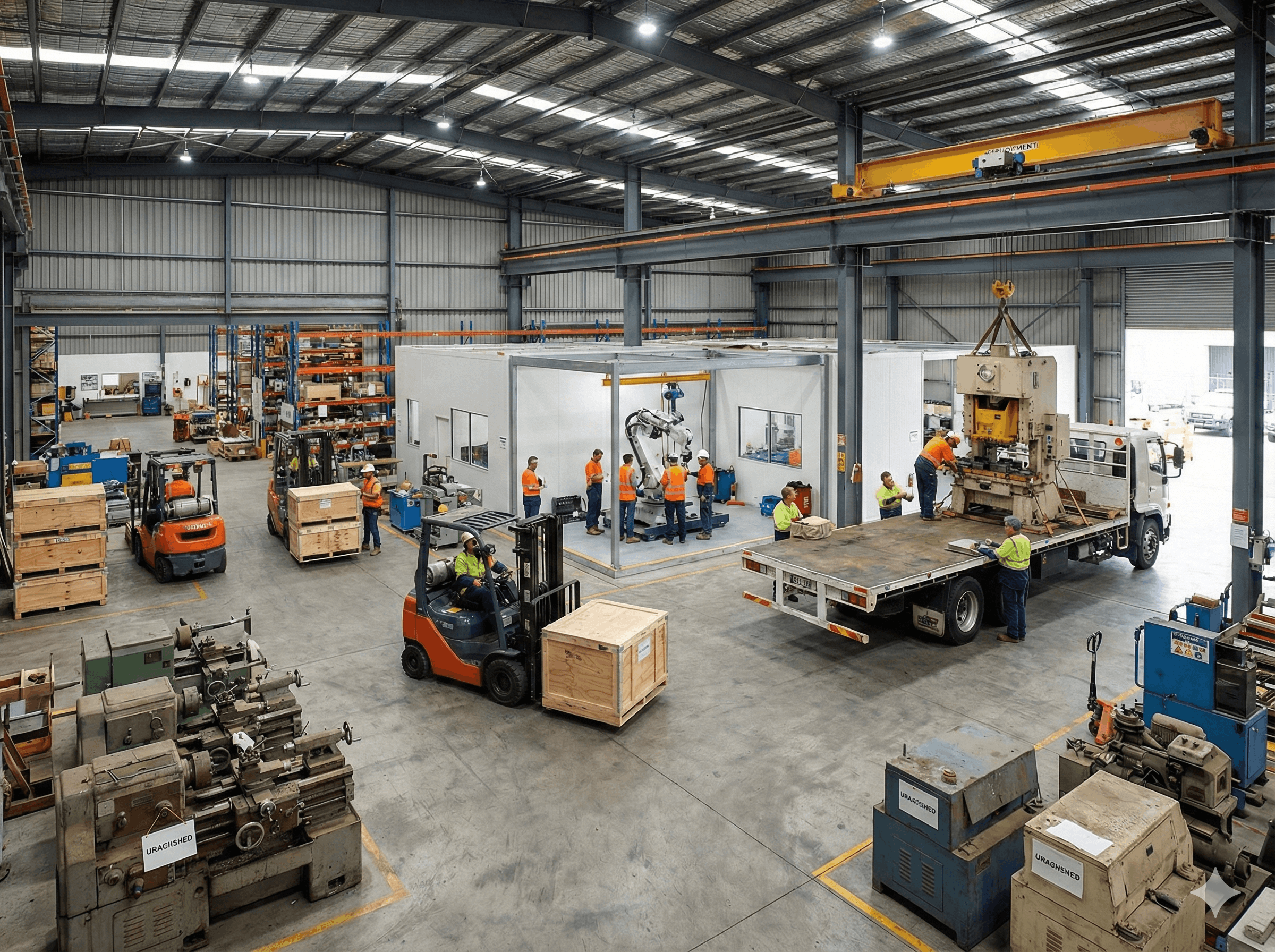
Asset redeployment is the process of reallocating surplus or underutilized industrial assets to where they can continue supporting operational needs. This may involve reassigning equipment within the same facility or transferring it to other facilities across the enterprise when demand exists elsewhere.
Rather than allowing equipment to sit idle or moving directly to disposal, redeployment enables organizations to reuse existing assets as part of a broader surplus asset management strategy. By extending the useful life and redirecting assets to productive use internally or across locations, companies can reduce unnecessary purchases, control costs, and conduct asset disposition in a responsible way.
Why Asset Redeployment Matters?
The steps below outline a structured redeployment process for moving surplus industrial equipment from idle to productive use, with clear decisions and minimal disruption.
1. Preserve Capital and Reduce Unnecessary Spend
Asset redeployment reduces the need to purchase new equipment for an industrial enterprise by reusing surplus assets that already exist within the firm. Instead of spending money on replacements, idle or underutilized industrial surplus can be redirected to support current operational needs.
By extending the useful life of existing assets, companies preserve capital and improve cost efficiency. This leads to more disciplined investment decisions within corporate finance, eases pressure on CapEx budgets, and allows funds to be allocated to higher-value initiatives that increase profitability.
2. Improve Asset Utilization
It increases the utilization of existing assets by shifting surplus equipment from low-demand areas to locations where it is actively required. This prevents valuable industrial machinery from remaining idle in an industrial landscape.
The result is higher utilization, improved efficiency, and support for an industrial circular supply chain.
3. Support Cost-Effective Operations
Unused equipment continues to generate costs related to storage, insurance, and ongoing maintenance without contributing to operational value. Bringing surplus assets back into active use reduces these carrying expenses and helps organizations better manage overall costs.
Faster redeployment also limits downtime by ensuring equipment is available where and when it is needed.
This supports broader cost management strategies by improving operational efficiency, controlling expenses, and aligning resources with real demand.
4. Extend Asset Useful Life
Keeping equipment in active use delays asset disposal and reduces the risk of surplus assets becoming obsolete while still functional. Continued use allows company to extract more value from assets that still meet operational needs.
By extending the useful life of equipment, companies improve returns on their original capital investment. This approach supports better asset lifecycle management by maximizing value before assets are sold, recycled, or otherwise disposed of.
5. Align With Sustainability and Circular Use Goals
Reusing industrial equipment contributes to industrial waste diversion, helping minimize material waste. Keeping equipment in service longer also lowers the environmental impact associated with manufacturing, transporting, and installing new machinery.
When internal or cross-facility reuse is not possible, working with circular suppliers supports a stronger circular supply chain by keeping equipment and materials within the industrial ecosystem.
This approach extends asset life through practical reuse and recovery, enabling organizations to support sustainability goals while maintaining operational efficiency and cost discipline.
How to Do Asset Redeployment (Step-by-Step)

The steps below explain how to redeploy surplus industrial equipment in a structured and repeatable way:
1. Identify Surplus Industrial Assets and Equipment
The process starts by identifying surplus or idle equipment at the originating facility. Equipment may become surplus due to completed projects, shifts in demand, capacity changes, or site consolidation, even when it remains fully operational and suitable for continued use.
At this stage, building an accurate inventory is essential. Capturing details such as condition, specifications, age, and location improves visibility across the business and helps teams determine whether equipment can be redeployed to other facilities.
Early identification also reduces storage-related expenses and prevents valuable equipment from losing value while sitting unused.
2. Match Assets to Internal Demand
After surplus equipment is identified, the next step is determining where it can support current or upcoming operational needs. This requires coordination between operations, engineering, and procurement teams to understand demand across facilities and confirm whether existing equipment is suitable.
At this point, teams should compare the total effort and expense of moving equipment with the option of purchasing replacements. Considering factors such as transfer, refurbishment, and installation helps ensure decisions are practical, cost-effective, and aligned with both operational requirements and financial priorities.
3. External Asset Redeployment for Reuse
When no internal requirement exists, surplus equipment can be redeployed externally through sale or liquidation to other businesses that can return it to productive use. This enables organizations to recover value from underutilized assets while extending equipment life beyond their own operations.
External redeployment may be executed directly or with the support of asset recovery firms that specialize in identifying qualified buyers, assessing market demand, and managing logistics.
When handled in a structured manner, this approach helps offset the original investment, reduce waste, and maximize value recovery before equipment moves to recycling or final disposition.
4. Establish Governance for Industrial Asset Redeployment
Clear governance ensures this process is applied consistently across facilities and business units. This includes defining approval authority, setting transfer or chargeback rules, and establishing clear criteria for when equipment should be internally reassigned, retained temporarily, or moved toward asset disposition.
When responsibilities for approvals, execution, and outcomes are clearly assigned, decisions move faster and align with corporate finance priorities.
Clear and strong governance prevents surplus equipment from remaining idle due to uncertainty and helps ensure assets are managed as part of a disciplined, repeatable process.
5. Transfer, Logistics, and Reinstallation
Once approvals and governance are in place, the process moves from planning to execution. Equipment must be decommissioned and transferred from the originating site to the receiving facility in a safe and controlled manner.
This involves coordinated planning for decommissioning, transportation, and reinstallation to minimize downtime and protect equipment condition.
Proper sequencing, site readiness, and compliance checks help ensure equipment is returned to service quickly and continues to support operational needs without disruption.
6. Track and Report Outcomes
The final step is measuring results and keeping records up to date. Asset registers and internal systems should reflect the new location, status, and remaining useful life of equipment following transfer.
Tracking outcomes such as avoided spend, expense reduction, and improved utilization helps demonstrate the financial impact of the process.
These metrics support finance reviews, strengthen financial reports, and provide insight to refine future surplus asset management decisions.
Common Surplus Asset Redeployment Mistakes
Businesses struggle to recover full value from surplus assets because redeployment decisions are delayed or poorly managed. Idle machinery is often held in storage without clear needs, and increasing costs related to maintenance, insurance, and space.
- Holding surplus too long “just in case,” increasing storage costs, and reducing useful life
- Poor data quality, makes it difficult to manage equipment and resources effectively
- Ignoring the total cost of transfer, including dismantling, transport, and reinstallation
- Treating redeployment as an ad-hoc decision instead of a structured, cost-effective process
How Amplio Helps Redeploy Industrial Assets
AI-Powered Appraisal
Amplio combines AI with an expert team to identify and evaluate surplus industrial equipment across facilities. This approach delivers faster visibility into condition, remaining useful life, and reuse potential, supporting confident decisions without adding workload.
Industrial Redeployment
Amplio helps identify surplus machinery at one facility and supports its redeployment to other facilities where demand exists. By enabling structured, site-to-site transfers, organizations can make better use of existing resources, reduce unnecessary purchases, and improve operational efficiency before considering external sale or asset disposition.
External Redeployment Through Liquidation
When surplus industrial equipment cannot be reused internally, Amplio enables external redeployment through a structured liquidation service. We manage valuation, buyer sourcing, sales execution, and asset removal and logistics to place usable equipment with other businesses that can put it back into productive use. This approach eliminates ad-hoc selling, reduces storage and holding costs, and helps organizations recover value quickly and efficiently before assets move to final disposition or recycling.
Our asset redeployment services help organizations extend the productive life of surplus industrial assets and preserve more value from equipment that is no longer needed in its current location.
Contact Amplio to redeploy surplus industrial assets efficiently and cost-effectively.