5 Common Reasons Equipment Becomes Underutilized and How to Fix It

Introduction
In many industrial operations, valuable machines and tools sit idle for long periods, not because they’re broken, but because they’re overlooked. This is what’s known as underutilized equipment, which refers to assets operating below their expected capacity or no longer supporting current production requirements.
While it may seem harmless, underutilized assets create hidden costs. The longer these assets remain unused, the more value they lose — both operationally and financially.
This article explains the most common reasons equipment becomes underutilized and outlines practical ways to return it to productive use, redeploy it across the enterprise, or recover its remaining value.
Why Underutilized Equipment Creates Problems
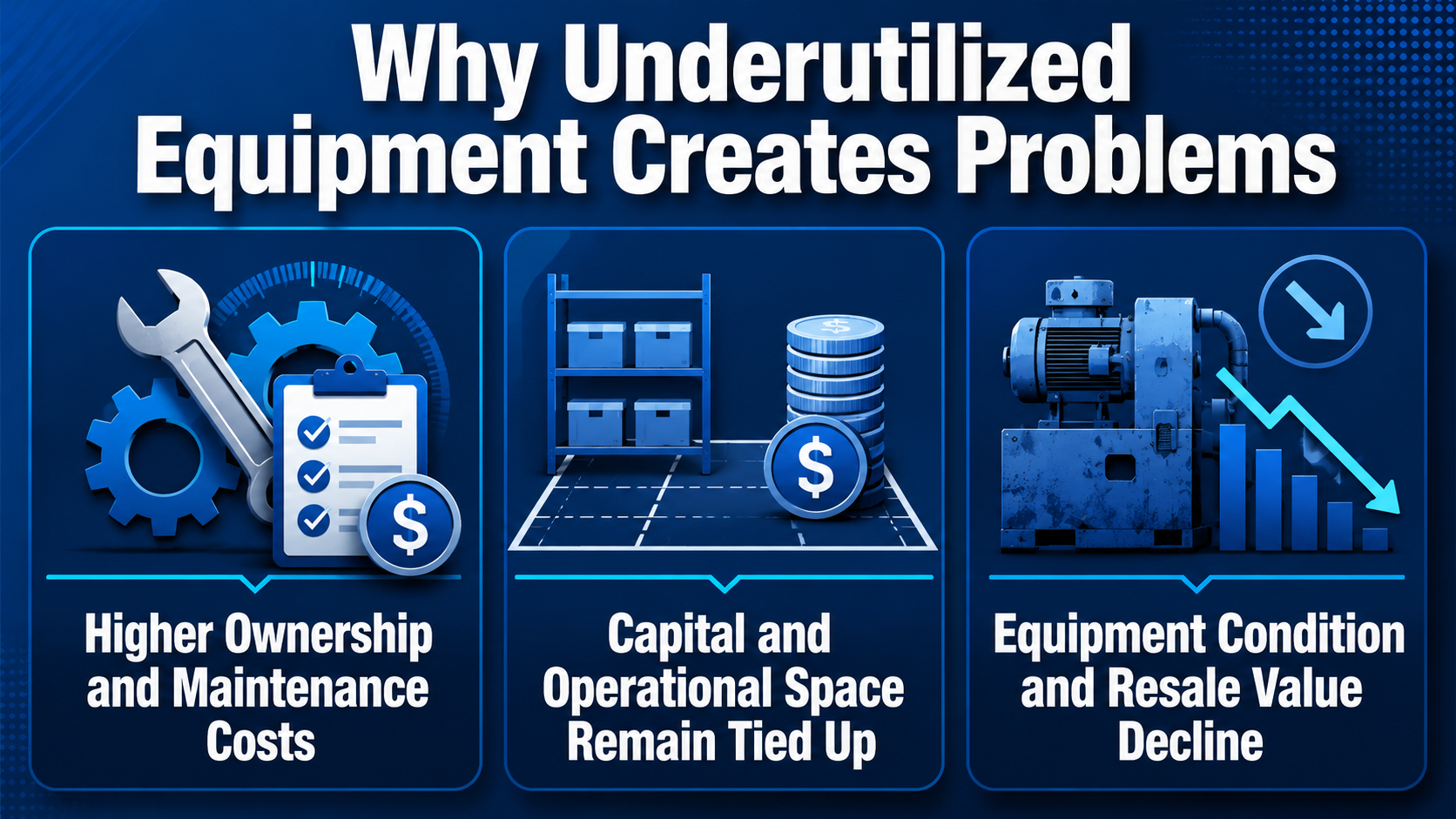
Equipment that remains idle can continue to create financial and operational pressure. Below are the main ways underutilized equipment can affect your business.
1. Higher Ownership and Maintenance Costs
Equipment ownership costs continue even when a machine is rarely used. Businesses may still pay for preventive maintenance, inspections, calibration, storage, licensing, replacement parts, and insurance premiums to keep the asset ready for future use, reducing the financial return it provides.
2. Capital and Operational Space Remain Tied Up
Money invested in idle equipment cannot support active production, facility upgrades, or other revenue-generating business priorities. These opportunity costs can limit financial flexibility and reduce profitability, while inactive machinery occupies space that could support revenue-generating operations.
3. Equipment Condition and Resale Value Decline
Machinery can deteriorate while sitting inactive as moisture, corrosion, dust, aging components, and limited operation affect its condition. Depreciation and lower buyer demand can reduce resale value, affect financial reporting, and leave the business with fewer recovery options.
5 Common Reasons Equipment Becomes Underutilized
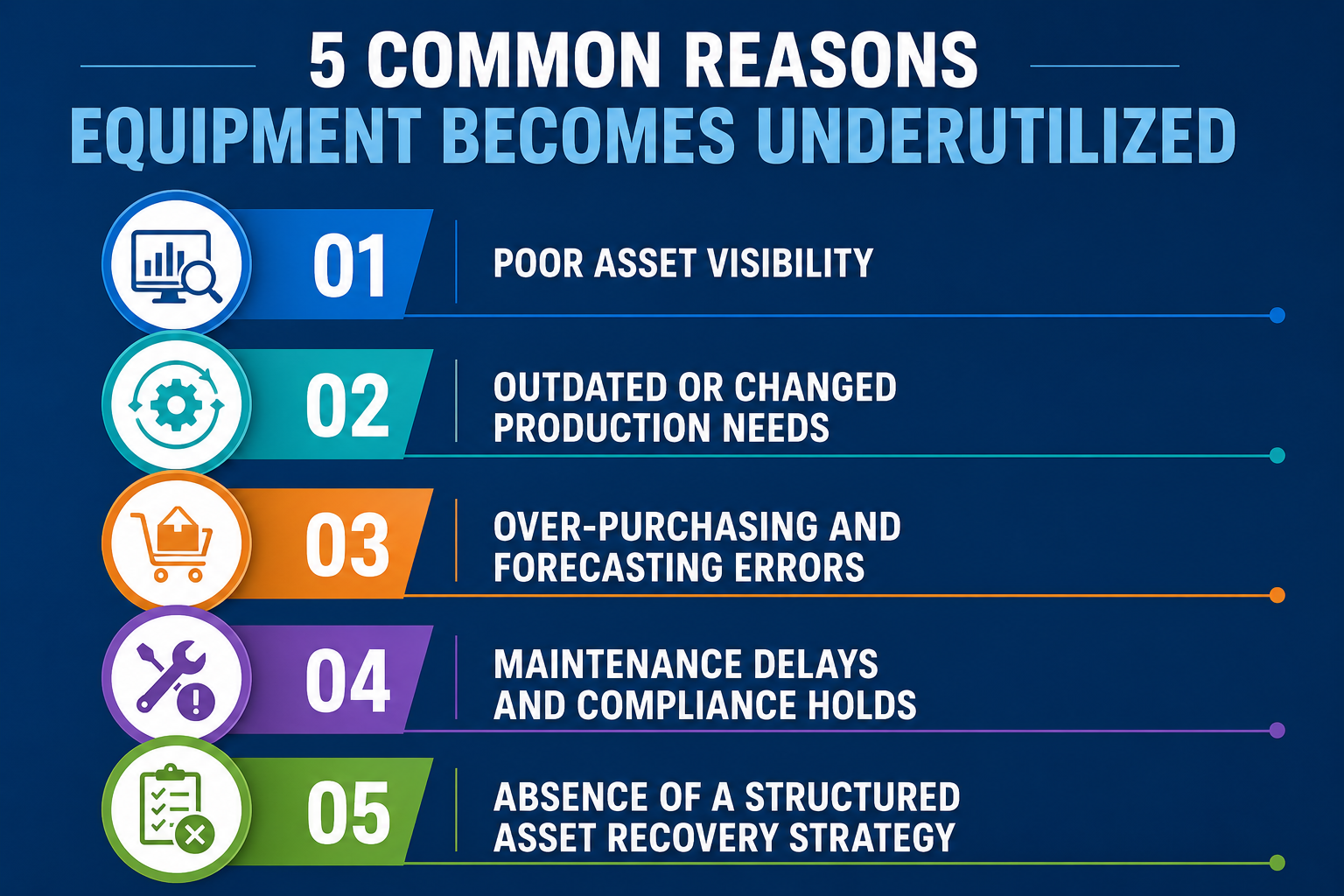
Here are some of the most common reasons valuable equipment becomes underutilized in industrial operations, along with practical steps to return those assets to productive use.
1. Poor Asset Visibility
When equipment is spread across multiple plants or warehouses, teams may struggle to determine what is available, where it is located, and how often it is used. Many companies still rely on manual spreadsheets or disconnected tracking systems, which can create information gaps and outdated records.
Without centralized, real-time asset visibility, teams may buy new equipment unnecessarily while existing assets sit idle and lose value. Limited visibility also makes effective resource management difficult because teams cannot accurately review usage patterns or allocate equipment across facilities.
How To Fix It:
To fix visibility issues, organizations need asset management software for managing machine assets across facilities and accessing real-time data on their location, usage, condition, and availability. A few effective steps include:
- Implement a centralized digital registry that tracks equipment across all sites.
- Assign accountability for maintaining accurate asset records.
- Integrate asset tracking with procurement to prevent duplicate purchases.
- Give operations, maintenance, and procurement teams access to the same equipment data.
- Review available resources, including idle or underused equipment, across all facilities before approving new purchases.
2. Outdated or Changed Production Needs
As production lines change and new technologies are introduced, older equipment may no longer fit the updated process. Machines designed for previous product specifications or legacy systems can lose operational relevance when production requirements shift.
In many cases, the equipment remains functional but cannot support the new workflow without modification. Without a plan to repurpose or redeploy it, underused assets may remain idle while their condition and market value decline.
Evaluating equipment during each production change helps identify what can be retooled, relocated, sold, or recycled. This review can support operational efficiency and prevent functional equipment from becoming a long-term financial burden.
How To Fix It:
To avoid losses when production requirements change, businesses should proactively identify how older equipment can continue to deliver value. Practical steps include:
- Review all existing machinery during process upgrades to spot potential reuse opportunities.
- Assess if older machines can be modified or retrofitted to meet updated production requirements.
- Relocate functional assets to other sites, if any exist, where similar equipment remains in demand.
- For assets that no longer fit, plan timely liquidation or recycling to recover value before they depreciate further.
3. Over-purchasing and Forecasting Errors
When demand projections miss the mark, companies often end up buying more equipment than they require. These forecasting errors can create excess inventory that remains unused when actual production volumes fall below expectations.
The result is capital tied up in machines that deliver little or no return while consuming valuable production or storage space. Businesses may also continue paying for maintenance and inspections on equipment that operates far below max capacity.
How To Fix It:
To prevent forecasting errors from creating excess equipment, businesses should use verified demand, current capacity, and long-term production plans to optimize purchasing decisions. Consider these approaches:
- Compare forecast demand with actual production volumes before approving new equipment purchases.
- Review equipment capacity across all facilities to identify machines that can meet the requirement.
- Include operations, procurement, maintenance, and finance teams in capital purchase decisions.
- Rent or lease equipment when production demand is temporary or uncertain.
4. Maintenance Delays and Compliance Holds
Equipment often becomes idle when maintenance work takes longer than planned or inspection backlogs delay its return to production. Routine repairs, calibration, or servicing may extend into weeks of idle time, leaving valuable machinery unavailable for use.
The financial impact can extend beyond repair costs. National Institute of Standards and Technology (NIST) estimated that preventable maintenance issues accounted for $18.1 billion in downtime losses among U.S. discrete manufacturers in 2016.
In other cases, equipment remains sidelined because of incomplete documentation, expired certifications, failed inspections, or unresolved safety requirements. These maintenance and compliance issues can disrupt production and leave capital tied up in inactive equipment.
How To Fix It:
A structured maintenance program can reduce avoidable downtime, support compliance readiness, and contribute to cost reduction by limiting emergency repairs and extended production delays. Key steps include:
- Create preventive maintenance schedules to reduce unexpected breakdowns and extended repair cycles.
- Digitize service, calibration, and inspection records for easier monitoring and retrieval.
- Coordinate maintenance and compliance activities across departments to minimize overlap or missed deadlines.
- Set automated alerts for upcoming certification renewals to keep all assets operational.
5. Absence of a Structured Asset Recovery Strategy
When there is no structured plan for managing idle equipment and other underutilized resources, assets may remain unused long after the original need has ended. Many organizations delay decisions about redeployment, resale, recycling, or retirement because no clear process or ownership has been established.
This delay can reduce the amount of capital recovered, occupy valuable space, and allow equipment condition and market value to decline. It can also limit opportunities to reuse equipment or recover materials through responsible recycling.
How To Fix It:
A defined asset recovery process ensures that every idle asset is reviewed, evaluated, and addressed within a set timeline. Companies can create more value from idle equipment by:
- Setting utilization thresholds to determine when assets should be redeployed, resold, or scrapped.
- Conducting regular disposition reviews to prevent idle equipment from accumulating across facilities.
- Partnering with trusted industrial value recovery specialists to manage valuation, asset recovery, and compliance.
- Tracking outcomes to measure capital recovered and materials recycled.
How to Identify Underutilized Equipment
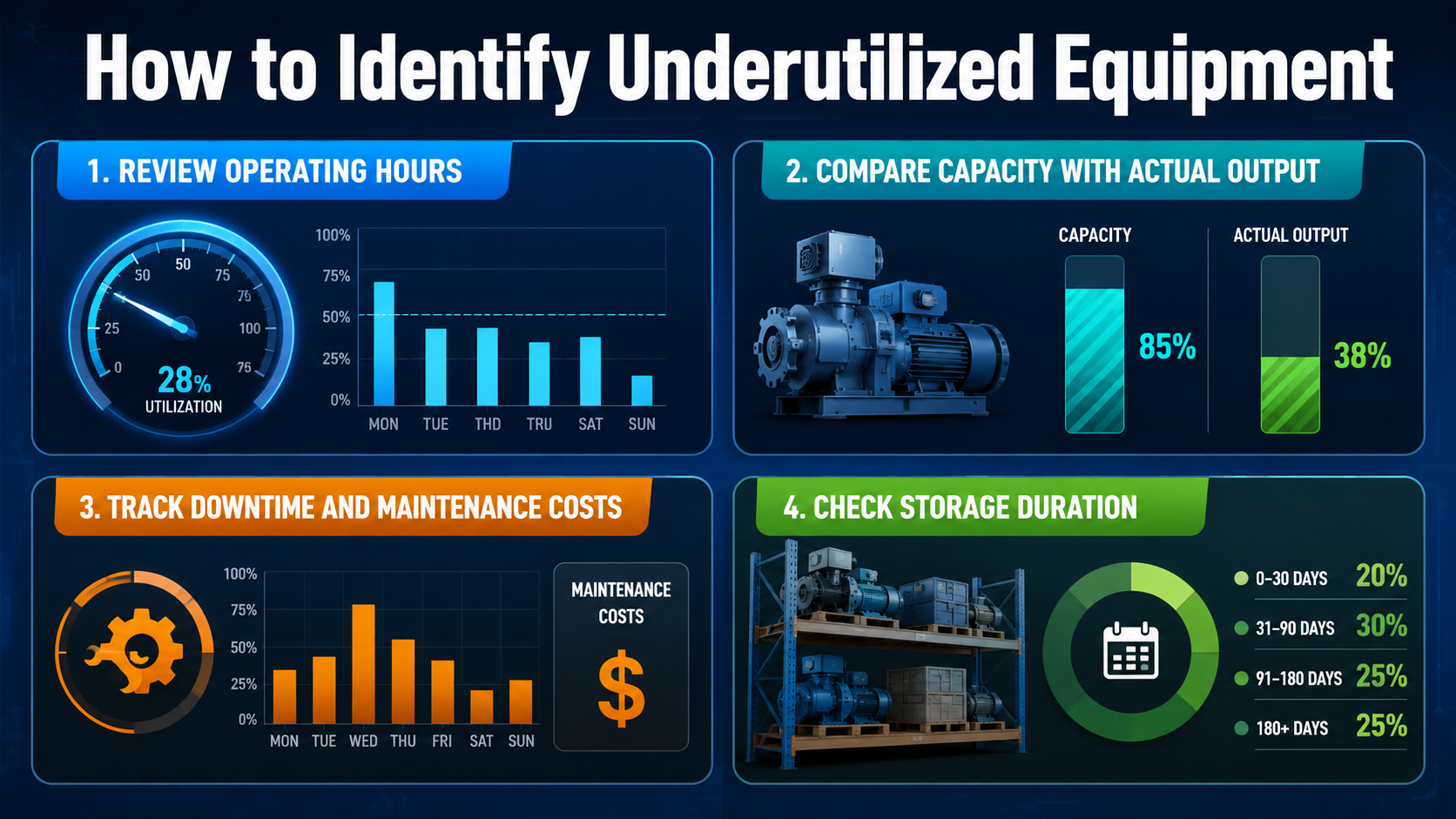
Identifying underutilized equipment requires more than checking which machines appear inactive. The following checks can help you identify equipment that may need to be repaired, redeployed, sold, or recycled.
1. Review Operating Hours
Operating hours show how often equipment is used during a defined period. Calculate the utilization rate by comparing productive operating time with scheduled production hours. A consistently low result may indicate that the machine is underutilized.
Review data across several weeks or months instead of relying on a single production cycle. This helps separate temporary slowdowns from consistent underuse.
2. Compare Capacity With Actual Output
Compare each machine’s production capacity with the actual output it delivers during a defined period. A consistent gap between the two may indicate low productivity or equipment operating below its intended level.
Review the reasons for low output before classifying the asset as underutilized. Material shortages, staffing gaps, long changeovers, quality issues, or production bottlenecks may limit output even when the equipment is still required.
3. Track Downtime and Maintenance Costs
Track how often equipment is unavailable because of repairs, servicing, or inspections. Frequent unplanned downtime can reduce output and prevent the asset from being used as intended.
Review maintenance costs over time to identify rising repair expenses or repeated service needs that may be limiting equipment availability.
4. Check Storage Duration
Review how long unused machinery has remained in storage. Extended storage periods can indicate low demand, limited use, or a change in operational requirements.
Track storage dates to identify equipment that has remained inactive beyond its planned review period.
Turn Underutilized Equipment into Measurable Value with Amplio
AI-Powered Equipment Insights
Amplio’s online platform uses AI agents to analyze equipment lists within minutes and identify assets that may be redeployed, resold, or responsibly recycled. By connecting with ERP systems across multiple facilities, the platform provides precise asset-level visibility, giving teams a strategic advantage when deciding how each asset should be managed.
Redeploy Assets to Where They’re Needed
When equipment still holds operational value, Amplio helps identify facilities where it may support current production needs. This improves resource allocation across the organization, creates cost savings by reducing unnecessary purchases, and extends the useful life of existing machinery.
Liquidate Through a Trusted Private Marketplace
For equipment that no longer serves an internal purpose, selling unused equipment through Amplio’s private marketplace can help you reach vetted industrial buyers and dealers. This approach ensures fast, compliant liquidation with resale values typically 20–50% higher than traditional liquidators.
Responsible Recycling for Scrap Equipment
Assets beyond repair still hold commodity value. Amplio manages scrap inventory through certified recycling partners, recovering material value and supporting your ESG and compliance goals.
Contact us today to see how Amplio can help you redeploy, resell, or recover value from your existing equipment portfolio.