7 Reasons Why Companies Struggle With Surplus Asset Disposal

Surplus asset disposal becomes difficult when companies lack clear visibility, ownership, valuation data, and a structured disposition process.
Many manufacturers, warehouses, and industrial businesses hold unused equipment, spare parts, MRO inventory, raw materials, and machinery longer than needed. These surplus assets tie up working capital, take up valuable space, increase storage costs, and reduce asset recovery value.
This blog explains why companies struggle with surplus asset disposal and how poor surplus asset management can create added costs, missed recovery opportunities, and operational challenges.
What Is Surplus Asset Disposal?
Surplus asset disposal is the structured process of identifying, valuing, redeploying, selling, recycling, or removing assets your business no longer needs.
These assets may include unused machinery, surplus equipment, industrial equipment, spare parts, tools, MRO inventory, raw materials, IT assets, and obsolete equipment.
The goal is to recover value while reducing waste, storage costs, and potential liabilities. A clear disposal process helps you free valuable space, recover capital, support sustainability goals, and meet regulatory requirements for certain assets.
Why Do Companies Struggle With Surplus Asset Disposal?
Surplus asset disposal becomes difficult when unused assets begin affecting costs, space, recovery value, and operational planning.
Below are the main reasons companies struggle with surplus asset disposal.
1. Lack of Visibility Into Surplus Assets

Poor asset visibility is one of the main reasons companies struggle with surplus asset disposal.
In many industrial organizations, ERP (Enterprise Resource Planning), CMMS (Computerized Maintenance Management System), EAM (Enterprise Asset Management), procurement, and finance systems operate separately. Each system may hold part of the asset records, but no single platform gives teams a clear view of ownership, location, condition, or usage.
As a result, idle equipment, spare parts, surplus equipment, and MRO inventory can sit for months without proper documentation. These surplus assets often surface during a plant shutdown, internal audit, or facility relocation.
Poor asset visibility also leads to duplicate purchases. A procurement team may order new equipment while a compatible unit sits unused at another site. This increases storage costs, ties up working capital, and reduces asset recovery value across the business.
2. Unclear Ownership of the Disposal Process

Unclear ownership is another reason companies struggle to dispose of surplus assets.
In many organizations, several teams may be involved with the same asset. Operations may know why it is no longer needed. Maintenance may know its condition. Finance may track book value. Procurement may understand replacement cost.
As Amplio co-founder and CEO Trey Closson put it, surpluses build up across so many cost centers and facilities that “no single person owns the full picture.”
That ownership gap makes it harder to decide what happens next. Without a clear owner, companies miss internal reallocation opportunities, delay selling assets, and lose recovery value.
3. Approval Bottlenecks in Surplus Asset Disposition

Approval bottlenecks are another reason companies struggle to dispose of surplus assets.
Even when teams identify surplus assets, the surplus asset disposition process often takes too long. Pricing reviews, internal approvals, inspection requests, removal planning, and buyer decisions may pass through several departments before teams move forward.
By that point, the asset may have lost market value.
These delays increase storage costs and maintenance costs. According to the Investment Recovery Association, average holding costs for surplus assets and stores inventories equal about 20% of book or fair market value.
Clear review timelines can help teams move surplus assets before resale potential drops.
4. Challenges in Determining Fair Market Value
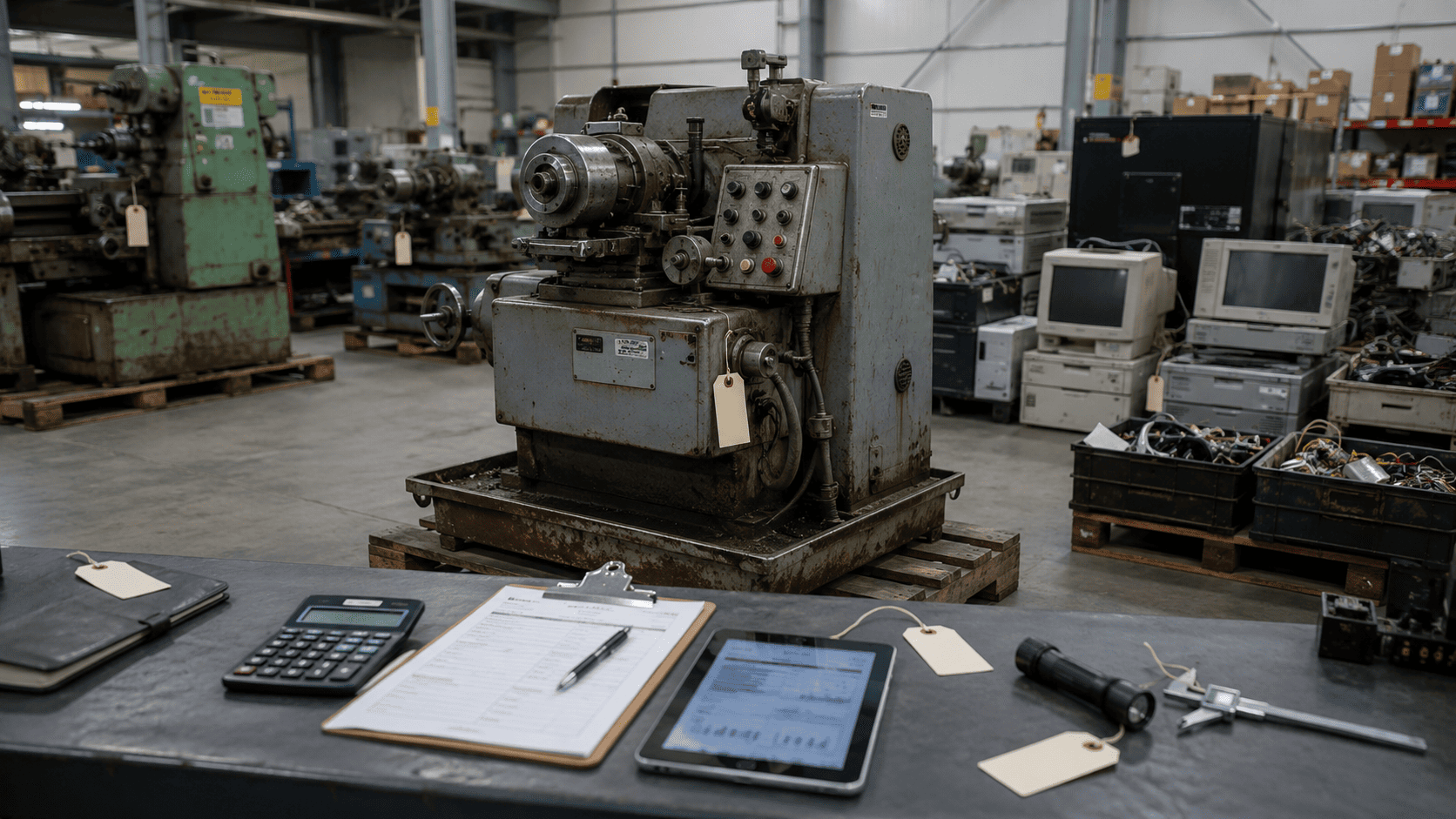
Fair market value can be hard to determine when companies lack current data on asset condition, demand, and resale potential.
Book value does not always reflect what potential buyers will pay. A machine may look valuable in financial records, but its market value can drop if demand is low, parts are outdated, or similar surplus equipment is already available in the secondary market.
The challenge becomes greater with specialized industrial equipment, IT assets, and obsolete equipment. Not all equipment has clear pricing benchmarks. Market dynamics can also shift based on industry demand, supply chain needs, age, brand, and condition.
This uncertainty can delay surplus asset disposition. Companies may overprice assets and fail to attract buyers, or undervalue valuable assets and lose financial returns.
5. Missed Opportunities for Internal Redeployment

Companies often miss internal redeployment opportunities when teams lack visibility across plants, departments, or business units.
A surplus asset in one location may still meet an active need somewhere else. For example, one facility may have an unused motor, pump, or spare part in storage while another site buys the same item as new equipment. This creates unnecessary capital spending.
The issue often comes from disconnected inventory management and asset tracking. Teams may have a clear view of their own site, but limited insight into what other facilities already own.
When companies skip internal reallocation, they may sell, scrap, or store valuable assets that could still support operational needs. This reduces cost savings, increases duplicate purchases, and limits the value of surplus asset management.
6. Fragmented Resale and Disposal Channels

Fragmented resale and disposal channels make surplus asset disposal harder to manage across multiple facilities.
Many companies rely on separate brokers, auction platforms, recyclers, scrap metal buyers, and direct sales contacts. Each route may use a different pricing method, buyer network, approval process, and documentation standard.
This creates inconsistent decisions from one facility to another. One team may sell surplus equipment through an auction, while another may hold similar assets in storage or send them to scrap.
Without a consistent asset disposition strategy, companies lose visibility into pricing, timelines, buyer activity, and asset recovery value. This can create longer disposal cycles, additional costs, and weaker financial returns from surplus assets.
7. Complex Compliance and Environmental Requirements
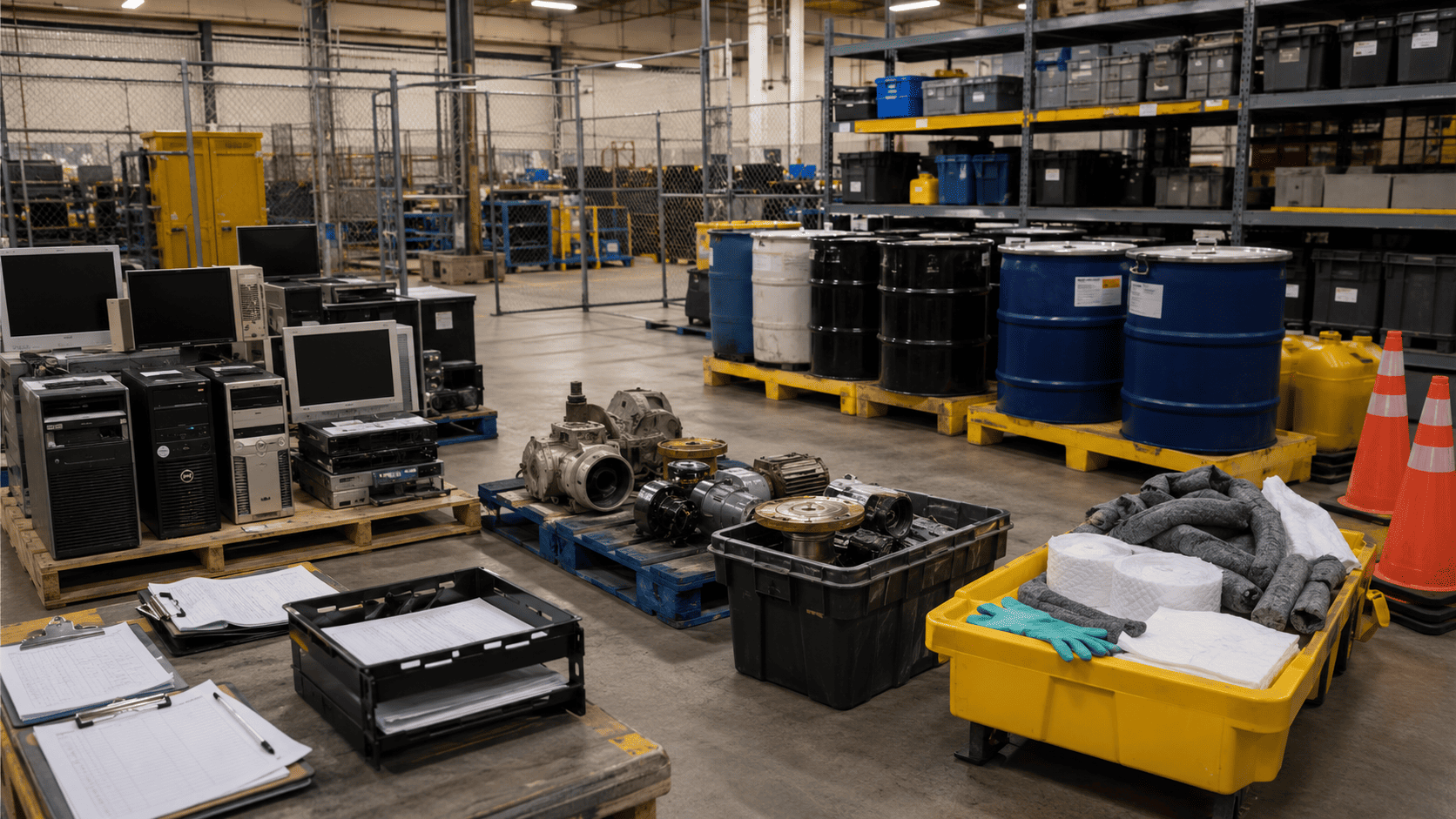
Complex compliance and environmental requirements can slow surplus asset disposal, especially when assets involve data, regulated materials, or industry-specific handling rules.
IT assets may require secure data wiping before resale or recycling. Industrial equipment may contain oils, coolants, batteries, chemicals, or other materials that need proper handling. Some surplus items also require documentation to support audit, safety, and sustainability requirements.
These risks make disposal decisions more difficult for internal teams. A rushed process can create potential liabilities, increase environmental impact, and harm the company's reputation.
Partner With Amplio to Solve Surplus Asset Disposal Challenges
- AI-Driven Surplus Identification Across Sites
Amplio helps you identify surplus assets hidden across your plants, warehouses, and storage areas. Our AI analyzes inventory data, movement patterns, and usage history to flag idle equipment, slow-moving inventory, and obsolete equipment before they lose market value. You gain real-time visibility into what you own and where action is needed first.
- Internal Redeployment Before External Disposal
We review your surplus inventory against active needs across your facilities to identify redeployment opportunities. When a surplus asset can support operations at another site, we help move it there instead of selling it externally. This helps you reduce duplicate purchases, protect working capital, and keep valuable assets in use longer.
- Structured Disposition Through Verified Buyers
For assets that move to market, we manage the entire disposition process through a vetted buyer network and private marketplace built for industrial surplus. We handle valuation, listing, buyer communication, documentation, and logistics under one structured process.
Contact us to gain full visibility into your surplus assets, recover idle capital, and manage surplus asset disposition through a single accountable partner.