Sustainable Procurement Moves That Also Save Money

According to McKinsey research, companies with strong ESG performance reduce procurement and supply chain costs by 5–10%, driven by greater efficiency, lower waste, and improved supplier reliability. They result from deliberate shifts in how organizations manage sourcing, supplier relationships, and operational life cycle decisions, while improving sustainability performance.
For enterprise manufacturers, sustainable procurement is no longer a parallel initiative. It is a strategic lever for lowering the total cost of ownership, improving resilience, and supporting sustainability goals. This matters even more as regulatory, customer, and market expectations around environmental and social performance continue to grow. When procurement and sustainability are aligned, sustainable supply chains perform more reliably, operate at lower cost, and support long-term growth.
This article defines sustainable procurement, outlines cost-saving sustainable procurement best practices that deliver operational and ESG value, and provides a structured roadmap for implementation.
What Is Sustainable Procurement?
International Organization for Standardization (ISO) defines sustainable procurement as “the process of making purchasing decisions that meet an organization’s needs for goods and services in a way that benefits not only the organization but society as a whole, while minimizing its impact on the environment.”
This practice evaluates the procurement process and its impacts to reduce harm, minimize waste, and enhance long-term value for an organization.
Sustainable procurement rests on three core pillars:
1. Environmental impact
This pillar seeks to shrink the ecological footprint of every purchase. It covers selecting low-carbon, recycled, or renewable materials and optimizing resource efficiency. It also involves reducing waste streams, lowering resource consumption, and embedding circular economy principles to conserve natural resources, support environmental protection, and lower disposal costs. These actions also contribute to broader environmental sustainability goals.
2. Social responsibility
This pillar ensures that sourcing decisions uphold ethical practices, labor standards, and worker well-being while supporting local communities. It involves vetting suppliers for fair wages, safe working conditions, supplier diversity, and inclusion. It also includes strengthening stakeholder well-being to mitigate risks and reinforce corporate social responsibility.
3. Corporate governance
This pillar embeds transparency, accountability, and compliance into procurement. It includes establishing clear policies, supplier codes of conduct, risk-management frameworks, and audit processes to enforce ethical sourcing, compliance with environmental laws, and consistent, auditable decision-making. These structures help organizations integrate sustainability into procurement in a consistent and measurable way.
Benefits of Sustainable Procurement

By integrating green procurement practices into your sourcing strategy, you can achieve the following outcomes:
1. Cost Savings & Total Cost of Ownership (TCO)
Evaluating purchases over their full lifecycle reduces maintenance, energy, and disposal expenses. According to the World Economic Forum’s report, sustainable procurement practices can cut procurement-related costs by 9–16% through improved resource efficiency and waste reduction.
This approach also lowers the total cost of ownership by extending asset life, minimizing unplanned replacement expenses, and improving efficiency across procurement operations. Over time, that creates measurable economic benefits for manufacturers operating under cost pressure.
2. Risk Reduction & Compliance
Incorporating environmental and social criteria into supplier selection helps you mitigate risks tied to regulatory fines, supply interruptions, and rising environmental compliance costs. Procurement teams also need to consider environmental factors that can affect supplier stability, sourcing continuity, and compliance risk over time.
A survey conducted by McKinsey & Company found that 83% of organizations that improved their environmental footprint and resilience reported fewer supply chain disruptions over two years. This underscores how responsible procurement strengthens business continuity, protects brand value, and helps organizations stay aligned with changing environmental regulations.
3. Reputation & Talent Attraction
Demonstrating a firm commitment to sustainable procurement strengthens stakeholder trust, market positioning, and brand reputation. Enterprises recognized for strong ESG credentials often build deeper supplier relationships and stronger customer loyalty.
This focus also supports employer branding, helping attract professionals who value corporate social responsibility.
4. Operational Efficiency & Financial Upside
Sustainable procurement cuts waste-disposal fees, energy consumption, and late-delivery penalties. In many cases, this also results in reduced energy costs across procurement and facility operations. When combined with secondary-market sourcing and asset recovery, it unlocks working capital and strengthens cash flow.
Executing these sustainable practices effectively can curb rising operating expenses—driven by raw-material, water, and carbon costs— and, according to McKinsey research, affect operating profits by as much as 60 percent.
5 Sustainable Procurement Practices That Reduce Costs
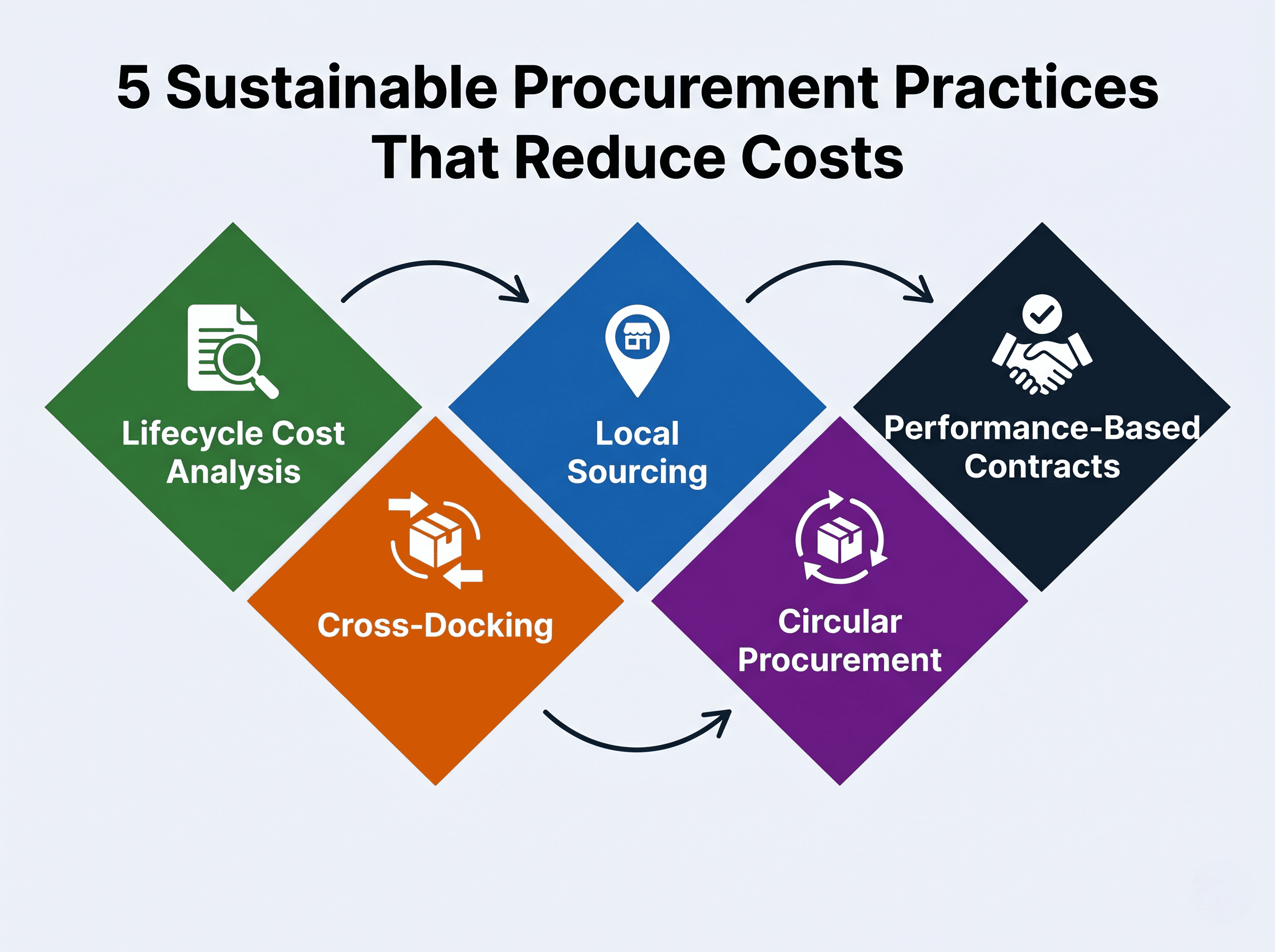
Green initiatives are integral to industrial operations, with procurement playing a key role in driving sustainable development, long-term value, and stronger supply chain management. Below are the targeted green procurement practices your procurement team can implement to reduce costs and drive long-term value:
1. Lifecycle Cost Analysis
Right-sizing specifications prevents over-purchasing and aligns procurement spend with actual usage. This responsible procurement approach cuts inventory carrying costs and reduces obsolescence risk.
By evaluating the total cost of ownership, teams make better purchasing decisions and identify durable, efficient assets that deliver best-in-class value across their lifecycle. This also makes it easier to prioritize sustainable products with lower long-term operating costs.
2. Cross-Docking
Cross-docking transfers inbound shipments directly to outbound carriers, eliminating the need for long-term storage. This approach reduces warehouse energy consumption and labor costs, improving your total cost of ownership.
By cutting inventory dwell time and packaging requirements, cross-docking advances sustainable procurement objectives and lowers carbon emissions across your distribution network, all while saving you money.
3. Local Sourcing
Local sourcing brings suppliers closer to your manufacturing sites, trimming freight costs, lead times, and your carbon footprint. Prioritizing nearby vendors in your sustainable procurement operations reduces transportation‐related emissions and fuel consumption.
This green procurement practice bolsters resilience by diversifying the supplier base, strengthening community partnerships, and helping combat climate change by reducing supply chain length. It can also create a competitive advantage by improving supply responsiveness and reducing sourcing delays.
4. Circular Procurement
Integrating circular procurement into your sourcing strategy extends asset lifecycles, reduces dependency on virgin materials, and lowers the total cost of ownership.
This sustainable procurement practice decreases waste-disposal expenses and raw-material spend, improving your procurement efficiency, while supporting your responsible procurement objectives and advancing industrial symbiosis based on a circular economy model.
5. Performance-Based Contracts
Performance-based contracts tie supplier compensation directly to agreed sustainability and cost objectives. By linking payments to measurable outcomes—such as kilowatt-hours saved or waste diverted—you shift performance risk to vendors and secure verifiable results.
This practice embeds accountability into your sustainable procurement operations and helps ensure sustainable solutions deliver real cost savings.
Strategic Roadmap for Implementing Sustainable Procurement
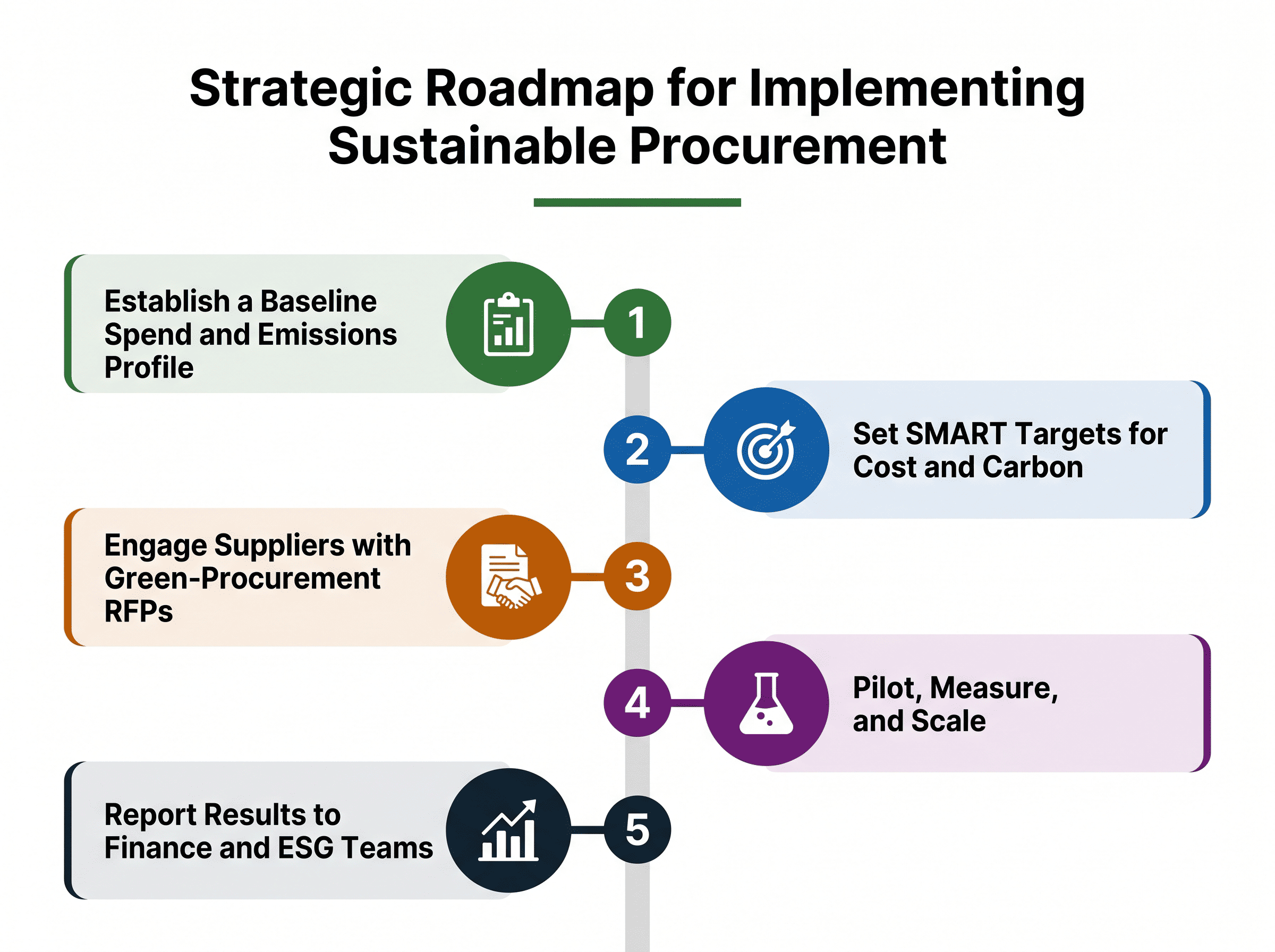
A clear roadmap turns a sustainable procurement strategy into action. Follow these five steps to embed procurement sustainability and green procurement practices into your operations and improve sustainability outcomes.
1. Establish a Baseline Spend and Emissions Profile
You begin by auditing your current procurement spend and mapping associated carbon emissions. Capture data on supplier spend categories, energy use, and waste streams. This baseline informs every next move and highlights high-impact areas for sustainable procurement operations.
2. Set SMART Targets for Cost and Carbon
Translate your baseline into specific, measurable goals. Define targets for procurement cost reduction, CO₂ per dollar spent, and waste diversion. Ensure each objective is time-bound and trackable, so you can demonstrate the benefits of sustainable procurement to stakeholders and support long-term economic sustainability.
3. Engage Suppliers with Green-Procurement RFPs
Develop Request for Proposals (RFPs) that include sustainability criteria, such as recycled content, energy efficiency ratings, and circular supply chain commitments. Share these requirements with existing and potential suppliers to drive responsible procurement and support more sustainable sourcing across the supply base. Evaluate responses not just on price, but on lifecycle impact and ESG credentials.
4. Pilot, Measure, and Scale
Run small-scale pilots on priority categories—like energy-efficient equipment or remanufactured parts, or partner with circular economy partners—to test your sustainable procurement practices. Measure results against your SMART targets and gather supplier feedback. Use lessons learned to refine processes before scaling across the full supply base.
5. Report Results to Finance and ESG Teams
Compile your performance data into concise reports for finance, operations, and ESG leadership. Highlight cost savings, emissions reductions, and circular-economy achievements. Regular reporting embeds accountability and secures ongoing support for your sustainability in procurement initiatives. It also helps leaders connect procurement improvements to broader business outcomes such as resilience, margin protection, and revenue growth.
How Amplio Supports Sustainable Procurement
Amplio enhances sustainable procurement by providing secondary-market sourcing of certified surplus assets, eliminating the need for new capital investments and significantly reducing embodied carbon. By utilizing a vetted network of industrial sellers, you gain immediate access to high-quality pre-owned equipment. This approach supports green procurement, circularity, and sustainable purchasing practices while preserving budget for core initiatives for many industries.
Contact us now to integrate turnkey secondary-market sourcing and comprehensive asset recovery into your sustainable procurement strategy.