7 Strategies to Reduce CapEx in Manufacturing

Introduction
High capital costs remain a constant challenge for manufacturers. Every major purchase, from production lines to automation systems, requires a large financial commitment that can slow growth and limit flexibility. In a competitive market, tying up too much capital in new assets often leaves little room for innovation or adaptation.
Many manufacturers are now rethinking their spending approach. Instead of automatically purchasing new equipment, they are finding smarter ways to make the most of existing assets.
In this article, we will explore seven practical and easy strategies manufacturers can use to reduce capital expenditure while improving operational efficiency and resource utilization.
What is CapEx(Capital Expenditure)
Capital expenditure, or CapEx, refers to the money a company invests in acquiring, upgrading, or maintaining long-term physical assets that support its operations. In manufacturing, this typically includes major purchases such as manufacturing machines, production lines, plant expansions, or automation systems.
These investments are essential for growth and efficiency, but they also require significant upfront spending and careful planning. Unlike operational expenses, which cover day-to-day costs, CapEx focuses on assets that deliver value over several years.
Managing these investments wisely helps manufacturers balance financial stability with production capacity and long-term competitiveness.
7 Effective Strategies to Reduce CapEx in Manufacturing
.png)
Here are seven effective strategies manufacturers can use to reduce capital expenditure while maintaining operational efficiency.
1. Asset Redeployment
Asset redeployment is one of the most effective strategies for reducing capital expenditure in manufacturing. It involves transferring idle or underused equipment from one facility to another instead of purchasing new machinery. Many manufacturers already own valuable assets that remain in storage or sit unused due to changes in production demand, but don’t have centralized inventory visibility.
By identifying and reallocating these assets, companies can eliminate duplicate spending, increase the return on investment for existing equipment, and promote more sustainable operations. For example, a compressor from a closed production line can be reassigned to another facility where it is needed immediately.
This simple yet powerful approach allows organizations to make full use of their current resources before committing to new capital investments.
2. Surplus Sourcing
When redeployment is not an option, sourcing surplus equipment can be the next best move.
Surplus sourcing involves purchasing verified pre-owned or refurbished machinery as a cost-effective alternative to buying new, often available through industrial surplus networks that ensure quality and traceability. Many manufacturers, distributors, and OEMs regularly release surplus inventory that remains in excellent working condition but is no longer needed for their operations.
When acquired through verified suppliers or OEM networks, surplus equipment offers the same level of quality and reliability as new assets at a significantly lower cost.
By integrating surplus sourcing into their procurement strategy, manufacturers can reduce upfront capital spending while maintaining high operational standards and equipment performance.
3. Equipment Leasing
Flexible ownership models such as equipment leasing offer manufacturers a practical way to stay efficient without overcommitting capital. Instead of paying the full cost of machinery upfront, companies can lease or rent high-value equipment for a specific period.
This approach helps preserve cash flow, making it easier to allocate funds to other critical areas like maintenance, workforce development, or process improvements.
Leasing also provides the flexibility to upgrade as technology evolves, ensuring operations remain current without the long-term financial burden of ownership.
For example, a manufacturer facing a seasonal increase in production can lease additional packaging or assembly machines to meet short-term demand, then return them once operations stabilize.
By using leasing as part of their asset strategy, manufacturers can balance performance needs with financial efficiency and maintain agility in a changing market.
4. Standardization
Standardization is a straightforward yet powerful way to control capital costs in manufacturing. It involves using uniform machinery, components, and systems across multiple facilities. When equipment models and processes are consistent, operations become easier to manage, train, and maintain.
This approach reduces the need for specialized spare parts, lowers maintenance complexity, and enables group buying, which further drives down costs. Standardization also streamlines sourcing since procurement teams can focus on fewer, more reliable supplier relationships instead of managing many different vendors.
Beyond cost savings, it strengthens operational consistency, ensuring that production lines run smoothly regardless of location. Along with standardization, maintaining existing equipment is another simple way to control spending.
5. Liquidation- Based Sourcing
Liquidation sourcing, like surplus sourcing, gives manufacturers access to high-quality equipment at a fraction of the original cost.
Many industrial enterprises regularly liquidate assets that remain in excellent working condition, a practice supported by trusted B2B liquidation and industrial liquidation auctions. These assets, though pre-owned and used, come with complete documentation.
Purchasing through verified liquidation channels allows manufacturers to acquire premium equipment quickly and affordably.
Beyond cost savings, liquidation sourcing provides traceability and compliance assurance. It also supports a circular supply chain by extending the useful life of industrial assets that might otherwise go unused.
When sourced through verified asset recovery and liquidation specialists, manufacturers can unlock hidden savings across the supply chain and strengthen their overall capital efficiency.
6. Preventive Maintenance
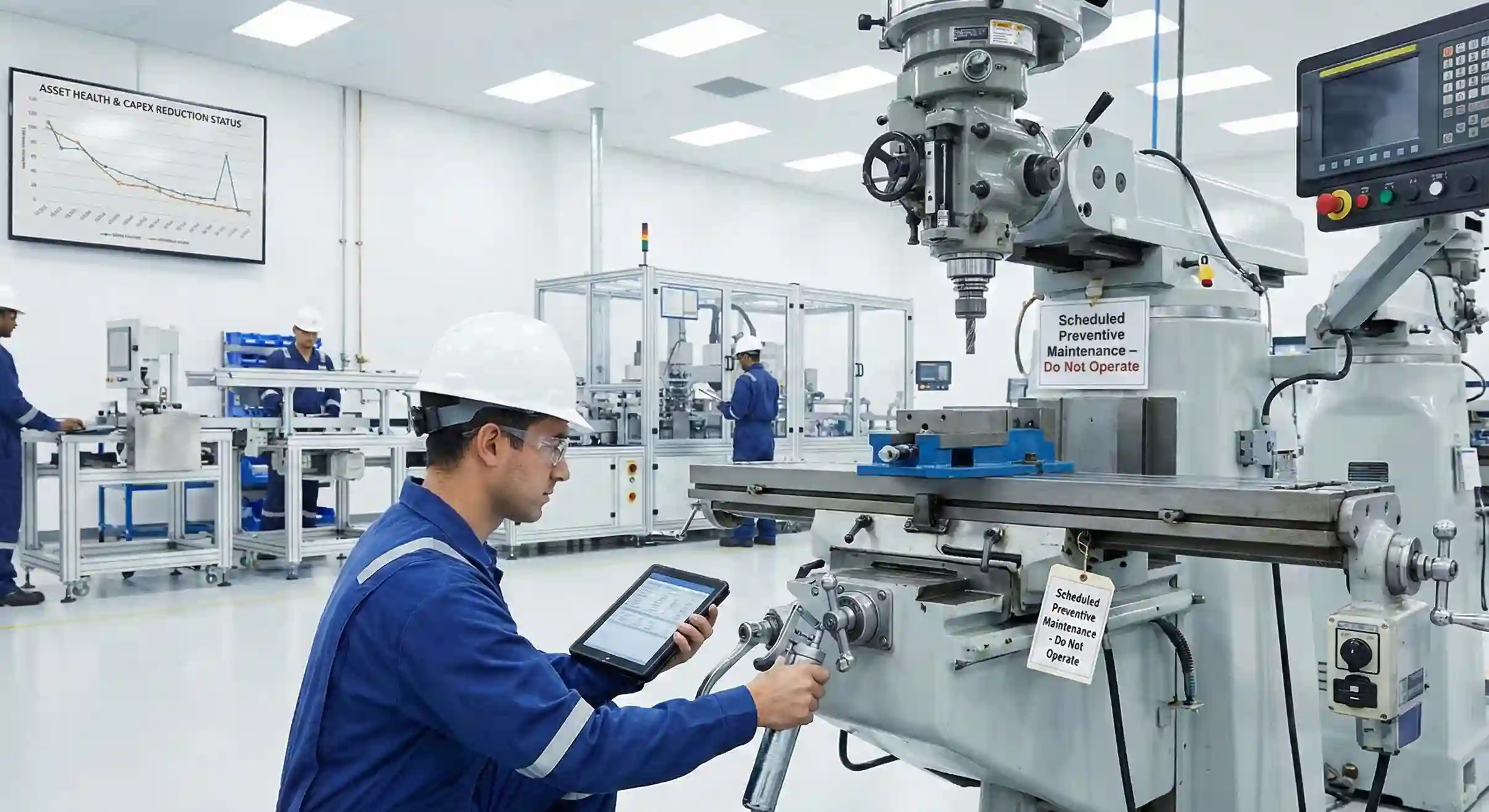
Preventive maintenance is one of the simplest ways to reduce long-term capital spending. By performing regular inspections, servicing, and part replacements, manufacturers can extend the lifespan of critical assets and delay the need for costly replacements.
A well-maintained machine not only performs better but also reduces the likelihood of sudden breakdowns that can halt production and lead to emergency capital purchases.
Modern approaches, such as condition monitoring and usage tracking, make preventive maintenance more effective by identifying potential issues before they escalate. This proactive mindset turns maintenance into a strategic investment rather than a routine expense, helping manufacturers preserve asset value and operational stability.
While maintenance preserves current assets, coordinated procurement helps reduce future investments.
7. Bulk Procurement
Bulk procurement is another useful strategy to reduce capital expenditures. It focuses on combining equipment and material purchases across multiple departments or facilities to gain stronger negotiating power.
By consolidating orders, manufacturers can secure better pricing, reduce vendor complexity, and lower the overall per-unit cost of capital purchases.
Centralized procurement platforms make this process even more efficient by giving decision-makers full visibility into enterprise-wide capital equipment purchasing needs.
This level of coordination prevents duplicate orders, improves supplier relationships, and helps standardize equipment specifications across locations.
How Amplio Helps Reduce CapEx in Manufacturing
Verified Sourcing
Amplio connects manufacturers with a trusted network of verified surplus and engineered equipment suppliers. Every listing is documented, compliant, and performance-tested, allowing buyers to acquire high-quality assets at a fraction of replacement cost. The result is lower spending and better capital utilization across sites.
AI- Supported Asset Redeployment and Surplus Liquidation
Amplio enables manufacturers to capture full lifecycle value from every asset. Its AI tools identify idle or underused equipment, surface redeployment opportunities, and manage liquidation through its private liquidation marketplace. This approach minimizes waste, prevents unnecessary CapEx, and ensures traceable recovery across the network.
Join Amplio and start optimizing your capital investments today by sourcing smarter, redeploying faster, and recovering more value from every asset across your operations.