Strategic Liquidation: What It Is and How to Create a Winning Plan

Strategic liquidation is employed by an enterprise to systematically recover value from idle stock, improve cash flow, and reduce holding costs. It also supports operational efficiency by freeing warehouse space, lowering insurance expenses, and reallocating resources to higher-priority areas.
Unlike unplanned or emergency liquidation, which often forces rapid sales at steep discounts, strategic liquidation follows a deliberate plan. You decide what to sell, where to sell it, and at what price — all while managing brand impact and regulatory compliance.
In this article, you’ll learn exactly what strategic liquidation holds, when to consider it, and how to create a winning plan.
What Strategic Liquidation Means for Enterprises

Strategic liquidation is the controlled, planned process of selling assets or inventory with the goal of maximizing financial gains. It is not a quick clearance sale — it is a structured business decision supported by data, market research, and defined objectives.
It can be best described as following:
- The process is proactive — you decide when and how to liquidate based on business priorities, not external pressure.
- It is data-driven — informed by asset valuations, demand forecasts, and market pricing trends.
- It is market-aware — aligned with current buyer demand, competitive activity, and channel dynamics.
When to Consider Strategic Liquidation For Your Business
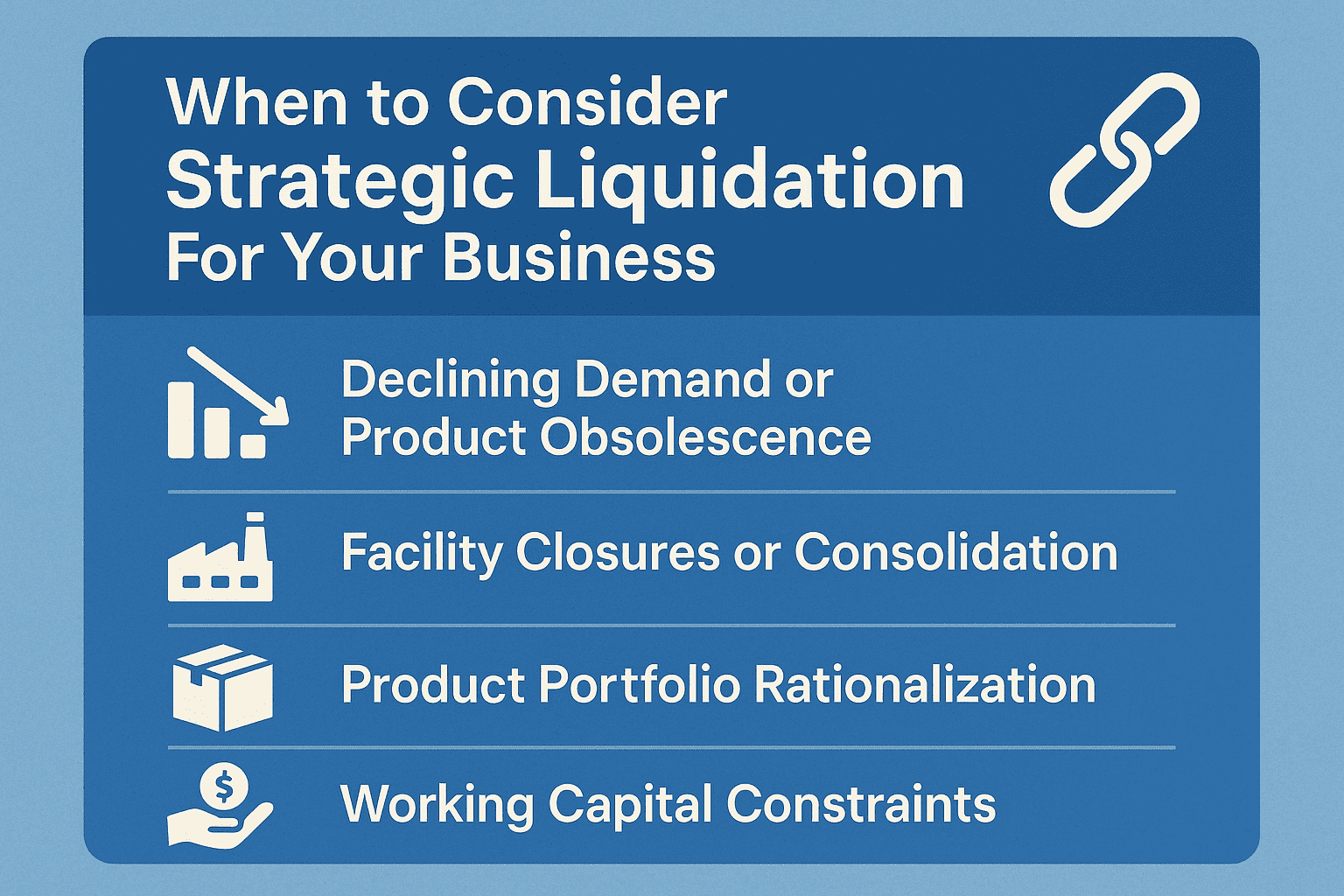
Strategic liquidation works best when it is planned in response to specific business conditions. Acting early helps you recover more value, maintain market control, and avoid the deep losses that come with reactive sales. Recognizing the right time to initiate the process is critical for maximizing results. Here are a few instances which might signal you to undergo strategic liquidation.
- Declining Demand or Product Obsolescence
When market interest in a product falls or a newer version replaces it, the remaining stock becomes harder to sell. Technological obsolescence, shifting customer preferences, or updated industry regulations can all trigger this decline. Holding onto such items increases carrying costs and raises the risk of full write-offs, making early action essential to limit losses.
- Facility Closures or Consolidation
When a warehouse, plant, or distribution center is shut down or merged with another location, the assets stored there need to be cleared through a structured plant liquidation. This can include finished goods, raw materials, spare parts, and equipment. Delays in moving or selling these items increase storage expenses and risk damage during relocation, making timely action critical.
- Product Portfolio Rationalization
When a company streamlines its product lineup to focus on higher-margin or better-performing items, certain Stock Keeping Unit (SKUs) are discontinued. These products may still hold value but no longer align with the core business strategy. Clearing them from inventory through a strategic liquidation reduces complexity, frees up warehouse space, and allows resources to be redirected to products with stronger growth potential.
- Working Capital Constraints
When cash flow is tight, holding excess assets or slow-moving stock limits the funds available for essential operations. Inventory, equipment, or other idle resources can represent significant value locked outside your active cash cycle. Converting these assets into liquid funds helps reduce financial pressure and supports ongoing operational needs.
Key Steps to Create a Winning Strategic Liquidation Plan
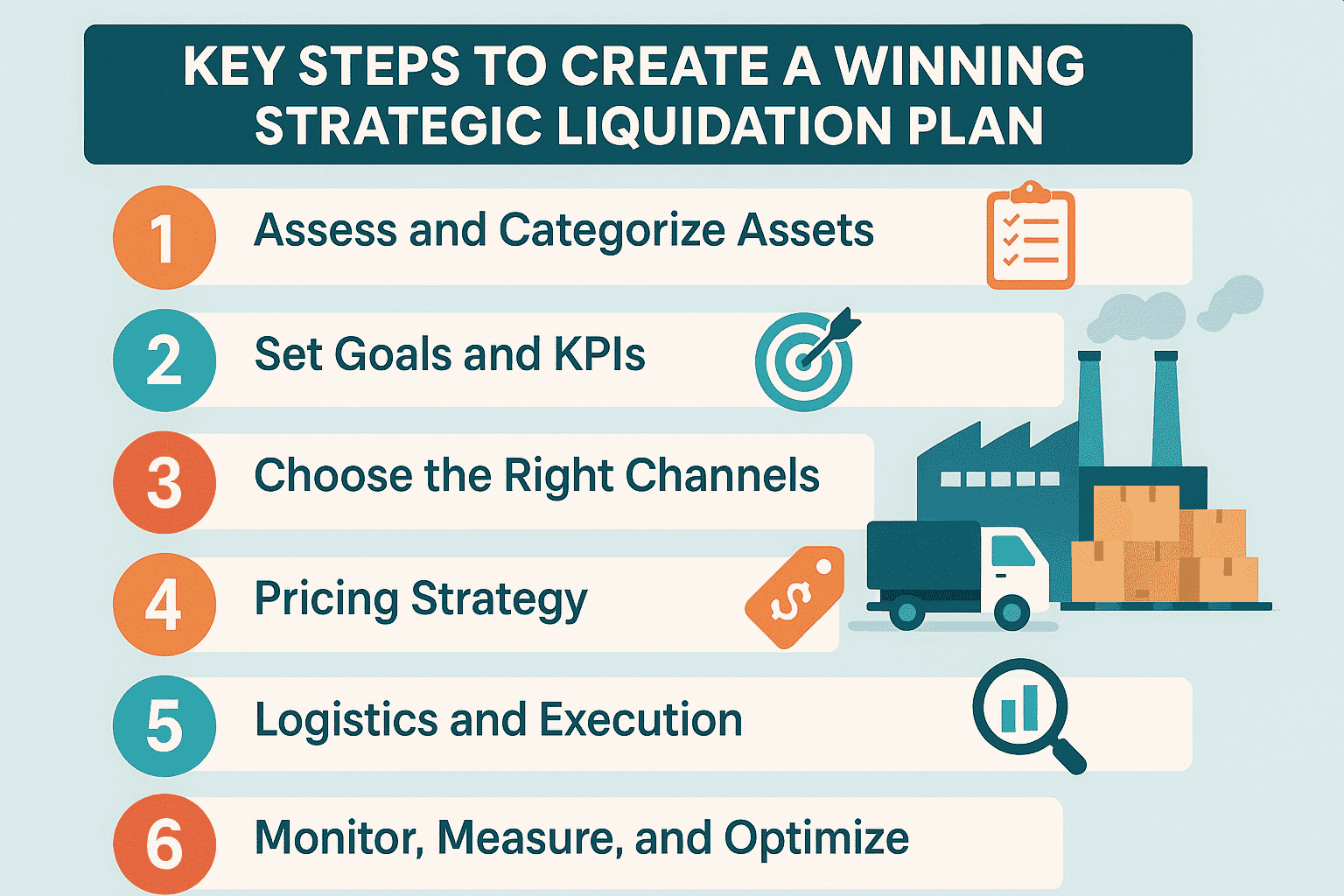
A successful strategic liquidation is based on accurate information, defined objectives, and a focus on maximizing returns while minimizing operational disruption.
Step 1 — Assess and Categorize Assets
The process begins with knowing exactly what assets you have and understanding their market potential. Begin with a detailed inventory audit to verify quantities, storage locations, and current condition. Determine the market value of each asset and group them according to condition, demand potential, and resale viability. Use data from your enterprise resource planning (ERP) system or warehouse management system (WMS) and merge the data under a single centralized inventory management tool to ensure accuracy and create a solid foundation for the liquidation plan.
Step 2 — Set Goals and KPIs
Define clear objectives before starting the liquidation process. Establish revenue targets to guide pricing and sales efforts. Set recovery rate benchmarks to measure how much value you regain compared to the original asset cost. Determine timeline goals to ensure the process moves efficiently and avoids unnecessary storage costs. Tracking these key performance indicators (KPIs) keeps the plan focused and provides measurable results for future improvement.
Step 3 — Choose the Right Channels
Select sales channels that align with your asset type, target buyers, and revenue goals. Direct sales to existing customers can often generate higher returns and move inventory quickly, especially if you have established relationships. For broader reach, work with authorized liquidation partners like Amplio who have expertise in secondary markets or specialize in business-to-business (B2B) resale. Their market insights, buyer networks, and experience in handling surplus goods can help you achieve faster sales while protecting brand value.
Note: Before liquidating, assess if the equipment or machinery can be redeployed internally. This keeps assets productive, avoids unnecessary purchases, and maximizes value without entering the resale market.
Step 4 — Pricing Strategy
Set pricing that maximizes recovery while staying competitive. Use a structured approach to ensure each item is positioned for the best possible return. There are multiple ways of pricing your equipment:
- Tiered discounting — Adjust prices based on asset age and condition to balance speed of sale with value recovery.
- Bundling — Package low-demand products with higher-demand items to improve sell-through rates and move slow stock.
- Market benchmarking — Compare against current secondary market prices to remain competitive and avoid undervaluing assets.
Step 5 — Logistics and Execution
Plan the movement of assets to minimize costs and ensure timely delivery to buyers or work with a third party logistic service. Consolidating shipments can improve efficiency, reduce freight expenses, and simplify handling. This approach also lowers the risk of damage by reducing the number of touchpoints during transportation.
Step 6 — Monitor, Measure, and Optimize
Lastly, track key performance indicators (KPIs) such as recovery rate, time-to-sale, and cost savings to evaluate the effectiveness of the liquidation plan. Review the data to identify patterns, bottlenecks, and opportunities for improvement. Document lessons learned and apply them to future liquidation cycles to increase efficiency, maximize returns, and strengthen decision-making.
Conclusion
Strategic liquidation delivers the best results when it is proactive, data-driven, and aligned with your business goals. By following a structured process — from asset assessment to performance monitoring — you can recover maximum value, reduce holding costs, and maintain operational efficiency.
Partner with Amplio for Strategic Liquidation
Full Visibility Across All Sites
Gain complete control over your surplus assets across different facilities with our centralized inventory management tool. Track, manage, and update inventory across multiple locations from a single platform.
Data-Driven Pricing Decisions
Use Amplio’s advanced data analytics to set competitive prices, optimize recovery rates, and make informed sales decisions.
Direct Access to Qualified Buyers
Leverage Amplio’s online platform to connect with a curated network of vetted industrial buyers. This targeted approach expedites transactions and improves capital recovery timelines.
If you are planning to liquidate plant assets, our strategic liquidation services can help you manage the process and recover more value.
Contact us now to develop and execute a strategic liquidation plan that supports your business goals.