Factory Liquidation: A Comprehensive Guide for Supply Chain and Plant Managers

Factory liquidation is the process of selling manufacturing equipment and other plant contents, either as a partial selloff or as part of closing an entire facility. It typically happens during plant closures, restructuring, downsizing, or consolidation. If you are a supply chain or plant manager leading a plant liquidation, knowing the right options, best practices, and common risks is key to keeping the work controlled and compliant.
But this is not just about selling fast. The real goal is to recover value while working against tight timelines. The faster you need to move equipment, the harder it is to protect pricing, so success depends on balancing speed, recovery, and execution under pressure.
Whether you are preparing for factory closing auctions or exploring a private B2B sale, a structured plan helps you make better decisions, reach qualified buyers, and complete the close with fewer surprises.
When is Factory Liquidation Necessary?
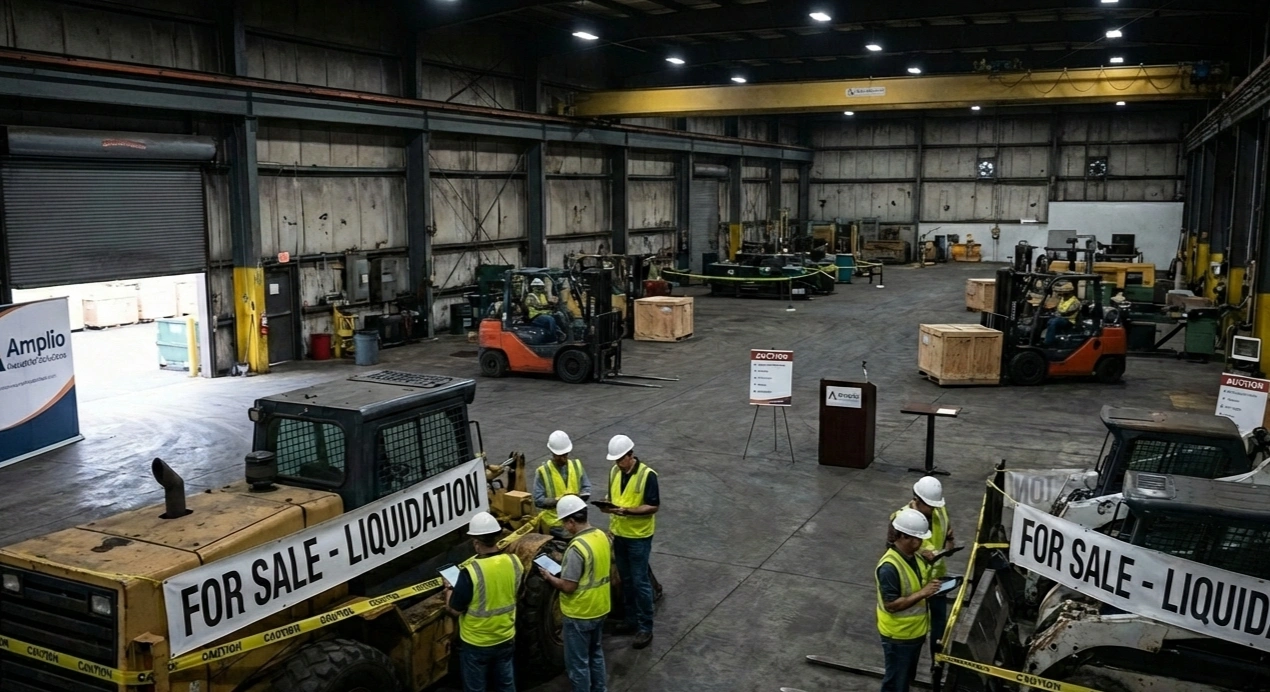
This type of plant closeout becomes necessary when a facility needs to reduce, replace, or remove items that no longer support current production goals.
Common scenarios include:
- Factory closure: When a site is permanently shutting down due to market changes, cost pressures, or shifts in production strategy, and plant contents must be sold to recover value.
- Mothballed plants: When a plant is placed into long-term idle status, assets often remain unused for extended periods. Without active production, equipment deteriorates, documentation goes stale, and recovery value erodes, making liquidation a necessary step rather than a future option.
- Retooling for new product lines: When existing tooling or production lines cannot support new products, upgrades often create excess items that need to be sold or redeployed.
- Consolidation or footprint reduction: When operations move to fewer locations, redundant lines, warehouse systems, and plant support equipment are left behind and require disposition. During plant consolidation, teams may need to decide which assets should be transferred to another facility, sold, or removed.
- Bankruptcy or insolvency: When an organization cannot meet financial obligations, an orderly sale may be required to generate cash, pay creditors, or complete a structured wind-down.
- Excess stock or surplus equipment: Over time, plants accumulate idle items that take up space, tie up capital, and increase storage and maintenance costs, making a selloff the practical next step.
Types of Factory Liquidation
Complete Liquidation
Complete plant liquidation is the process that includes the sale or disposal of everything, from machinery and production lines to office furniture and warehouse shelving. It occurs when a facility is permanently closed, and a comprehensive asset disposition is required.
Partial Liquidation
It happens when only a portion of the assets is sold, such as industrial surplus, while the facility continues operating in some capacity.
Exploring Your Factory Liquidation Options
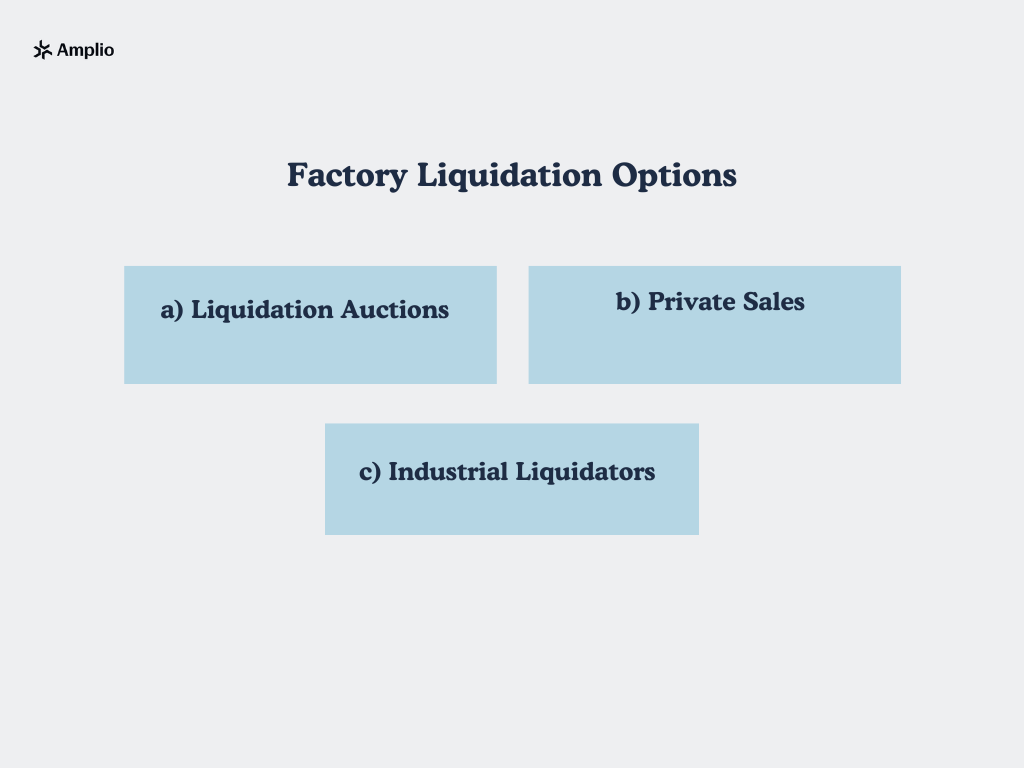
There are several ways to liquidate manufacturing plant equipment and assets, and the right approach depends on your timeline, the type of items you are selling, and how much control you need over pricing and terms.
a) Liquidation Auctions
Liquidation auctions are a common option when a plant needs to move assets quickly, especially during a restructuring, downsizing, or a closure. Auctions can run onsite or online and typically work best for high-volume materials categories with broad buyer demand.
Pros
- Speed: Auctions are designed for fast turnover, which helps when you need to liquidate manufacturing equipment on a tight schedule.
- Clear process: Rules, terms, and timelines are usually defined upfront, making it easier to manage execution across multiple asset lots.
Cons
- Price uncertainty: Final sale value depends on bidder participation and market conditions, so recovery can vary widely.
- Limited control: Once bidding begins, you have less control over pricing and pacing.
- Fees: Auction fees and related costs can reduce net recovery.
b) Private Sales
Private sales involve selling industrial assets directly to a buyer or through a brokered B2B liquidation process. This route is often best when you are selling specialized machinery, entire production lines, or assets that require the right buyer match to achieve the best possible return.
Pros
- More control over pricing and terms: You can negotiate pricing, payment terms, and removal requirements instead of relying on open bidding.
- Targeted buyers: You can focus outreach on buyers who specifically need your equipment, which can improve close rates.
- Higher recovery potential: For niche machinery, private sale deals often outperform auctions when executed well.
Cons
- Longer timeline: Finding the right buyer can take longer, which is risky if you are trying to sell a closed factory under time pressure.
- Smaller buyer pool: Highly specialized industrial tools can limit demand.
- Complexity and legal work: Contracts, warranties, and closing requirements can increase effort and legal costs for the seller.
c) Industrial Liquidators
Industrial liquidators specialize in plant liquidation services, helping companies sell equipment, machinery, inventory, and plant support equipment through structured processes. This option is typically chosen when a company needs speed, expertise, and fewer internal headaches during an manufacturing plant liquidation, especially for larger or multi-category selloffs.
Pros
- Expertise in valuation and appraisals: Liquidators understand secondary-market pricing and can position assets to maximize recovery.
- Buyer network: Established buyer relationships help match resources to demand, which matters when who buys shut down plants is a key concern.
- Operational efficiency: They handle marketing, buyer management, and logistics so your team can stay focused on site priorities.
- Market-based pricing: Strong knowledge of current market conditions helps reduce the risk of undervaluation.
Cons
- Fees: Service fees reduce gross proceeds, although the tradeoff is typically less internal workload and better execution discipline.
Step-by-Step Guide to Factory Liquidation
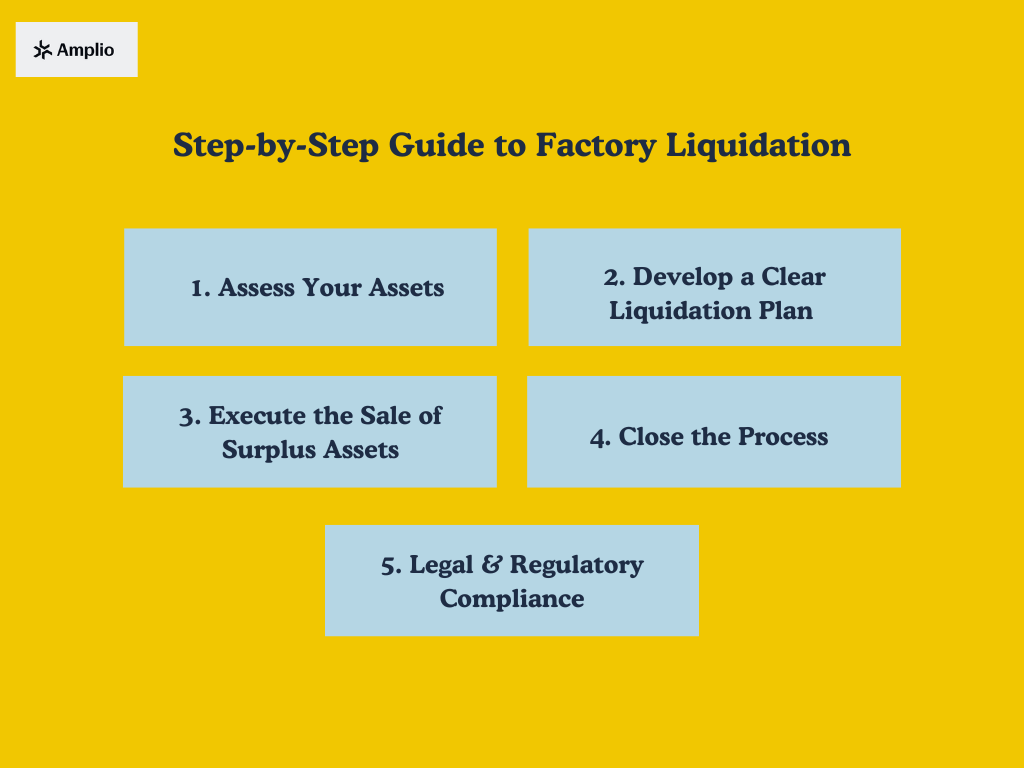
Liquidating a factory is a complex process, but breaking it down into clear steps can help you manage it efficiently. Here’s how you can approach it:
1. Assess Your Assets
Before you begin, evaluate everything you plan to sell so you know what you have, what it is worth, and what it will take to move it. This typically includes machinery, equipment, inventory, and any other items tied to the facility.
- Complete appraisals : Bring in a qualified appraiser for high-value machinery, specialized equipment, and full production lines. Accurate valuation helps prevent underpricing and gives you a stronger foundation for setting expectations internally.
- Document condition and usability: Note age, maintenance history, runtime hours, and operational status. Equipment that is well maintained and clearly documented usually sells faster and commands stronger offers.
- Build a detailed inventory list: Create a complete inventory of items for sale, including surplus stock, tooling, spare parts, and materials. Include serial numbers, specs, photos, and location within the site to reduce buyer back-and-forth.
- Account for total cost to sell: Factor in rigging, removal, storage, transport, and any refurbishment needs. These costs directly affect the net return and can influence whether an auction, direct sale, or managed approach makes the most sense.
2. Develop a Clear Liquidation Plan
A clear liquidation plan is what keeps a factory or plant liquidation on track when timelines are tight and multiple teams are involved. The stronger your plan, the easier it becomes to manage risk, control costs, and protect the best possible return from surplus inventory.
a) Set Clear Objectives:
Start by defining what success looks like. Do you need a fast sale to meet closure deadlines, or are you prioritizing value recovery over a longer window? Your objective will influence pricing, sequencing, and whether you choose an auction-style approach or a more controlled sale process.
b) Choose Your Plant Liquidation Method:
Match the method to your resources mix and schedule. Auctions can move large volumes quickly, private sales can work well for specialized machinery or production lines, and working with experienced liquidation partners can reduce internal workload when the scope is large.
Consider time constraints, buyer demand, and how much control you need over terms, pricing, and removal requirements.
c) Create a Timeline:
Set realistic deadlines for each phase of the liquidation. A clear timeline helps you stay on track and manage expectations.
- Include time for appraisals, asset marketing, the sale itself, and removal of items.
- Factor in potential delays, such as buyer negotiations or unforeseen legal issues.
d) Budget for Expenses:
Make sure you account for all the costs involved in the liquidation. This includes auction fees, legal costs, transport, storage, and any fees paid to liquidation professionals.
Having a detailed budget prevents unexpected expenses from derailing your plan.
e) Communicate with Stakeholders:
Ensure that all parties involved, such as employees, investors, or legal advisors, are kept informed of your liquidation plan.
3. Execute the Sale of Surplus Assets
Once you’ve chosen the method, it’s time to execute the sale and secure the best possible return for your stock.
a. If Using an Auction:
Industrial Auctions are a fast way to sell assets, but you need to ensure you're reaching the right buyers.
- Choose a well-known platform or a reputable auction house with a strong track record. Knowing what to look for when choosing an auction partner can help you assess whether they have the experience and buyer reach needed for the sale.
- Market the auction effectively, with clear descriptions and images of the inventory, to spark interest from the right audience.
- Set realistic reserve prices to avoid undervaluing your assets while still encouraging bids.
b. For Private Sales:
A private B2B sale offers more control over the process and can yield higher returns for specialized equipment.
- Negotiate directly with buyers to ensure you're getting the best terms. Be firm but flexible when it comes to price, payment terms, and the timeline for asset removal.
- Identify buyers who are genuinely interested and capable of completing the transaction on time. Whether they’re industry competitors, resellers, or wholesalers, ensure their reputation and financial stability.
c. Using Professional Industrial Liquidators:
Professional industrial liquidators provide an excellent solution for businesses looking to manage complex asset sales. They offer a vast network of pre-vetted industrial buyers and sellers, ensuring that your inventory are sold to the right market. They will guide the entire process and handle logistics, functioning as an in-house disposition team. From valuation to sale, they ensure a streamlined experience and maximum recovery value.
4. Close the Process
Once the sale is complete, the final step is to close out the project and make sure every detail is documented and resolved.
- Collect payments and clear obligations
Confirm that payments are received in full and on time. Then settle any outstanding obligations tied to the items sold, such as liens, service contracts, or removal-related charges, so finance can close the books cleanly.
- Remove all items and document removal
Ensure that everything included in the sale is removed from the site on the agreed schedule. This includes production equipment, surplus stock, and any remaining site contents. Keep clear documentation for each pickup or shipment, including buyer confirmation and removal records, to reduce future legal or financial risk.
- Close contracts and finalize paperwork
Formally close all agreements connected to the sale, including terms with auction providers, direct buyers, and any partners supporting the project. Collect final signatures, confirm completion milestones, and file documentation so the closeout is audit-ready.
5. Legal & Regulatory Compliance
When liquidating a factory, it's crucial to adhere to various legal and regulatory requirements to ensure a smooth process and avoid potential liabilities. Ensure that you meet all local, state, and federal regulations governing the sale of factory equipment.
Below are key regulatory compliances that you need to consider:
1. WARN Act (Worker Adjustment and Retraining Notification Act)
The WARN Act mandates that employers with 100 or more full-time employees provide at least 60 days' written notice before a plant closing or mass layoff affecting 50 or more employees at a single site. This notice must be given to affected employees, the state dislocated worker unit, and the local chief elected official.
- Purpose: To give workers and their families time to adjust to the prospective loss of employment and to seek and obtain other employment or enter skill training or retraining programs.
- Penalties for Non-Compliance: Employers who fail to provide the required notice may be liable to each affected employee for back pay and benefits for the period of the violation, up to 60 days.
2. Environmental Compliance
Factory closures often involve the disposal of hazardous materials and waste. Compliance with environmental regulations is crucial to prevent contamination and avoid legal issues. It is important to check the regulations set by the Environmental Protection Agency (EPA) to ensure proper disposal practices for different business sectors are followed.
- Key Regulations:
- Resource Conservation and Recovery Act (RCRA): Governs the disposal of solid and hazardous waste.
- Clean Water Act (CWA): Regulates discharges of pollutants into U.S. waters.
- Clean Air Act (CAA): Controls air pollution on a national level.
- Responsibilities:
- Conduct environmental assessments to identify potential hazards.
- Properly dispose of hazardous materials.
- Obtain necessary permits for waste disposal and emissions.
3. Local Regulations
In addition to federal laws, local regulations may impose additional requirements during liquidation of plant assets.
- Examples:
- Zoning Laws: Determine how property can be used after closure.
- Building Codes: Ensure structures are safe for demolition or repurposing.
- Local Business Licenses: May need to be canceled or transferred.
Note: It's advisable to consult with local government agencies or legal counsel to understand and comply with all applicable local regulations.
Challenges in Factory Liquidation
.webp)
1. Market Volatility
Economic fluctuations can significantly affect the demand for used industrial site contents. Past results aren’t particularly indicative of future success, and machinery that sold for hundreds of thousands of dollars recently can fail to sell entirely a year later.
The market for facility liquidations is not hugely liquid, so even the non-participation of a single important buyer can dramatically affect your eventual recovery rate. If you set a reserve price for your auction, you can mitigate against selling items for next to nothing, but that opens you to the risk that items don’t sell at all.
2. Equipment Age
Older equipment often fetches lower bids, which is why keeping tabs on your aged inventory levels and condition can steer timely liquidation decisions. Complete information, and particularly pictures of the physical resources and the facility as a whole, can fight against this, as a well-maintained facility increases buyer confidence.
Particular industries such as pharmaceuticals and food and beverage also have an easier time selling their used materials for higher prices because they have strong reputations for clean and well-maintained factories.
3. Financial Depreciation
Typically, the assets involved in a partial or complete liquidation haven’t been fully depreciated by the finance team when it comes time to move them. Especially for a large liquidation, this can result in a large hit to a company’s balance sheet as all the surplus items are written off at once.
Amplio offers finance and supply chain teams multiple ways to combat this tricky challenge – for instance, we have multiple deal structures that can enable depreciation schedules to be stretched out over time, softening the blow to finances in any given quarter.
4. Logistics and Removal of Assets
Coordinating the removal of large operational resources and machinery can be time-consuming and costly – particularly if you’re trying to arrange multiple private sales with different liquidators.
This is another aspect of liquidation that Amplio helps make go right – we only work with vetted, reputable buyers, and we work to minimize the number of unique buyers for each liquidation. In addition, we govern the fulfillment process and make sure that everything goes right and is done in a compliant manner. All your team has to do is get the items packed up for shipment, and we handle the rest.
Conclusion
Factory liquidation is a time-sensitive project that works best when it is planned like one. With accurate asset documentation, realistic timelines, and the right sale approach, plant and supply chain teams can recover value while reducing delays and risk.
If you are planning a shutdown, consolidation, or large-scale asset selloff, Amplio’s plant liquidation services can help you recover value, coordinate buyers, and keep the process structured, compliant, and easier to manage. Contact us now.