Material Disposition – What It Is and the Best Channels to Handle It

Introduction
In asset-intensive industries, idle machinery, surplus spare parts, and obsolete IT equipment silently drain capital, clutter warehouses, and slow down operations. Companies often struggle to recover value from these underused assets without disrupting workflows.
Effective material disposition solves this problem by strategically redeploying, reselling, or responsibly disposing of surplus materials, unlocking cash, optimizing inventory, and boosting operational efficiency.
In this article, we will explore what material disposition entails and the best channels to handle it for maximum efficiency.
What Is Material Disposition?
Material disposition is the strategic process of managing surplus, obsolete, or end-of-life assets to recover value, divert waste, and optimize operations.
Why Material Disposition Is Necessary

Effective material disposition is essential for industrial organizations holding surplus inventory, excess assets, or obsolete equipment.
Key reasons why businesses should prioritize material disposition include:
- Recover Capital: Idle machinery, overstocked spare parts, and outdated equipment tie up working capital that could be reinvested elsewhere.
- Reduce Carrying Costs: Idle inventory incurs on average ~21% carrying costs annually, draining resources.
- Optimize Storage: Free up valuable warehouse or plant space by clearing surplus and obsolete inventory.
- Reduce Waste: Properly managing obsolete or excess materials prevents unnecessary disposal costs and environmental impact.
- Maintain Compliance: Ensure adherence to environmental, safety, and regulatory standards when disposing of assets.
- Enhance Operational Efficiency: By identifying and strategically handling surplus or obsolete assets, businesses streamline workflows and minimize equipment idletime.
Best Channels To Handle Material Disposition
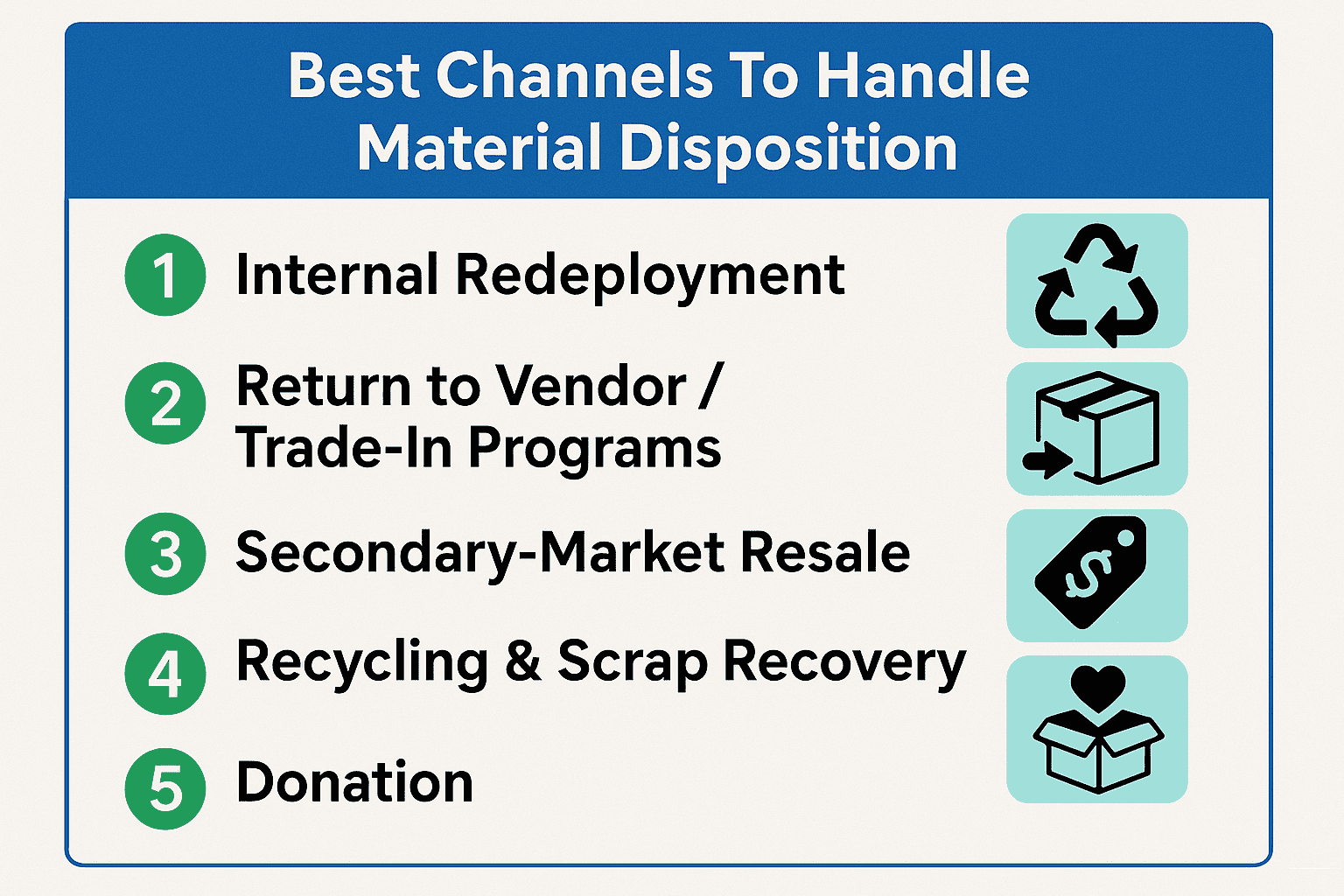
Effective disposition of surplus inventory and excess assets unlocks capital, frees space, and promotes sustainability for industrial organizations.
Below are the top channels to use for material disposition.
1. Internal Redeployment
Internal redeployment involves reallocating surplus or underused assets within the company. This approach saves costs, avoids unnecessary purchases, and retains asset value within the organization. Effective redeployment relies on centralized inventory visibility and structured exchange systems to ensure assets are moved quickly to departments or locations where they are most needed.
2. Return to Vendor / Trade-In Programs
Return-to-vendor or trade-in programs allow companies to send old or outdated equipment back to suppliers in exchange for credit or discounts. This is ideal during IT upgrades or industrial equipment replacements. It provides immediate value, streamlines surplus management and ensures responsible disposal, and ensures that assets are handled responsibly by experienced vendors.
3. Secondary-Market Resale
Secondary-market resale is the most popular channel for material disposition that enables organizations to sell surplus assets externally via B2B excess marketplaces, asset recovery specialists, or auctions. This channel works best for functional items with market demand, helping convert idle inventory into cash while clearing storage space.
Key steps include:
- Assessing asset condition
- Providing proper documentation
- Ensuring compliance with regulatory standards
4. Recycling & Scrap Recovery
Recycling and scrap recovery focus on salvaging raw materials from scrap inventory. This channel is suitable for equipment that can no longer be used, enabling material recovery for industrial upcycling while supporting environmental responsibility.
Best practices include:
- Using certified recyclers
- Properly segregating materials
- Maintaining accurate records of disposal
5. Donation
Donating surplus assets to nonprofits, schools, or community organizations is an effective way to handle items with low resale value but still functional. Donations enhance corporate social responsibility, can provide tax benefits when properly documented, in compliance with tax regulations, and promote sustainability. Ensure that items are safe, functional, and accompanied by proper documentation before transferring to external recipients.
Strategic Tips for Effective Material Disposition
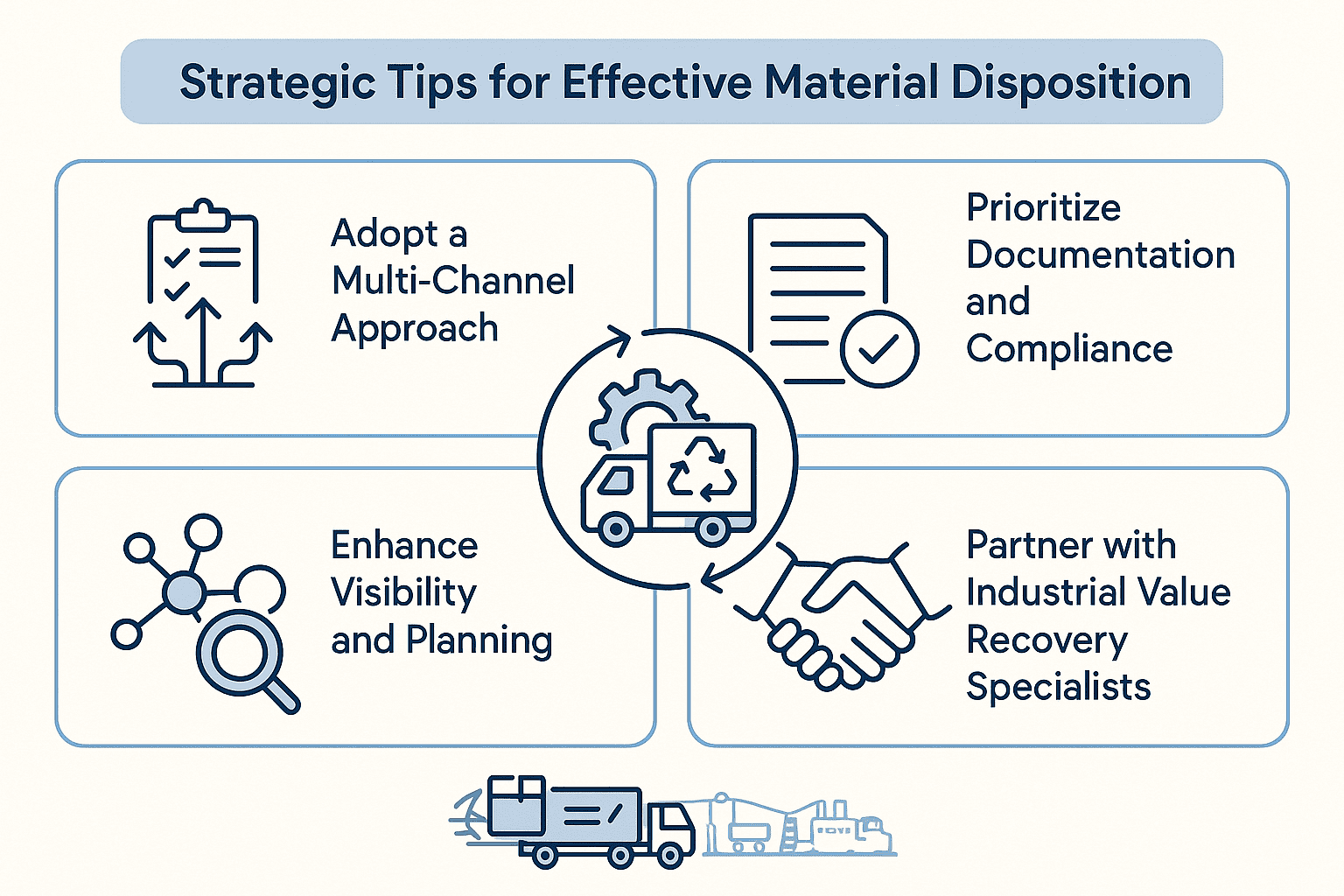
Maximizing the effectiveness of your material disposition requires a strategic approach. Here are essential tips every organization should follow to ensure optimal value recovery, compliance, and operational efficiency.
Adopt a Multi-Channel Approach
Effectively managing surplus or end-of-life assets requires leveraging multiple material disposition channels. Combining internal redeployment, liquidation, recycling, and donation ensures maximum value recovery, reduces storage costs, and supports operational efficiency. A diversified strategy allows organizations to handle assets based on condition, demand, and business priorities.
Prioritize Documentation and Compliance
Maintaining accurate records and adhering to legal, safety, and environmental regulations is critical. Proper documentation ensures transparency, protects against liability, and demonstrates compliance during audits. This approach not only safeguards the organization but also strengthens stakeholder trust in responsible asset management practices.
Enhance Visibility and Planning
Centralized asset tracking and inventory visibility enable informed decision-making. By knowing what assets exist, where they are located, and their condition, businesses can plan redeployment, resale, or recycling proactively. Improved visibility reduces idle inventory, minimizes waste, and optimizes operational efficiency across all facilities.
Partner with Industrial Value Recovery Specialists
Lastly, many enterprises lack dedicated disposition teams, often assigning the responsibility to procurement. When dealing with high-value or large quantities of industrial machinery and equipment, this can quickly become complex and resource-intensive. Partnering with industrial value recovery specialists, such as Amplio, ensures that assets are managed efficiently, compliant standards are met, and maximum value is recovered. These experts bring market knowledge, access to qualified buyers, and streamlined processes, enabling your organization to convert surplus assets into cash while minimizing operational risk.
How Amplio Helps You Handle Material Disposition
Internal Redeployment of Assets
Amplio’s centralized inventory management tool enables our clients to seamlessly relocate idle or underutilized inventory to areas of high demand within their organization. Our tool helps you in reducing unnecessary purchases, minimizing downtime, and ensuring operational assets are always delivering value across their plants, warehouses, and facilities.
Secondary-Market Resale
Amplio online platform helps our clients convert surplus or obsolete assets into cash by connecting them with qualified buyers via structured B2B marketplaces. Our processes ensure proper evaluation, documentation, and compliance, maximizing returns while efficiently clearing storage space.
If surplus materials are taking up space or tying up value, our material disposition services can help you determine the right next step.
Contact us today to implement an efficient material disposition strategy aligned with your business goals.