Inactive Inventory — Identify, Manage, and Reduce

Introduction
Inventory that sits untouched for months—or even years—silently drains resources. Often referred to as inactive inventory, this stock has not been utilized or sold within a set time frame and delivers no return on the capital invested in it.
Beyond the financial impact, it occupies valuable warehouse space, drives up carrying costs, and increases the likelihood of obsolescence or product deterioration.
In the following sections, we’ll discuss how to identify inactive inventory before it becomes a liability and explore proven strategies that can help your business recover value, reduce waste, and strengthen overall supply chain efficiency.
What is Inactive Inventory
Inactive inventory is stock that remains unused or unsold for a significant period, draining capital and occupying space without contributing to operations.
Inactive inventory category differs from slow-moving inventory, which is utilized but at a slower rate, and from excess inventory, which exceeds forecasted demand. When inactivity extends beyond a set threshold — often 90 or 180 days — items risk becoming obsolete, losing value, and requiring disposal.
Typically, inventory moves through stages:
active → slow-moving → excess → inactive → obsolete.
Common Causes of Inactive Inventory
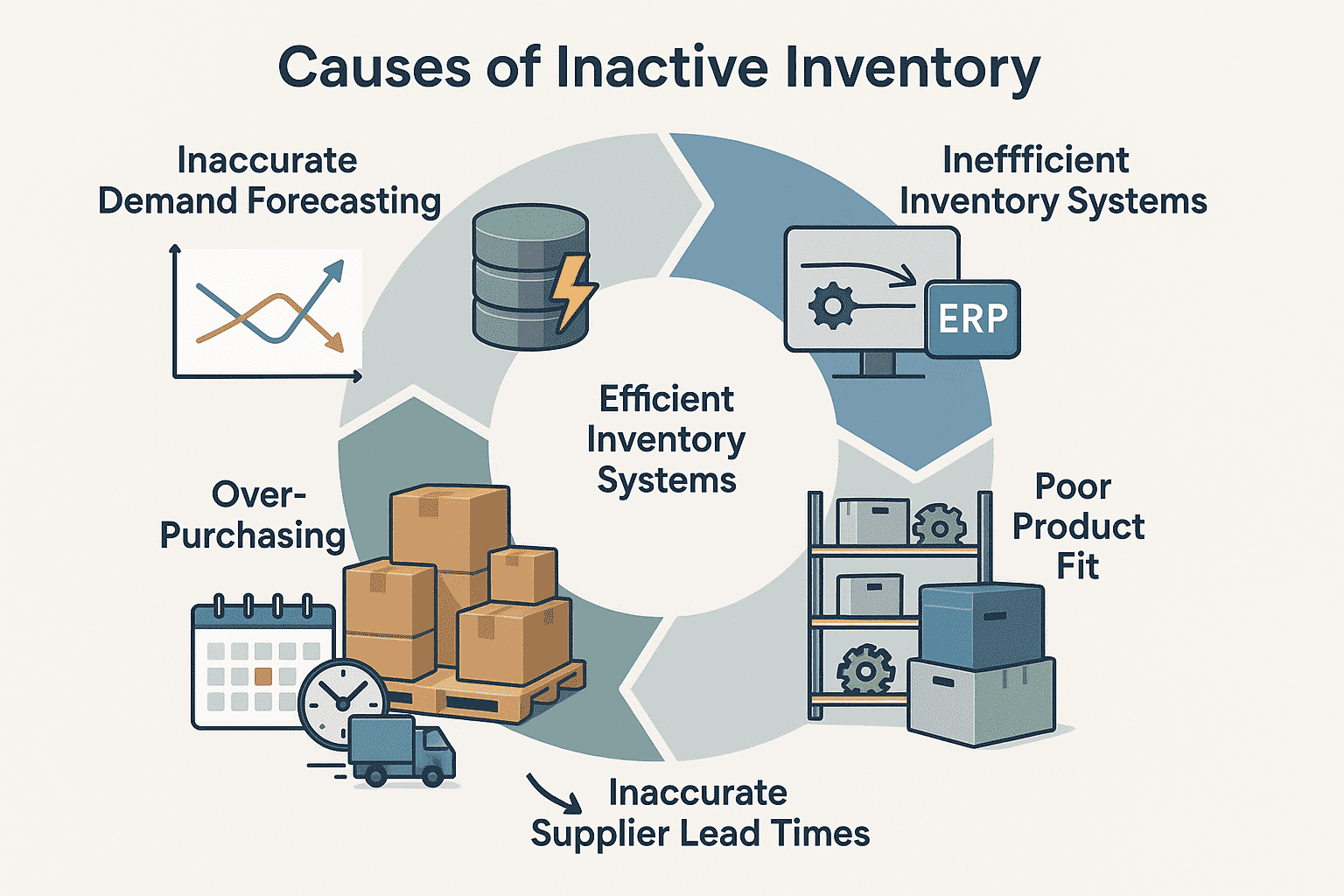
1. Inaccurate Demand Forecasting
Overestimating demand creates excess stock in low-demand locations while other sites face shortages, tying up capital and space. Poor forecasting increases the risk of storage bottlenecks and missed opportunities to keep inventory moving efficiently.
2. Inadequate Inventory Management Systems
Outdated or disconnected systems limit visibility into stock movement, delaying action on slow-moving items. Without real-time insights, inventory remains idle longer, thus increasing equipment idle time.
3. Poor Product Fit
Items that don’t match operational needs or specifications often go unused from arrival. This mismatch wastes storage space, adds carrying costs, and delivers no return on investment.
4. Over-Purchasing
Ordering beyond actual requirements—due to inaccurate data or procurement errors—creates surplus inventory that ties up working capital and adds long-term storage costs without improving supply chain resilience.
5. Inaccurate Supplier Lead Times
Deliveries arriving too early or late disrupt allocation, creating surpluses in some areas and shortages in others. This imbalance leaves stock unused for extended periods.
How to Identify Inactive Inventory
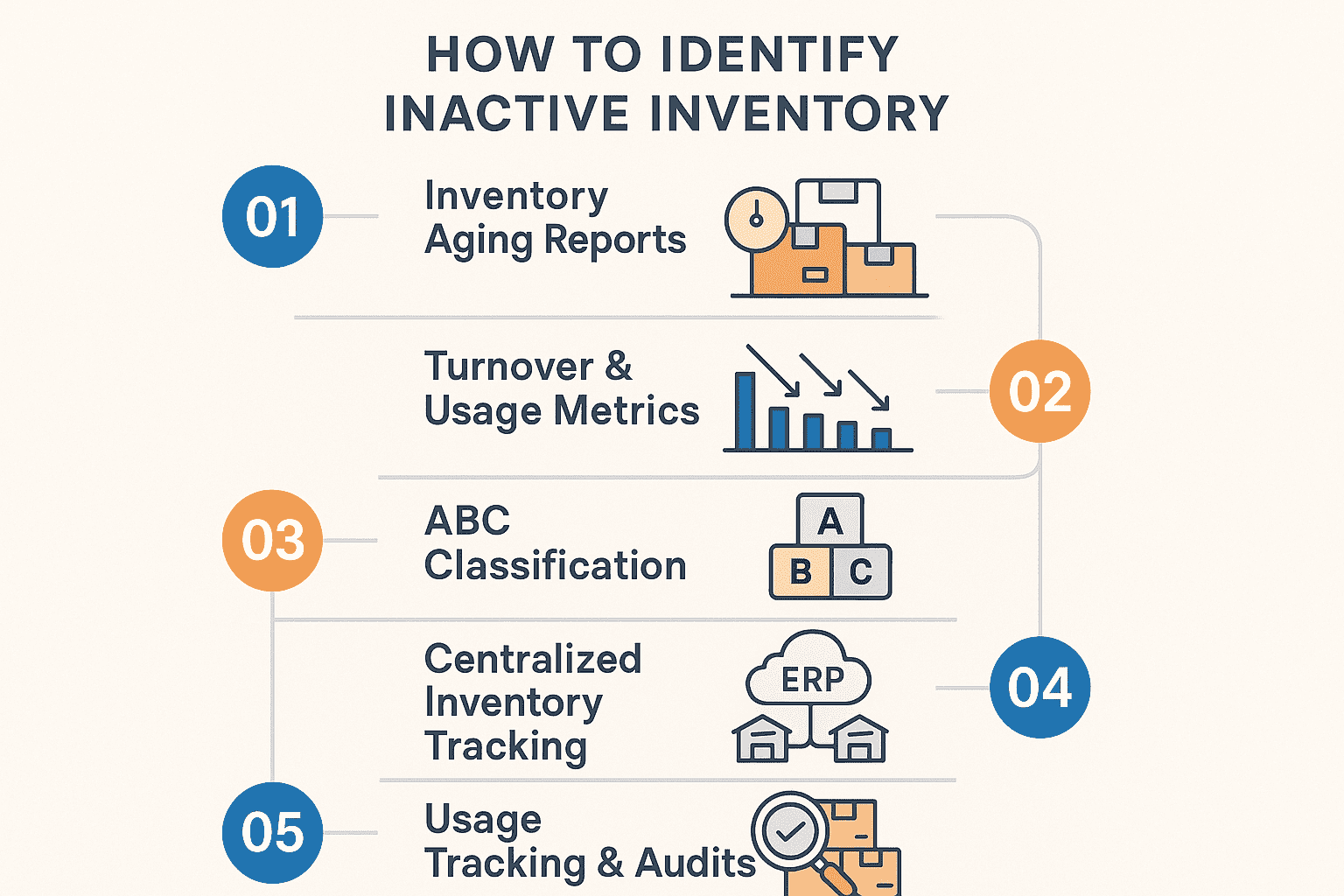
The following steps outline proven ways to identify idle stock early, enabling timely action to recover value and optimize warehouse space.
1. Inventory Aging Reports
Running inventory aging reports is one of the fastest ways to spot idle stock. These reports group items by how long they’ve been sitting without movement, helping identify parts, hardware, or components that have passed your inactivity threshold. Regular reviews allow you to act before items become obsolete or lose resale value.
2. Turnover and Usage Metrics
Low turnover ratios and high days-on-hand are clear warning signs of inactive inventory. Tracking these metrics consistently helps flag underperforming items across warehouses. By setting specific targets, you can quickly identify products that aren’t generating returns and make informed decisions about redeployment, redistribution, or liquidation.
3. ABC Classification
Not all inactive inventory has the same financial impact. Using ABC classification, you can focus on high-value or high-priority items that are underused. Inactive “A” items—like expensive machinery parts or high-end IT equipment—should be prioritized for action to recover capital and reduce carrying costs.
4. Centralized Inventory Management Tracking
A unified inventory management tool that unifies the Enterprise Resource Planning (ERP) or Warehouse Management System (WMS) gives you real-time visibility into stock across multiple locations. This centralization makes it easier to spot surpluses in one site and shortages in another, enabling proactive redistribution. Automated alerts ensure you address inactivity before it becomes a long-term storage issue.
5. Usage Tracking and Audits
Accurate identification depends on recording every inventory movement. Enforce consistent usage logging and conduct regular cycle counts to validate data. Audits can uncover misplaced, unused, or obsolete items, giving you a clear view of what needs to be moved, sold, or written off.
How To Manage Inactive Inventory

A structured process to manage inactive inventory helps recover value, free resources, and improve operational efficiency.
1. Conduct a Full Inventory Audit
Start with a comprehensive physical and digital count of all items across warehouses, plants, and storage areas. Identify products or parts that haven’t moved in a set period—often 6 months or more. This audit creates a clear baseline for decision-making and ensures you understand the true scope of inactive stock.
2. Update Records and Make Items Officially Inactive
Instead of deleting inactive stock from your ERP or inventory system, mark it as inactive. This approach keeps the historical record intact for audits and analysis, while preventing accidental reordering. Keeping accurate, updated records ensures better long-term visibility and control over stock.
3. Leverage Key Performance Indicators (KPIs) and Reporting
Track key inventory metrics such as turnover rate, days on hand, and percentage of inactive stock. Regular reporting highlights trends and problem areas before they escalate, allowing you to address issues promptly. Data-driven insights also support disposition strategies and production planning decisions.
4. Classify Inventory Status
Sort inactive items based on the data and reports into categories such as obsolete, slow-moving (low demand), or redeployable (usable elsewhere). This classification makes it easier to decide the best course of action for each group and helps prioritize quick wins for freeing up space and reducing costs.
5. Evaluate and Decide on a Value Recovery Strategy
For each category, assess the most cost-effective value recovery option—redeploy to other facilities, sell on the secondary market, donate for tax benefits, recycle, or scrap. The decision should factor in market demand, resale potential, and the cost of storage versus potential recovery value.
Strategy to Reduce Inactive Inventory

Moving on to the reduction of inactive inventory, here are five practical strategies to effectively reduce inactive inventory, improve stock turnover, and free up valuable storage space:
1. Inventory Redistribution
Transfer surplus stock from low-demand locations to sites with higher usage needs. This can be done internally or externally by building supply chain partnerships with other enterprises. This keeps assets active, improves turnover, reduces storage costs, and frees up capital. The process includes demand analysis, selecting transfer destinations, and moving goods with minimal disruption to operations.
2. Inventory Redeployment
Reassign idle assets internally to other departments or facilities where they can be used. This maximizes asset life, prevents waste, and reduces the need for new purchases. Examples include redeploying equipment or converting stored MRO parts into resources for maintenance and repairs across other facilities.
3. Strategic Liquidation
Sell inactive or surplus stock through a structured, time-bound process to preserve value and reduce holding costs. Apply targeted tactics such as volume discounts, product bundling, or B2B resale networks to accelerate turnover and recover capital. For best results, work with experienced industrial liquidation specialists like Amplio, who can operate as an extension of your internal team, manage the disposition process end to end, and ensure inactive inventory is sold through a proper liquidation channel at optimal terms.
4. Product Reconfiguration
Adapt inactive items for alternate uses or markets. For example, modify outdated components for secondary applications or repackage products for small and medium enterprises (SMEs). This creates new sales opportunities and reduces waste.
5. Supplier Return Programs
Try to negotiate with suppliers to return slow-moving or excess items for credit or exchange. This helps recover investment, free up storage space, and maintain healthy supplier relationships while minimizing losses from inactive stock.
How Amplio Helps Manage and Reduce Inactive Inventory
Data-Driven Inventory Actions
Our platform can aggregate data from multiple systems and sites, so decision-makers can see exactly where surplus exists and where demand is emerging. With accurate, timely insights, you can act decisively to reduce inactive inventory. Options include:
- Redistribution — Move stock to high-demand areas to meet immediate needs.
- Redeployment — Repurpose inventory for alternative uses within operations.
- Strategic Liquidation — Sell through targeted channels to recover maximum value.
Online Platform for Buying and Selling Inactive Industrial Equipment
Amplio’s platform enables you to sell them directly to qualified industrial buyers. By connecting sellers and buyers in one secure environment, the platform facilitates quick transactions, fair pricing, and wider market reach for surplus machinery, tools, and equipment. This reduces storage costs and accelerates value recovery.
Don’t let inactive inventory drain your resources. Amplio’s intelligent platform helps you.