10 Types of Industrial Equipment Auctions Buyers Should Know
Buying industrial equipment is a major capital decision for any business. According to the U.S. Census Bureau, U.S. nonfarm employer businesses spent $61.8 billion on used equipment in 2022, revealing a considerable secondary equipment market.
That is why many buyers turn to industrial equipment auctions when they need access to used industrial equipment or surplus assets without paying new-market prices. The opportunity can be strong, but the process still needs careful review. Bidding rules, inspection access, buyer premiums, transportation, and removal deadlines can all change the final cost.
In this blog, you’ll learn how different auction formats work, what buyers need to check before bidding begins, and how to make a smarter purchase decision for your business.
What Are Industrial Equipment Auctions?
Industrial equipment auctions are structured sales where companies sell used machinery, tools, heavy equipment, and surplus assets through a bidding process. These auctions can take place online, on-site, or through a mix of both.
Companies often hold industrial equipment auctions after a facility closure, an equipment upgrade, a business downsizing, or a surplus inventory review. The process helps sellers reach qualified bidders, recover value from idle assets, and clear equipment from a facility within a set timeline.
For buyers, these auctions provide a way to purchase used industrial equipment through real bidding activity. Final prices often depend on equipment condition, asset demand, inspection access, transportation cost, and competition among bidders.
Common Equipment Sold at Industrial Auctions:
- Manufacturing Equipment: CNC machines, lathes, presses, welders, conveyors, and complete production lines
- Construction Tools: Excavators, loaders, cranes, skid steers, compressors, and generators
- Agriculture Machinery: Tractors, harvesters, seeders, sprayers, irrigation equipment, and attachments
- Food Processing Machinery: Mixers, slicers, ovens, packaging lines, conveyors, and refrigeration equipment
- Warehousing Equipment: Forklifts, pallet racking, dock equipment, pallet jacks, and material handling tools
- Facility Operations Systems: Pumps, motors, electrical panels, HVAC units, spare parts, and MRO inventory
Types of Industrial Equipment Auctions
Below are the main types of industrial equipment auctions buyers need to understand before bidding.
Format-Based Auctions
1. Live On-Site Auctions
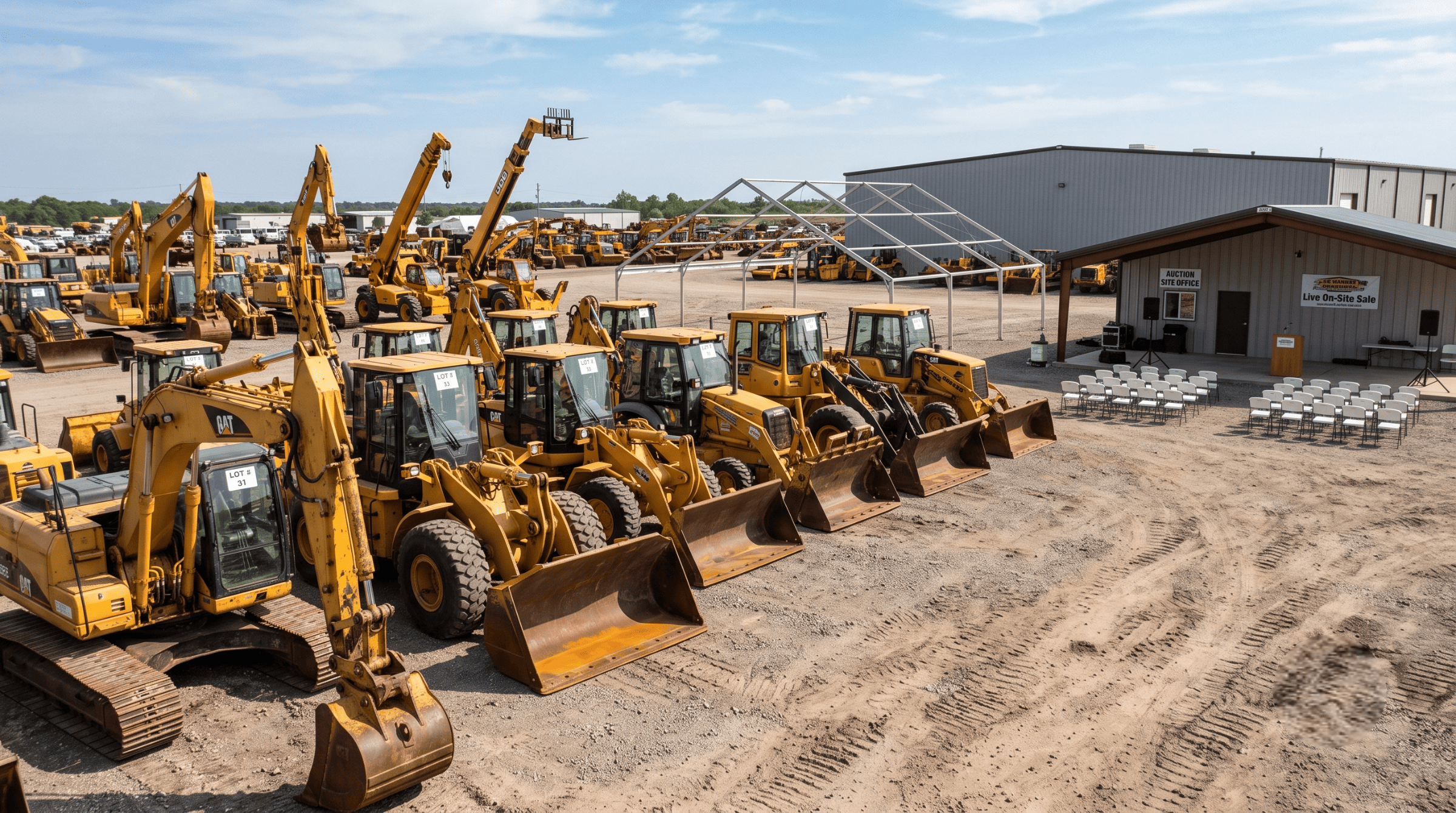
Live on-site auctions take place at a physical location, such as a factory, warehouse, plant, equipment yard, or construction site. Buyers attend in person and place bids while an auctioneer manages the sale, which makes this format a key option when comparing online and live industrial equipment auctions for machinery purchases.
This auction format is common for heavy machinery, construction equipment, plant closures, facility liquidations, and large-scale equipment sales.
Buyers can often inspect the machinery before bidding begins, which helps with condition checks, appraisals, transportation planning, and purchase approval.
Best For
Live on-site auctions are best for:
- Buyers who want to inspect equipment in person
- Local buyers who can visit the auction location
- Experienced buyers who understand machinery value
- Buyers who can make fast decisions during competitive bidding
Buyer Tip
Before the auction starts, set your maximum bid for each item. Live bidding can move fast, and competition among bidders can push the final cost above your planned budget.
2. Online Auctions
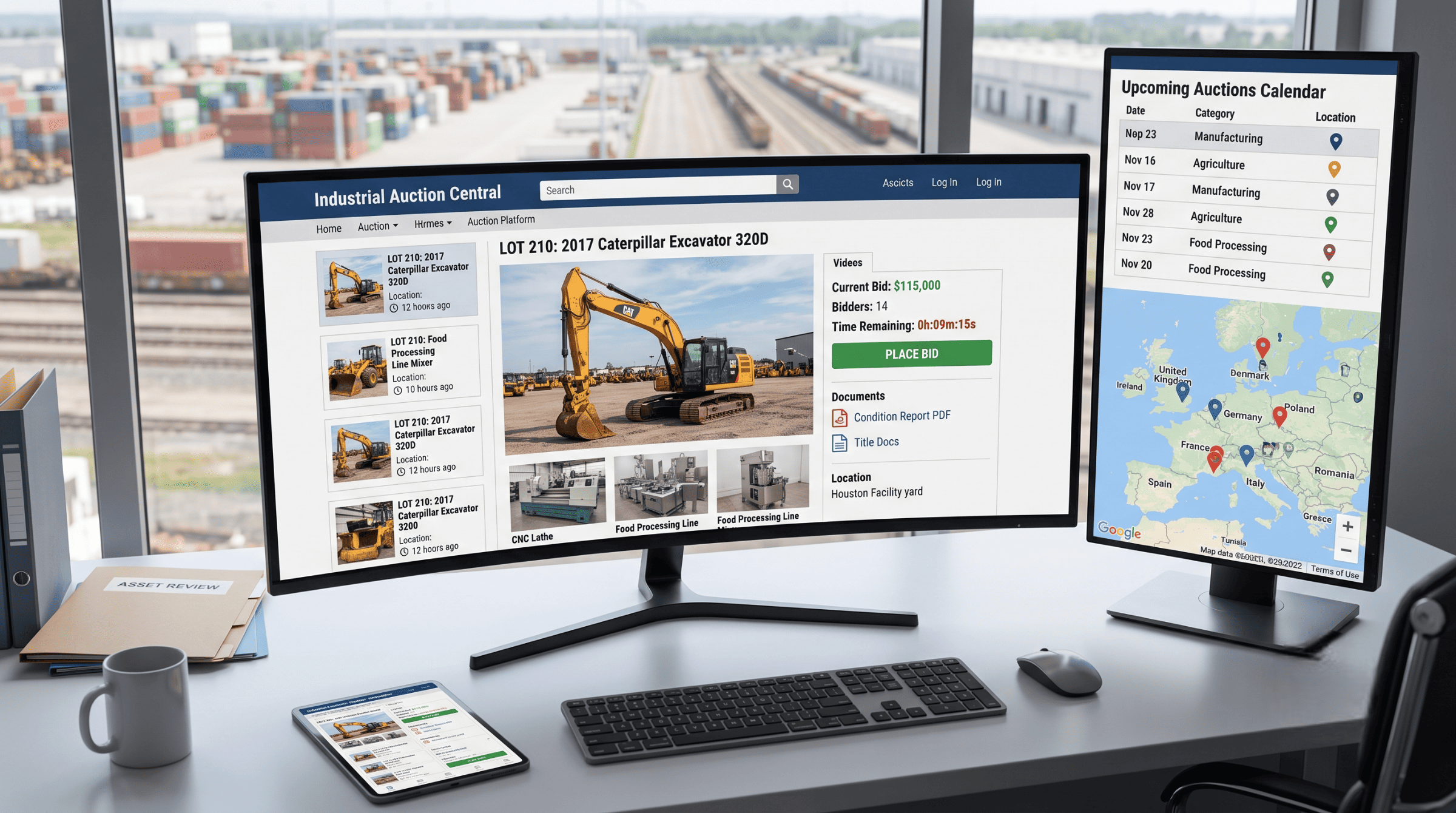
Online auctions allow buyers to bid on industrial equipment through a digital auction platform. This format gives you remote access to used machinery, surplus equipment, and facility assets without visiting the auction site in person.
Most online auction listings include equipment photos, videos, descriptions, documents, location details, and closing dates. Buyers register through the platform, review the auction terms, place bids online, and follow digital payment instructions after the sale.
Online auctions are common for used industrial equipment auctions because they help sellers reach more bidders and help buyers compare assets across different locations.
Best For
Online auctions are best for:
- Remote buyers who cannot visit the site
- Procurement teams comparing multiple assets
- Buyers reviewing equipment across different locations
- Companies sourcing used industrial machinery
- Buyers who need access to upcoming auctions through an online calendar
Buyer Tip
Before placing a bid, check asset photos, serial numbers, inspection reports, pickup terms, buyer premiums, and seller details. Also, confirm the location and transportation cost so your final purchase price does not exceed your budget.
3. Timed Online Auctions
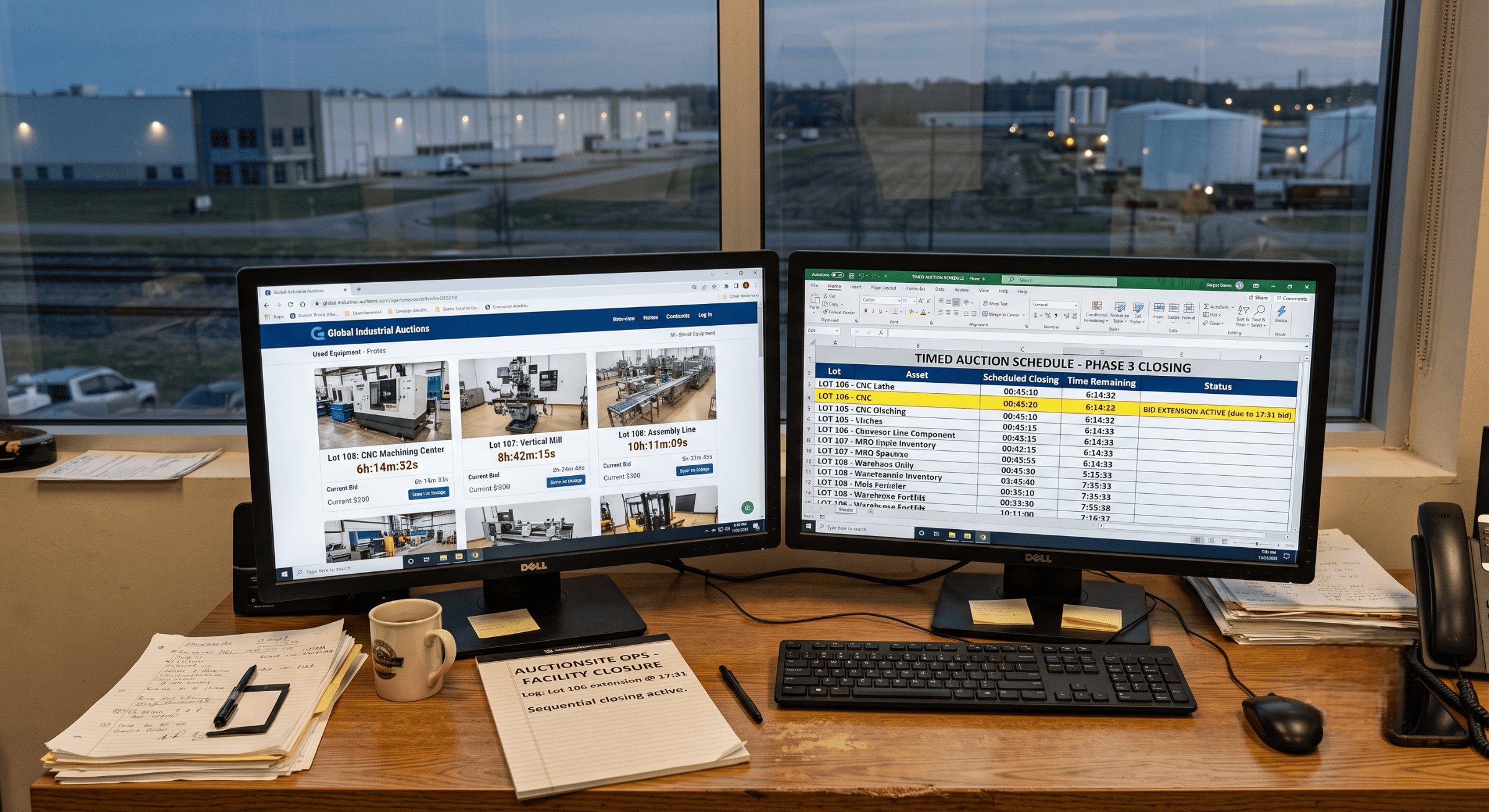
Timed online auctions run through a digital auction platform, stay open for a set period, and close at a scheduled time. Buyers place bids before the deadline, and the highest accepted bid wins at the end of the auction.
This format gives buyers more time to review equipment details, compare lots, check inspection notes, and plan transportation before bidding begins. Some timed auctions use staggered closing, in which lots close one after another rather than all at once.
Some platforms also extend bidding when a late bid comes in near the closing time. This gives other bidders a chance to respond and keeps the auction process fair.
Best For
Timed online auctions are best for:
- Buyers who need time to compare lots
- Equipment resellers reviewing multiple items
- Procurement teams managing several bids
- Buyers who prefer a slower process than a live auction
Buyer Tip
Read the closing rules before you bid. A timed online auction may extend when a bid comes in near the end, so plan your bidding schedule and avoid waiting until the last few seconds.
Bidding Mechanism Auctions
4. Sealed Bid Auctions
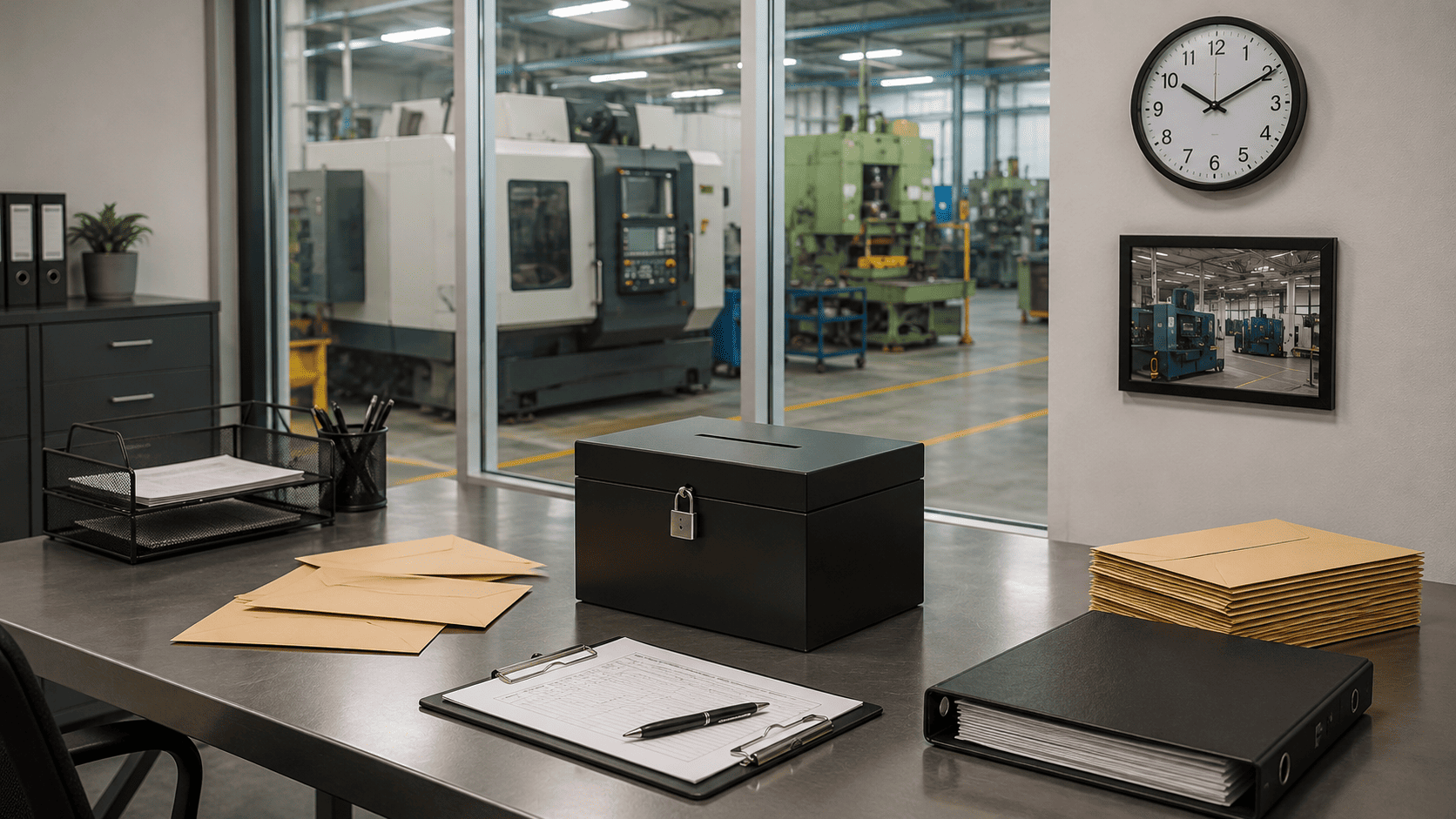
Sealed bid auctions require buyers to submit private offers by a set deadline. Other bidders cannot see your bid, and you cannot see theirs.
After the deadline, the seller reviews all offers and decides which bid to accept. The highest bid may win, but seller terms can vary based on payment terms, buyer qualifications, removal plans, or other sale conditions.
This format is common for specialized equipment, large asset packages, high-value machinery, and surplus assets where sellers want a controlled sale process.
Best For
Sealed bid auctions are best for:
- Buyers purchasing specialized industrial assets
- Buyers who understand fair market value
- Buyers participating in controlled or private sale processes
- Bulk equipment transactions
- Companies buying machinery with internal approval limits
Buyer Tip
Research the fair market value before submitting your bid. Since you cannot see other offers, your price needs to stay competitive without exceeding your budget.
5. Absolute Auctions
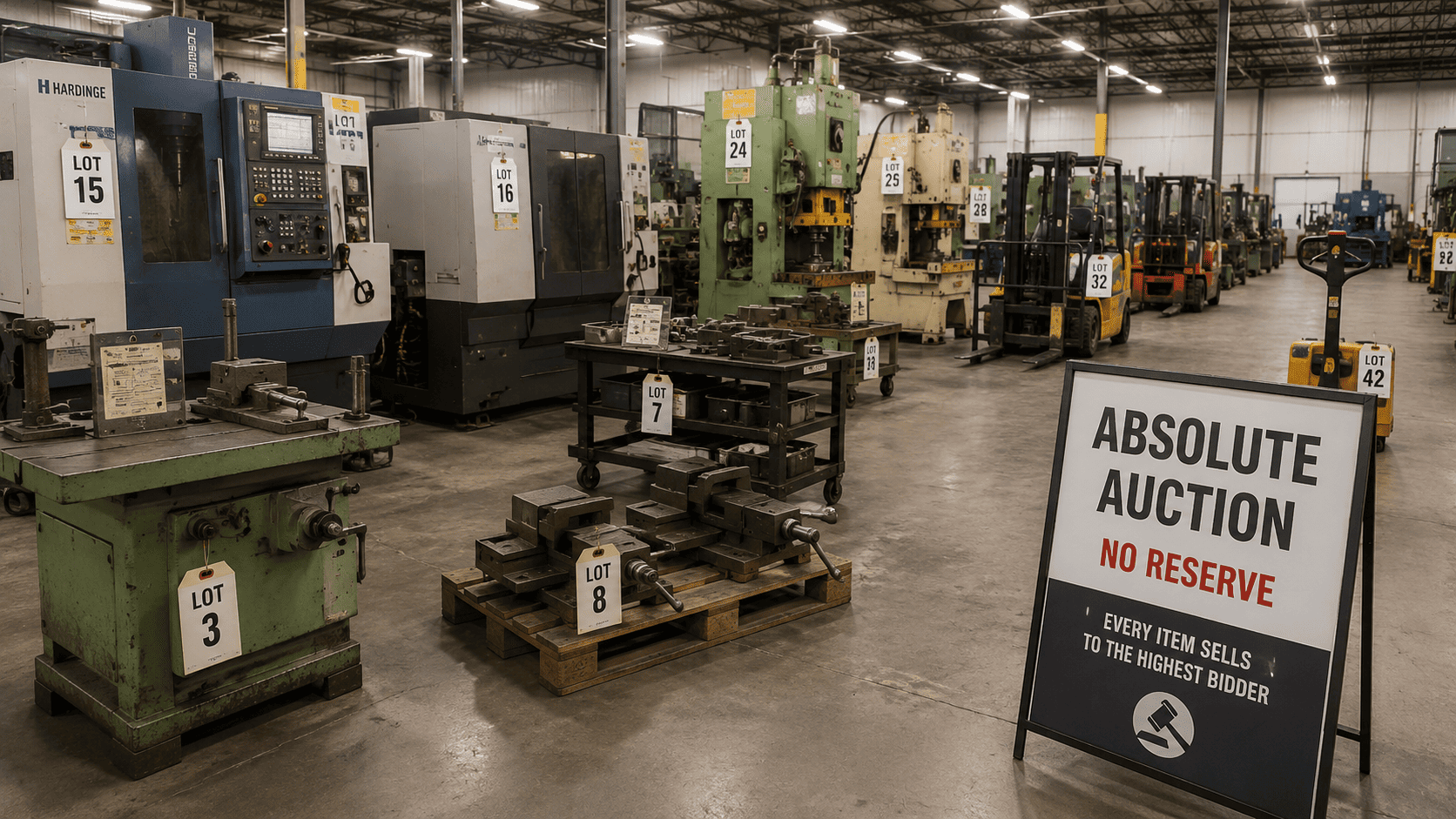
Absolute auctions sell equipment to the highest bidder with no reserve price. This means there is no minimum seller price once bidding begins.
In this format, the highest bid wins. Sellers often use absolute auctions when they need to sell assets fast, clear a facility, or complete a liquidation process within a set timeline.
For buyers, absolute auctions can create strong buying opportunities. Equipment may sell below expected market value when competition is low, the asset is specialized, or the seller needs a fast sale.
Best For
Absolute auctions are best for:
- Buyers looking for lower acquisition costs
- Liquidation buyers
- Resellers
- Buyers with clear inspection and logistics plans
- Companies that can move fast after purchase
Buyer Tip
Do not assume a low winning price means a low total cost. Add rigging, freight, repairs, missing parts, and downtime into your real purchase cost before you bid.
6. Reserve Auctions
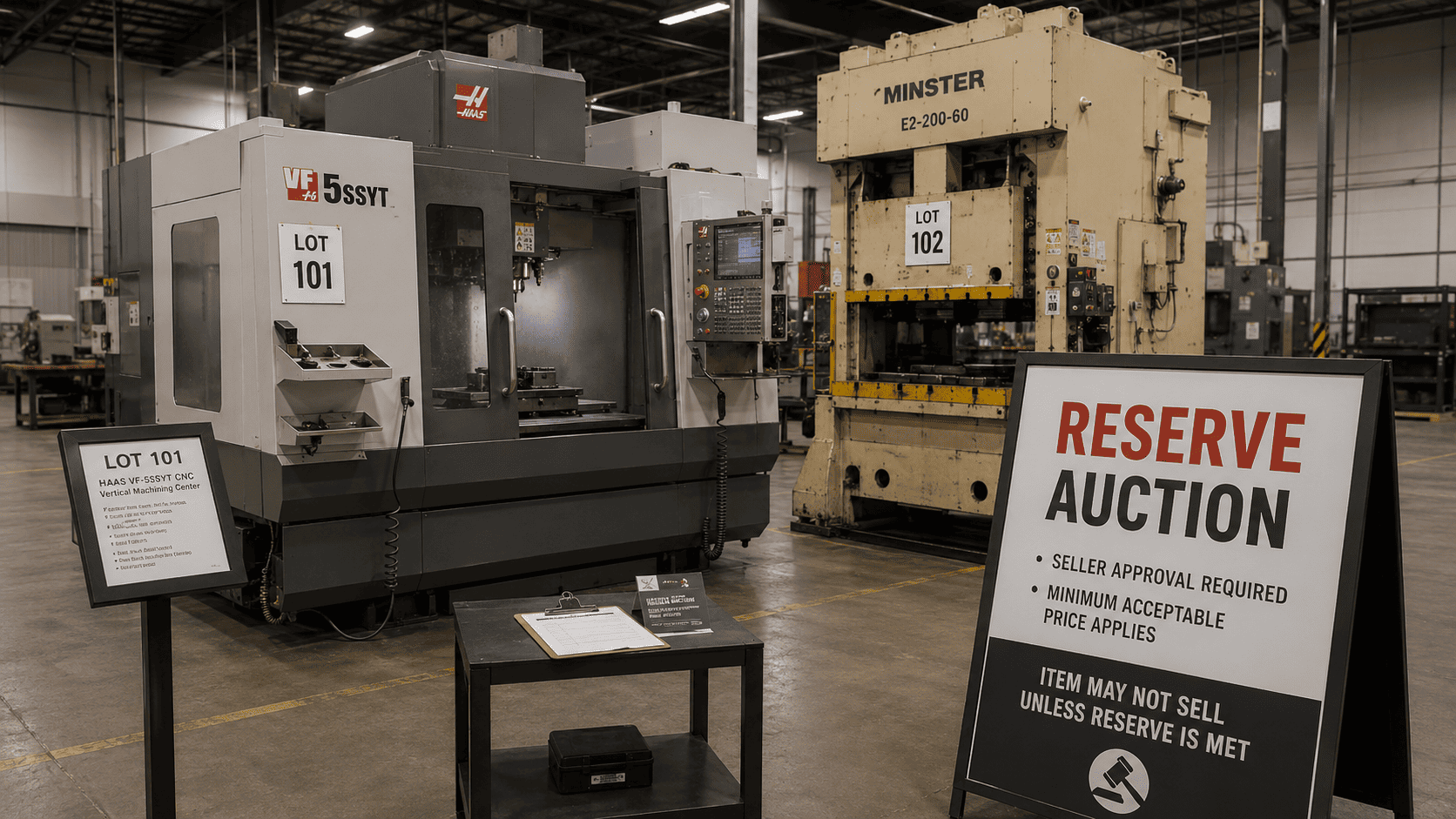
Reserve auctions include a minimum price the seller is willing to accept for an asset. The seller usually sets this reserve price before the auction begins.
If bidding does not meet the reserve price, the equipment may not sell. This format is common for high-value machinery, specialized industrial equipment, and assets where the seller wants to protect value.
In some reserve auctions, the final sale may still need seller approval. This means the highest bid does not always guarantee a completed purchase.
Best For
- Reserve auctions are best for:
- Buyers looking for specific equipment
- Buyers who understand market value
- Buyers are willing to negotiate after the auction
- Companies purchasing high-value machinery or specialized assets
Buyer Tip
A high bid does not always mean you won the equipment. Confirm if the reserve price has been met before you plan payment, transportation, or removal.
Buyer Access Auctions
7. Public Auctions
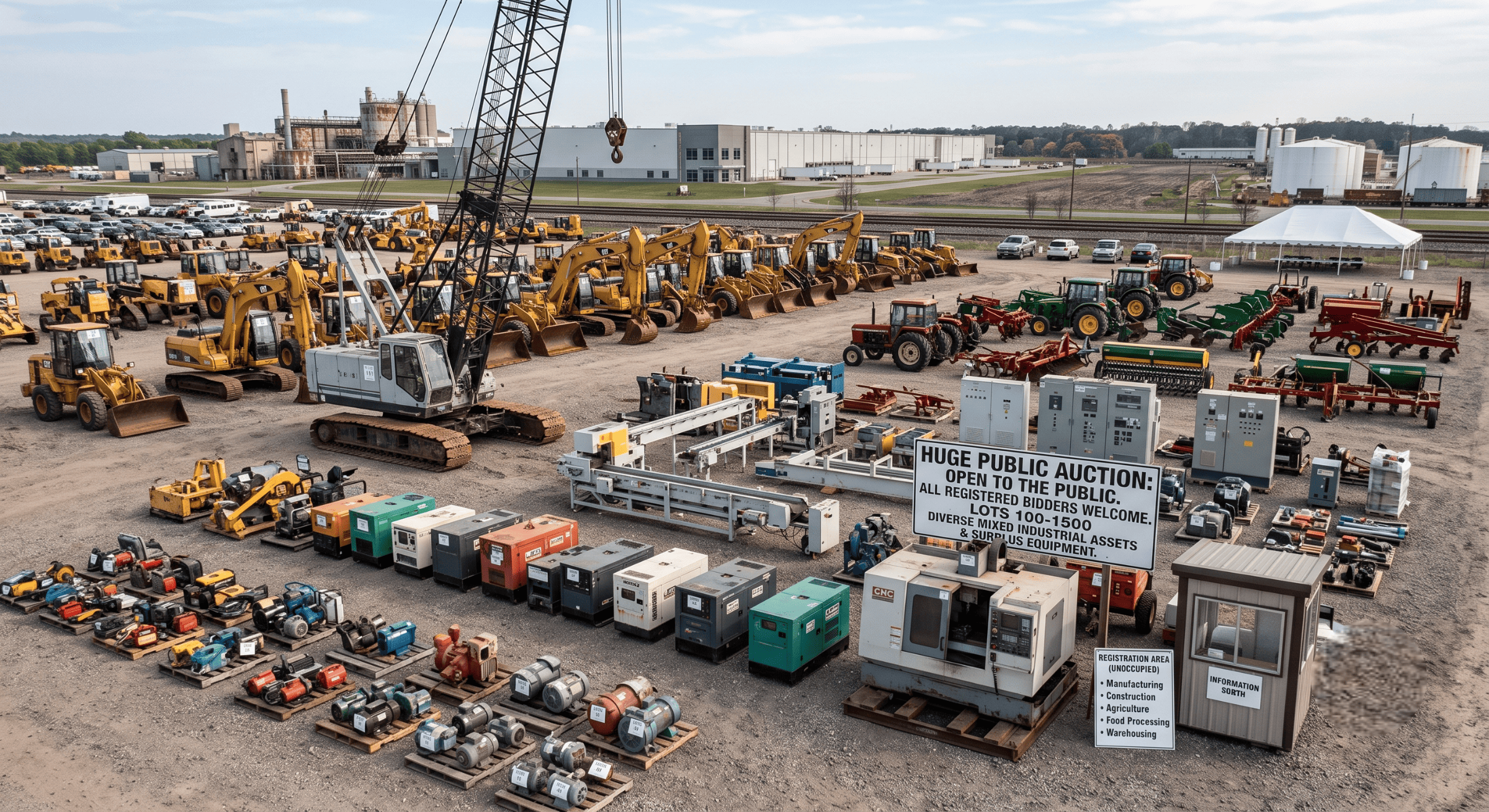
Public auctions are open to a wider buyer pool. Once buyers register and meet the auction terms, they can review available assets and place bids.
This format is common for industrial equipment auctions where sellers want broad market exposure. A public auction can attract more bidders, create stronger competition, and help assets reach buyers across different industries and locations.
For buyers, public auctions offer more access to used industrial equipment, surplus assets, machinery, tools, and facility equipment. The tradeoff is competition. More bidders can push prices higher, so you need a clear budget before bidding begins.
Best For
Public auctions are best for:
- Buyers looking for open access to industrial assets
- Companies comparing used equipment across several categories
- Buyers who are comfortable with competitive bidding
- Resellers looking for available inventory
- Teams that can make quick purchase decisions
Buyer Tip
Review the auction terms before you bid. Public auctions can move fast when demand is high, so set your maximum bid and calculate buyer premiums, transportation, and removal costs in advance.
8. Private Auctions
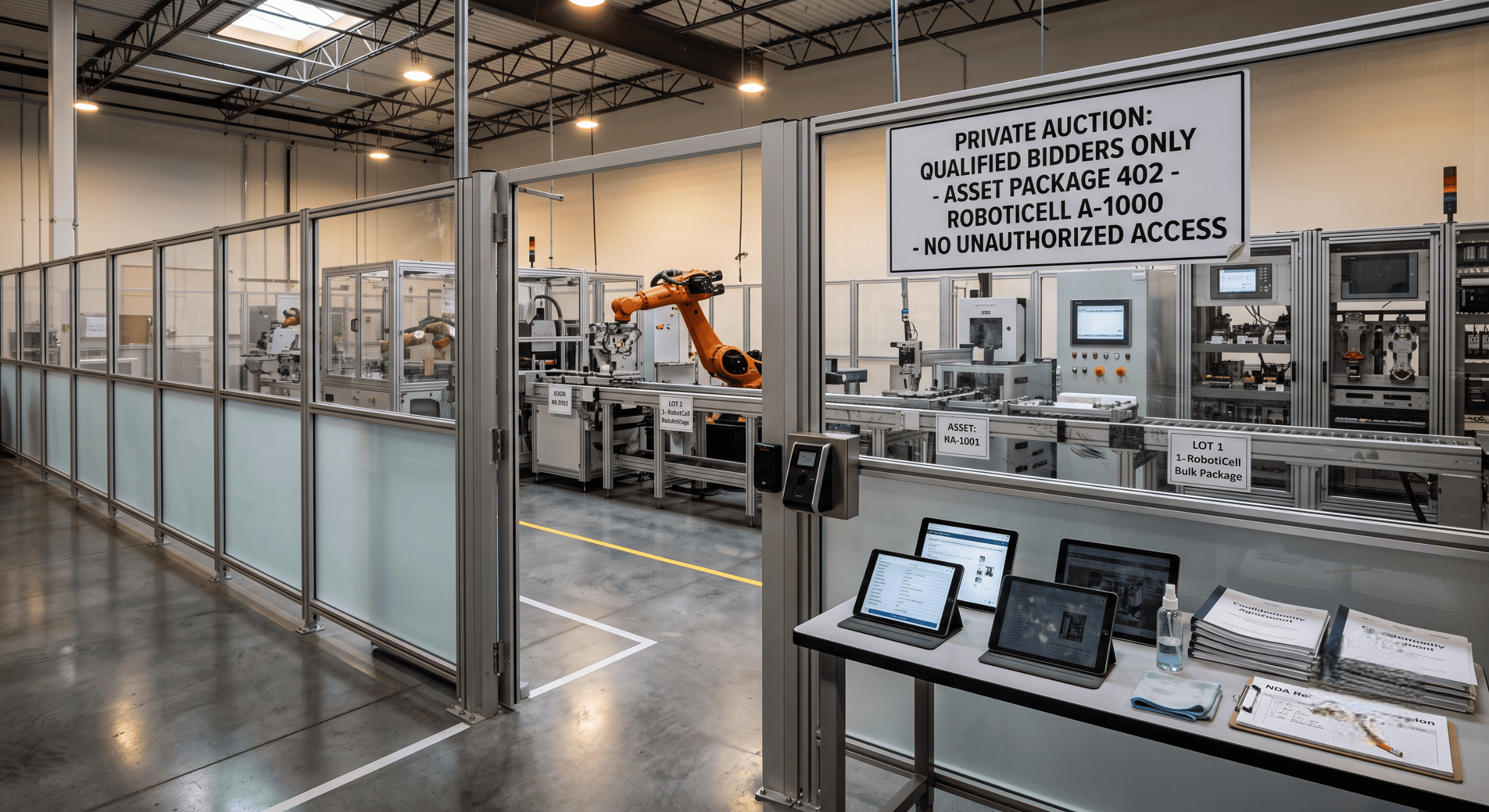
Private auctions limit access to approved or invited buyers. Instead of opening the sale to the public, the auctioneer or seller works with a restricted buyer pool.
This format is common for confidential asset sales, high-value machinery, specialized industrial equipment, and bulk asset packages. Buyers may need to qualify before they can review asset details, schedule an inspection, or place bids.
Private auctions can reduce open-market competition, but they also require more preparation. Sellers often want bidders with the right industry knowledge, purchase capacity, and a removal plan.
Best For
Private auctions are best for:
- Buyers with specific industry experience
- Large manufacturers
- Vetted resellers
- Buyers seeking specialized equipment
- Companies prepared to buy bulk asset packages
- Buyers pursuing confidential or restricted asset sales
Buyer Tip
Prepare company details, funding proof, and industry credentials before you contact the auction team. Private auctions may require approval before you can view assets or place bids.
Asset Disposition Auctions
9. Industrial Liquidation Auctions
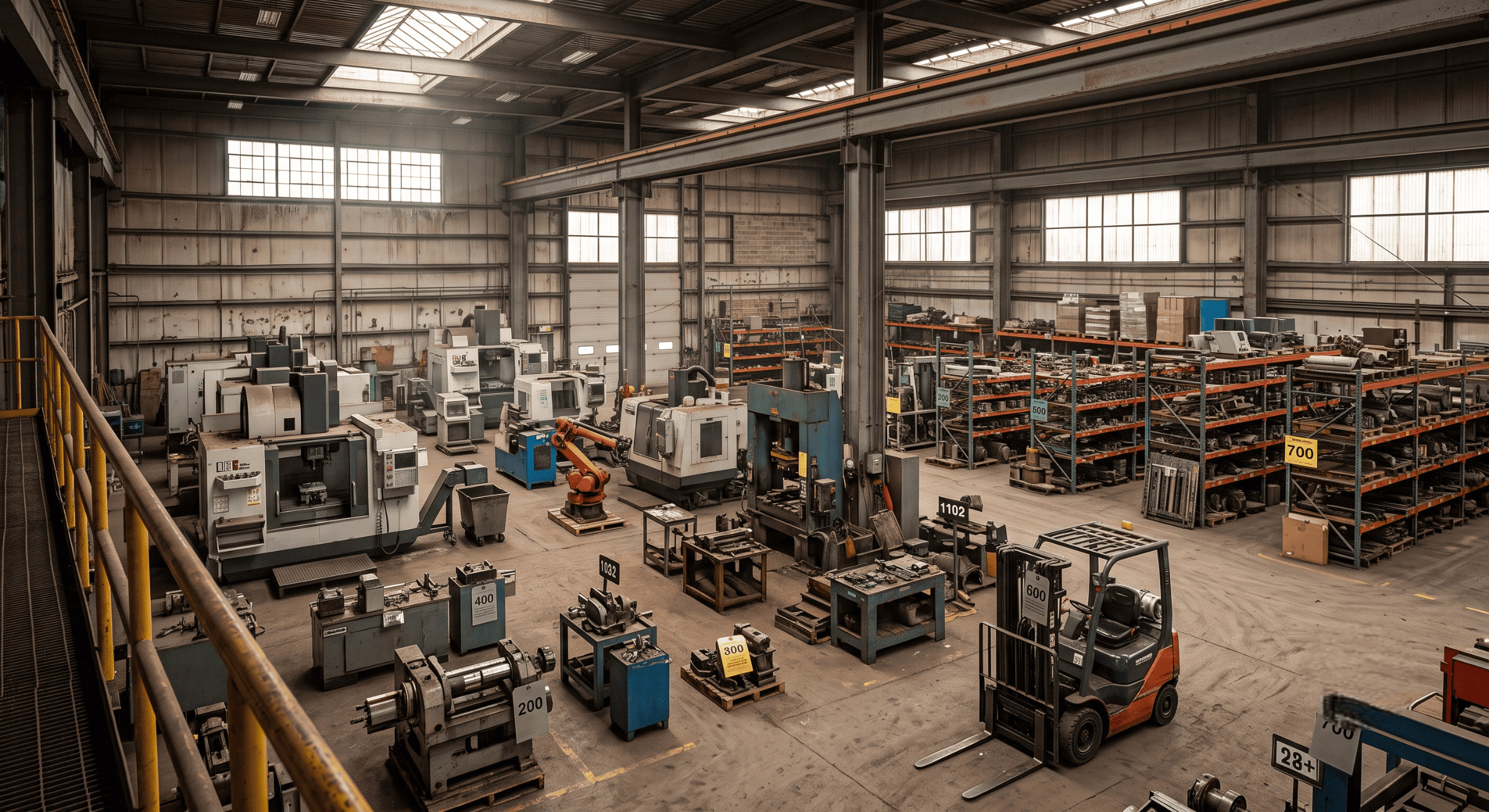
Industrial liquidation auction floor with CNC machines, warehouse racking, forklifts, spare parts, and tagged equipment lots arranged inside a large manufacturing facility.
Industrial liquidation auctions sell assets from facility closures, business downsizing, restructuring, relocations, or surplus inventory reductions.
Companies often use this auction format when they need to clear a site, recover value, and reduce holding costs tied to idle equipment.
For buyers, this auction format can create access to a wide range of used equipment from one location. Liquidation auctions are common in manufacturing, construction, food processing, agriculture, warehousing, and other industrial sectors where companies need to sell machinery, inventory, or facility assets at scale.
Best For
Liquidation auctions are best for:
- Buyers sourcing multiple assets
- Manufacturers expanding capacity
- Buyers looking for used equipment at a lower cost
- Asset resellers
- Companies that can manage transportation and removal
Buyer Tip
Removal planning matters. Check dismantling needs, rigging requirements, loading access, pickup deadlines, and site rules before bidding. A good purchase can lose value if your team cannot move the equipment on time.
10. Bankruptcy Auctions
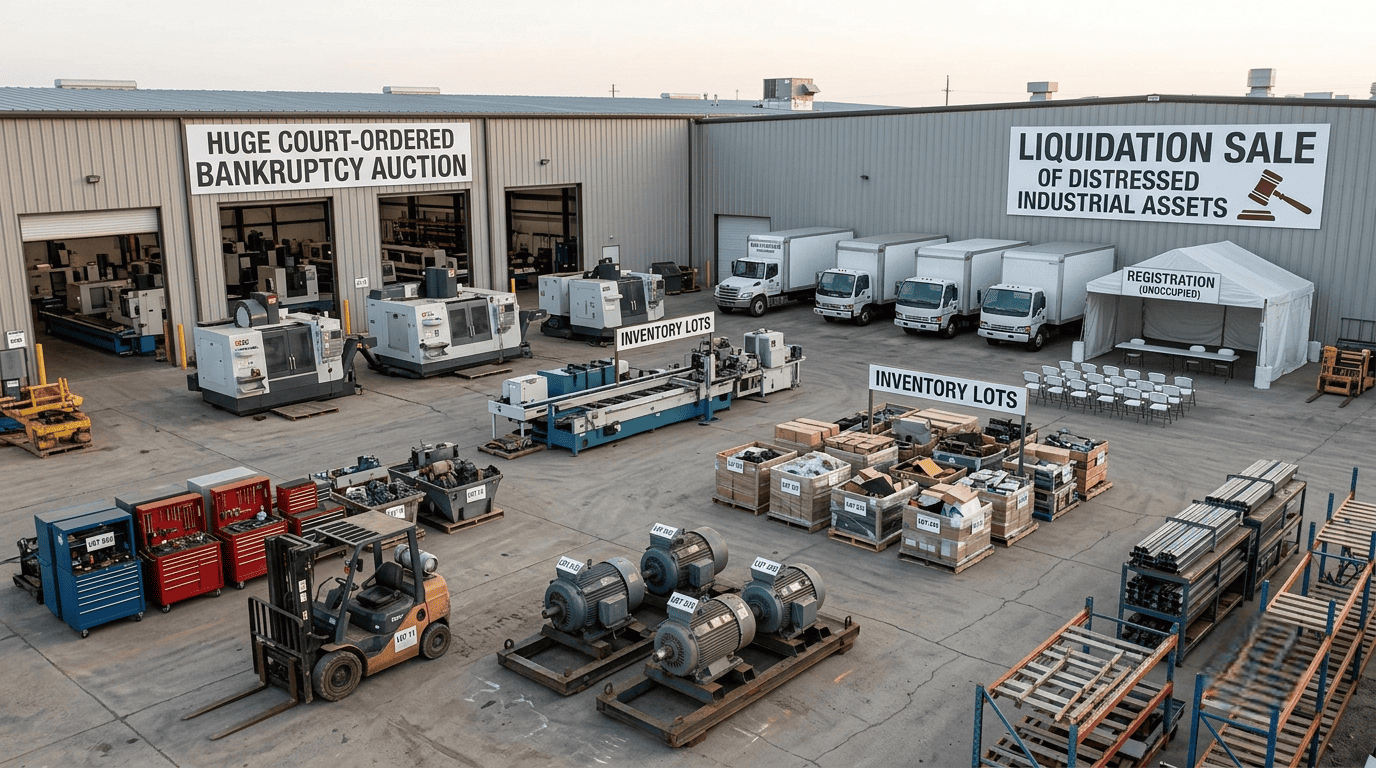
Bankruptcy auctions involve assets sold through a legal or court-supervised process after a business files for bankruptcy.
These auctions can include industrial machinery, vehicles, plant assets, inventory, support equipment, tools, and other business assets. The goal is often to convert assets into cash through a structured sale process.
Bankruptcy auctions may include court approval, stricter sale terms, and fixed deadlines. For buyers, this can create access to distressed industrial assets, but the process often requires more review before bidding begins.
Best For
Bankruptcy auctions are best for:
- Buyers looking for distressed industrial assets
- Resellers
- Buyers with legal and financial review support
- Buyers who can handle strict timelines
- Companies that can meet payment and pickup requirements
Buyer Tip
Review the sale terms closely. Bankruptcy auctions may include court approvals, strict payment rules, limited warranties, and firm pickup deadlines.
Final Thoughts
Understanding the different types of industrial equipment auctions helps you make better buying decisions before bidding begins.
Each auction format can affect inspection access, buyer competition, payment terms, transportation planning, and final cost. When you know how the process works, you can compare equipment, avoid hidden costs, and protect purchase value.
If you are buying used industrial equipment or planning to sell surplus assets, Amplio can help you review the right auction path, connect with qualified buyers, and support a more structured process. Contact us now.