20 Industrial Food Processing Equipment You Should Know About

Introduction
Industrial food manufacturing depends on a wide range of specialized machinery engineered to handle complex production demands with precision and reliability. From ingredient handling to end-of-line packaging, every piece of equipment contributes to maintaining product quality, hygiene, and operational efficiency.
Understanding the major industrial food equipment helps industrial teams identify where to invest, how to maintain compliance, and when to recover value from underutilized assets.
This article explores 20 essential industrial food processing machines that power modern manufacturing equipment, keeping global food supply chains efficient, compliant, and adaptable to future innovation.
20 Essential Equipment Used in Industrial Food Processing
1. Pasteurizer
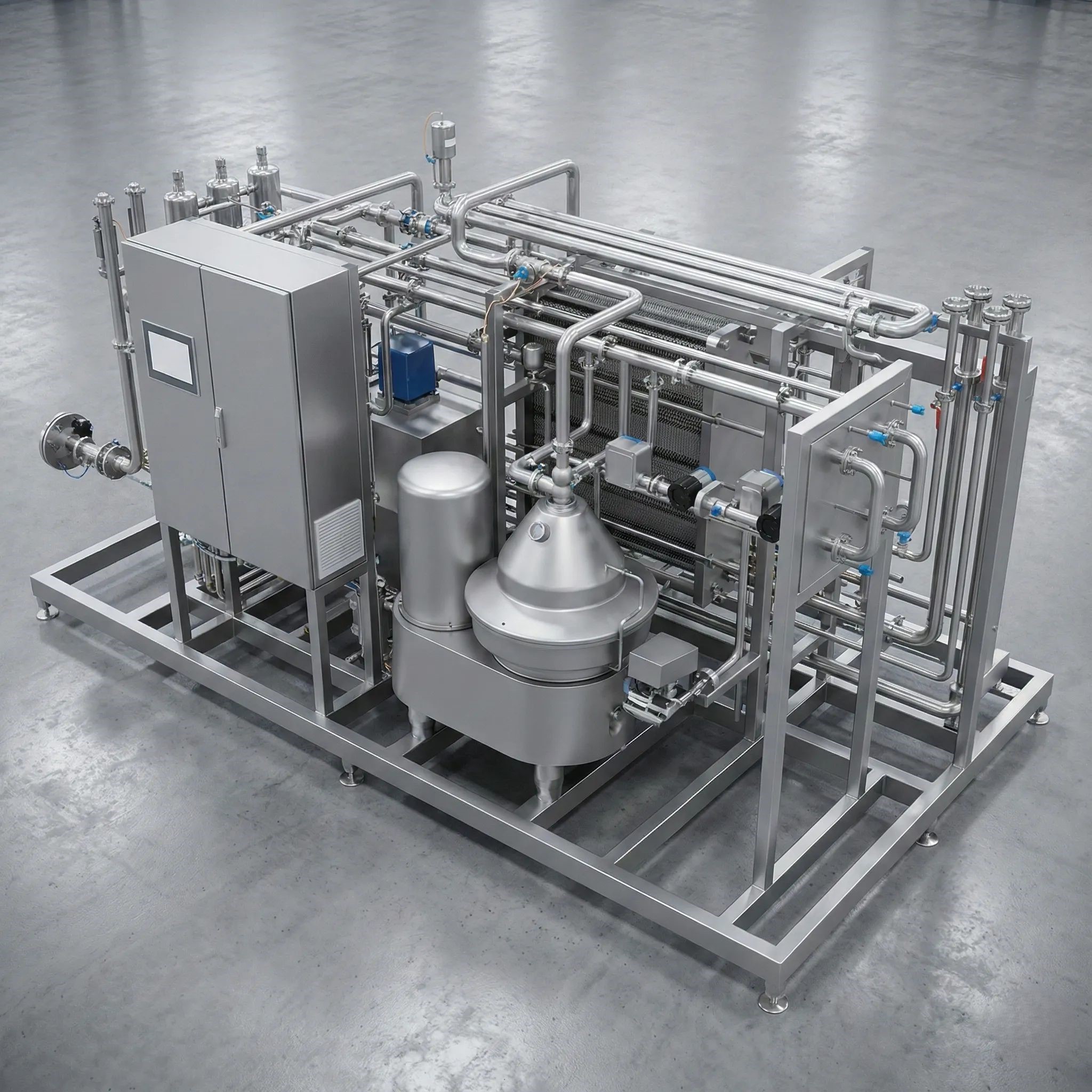
A pasteurizer heats liquid products like milk, juices, and sauces to eliminate harmful microorganisms while preserving flavor and nutrients. This controlled process ensures food safety, extends shelf life, and maintains consistent product quality.
Commonly used in dairy, beverage, and sauce production, pasteurizers are valued for their reliability, automation, and energy efficiency in large-scale operations.
2. Conveyor Belt System
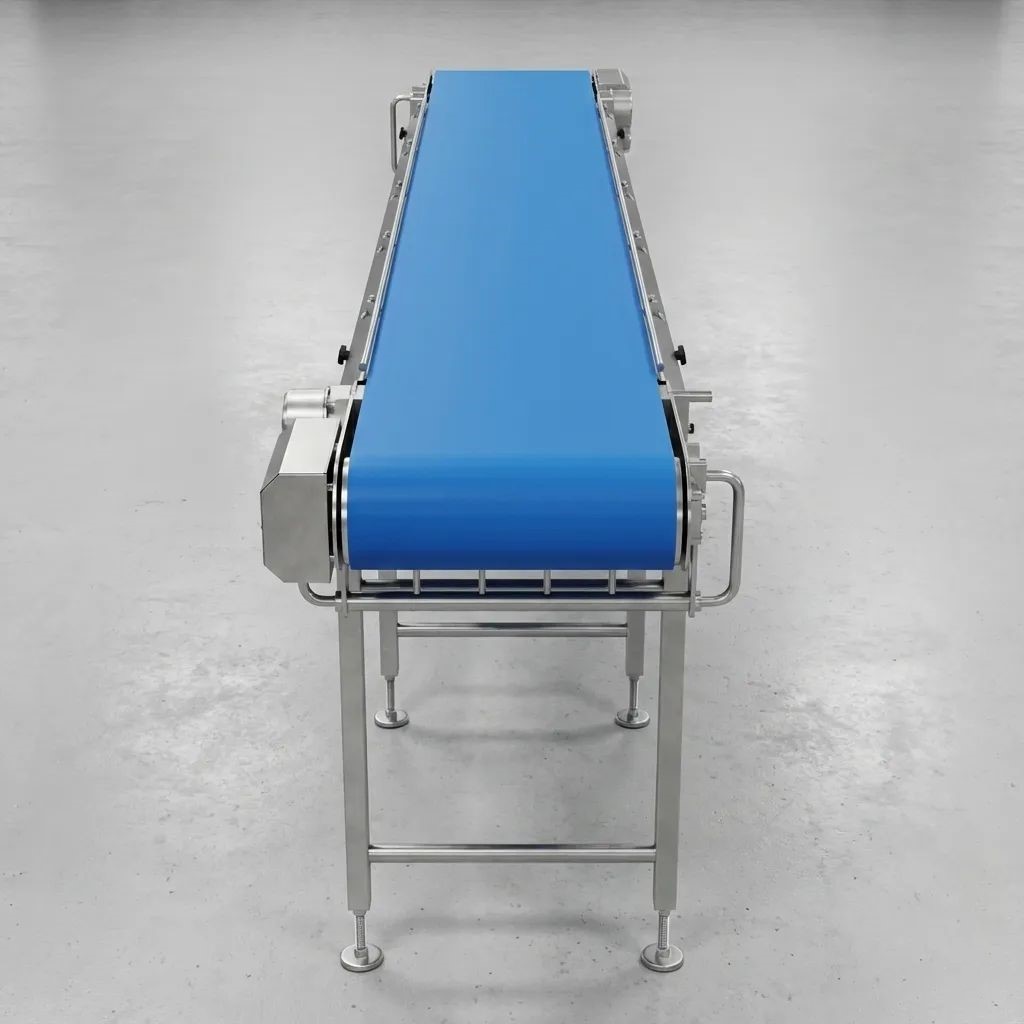
A conveyor belt system streamlines the movement of ingredients and finished products across different sections of a facility and is of various types. It supports continuous, automated flow, reducing manual handling and production delays.
Found in nearly every food plant, conveyors improve efficiency, safety, and ergonomics while maintaining consistent product transfer from one operation to the next.
3. Metal Detector
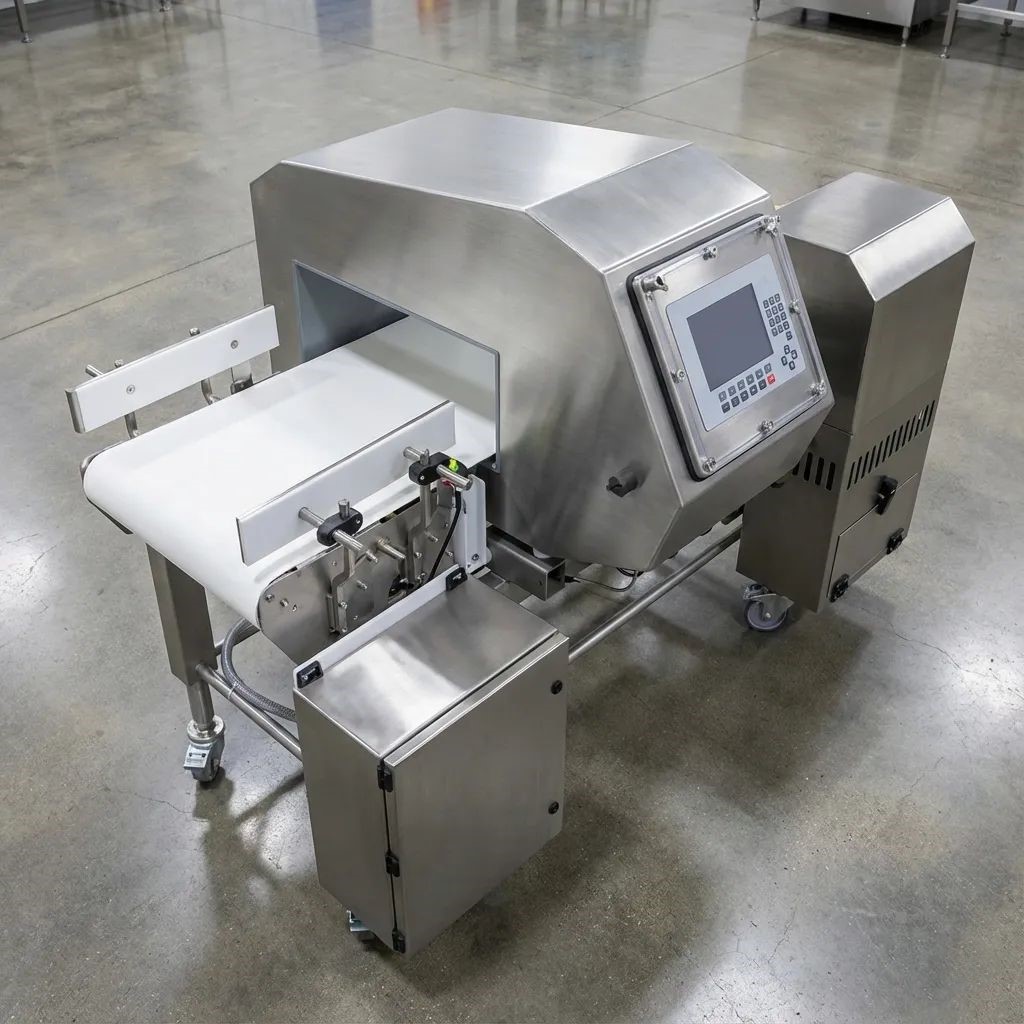
A food-grade metal detector safeguards product integrity by identifying and rejecting any metallic contaminants in bulk or packaged goods.
It is a critical component of quality assurance systems, helping manufacturers meet food safety regulations and prevent costly recalls.
Commonly installed near the end of production lines, metal detectors provide reliable, automated inspection for consistent compliance and consumer protection.
4. Vibratory Sieve
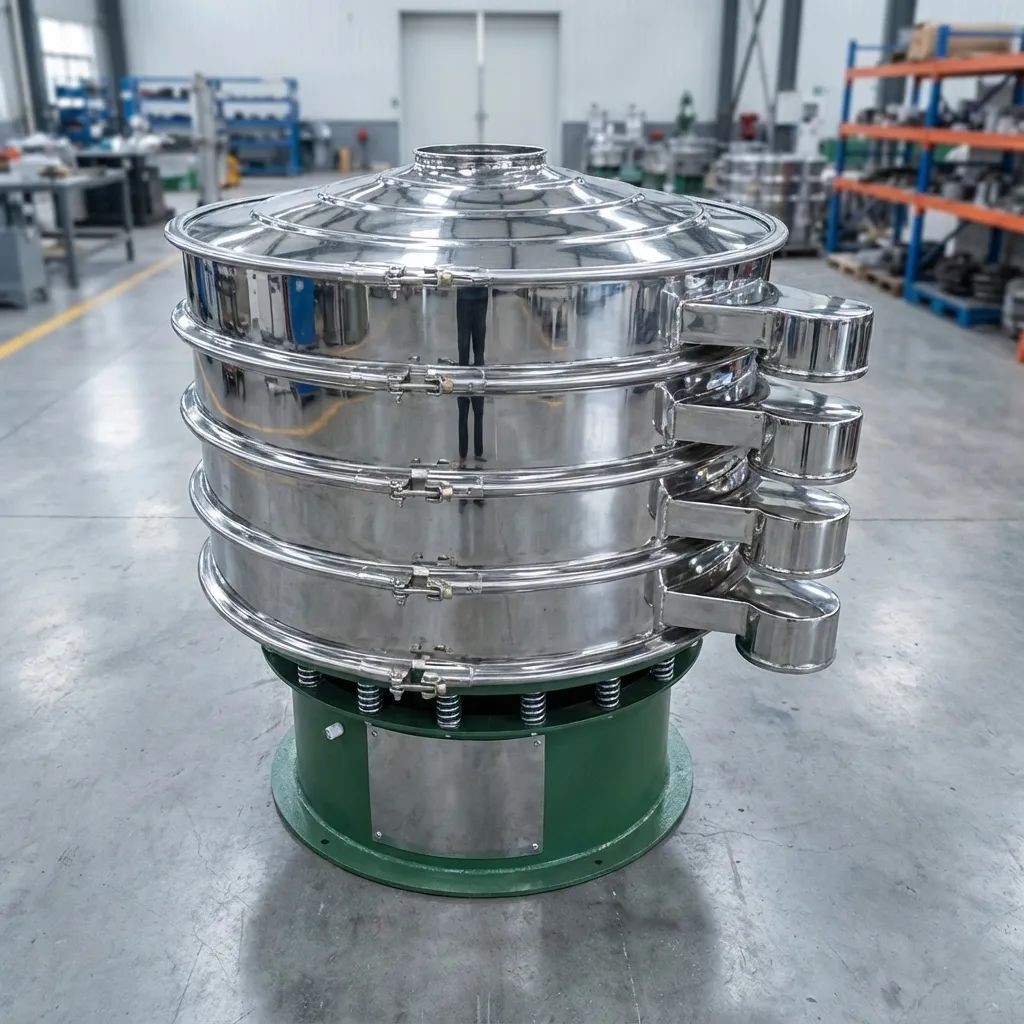
A vibratory sieve separates materials based on particle size to ensure uniform texture and quality. It uses controlled vibration to move powders or granules across mesh screens, filtering out oversized or unwanted particles.
Commonly used in flour milling, spice processing, and powdered food production, it helps maintain product consistency and prevents blockages in downstream equipment.
5. Emulsifier
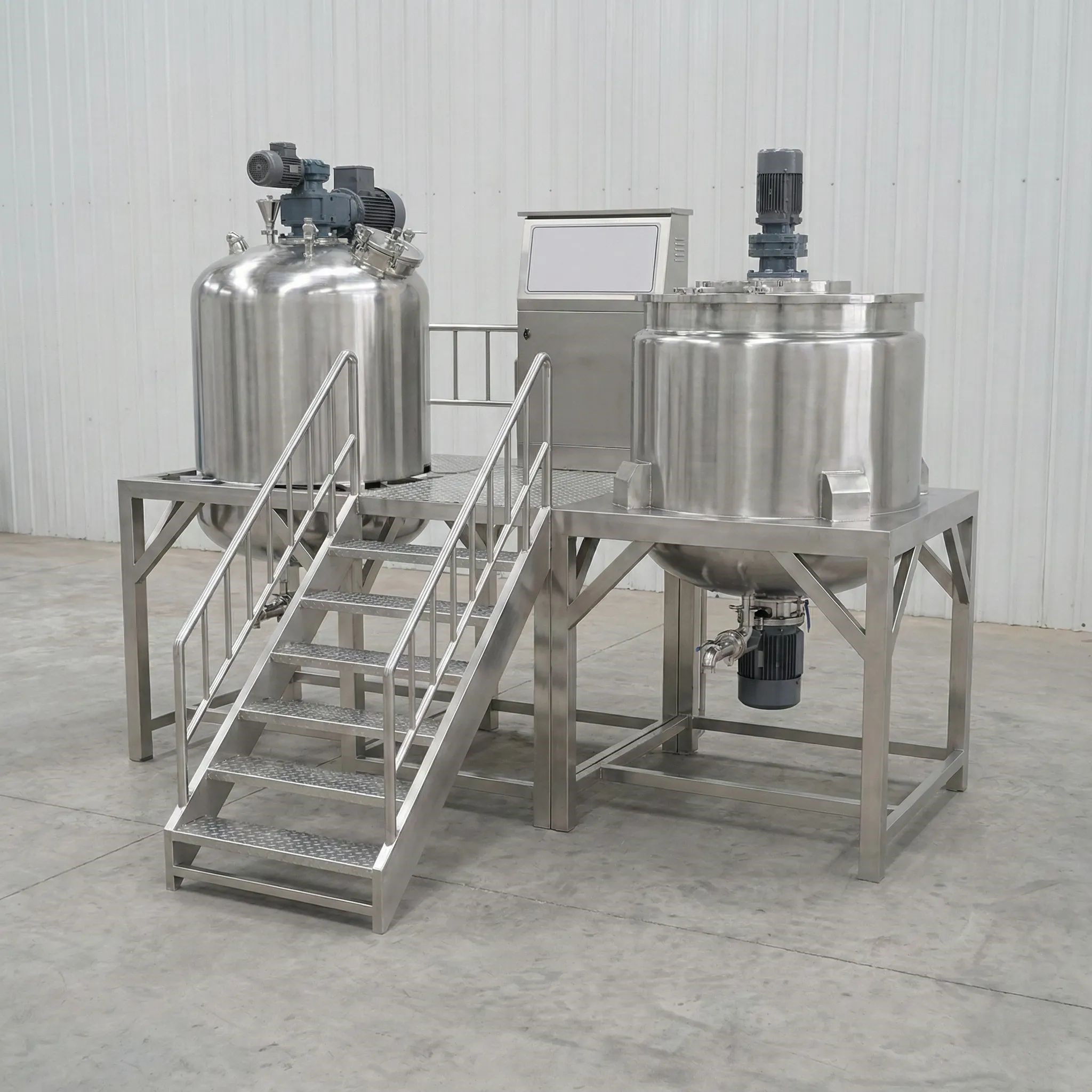
An emulsifier blends ingredients that normally don’t mix, such as oil and water, to create smooth and stable products.
It is essential in producing sauces, creams, dressings, and spreads where texture and consistency are critical.
Commonly used in dairy, condiment, and ready-meal facilities, emulsifiers ensure uniform quality and longer product stability across large-scale batches.
6. Ribbon Blender
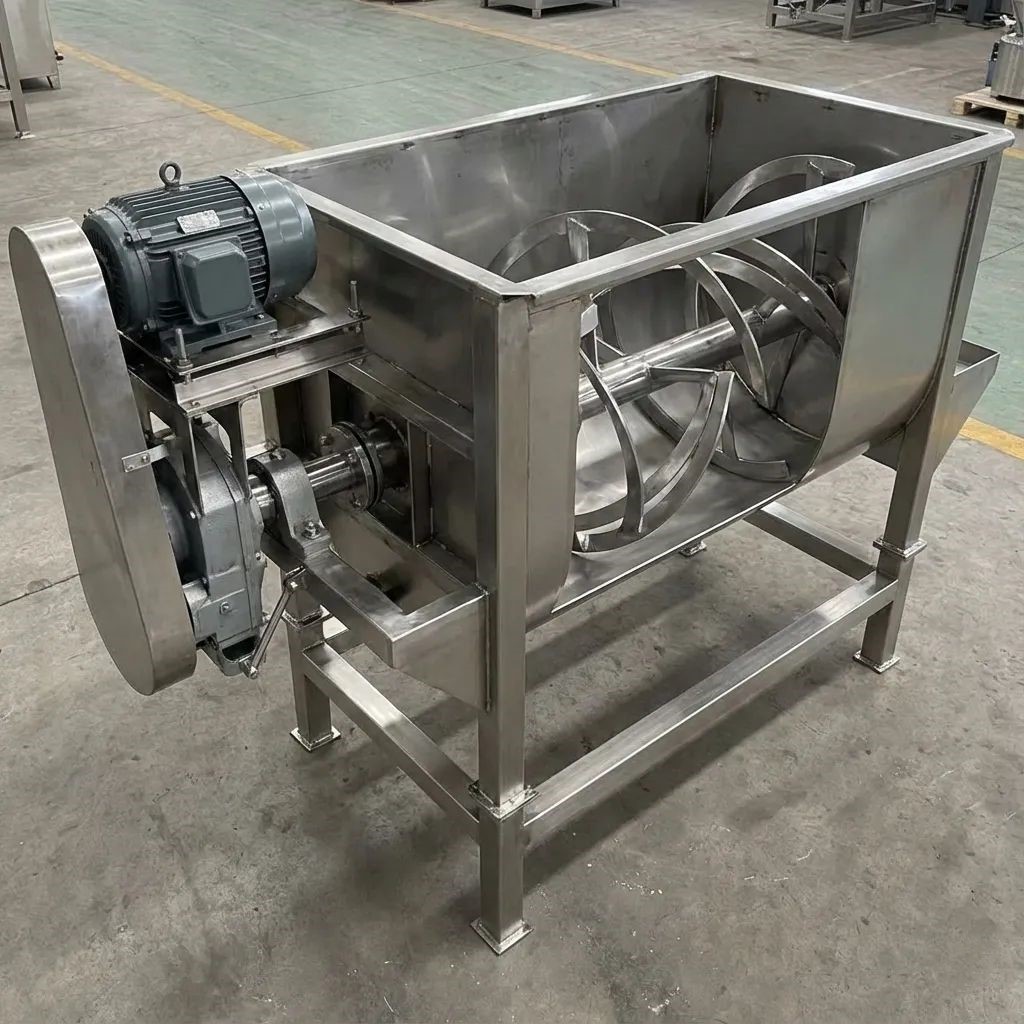
A ribbon blender efficiently mixes dry ingredients into a uniform blend using counter-flowing helical ribbons.
It’s widely used for bakery mixes, seasoning powders, and instant food formulations where consistency is essential.
Known for gentle yet thorough mixing, ribbon blenders offer high capacity, easy cleaning, and reliable performance across diverse industrial applications.
7. High-Shear Mixer
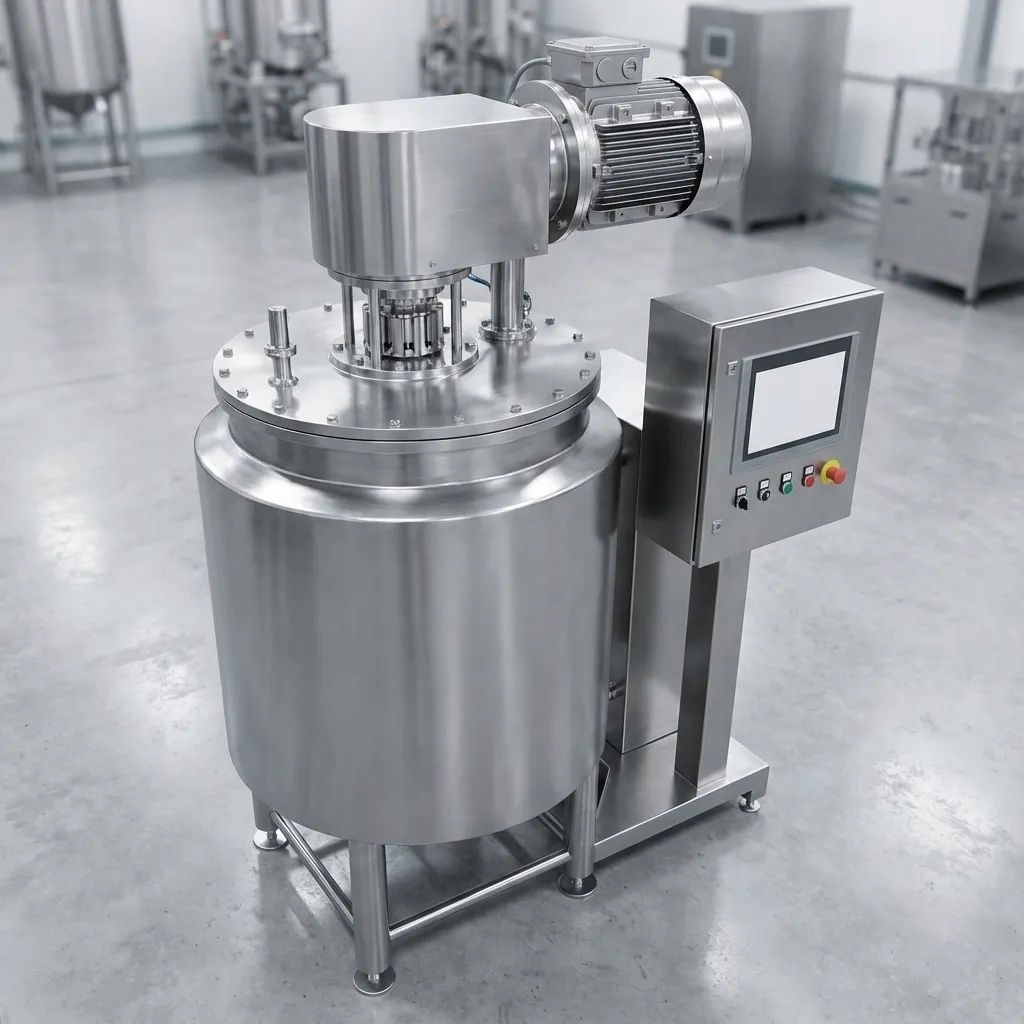
A high-shear mixer rapidly blends solids and liquids to create smooth, stable emulsions and dispersions. Its high-speed rotor-stator system breaks particles down to achieve fine, uniform textures in products like dressings, yogurts, sauces, and flavor concentrates.
Common in dairy, beverage, and condiment manufacturing, it ensures consistent quality and efficient mixing in large-scale production.
8. Decanter Centrifuge

A decanter centrifuge separates solids from liquids through high-speed rotational force, producing clear, refined outputs.
It is widely used in dairy processing to clarify milk or whey, in beverage production to remove pulp or sediment, and in edible oil refining to extract impurities.
By providing continuous, efficient separation, it enhances product quality and supports hygienic, large-scale processing.
9. Extruder
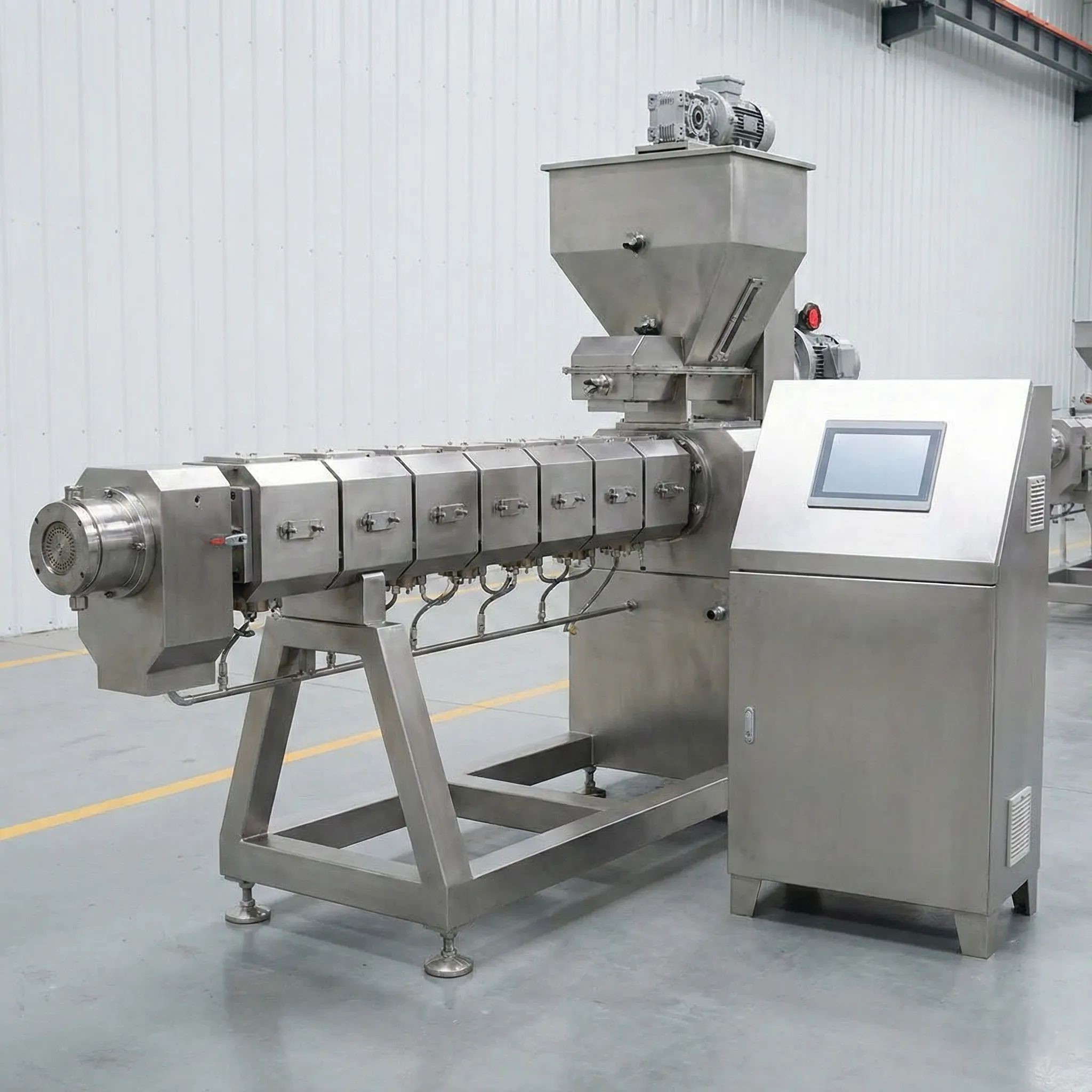
An extruder shapes and cooks food materials by forcing them through a die under controlled pressure and temperature.
It’s commonly used to produce snacks, breakfast cereals, pasta, and plant-based proteins with precise texture and density.
The process allows manufacturers to create uniform products at high speed, making extruders a key component in large-scale, continuous food production.
10. Industrial Oven
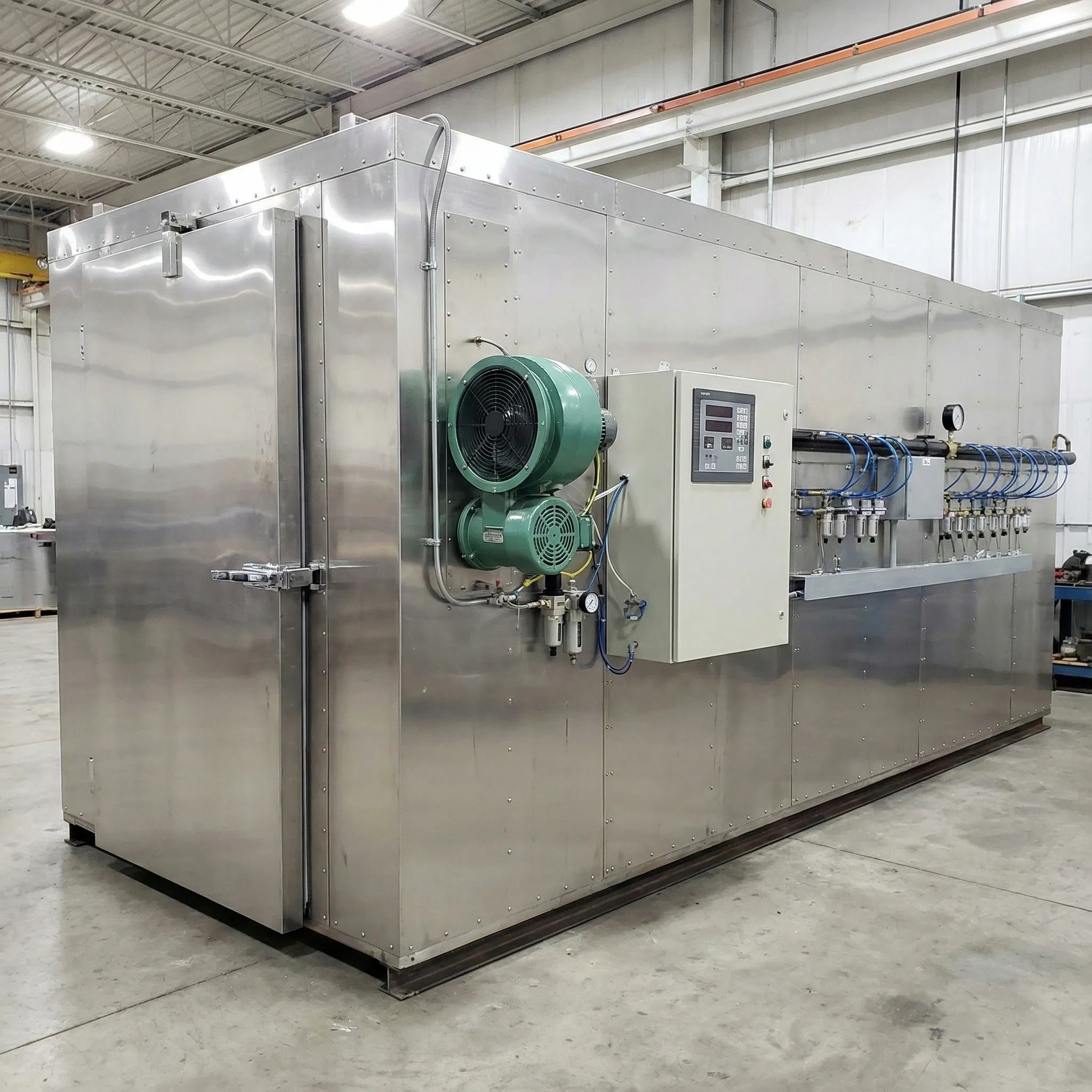
An industrial oven provides consistent heat for baking, roasting, and drying a wide range of food products.
It is used in bakery, meat, and ready-meal production to achieve uniform cooking and desired texture.
Designed for high-capacity operations, industrial ovens offer precise temperature control, energy efficiency, and durability to support continuous production in demanding environments.
11. Cooling Tunnel
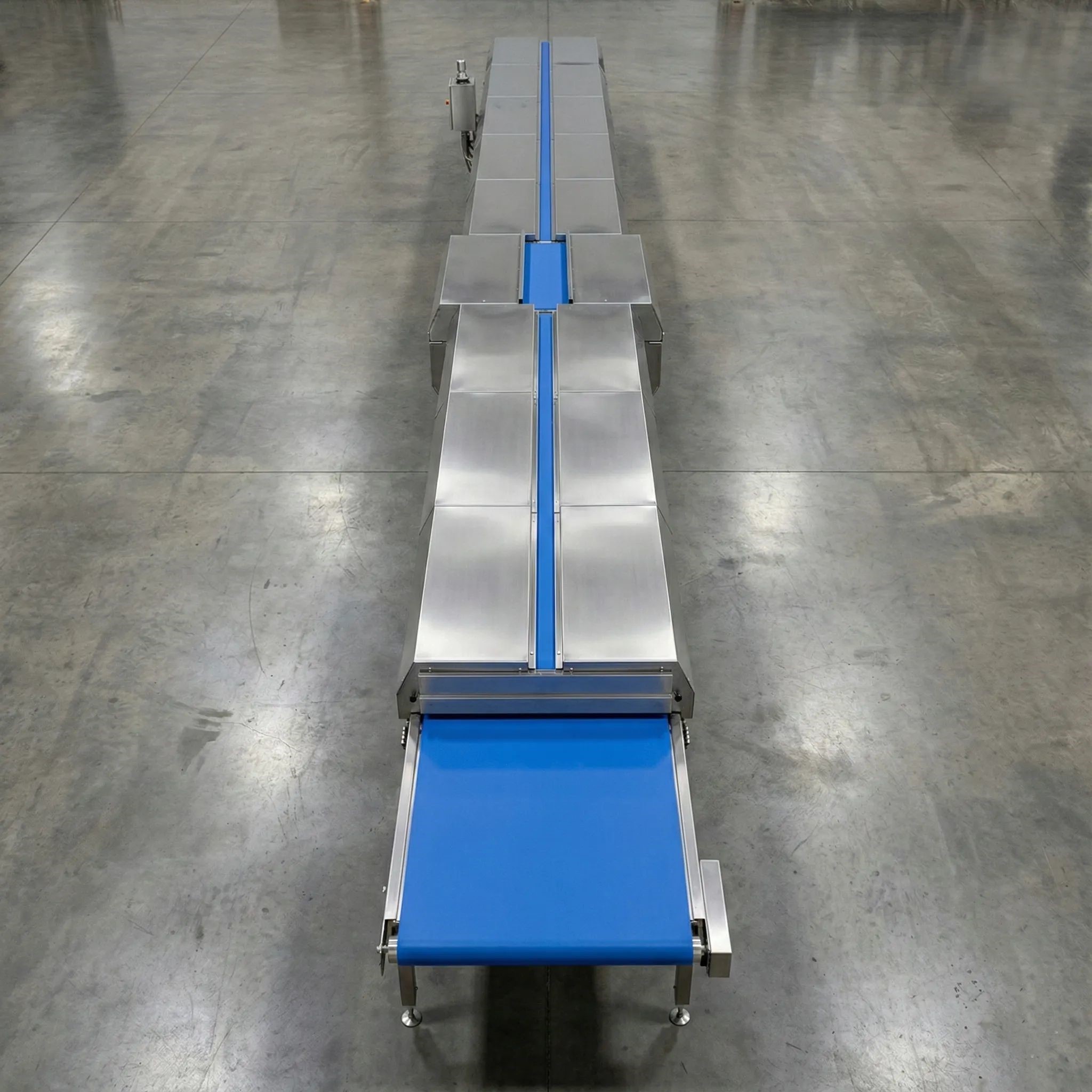
A cooling tunnel rapidly reduces the temperature of finished products to stabilize their structure and preserve quality.
It is commonly used in chocolate, confectionery, and baked goods manufacturing to set coatings or fillings before packaging.
By ensuring controlled cooling, it prevents deformation, maintains texture, and prepares products for efficient downstream handling.
12. Checkweigher
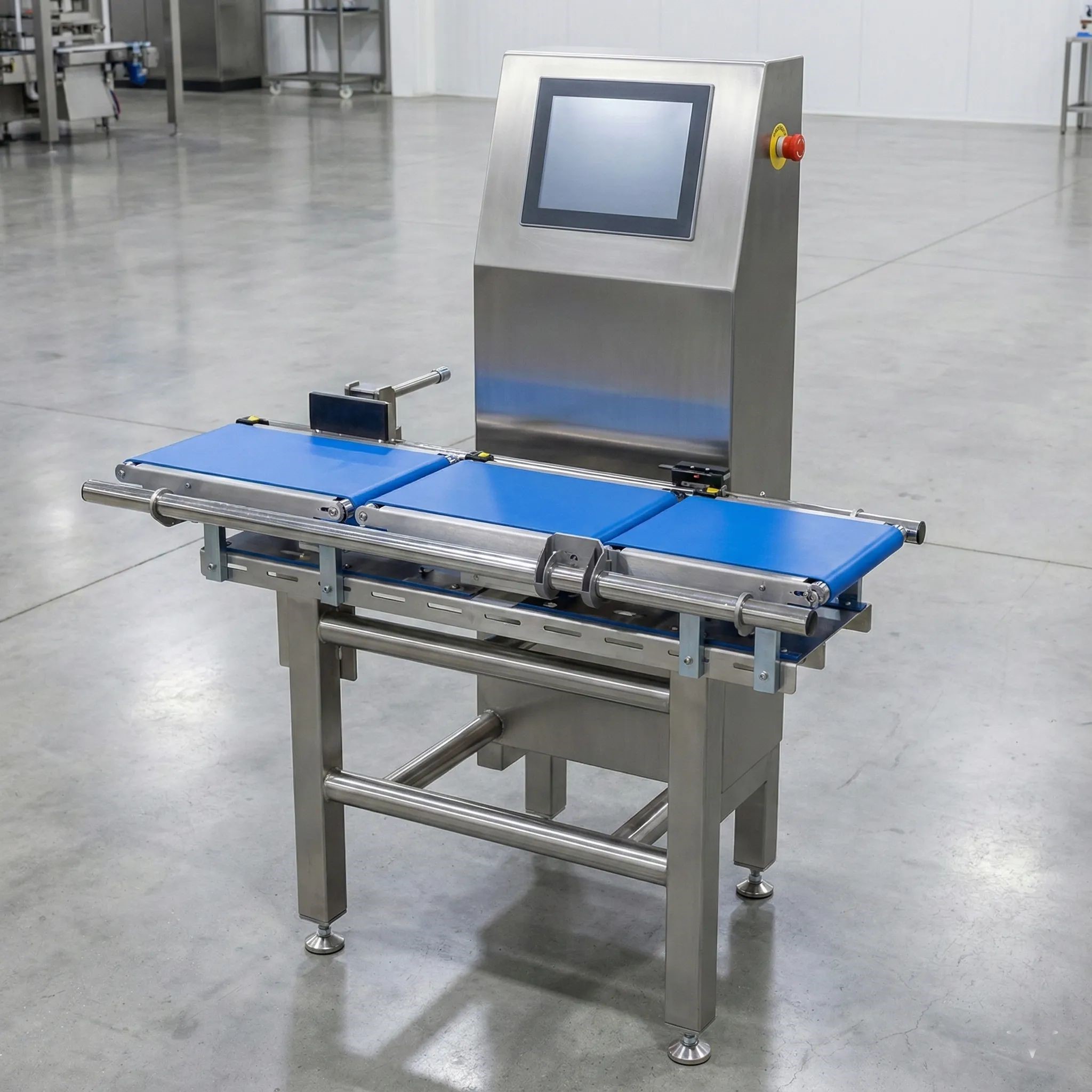
A checkweigher automatically measures the weight of packaged products as they move along the production line. It ensures each item meets the specified target weight for accurate labeling and regulatory compliance.
Commonly installed on high-speed packaging lines, it helps reduce product giveaway, maintain consistency, and improve overall quality control in food manufacturing.
13. Form-Fill-Seal Machine
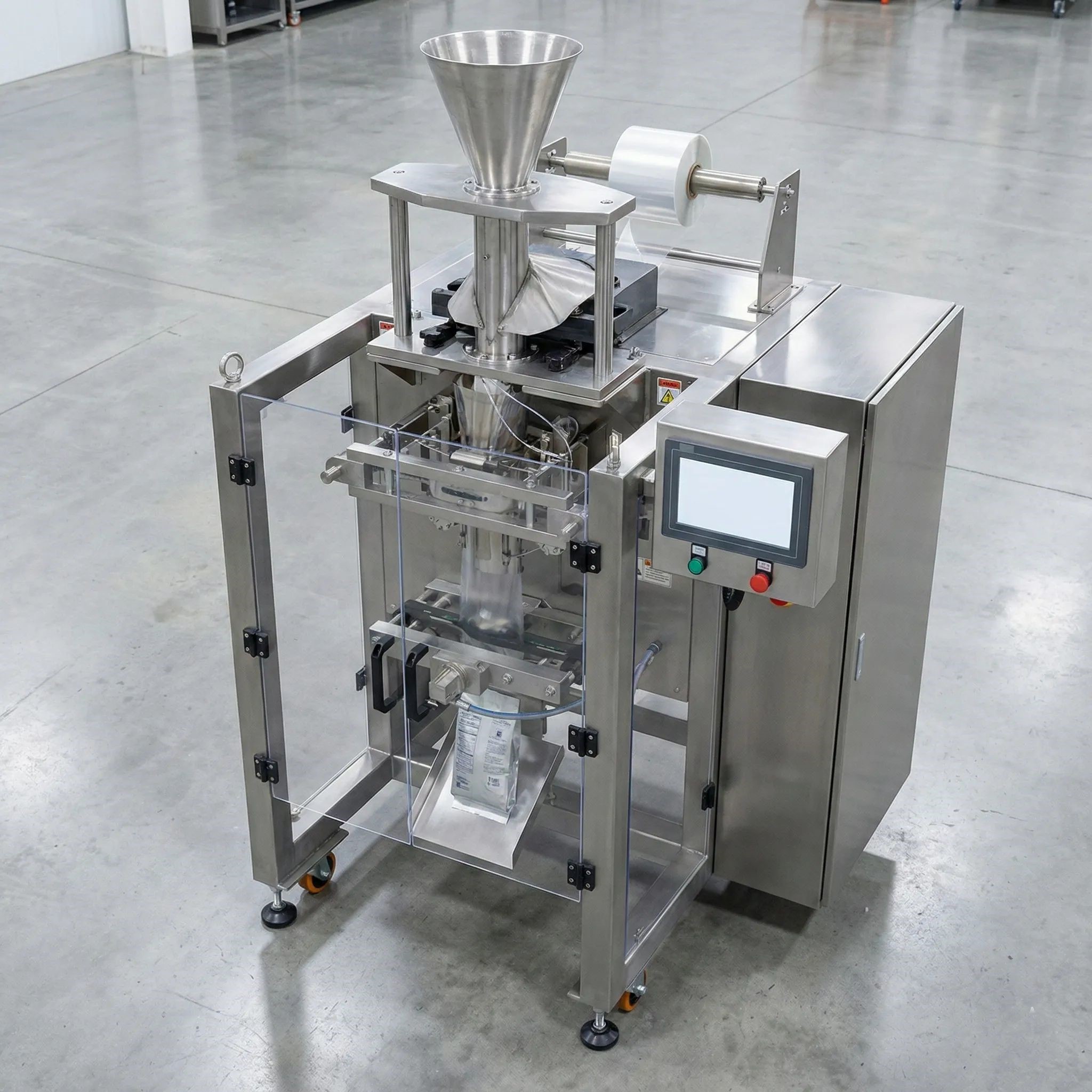
A form-fill-seal machine automates three key packaging steps: forming the film into pouches, filling them with product, and sealing them securely.
It is widely used for snacks, powders, frozen foods, and other consumer-ready products.
This system enhances packaging speed, reduces labor costs, and maintains hygiene standards, making it indispensable in modern food production facilities.
14. Steam Kettle
.jpg)
A steam kettle provides gentle, uniform heating for liquid and semi-liquid foods such as soups, sauces, and stews.
It uses indirect steam to prevent scorching while maintaining consistent temperature control.
Common in large-scale kitchens and food manufacturing plants, steam kettles are ideal for batch cooking, blending, and reducing products with reliable efficiency and food-safe operation.
15. Vacuum Sealer
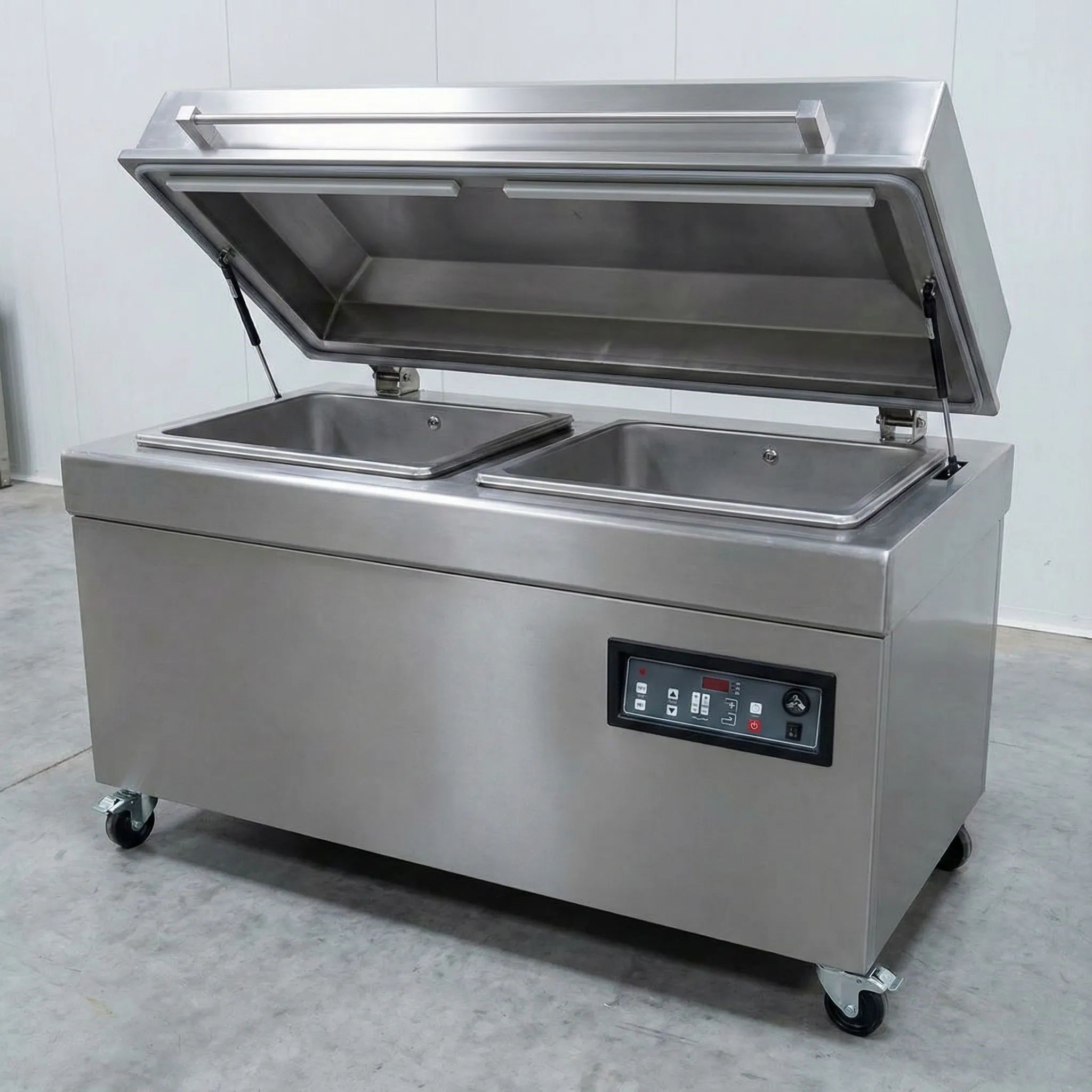
A vacuum sealer removes air from packaging before sealing to protect products from oxidation and spoilage.
It is widely used in meat, cheese, and ready-meal processing to extend shelf life and preserve freshness. It typically follows the commercial meat processing machines used for grinding, forming, and portioning.
By maintaining a controlled, airtight environment, vacuum sealing helps retain flavor, texture, and quality throughout storage and distribution.
16. X-Ray Inspection System
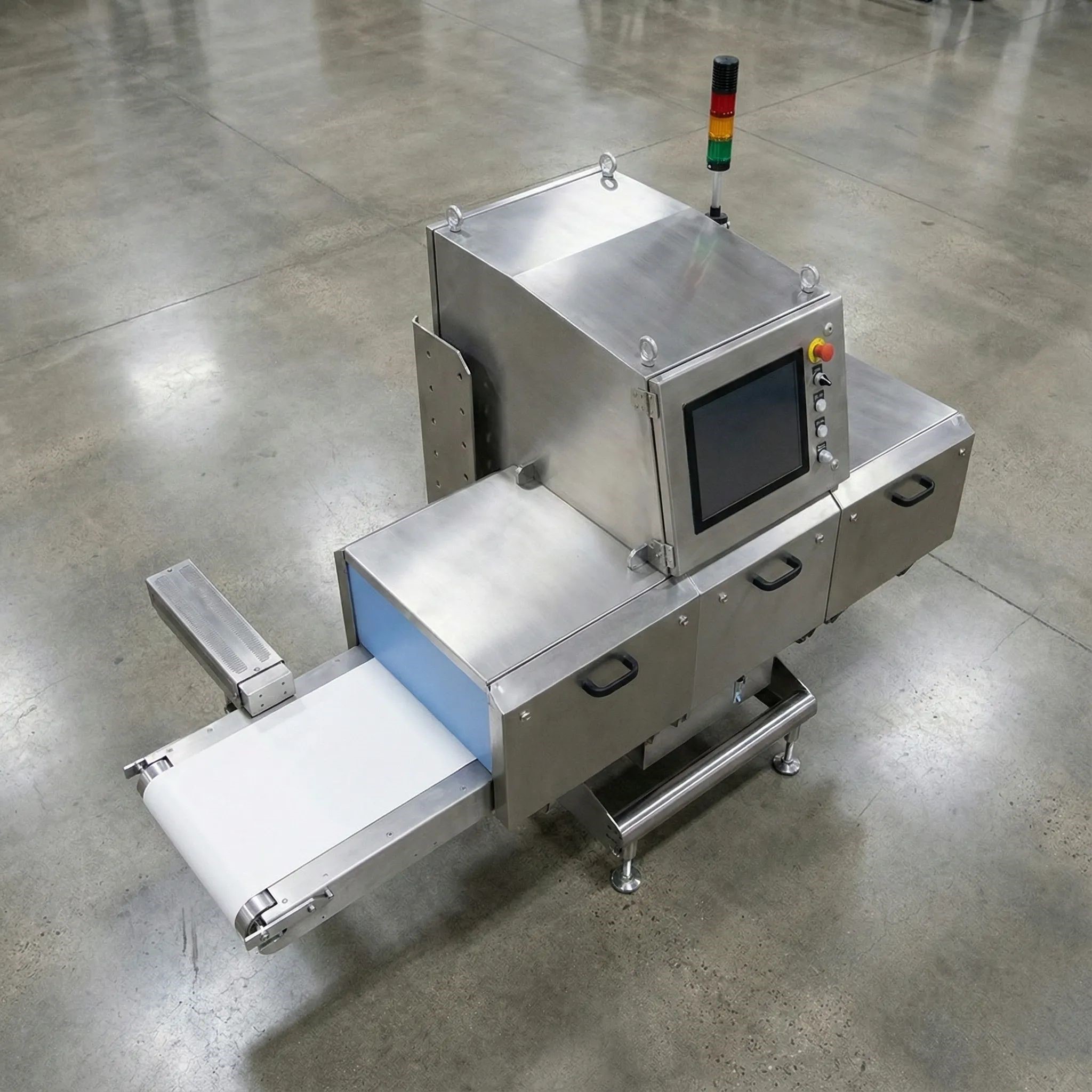
An X-ray inspection system enhances food safety by detecting non-metal contaminants such as glass, stone, or hard plastic inside sealed packages.
It is essential for high-value, premium, and export-grade products where strict quality standards apply.
Operating in real time, these systems provide precise detection and verification without opening packages, ensuring product integrity and regulatory compliance.
17. Optical Sorter
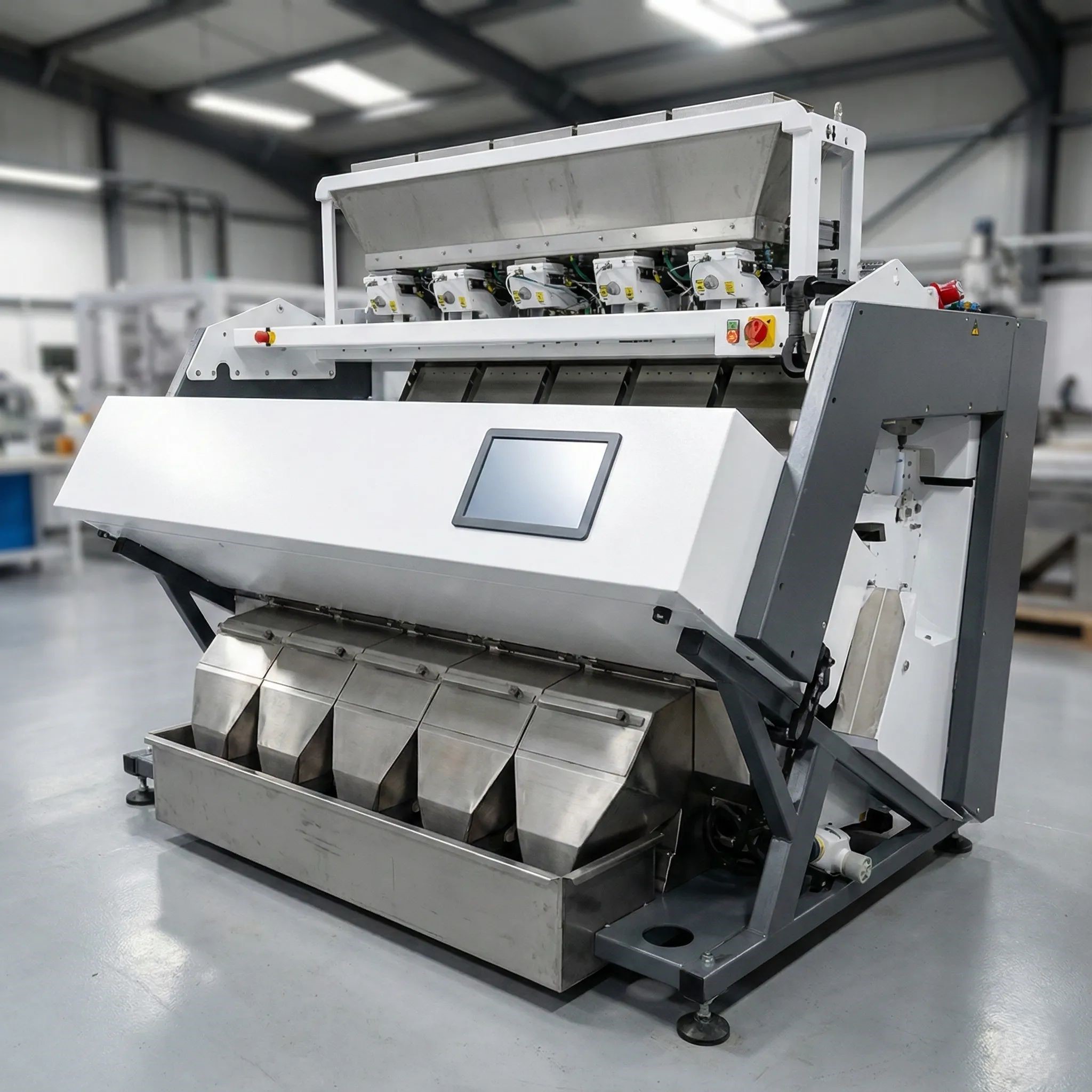
An optical sorter uses high-resolution cameras and sensors to detect color, size, or shape variations in food materials. It automatically identifies and removes defective, discolored, or foreign items to ensure consistent product quality.
Commonly used in produce, nut, and grain processing, optical sorters improve efficiency, reduce manual labor, and help maintain strict quality and safety standards in large-scale operations.
18. Bucket Elevator
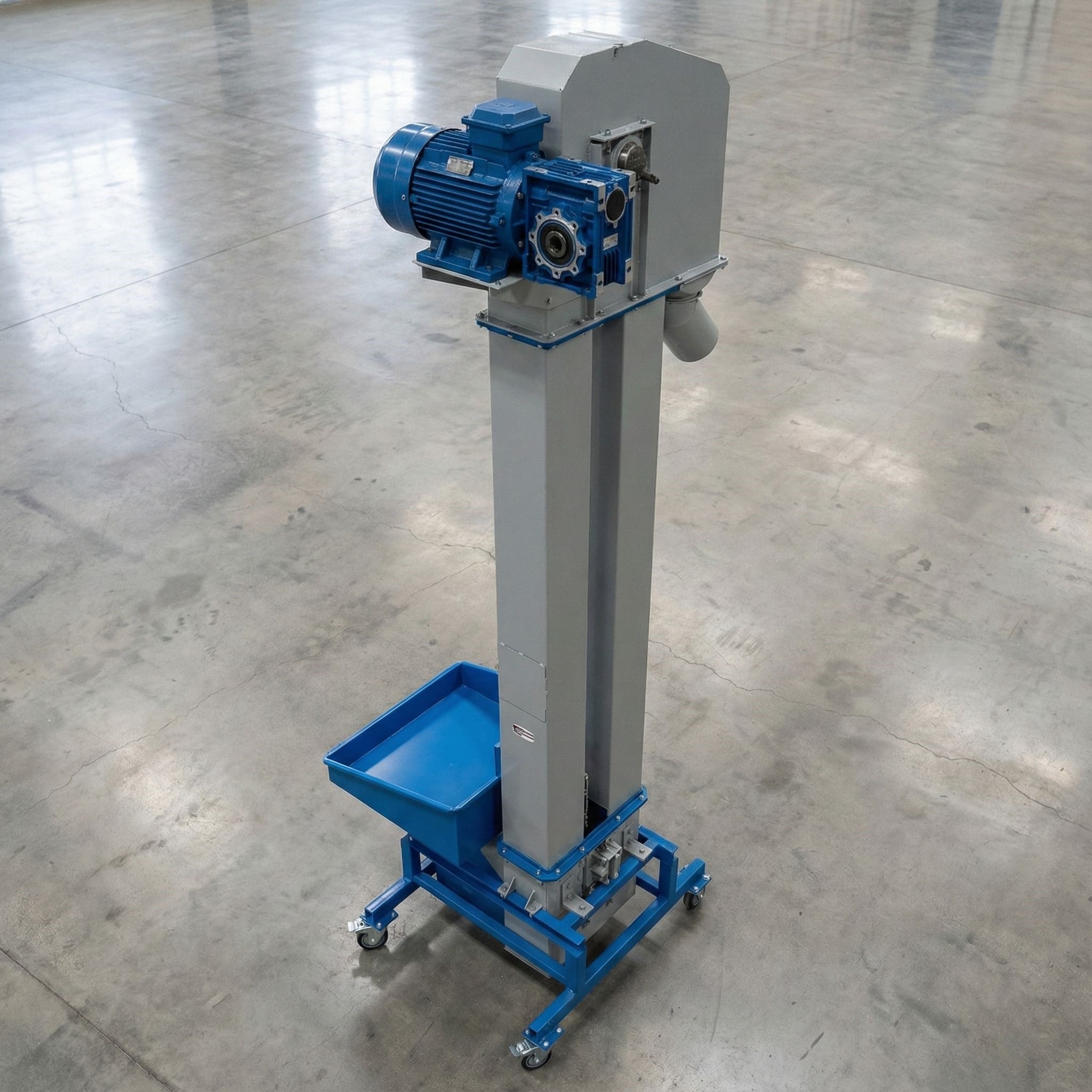
A bucket elevator transports bulk or granular ingredients vertically between different points in a production facility.
It efficiently moves materials such as grains, powders, or frozen goods from storage bins to processing hoppers or packaging lines.
Designed for continuous, high-capacity transfer, bucket elevators save space and improve material flow in large industrial operations.
19. Membrane Filtration System
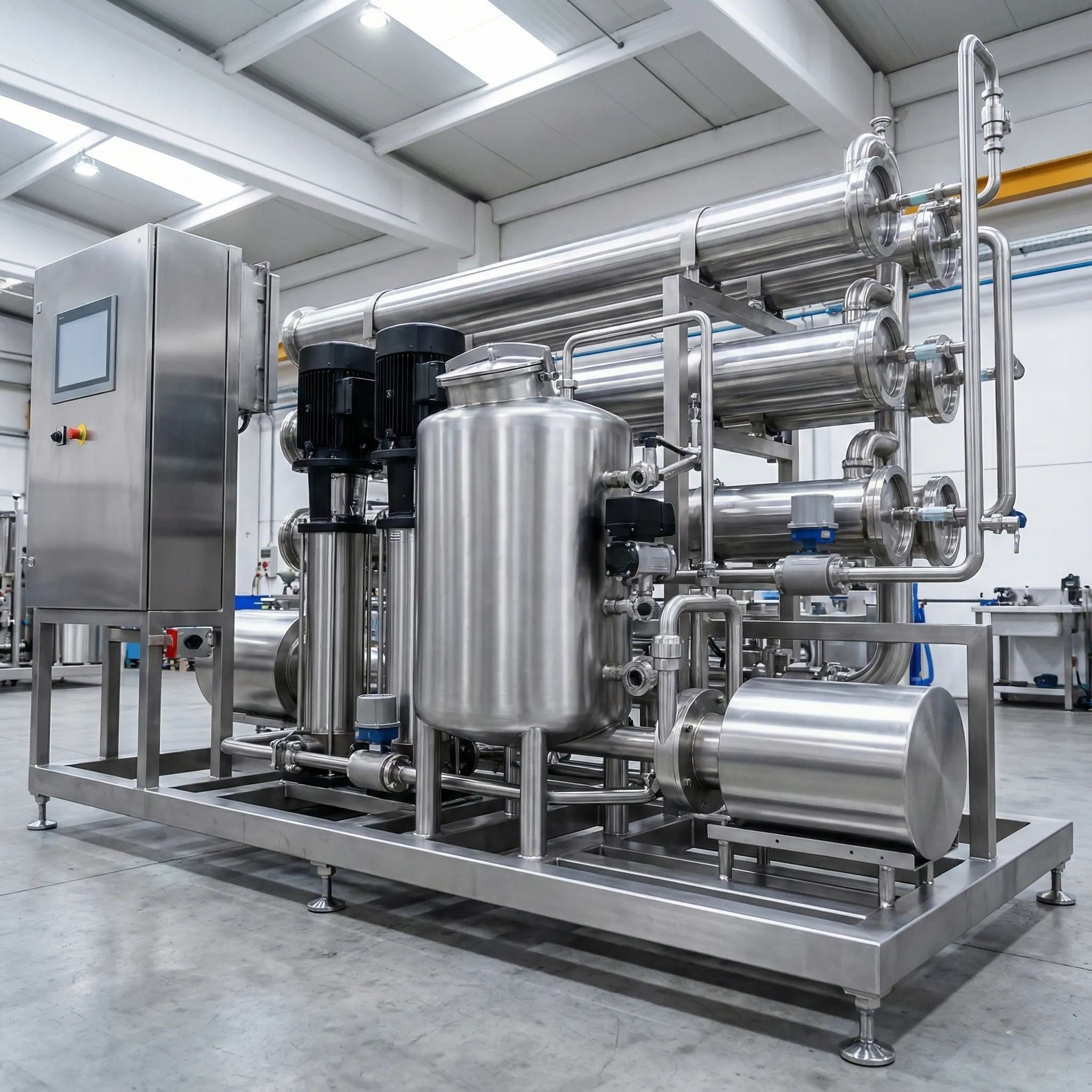
A membrane filtration system uses semi-permeable membranes to separate particles, microorganisms, and impurities from liquids.
It is commonly used in beverage, dairy, and water treatment applications to achieve product clarity and microbiological safety.
By providing precise filtration without affecting taste or composition, these systems ensure purity, consistency, and compliance with food industry standards.
20. CIP (Clean-in-Place) System
%20System.jpg)
A CIP system automates the cleaning and sanitization of equipment such as pipelines, tanks, and mixers without requiring disassembly.
It circulates cleaning solutions through closed systems to remove residue, bacteria, and buildup efficiently.
Common in dairy, beverage, and sauce manufacturing, CIP systems maintain hygiene, reduce downtime, and support consistent compliance with food safety regulations.
Conclusion
Industrial food manufacturing depends on a wide range of advanced equipment designed to maintain safety, efficiency, and consistency at every stage of production. From emulsifiers and mixers to conveyors, pasteurizers, and inspection systems, each machine plays a vital role in ensuring reliability and precision across operations.
Understanding these commonly used machines helps manufacturers optimize processes, extend equipment lifecycles, and make smarter capital decisions. By integrating the right mix of technology and maintenance practices, industrial enterprises can reduce waste, improve quality control, and sustain long-term operational excellence.
Contact Amplio to connect with verified buyers and sellers of surplus food processing equipment. Whether you’re looking to recover value or source reliable assets, our AI-powered private marketplace helps you do it faster, transparently, and with full confidence.