Why Surplus Inventory Hurts Manufacturers More Than It Seems

Introduction
Surplus inventory can look like a past expense. The purchase has already been made, so leaving unused stock in place may seem less costly than spending more time and money to deal with it.
But the financial impact does not stop when the purchase order is closed.
Once inventory no longer supports production or maintenance, it can keep consuming resources while the value the business can recover from it declines. What looks inactive on the warehouse floor can still create an ongoing cost for the business.
The Cost of Surplus Does Not Stop After Purchase
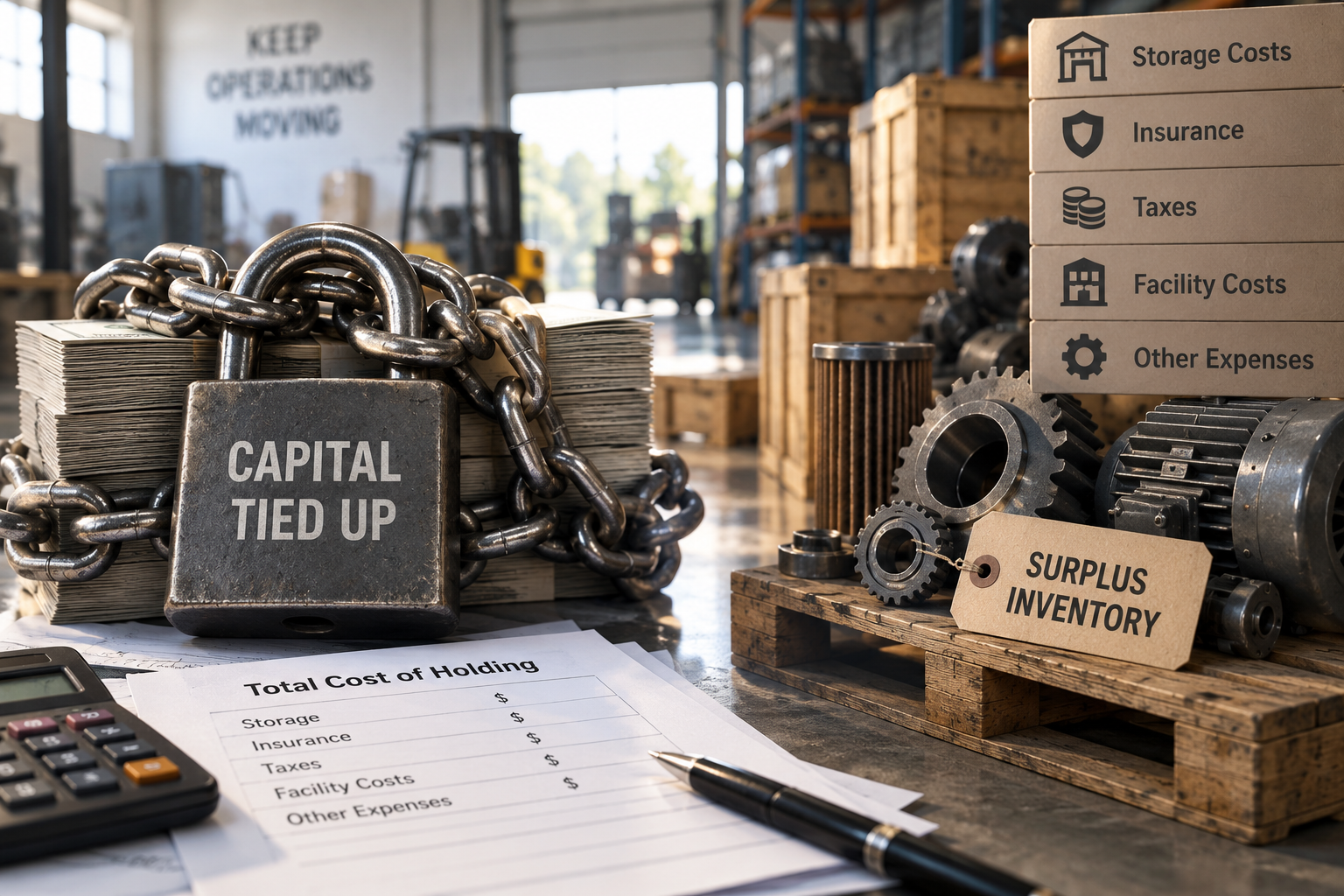
The purchase may already be complete, but the financial impact of surplus inventory continues while the asset remains unused.
Capital stays tied up in machinery, spare parts, and Maintenance, Repair, and Operations (MRO) inventory the business no longer needs. Manufacturers may also continue paying for storage, insurance, taxes, facility costs, and other expenses required to hold that inventory.
The scale of that financial exposure can become significant across a large manufacturing network. “Generally, our typical project is $5 to $10 million of surplus spread across a handful of facilities,” said Luke Crihfield, Senior Director of Revenue at Amplio. “Larger projects, $50 million in surplus.”
When that much value remains tied up in unused assets, the cost is not limited to what the company originally paid. Capital stays locked in inventory while holding costs continue until the assets are redeployed, sold, or otherwise removed from the business.
Surplus Inventory Adds Cost Without Protecting Production

Manufacturers often hold extra inventory for valid reasons. Critical spare parts, long supplier lead times, and shortage risk can justify keeping more stock on hand to protect uptime.
The problem starts when production requirements change but the inventory remains. A part that once supported maintenance or protected against disruption may no longer have a clear operational use.
At that point, the manufacturer still carries the cost of the inventory without receiving the production protection that originally justified it. Surplus can remain on hand long after its original operational purpose has ended.
Idle Inventory Still Consumes Space and Employee Time

Inventory does not stop creating work simply because it stops moving through production. Warehouse, procurement, and maintenance teams may still need to count it, inspect it, move it, reconcile records, review demand, and confirm whether another facility can use it.
That work adds labor cost to inventory that is no longer producing value. If the stock is later sold, recycled, or disposed of, employees may spend even more time identifying, sorting, packaging, and preparing it for removal.
Surplus also consumes warehouse capacity. Rack positions and floor space occupied by unused materials cannot support active inventory, production equipment, staging, or other current needs. The cost of surplus includes both the resources needed to manage it and the warehouse capacity the business cannot use for active operations.
Our clients report annual carrying costs between 10-25% of asset value. That is, they estimate that $1 million of assets costs them $100,000 to $250,000 to hold every year – if that inventory is surplus, it’s wasted operational efficiency.
Surplus Blocks New Operational Priorities
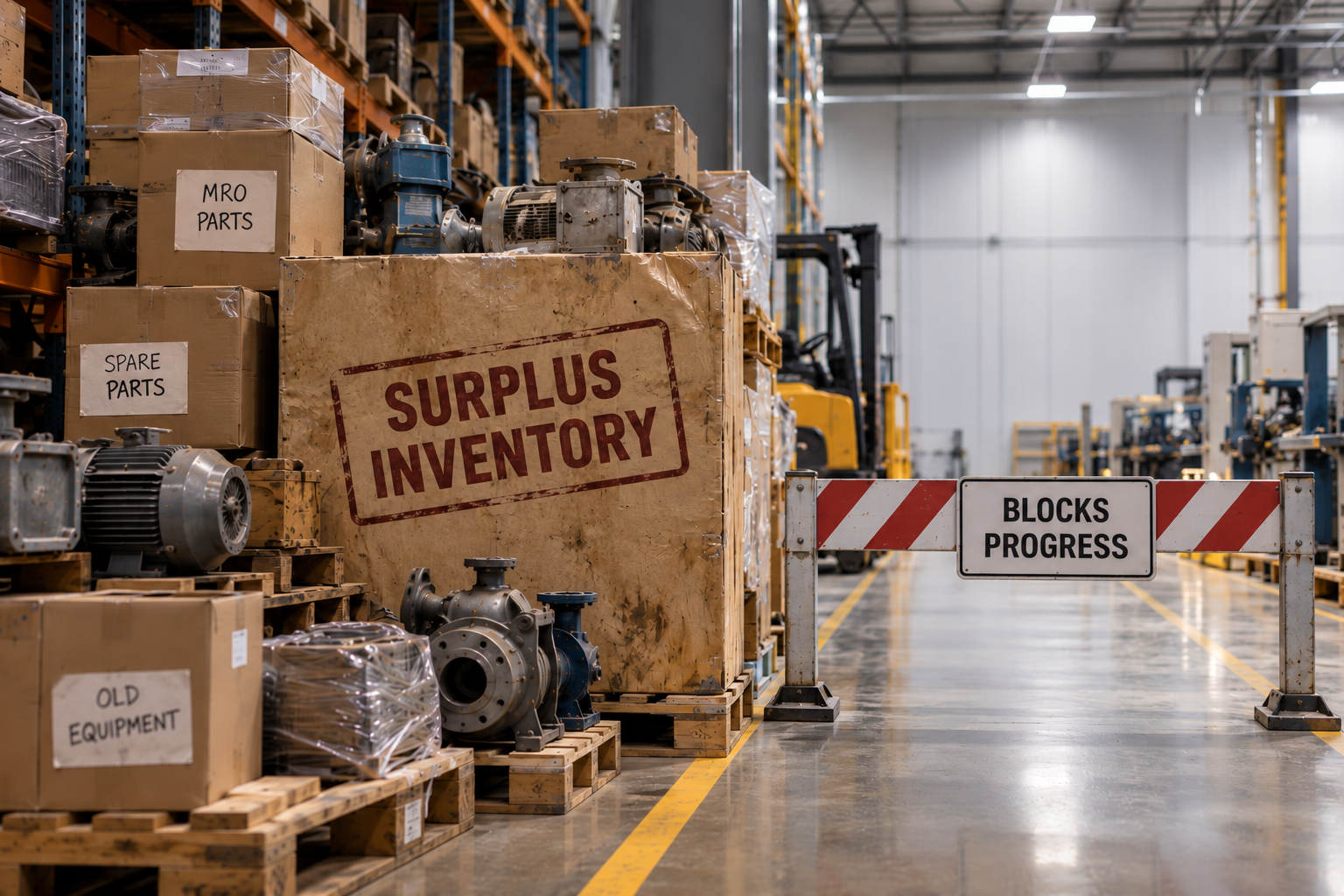
The impact of surplus goes beyond the cost of keeping it. Space, capital, and internal resources tied up in unused inventory cannot be directed toward higher-priority operational needs.
Surplus can make it harder to install new equipment, reorganize warehouse space, consolidate facilities, support new production, or fund higher-priority projects. A warehouse filled with unused parts or machinery may leave less room for active inventory, staging, or equipment needed for current operations.
This creates an opportunity cost that is easy to overlook. Surplus does not just consume resources while it sits. It can also delay what the business needs to do next.
Waiting Reduces What Your Surplus Is Worth
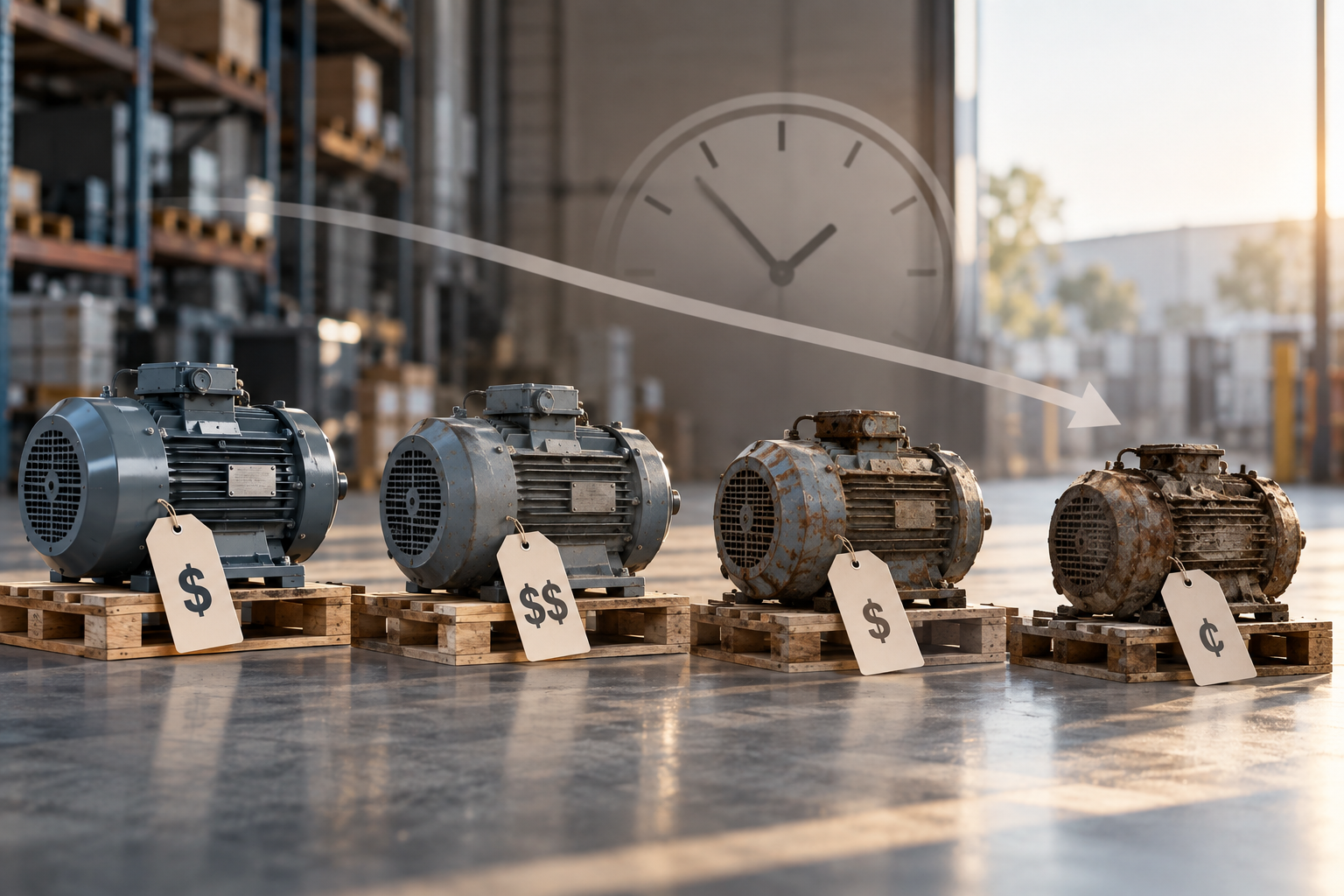
Surplus inventory can lose recovery value the longer it remains unused. Buyer demand may fall, equipment can become outdated, specifications may change, and newer alternatives may enter the market.
As an asset loses market value, freight and removal costs can consume a larger share of the amount recovered. These factors can also limit surplus asset recovery options. An item that once made sense to redeploy or resell may later have fewer viable recovery paths.
The cost of waiting therefore goes beyond another year of storage. Manufacturers may also lose part of the value they could have recovered by acting earlier.
How Amplio Helps Manufacturers Recover Value From Surplus Inventory
At Amplio, we combine AI-powered analysis with industrial asset recovery expertise to help manufacturers identify surplus, determine the right recovery path, and execute the process across multiple facilities.
Identify Surplus Across Multiple Facilities
Our AI helps review and organize asset data across ERP, CMMS, inventory, procurement, finance, and warehouse systems. This gives our team better visibility into surplus, duplicate stock, and internal reuse opportunities across plants and business units.
Build the Right Recovery Plan
We use AI-assisted appraisal and secondary-market data to assess asset value, market demand, location, and logistics. Our team then helps determine the right path for each asset, including internal redeployment, resale, liquidation, recycling, retention, or disposal.
Execute and Track the Recovery Strategy
Once the recovery plan is approved, our team helps manage buyer outreach, sales, logistics, asset removal, and responsible disposition. We also help manufacturers track outcomes such as value recovered, assets removed, and space freed.
Through our surplus asset management services, we provide a structured way to recover value from surplus inventory across your operations.
Contact us to get started.