Top 15 Automotive Machines Used in Modern Vehicle Manufacturing and Repair

Automotive machines are the backbone of modern vehicle manufacturing and repair. Without the right auto machinery, factories cannot hit production targets, and repair shops cannot deliver consistent results.
In today’s automotive industry, these machines drive speed, precision, and quality control across every stage of production, from forming metal and machining engine parts to assembly and inspection. This shift is not theoretical. In 2024, U.S. automakers installed 13,700 industrial robots on production lines, reflecting how heavily modern vehicle manufacturing depends on automation and advanced automotive machinery.
In this guide, you will learn what each automotive machine does, where it’s used, and what it helps you do in real manufacturing and repair workflows. The goal is to help you evaluate equipment choices with more clarity and fewer assumptions.
What Is an Automotive Machine?
An automotive machine is specialized equipment used to manufacture, repair, or rebuild vehicles and vehicle components. This includes machines used for engine work, structural fabrication, automotive parts machining, and workshop service operations.
In simple terms, automotive machine tools help you create parts, assemble vehicles, and fix problems with speed, accuracy, and consistent quality, so you can serve production demand and customer service needs without delays.
1) Conveyor Systems

Conveyor systems are a core part of auto machinery in modern vehicle production. They move vehicles, sub-assemblies, and parts through the factory in a timed production flow, which keeps manufacturing automotive components fast, safe, and consistent. This type of flow control is common in manufacturing machines used in production lines across many industries.
Common Use Cases
- Original Equipment Manufacturer (OEM) assembly lines
- Tier supplier production lines
- Paint and finishing lines
Key Outcomes
- Move parts and vehicles safely between stations
- Keep production speed consistent
- Reduce manual handling and workflow delays
2) Industrial Assembly Robots

Industrial assembly robots are a major part of modern automotive machinery because they handle repetitive tasks with extreme consistency. In high-volume vehicle production, this type of auto machinery improves quality control by reducing variation in how parts are positioned, fastened, or installed, helping plants meet cycle time and quality targets.
Common Use Cases
- Body-in-white lines
- Final assembly stations
- High-volume component plants
Key Outcomes
- Assemble parts with consistent torque and placement
- Reduce defects caused by human variation
- Speed up repetitive production tasks
3) Automotive CNC Machines

Automotive Computer Numerical Control (CNC) machines are some of the most important automotive machine tools used for producing high-precision metal components. In CNC machines for automotive industry workflows, milling and turning make it possible to manufacture automotive components with consistent tolerances, which directly affects engine performance, fit, and long-term reliability.
Common Use Cases
- Tier supplier machining shops
- Engine and drivetrain component manufacturing
- Prototype and tooling departments
Key Outcomes
- Machine metal parts with tight tolerances
- Produce repeatable parts at scale
- Support automotive parts machining and precision manufacturing
4) Jig Welders

Jig welders and fixtures are a key part of automotive machinery because they lock parts into the correct position before welding begins. In vehicle manufacturing, this type of automotive machine equipment helps maintain structural accuracy, which directly impacts fit, safety, and quality control.
Common Use Cases
- Frame and chassis production
- Body panel welding lines
- Fabrication stations in supplier plants
Key Outcomes
- Hold parts in exact alignment before welding
- Improve weld consistency and structural geometry
- Reduce distortion and rework
5) Hydraulic Presses

Hydraulic presses are heavy-duty automotive machines used to shape sheet-metal parts under controlled force. In the manufacturing of automotive components, stamping and forming presses enable the production of consistent parts at high volume, supporting faster assembly and consistent fit-up.
Common Use Cases
- OEM stamping plants
- Tier supplier sheet metal production
- Structural part manufacturing lines
Key Outcomes
- Form sheet metal into repeatable shapes
- Produce brackets, mounts, and structural panels at scale
- Reduce manual forming time and variation
6) Injection Molding Machines

Injection molding machines are essential automotive machinery used to produce plastic parts with consistent shape and repeatable quality. In modern vehicle manufacturing, these automotive machines support faster assembly by creating standardized components that fit correctly across thousands of vehicles.
Common Use Cases
- Polymer components plants
- Interior trim manufacturing
- Sensor housing and under-hood component production
Key Outcomes
- Produce consistent plastic parts in high volume
- Reduce part weight while maintaining fit
- Support fast assembly with standardized components
7) Automated Inspection Systems

Automated inspection systems are used to check parts and assemblies for defects, alignment issues, and missing components. In modern automotive manufacturing, vision and measurement equipment support quality control by catching problems early, before a vehicle or part moves further down the line. They generate inspection results you can share across production, QA, and supplier teams.
Common Use Cases
- End-of-line inspection stations
- Supplier QA departments
- Weld and assembly verification cells
Key Outcomes
- Detect missing parts, misalignment, or defects early
- Reduce warranty issues and recalls
- Improve quality control with measurable standards
8) Automotive Lifts

Automotive lifts are essential auto repair shop equipment because they raise a vehicle safely for inspections, servicing, and mechanical repairs. In a professional automobile garage, this type of automotive machine equipment improves workflow speed while protecting technicians during heavy underbody work.
Common Use Cases
- Mechanical repair shops
- Dealership service bays
- Suspension and brake workshops
Key Outcomes
- Access underbody components safely
- Speed up inspections and repairs
- Reduce injury risk during heavy mechanical work
9) Diagnostic Scanners
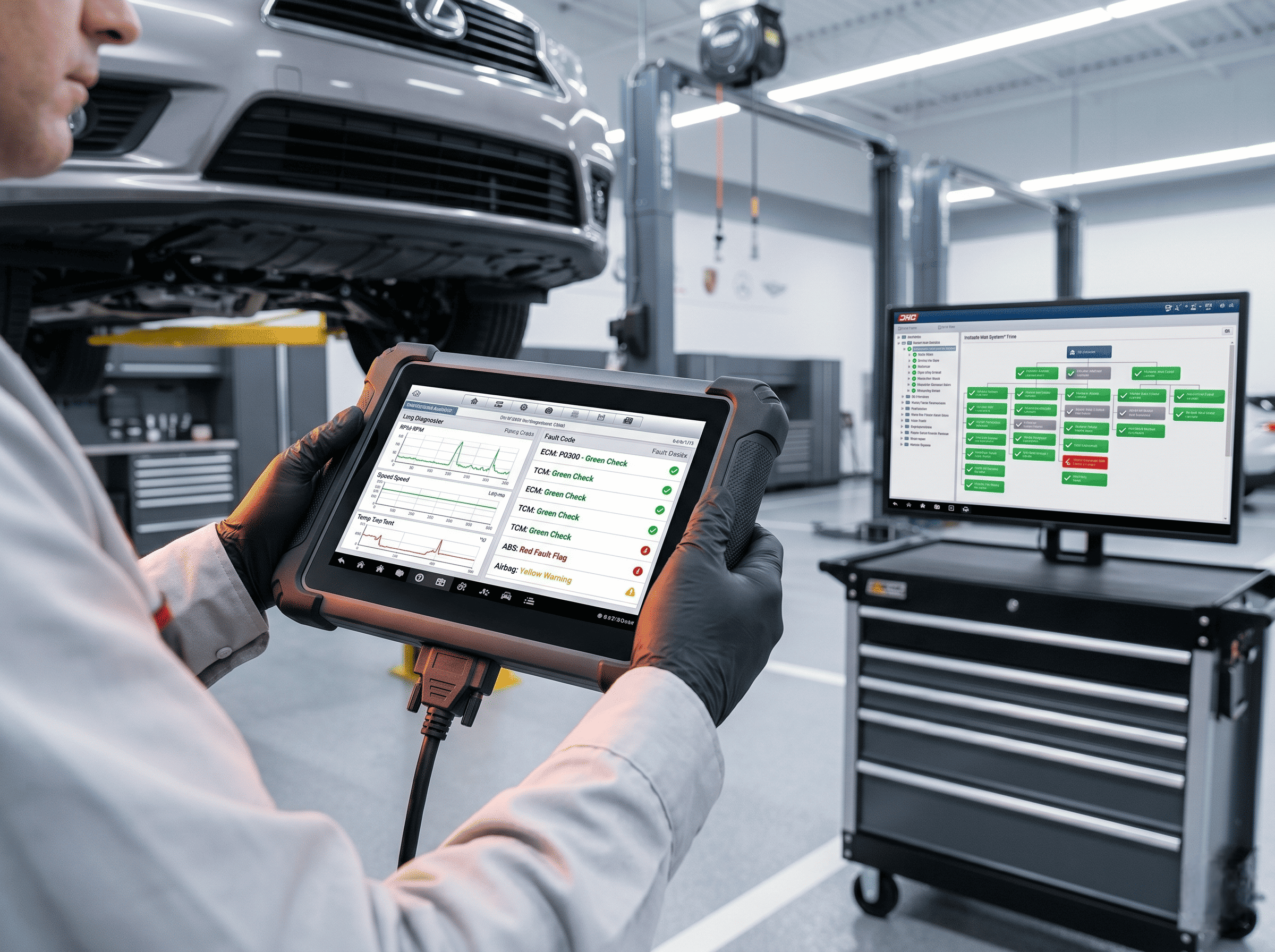
Diagnostic scanners are automotive machines used to communicate with a vehicle’s computer systems and retrieve real-time information. In modern automotive repair equipment setups, On-Board Diagnostics II (OBD II) scan tools help technicians diagnose engine, transmission, Anti-lock Braking System (ABS), and airbag problems faster, with clearer data. This improves the repair experience by reducing guesswork and repeat visits.
Common Use Cases
- Repair workshops
- Dealership diagnostic departments
- Fleet maintenance facilities
Key Outcomes
- Read fault codes and live vehicle data
- Identify electrical and sensor issues faster
- Reduce trial-and-error troubleshooting
10) Wheel Alignment Machines

Wheel alignment machines are a standard part of modern automotive repair equipment because they measure and adjust wheel angles with precision. This automotive machine equipment helps restore factory alignment specifications, which directly affects tire wear, steering control, and driving safety.
Common Use Cases
- Tire and alignment shops
- Dealership service centers
- Suspension and steering repair workshops
Key Outcomes
- Correct toe, camber, and caster to spec
- Fix uneven tire wear and steering pull
- Improve safety, handling, and fuel efficiency
11) Tire Changers
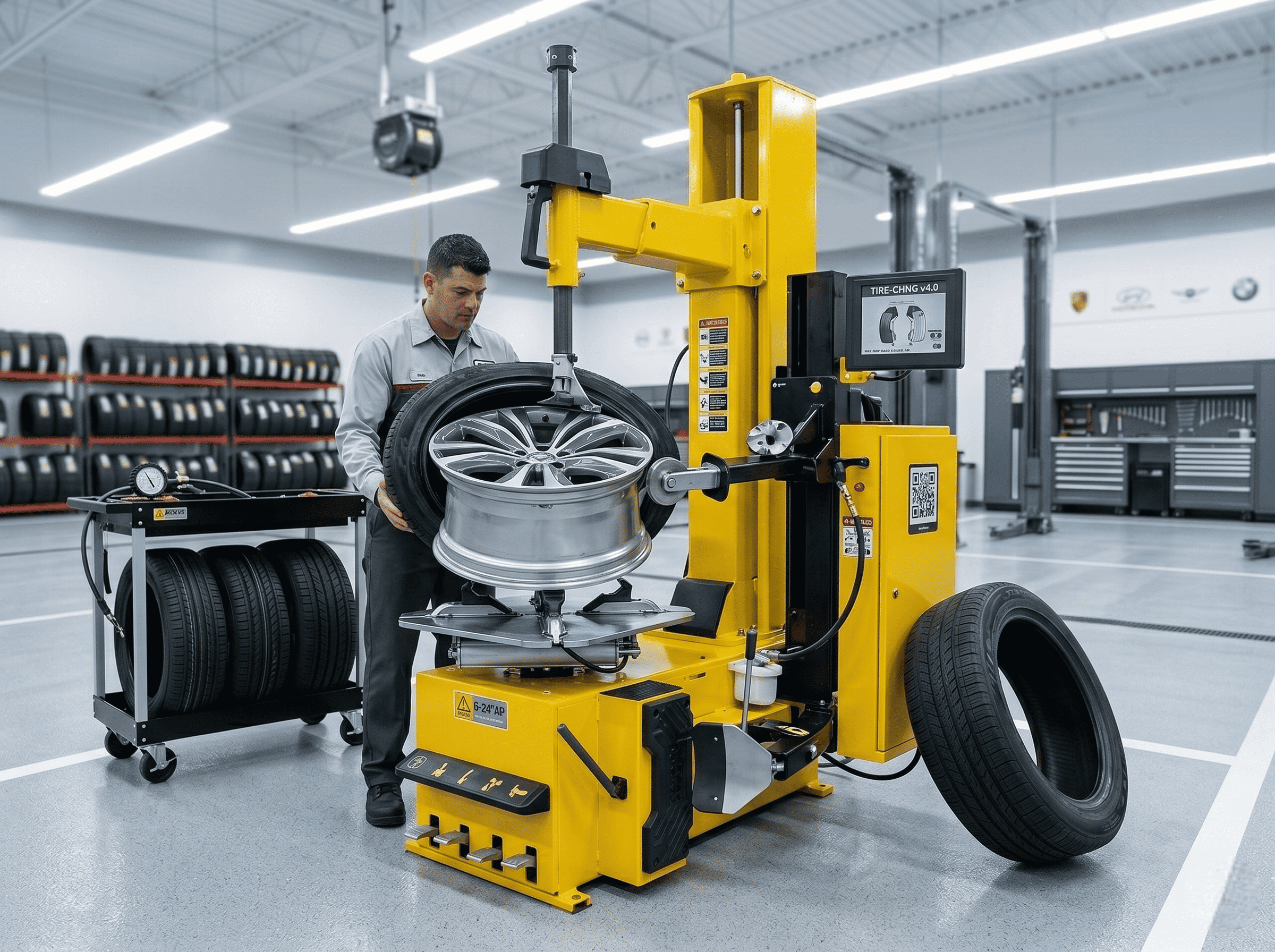
Tire changers are purpose-built automotive machines designed to remove and install tires quickly without damaging the wheel. In a busy shop, this auto repair shop equipment reduces manual labor and helps technicians complete tire jobs with consistent results.
Common Use Cases
- Tire shops
- General automotive workshops
- Fleet and service centers
Key Outcomes
- Remove and mount tires without rim damage
- Handle low-profile tires and larger wheels
- Speed up tire replacement and puncture repair work
12) Air Compressors

Air compressors are a central part of automotive machinery in many workshops because they provide compressed air for tools, cleaning, and spray applications. In day-to-day service work, this automotive machine equipment supports faster repairs by powering multiple pneumatic tools from a single air supply.
Common Use Cases
- Mechanical repair shops
- Collision repair workshops
- Paint prep and detailing bays
Key Outcomes
- Power pneumatic tools (impacts, ratchets, grinders)
- Support spray equipment and air blow-off cleaning
- Keep workflow moving without manual tool limits
13) Engine Hoists

Engine hoists are automotive machines designed to lift and position heavy components like engines and transmissions with control. In professional automotive repair equipment setups, this automotive equipment improves safety and reduces the risk of costly damage during removal and installation.
Common Use Cases
- Engine rebuild shops
- Mechanical workshops
- Performance and custom automotive garages
Key Outcomes
- Remove and install engines safely
- Reduce risk of damage during heavy lifting
- Support major repairs and drivetrain swaps
14) A/C Recovery and Recharge Machines
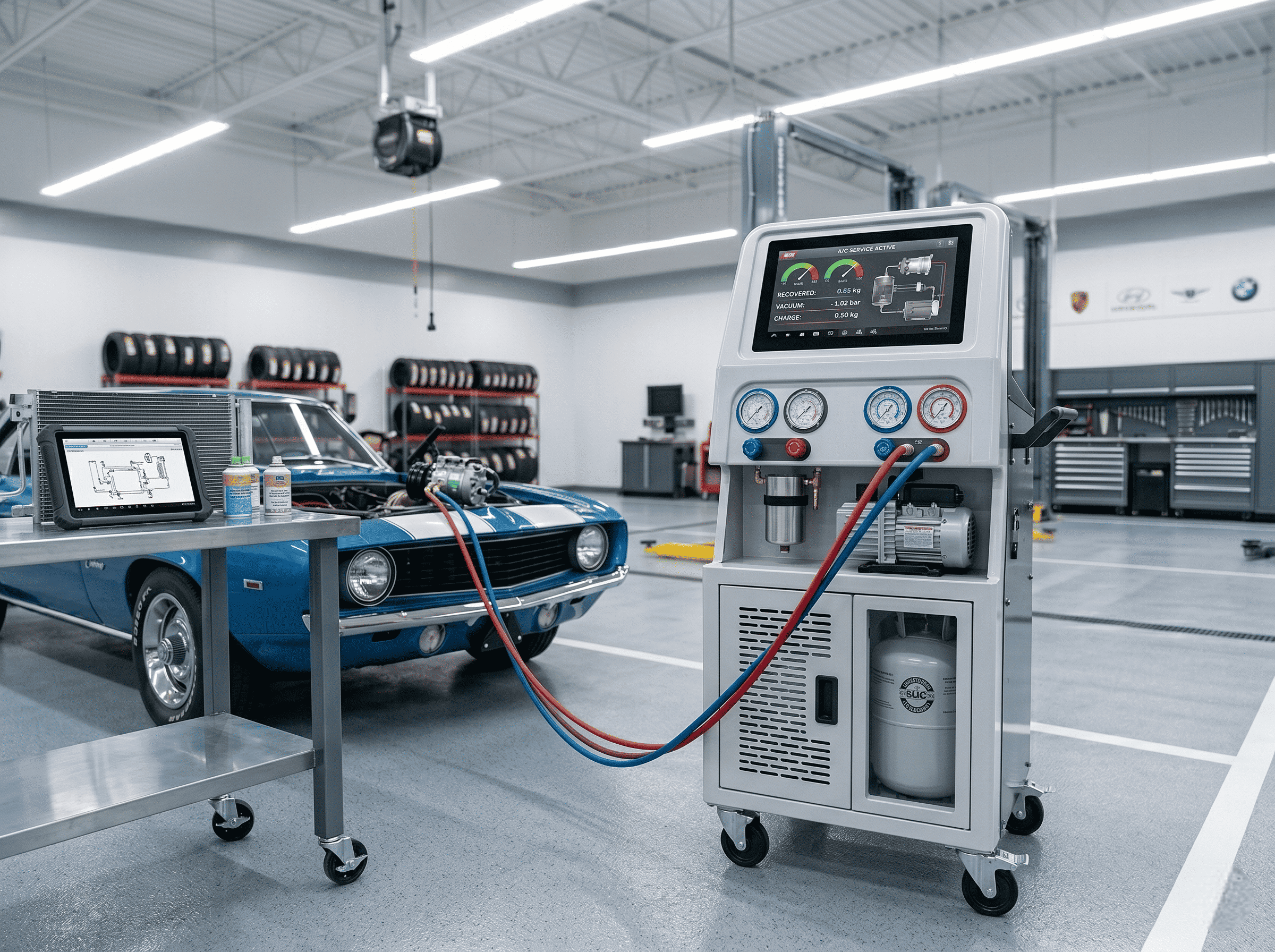
A/C recovery and recharge machines are specialized automotive machines used to remove, recycle, and refill refrigerant in vehicle air conditioning systems. In modern automotive repair equipment setups, this automotive machinery helps technicians service HVAC systems accurately, which improves cooling performance and reduces the risk of compressor damage.
Common Use Cases
- Automotive HVAC service bays
- Dealership repair departments
- Fleet maintenance shops
Key Outcomes
- Recover refrigerant safely and legally
- Recharge systems to correct specifications
- Improve cooling performance and reduce compressor failure
15) Welding Machines

Welding machines are some of the most widely used metal fabrication machines in the automotive industry. They allow technicians and manufacturers to join metal parts with strength and control. Processes like Metal Inert Gas (MIG) and Tungsten Inert Gas (TIG) welding make them critical for both manufacturing automotive components and completing structural repairs in a professional shop. They also allow repair teams to offer higher-value fabrication services.
Common Use Cases
- Manufacturing plants
- Tier supplier fabrication stations
- Collision repair shops
- Custom exhaust and performance workshops
Key Outcomes
- Join metal parts securely for structural strength
- Repair frames, brackets, mounts, and exhaust sections
- Support modern automotive metal fabrication work
Conclusion
Automotive machines directly affect throughput, repeatability, and cost control across both manufacturing and repair operations. When equipment is matched to the actual workload, teams spend less time correcting errors, waiting on bottlenecks, or repeating the same steps.
If you are evaluating automotive machinery for your business, prioritize machines that improve process consistency first. Then focus on equipment that reduces labor time per job and supports measurable quality control. You will notice the biggest impact in cycle time, rework rates, and overall delivery reliability as output scales.