10 Key Aerospace Machines Powering the Modern Aerospace Industry

Aerospace machines sit at the core of modern aerospace manufacturing. In the United States alone, aerospace product and parts manufacturing output reached $183.9 billion in 2024, which shows how much production depends on aerospace machines that can deliver precise parts under tight tolerances.
These machines shape structural components, cut complex geometries, and produce high-precision components used across aviation and defence. Without reliable aerospace machining systems, manufacturers struggle to meet safety requirements, production volumes, and quality standards expected across the aerospace industry.
In this guide, you will learn what each aerospace machine does, where it fits in the production line, and what to check before you invest.
What Is an Aerospace Machine
An aerospace machine is equipment used to manufacture, inspect, or test parts for the aerospace industry. These machines support aerospace machining processes that produce parts for aircraft, jet engines, landing gear, and other aerospace applications.
They are designed for tight tolerances, traceability, and quality control that standard manufacturing equipment cannot support. This ability allows aerospace manufacturers to handle complex geometries and high-strength materials without sacrificing consistency across production runs.
In simple terms, an aerospace machine enables aerospace manufacturers to produce precise, reliable components that meet safety and performance standards across aviation and defence.
1) 5-axis CNC Machining Centre

A 5-axis Computer Numerical Control (CNC) machining centre produces aerospace machined parts with complex geometries in a single setup. It machines turbine blades, engine housings, structural brackets, and deep pockets where multiple angles and surfaces must align within tight tolerances.
This matters because a single setup helps you hold precision machining across every face of the part. Fewer setups reduce alignment errors and protect tight tolerances on complex geometries. Continuous tool access improves surface finish, which supports consistent quality parts for aircraft, jet engines, and landing gear across aviation and defence.
Where it Fits in the Production Line
- After part design and Computer-Aided Manufacturing (CAM) programming
- During the primary machining of structural and engine components
- Before heat treatment, surface finishing, and final inspection
- Used in prototyping, low-volume builds, and scaled production
What to Check Before You Invest
- Spindle power and torque
Required for titanium and Inconel without chatter or tool failure.
- Tool changer capacity
Aerospace parts often need long tool lists for roughing and finishing.
- Probing and in-process measurement
Reduces human error and protects tight tolerances during machining.
- Chip management for titanium and Inconel
Poor chip control increases heat, tool wear, and scrap rates.
2) CNC Turning Centre

A CNC turning centre is an aerospace machine used to produce rotational aerospace machined parts with high accuracy. It is best suited for shafts, bushings, rings, fastener components, and other axis-critical parts used across aircraft systems.
This is critical because these rotational components depend on concentricity and balance for safe operation. A mill-turn configuration reduces handoffs between machines, which lowers alignment risk and protects precision. It also reduces the number of separate CNC equipment stations needed to complete one part, which improves consistency across production runs in aerospace CNC machining.
Where it Fits in the Production Line
- After material preparation and CAM programming
- During the primary machining of rotational and shaft-based components
- Before secondary finishing, heat treatment, or inspection
- Used in low-volume builds and repeat aerospace parts machining
What to Check Before You Invest
- Bar feeder compatibility
Supports continuous production runs and stable throughput.
- Live tooling capability
Allows milling, drilling, and slotting without removing the part.
- Part catcher and automation readiness
Reduces handling, limits human error, and protects quality.
3) Wire EDM Machine
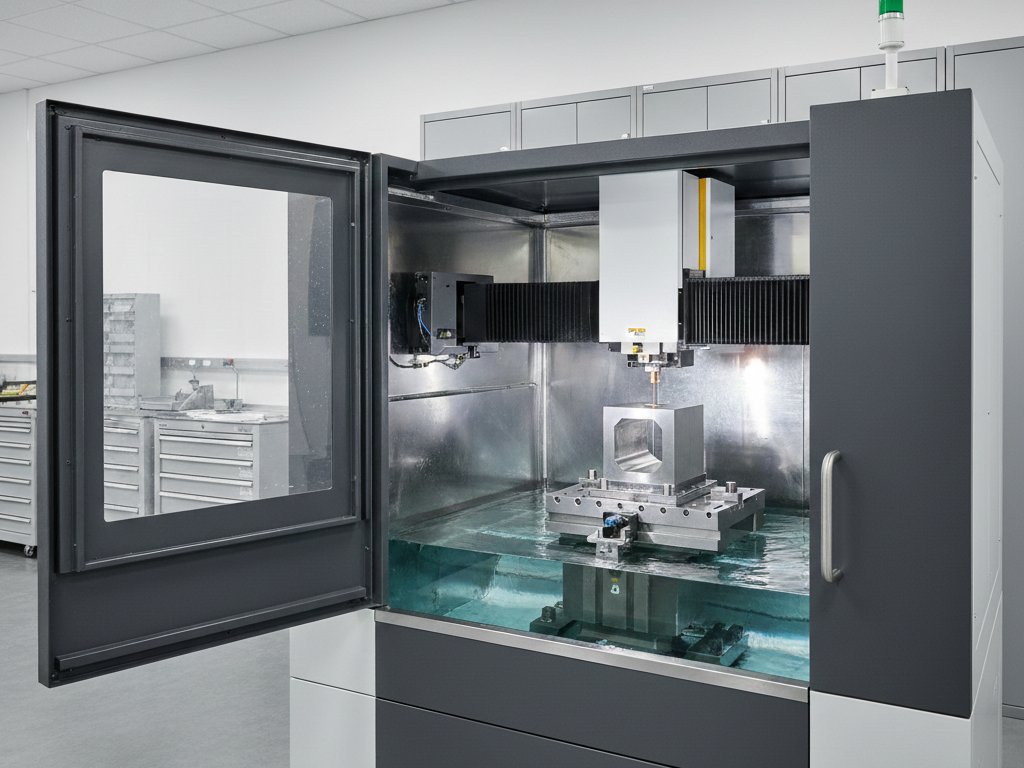
A wire Electrical Discharge Machining (EDM) machine is an aerospace machine used to cut profiles in hard alloys for aerospace machined components with extreme precision. It is best for intricate profiles, tight internal corners, and detailed geometries that are difficult to produce with conventional aerospace milling or cutting tools.
The key advantage is accuracy without mechanical cutting forces, which reduces distortion in hardened alloys. This protects tight tolerances, improves repeatability on high-precision components, and supports dimensional control when project requirements demand it.
Where it Fits in the Production Line
- After rough machining, forging, or heat treatment
- During the precision cutting of final profiles and internal features
- Before finishing steps like deburring, surface treatment, and inspection
- Used for both prototyping and repeat production runs
What to Check Before You Invest
- Wire diameter range
Smaller wire supports finer features, but it can reduce cutting speed.
- Dielectric filtration
Strong filtration improves stability, surface finish, and accuracy over long production runs.
- Cut speed vs finish modes
Look for a machine that balances throughput with finish passes for critical aerospace applications.
4) Laser Cutting System
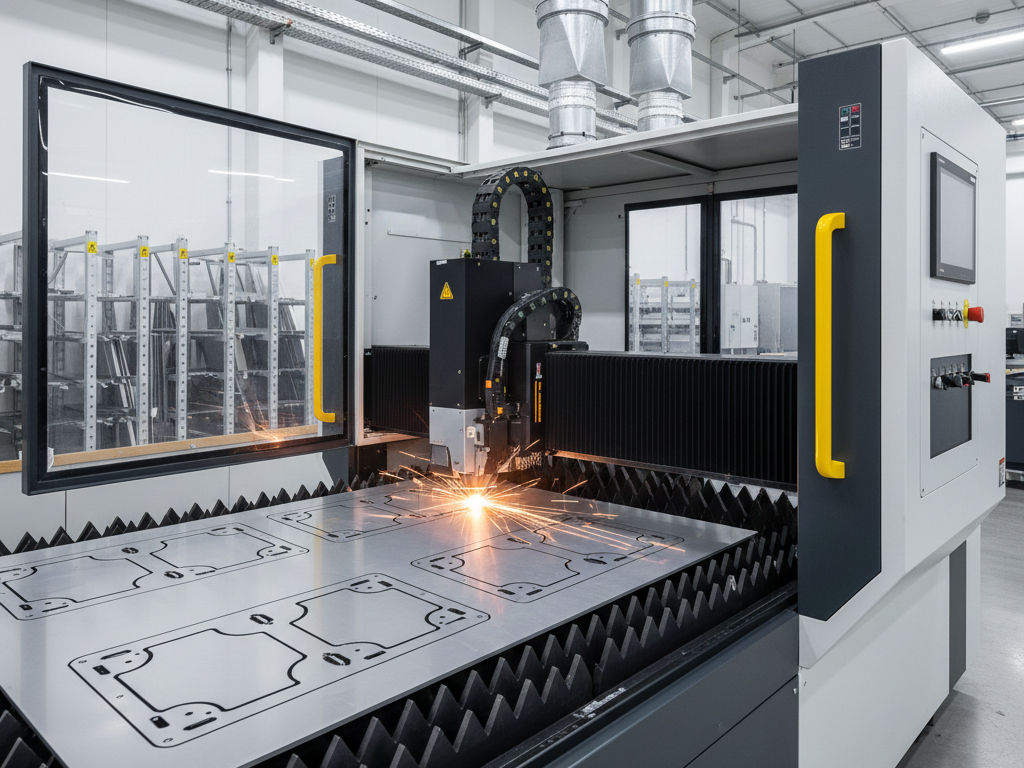
A laser cutting system is an aerospace machine used to cut aerospace sheet metal components with speed and high accuracy. It is best for sheet components, brackets, ducts, and precise cut patterns where clean edges and repeatable geometry matter.
The main advantage is consistent sheet metal output at scale. Laser cutting supports fast changeovers, reduces manual layout work, and keeps geometry stable across production runs. Clean edges also support corrosion resistance because coatings and sealants adhere more consistently. For aerospace companies, this reduces defects, limits rework, and improves reliability in aviation and defence applications.
Where it Fits in the Production Line
- After material selection and sheet preparation
- During the cutting of flat patterns before forming or bending
- Before welding, assembly, and final inspection
- Used in both prototype builds and repeat production runs
What to Check Before You Invest
- Material thickness range
Confirm the system can cut your required metals across aluminum alloys, stainless, and other aerospace materials.
- Assist gas setup
The right gas setup affects cut quality, edge finish, and speed.
- Fume extraction and safety interlocks
Strong extraction protects operators and supports compliance in aerospace manufacturing environments.
5) Industrial Metal 3D Printer

An industrial metal 3D printer is an aerospace machine that builds metal parts layer by layer using powder bed fusion. It is best for lightweight brackets, complex ducts, and topology-optimized parts where traditional aerospace machining would require multiple setups, fixtures, or assemblies.
The main advantage is design freedom without adding complexity to the production line. Metal additive manufacturing uses cutting-edge technology to produce integrated geometries that would be difficult or impossible to machine as a single part. This supports part consolidation, which reduces assembly time, lowers fastener count, and limits tolerance stack-up in aerospace applications where weight and packaging space directly affect optimal performance.
Where it Fits in the Production Line
- After part design and simulation for additive manufacturing
- During the production of near-net-shape metal components
- Before post-processing steps like heat treatment and machining
- Often followed by inspection, validation, and final finishing
What to Check Before You Invest
- Powder handling and safety
You need controlled storage, safe loading, and clear operator procedures.
- Build volume
Confirm the machine can produce your required part sizes without redesign.
- Post-processing plan (HIP, heat treat, machining)
Most aerospace parts still need post-processing to reach tight tolerances and required mechanical properties.
6) Composite Fibre Placement Machine

A composite fibre placement machine is an aerospace machine used to lay down carbon fibre material in controlled paths for large composite structures. It is best for fuselage sections, wing skins, and large composite layups where strength, weight, and consistency must meet aerospace manufacturing standards.
The main advantage is controlled fibre placement across large surfaces, where manual layup introduces variation. Composite performance depends on fibre orientation, so automated placement improves repeatability across production runs and reduces defects that weaken structural components. For aerospace companies producing high-strength parts at scale, this machine supports precision aerospace manufacturing by laying fibre with multi-axis control across large, curved surfaces.
Where it Fits in the Production Line
After part design, ply definition, and tool preparation
During composite layup before curing
Before autoclave curing or other curing processes
Followed by trimming, drilling, inspection, and assembly
What to Check Before You Invest
- Tow count and speed
Tow count drives deposition rate, but you still need control for tight curves and complex geometries.
- Defect detection
Look for systems that identify gaps, overlaps, wrinkles, and fibre misalignment during placement.
- Programming and ply verification workflow
Confirm you can validate each ply against the part design to protect quality and reduce rework.
7) Autoclave for Composite Curing
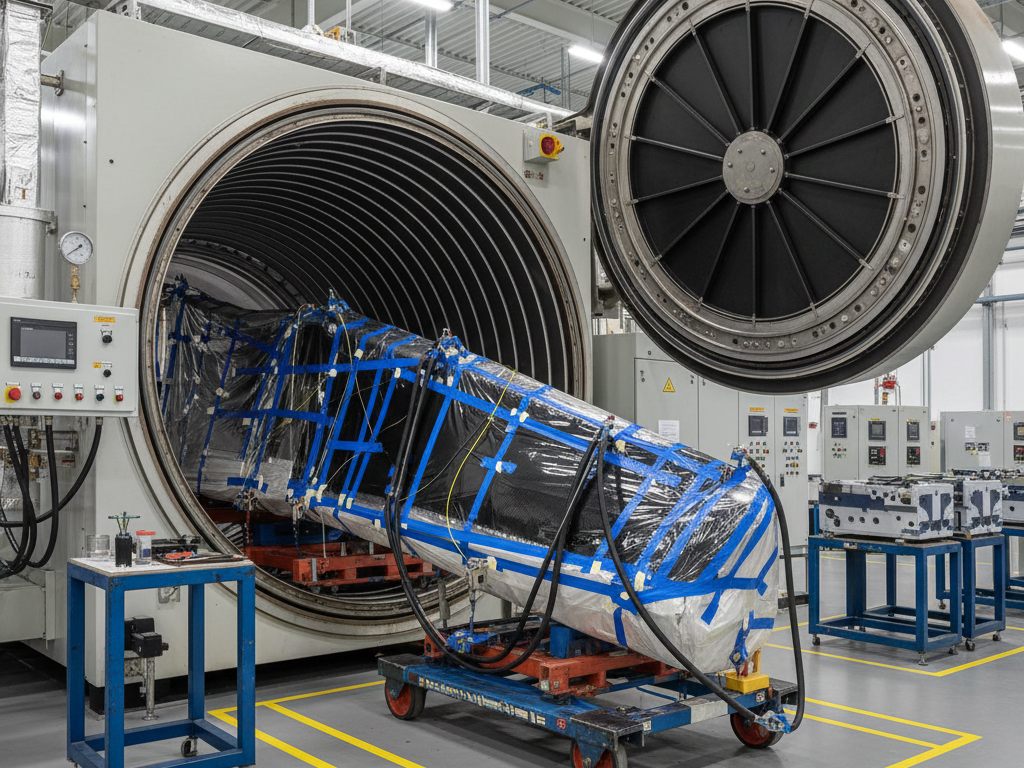
An autoclave is an aerospace machine used to cure prepreg composite parts under controlled heat and pressure. It is best for structural composite components where the curing cycle must deliver repeatable mechanical performance across production runs.
The main advantage is consistent consolidation during curing. Autoclave pressure helps reduce voids, improves fibre-to-resin bonding, and produces more uniform results across large composite layups. For aerospace manufacturing, this consistency is critical for durable structural parts used in aircraft and defence applications.
Where it Fits in the Production Line
- After composite layup and vacuum bag preparation
- During curing under controlled temperature and pressure cycles
- Before trimming, drilling, inspection, and assembly
- Often followed by non-destructive testing for validation
What to Check Before You Invest
- Chamber size
Confirm the autoclave can handle your largest tools and part designs.
- Pressure and temperature uniformity
Uniform cycles reduce weak zones and improve repeatability across the part.
- Data logging for traceability
Strong logging supports quality systems, certification needs, and process control documentation.
8) Coordinate Measuring Machine (CMM)
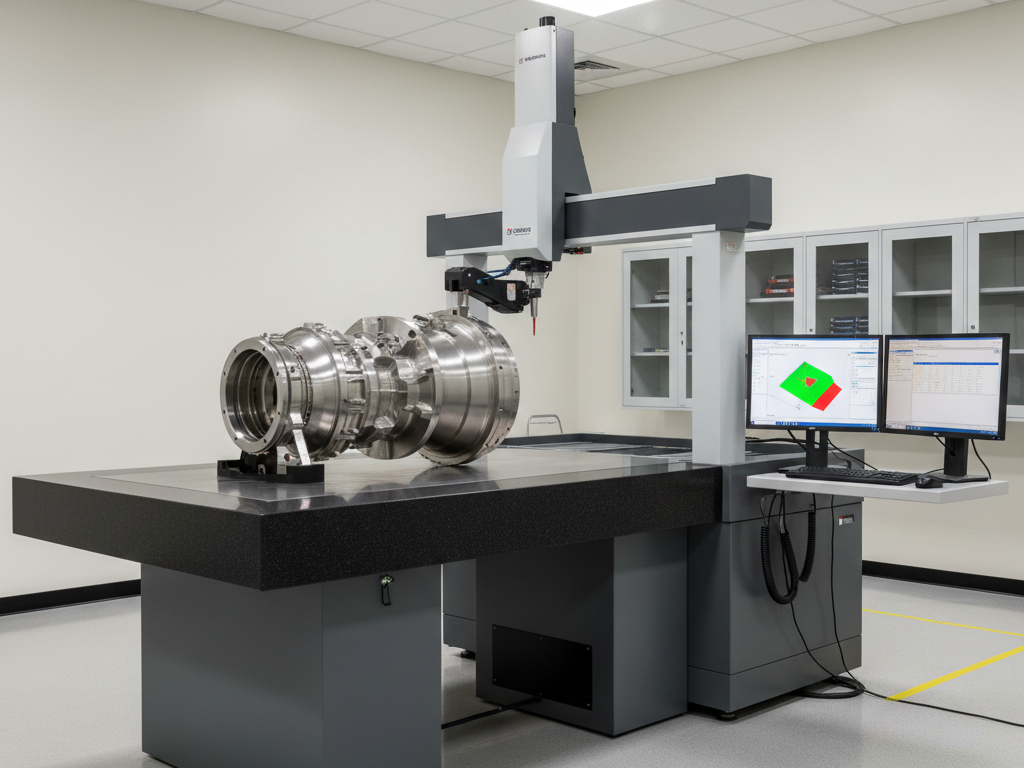
A CMM is an aerospace machine used to inspect aerospace machined parts for dimensional accuracy. It is best for tight-tolerance components where small deviations can affect fit, safety, and performance in aerospace applications.
The key benefit is verification. A CMM confirms critical dimensions, supports quality control, and provides measurement evidence needed for customer and quality-system requirements. For aerospace machining suppliers, this inspection step endorses the highest standards by reducing scrap and protecting repeatable output across aerospace CNC machining workflows.
Where it Fits in the Production Line
- After CNC machining, turning, milling, or finishing operations
- During first-article inspection and in-process quality checks
- Before assembly, shipment, or final certification steps
- Used in both prototyping and high-volume production
What to Check Before You Invest
- Probing options
Confirm support for touch probes, scanning probes, and part geometries you inspect most often.
- Temperature compensation
Temperature changes affect measurement accuracy, especially on high-precision components.
- Measurement software and reporting outputs
Look for software that supports Geometric Dimensioning and Tolerancing (GD&T), inspection reports, and formats your customers require.
9) Non-Destructive Testing (NDT) Equipment
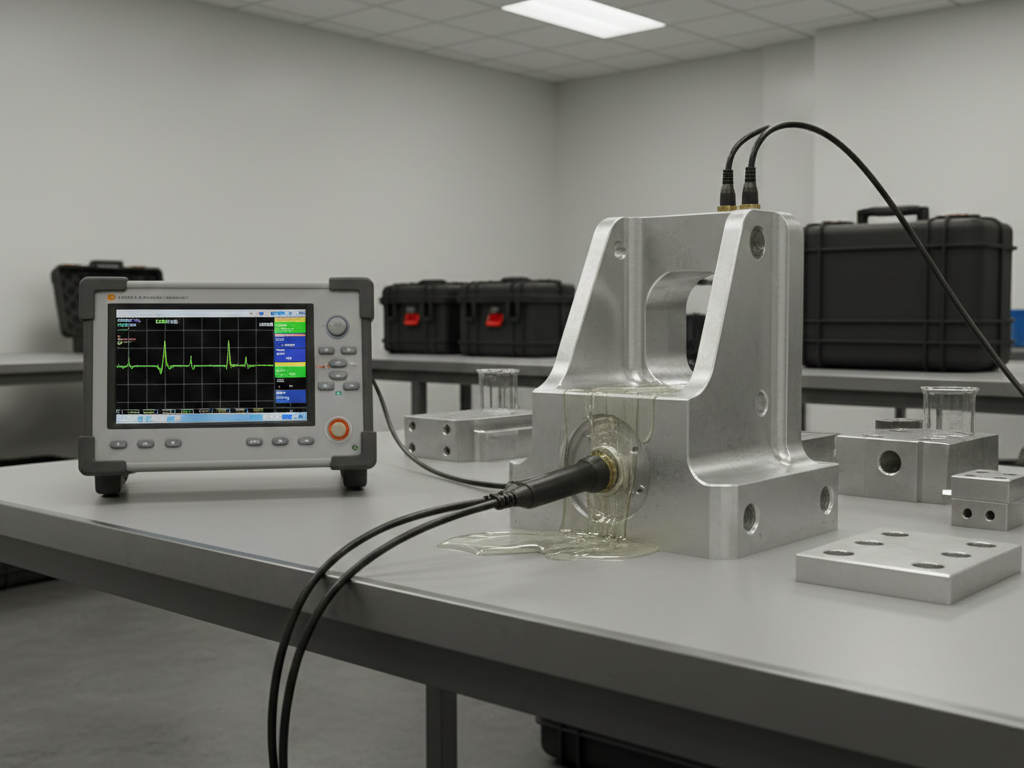
Non-destructive testing (NDT) equipment is aerospace equipment used to detect internal and surface defects without damaging the part. It is best for finding cracks, voids, delamination, and inclusions in high-precision components used across aircraft structures, jet engines, and safety-critical assemblies.
The key advantage is defect detection without part damage. Many aerospace failures begin below the surface, especially in composite structures and critical machined components. NDT catches these issues before assembly or service, which protects reliability, safety, and consistent performance across aerospace applications.
Where it Fits in the Production Line
- After machining, composite curing, welding, or assembly steps
- During in-process verification for critical structural components
- Before final inspection, shipment, or certification packages
- Used in both prototyping and high-volume production environments
What to Check Before You Invest
- Method selection by material and geometry
Match the technique to the part. Composites, aluminum alloys, and high-strength metals require different inspection approaches.
- Calibration blocks and procedures
Strong calibration practices protect accuracy and repeatability across production runs.
- Operator qualification and reporting
NDT depends on skilled operators, consistent procedures, and reporting outputs that meet customer and quality-system requirements.
10) Engine or Component Test Cell
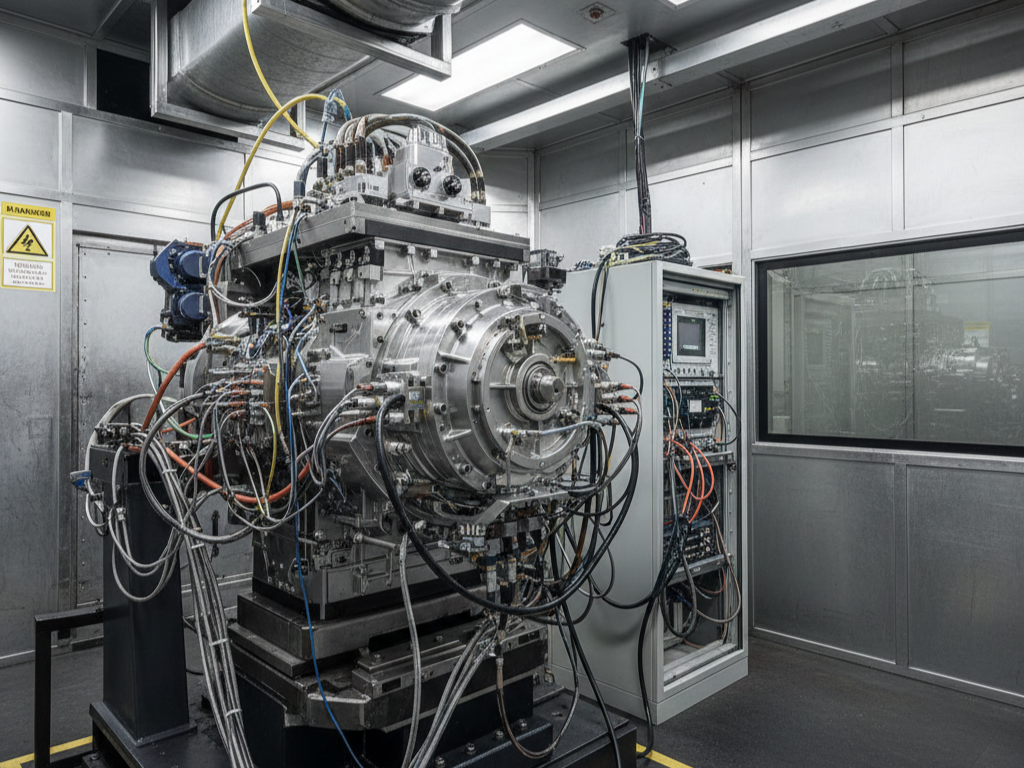
An engine or component test cell is aerospace equipment used to validate performance and function before parts go into service. It is best for functional validation, performance testing, and leak checks on systems where failure is not acceptable in aerospace applications.
The key advantage is proof under real operating conditions. Even when a part meets dimensional requirements, it still must perform under pressure, temperature, vibration, and load. Test cells confirm reliability, reduce risk, and support safety before flight use across aviation and defence.
Where it Fits in the Production Line
- After machining, assembly, and final build of the component
- During validation testing before shipment or installation
- Before customer acceptance and qualification documentation
- Used for prototypes, qualification builds, and repeat production runs
What to Check Before You Invest
- Instrumentation and sensors
Confirm you can measure pressure, temperature, flow, vibration, and other critical outputs.
- Data acquisition systems
You need stable data capture, storage, and reporting for traceability and customer requirements.
- Safety systems and compliance
Look for containment, emergency shutdown systems, and procedures that support safe operation under high-pressure and high-power conditions.
Final Thoughts
Modern aerospace manufacturing depends on more than one strong process. The most reliable production environments balance capability across machining, fabrication, inspection, and validation. You can produce aerospace machined parts at tight tolerances, but if inspection capacity lags, the parts queue. If composite curing becomes the constraint, schedules slip. If validation and testing are slow, delivery stops at the final gate. A strong aerospace line works because each stage supports the next without creating bottlenecks.
If you want to improve output and consistency, start with a single decision. Identify the one point in your workflow that limits production runs today. Then choose one aerospace machine upgrade that directly removes that constraint. This approach improves manufacturing capabilities without over-investing, which keeps upgrades cost-effective and improves repeatability across real aerospace applications.