Managed Industrial Liquidations: What It Is and How to Do It Easily
.png)
In 2025, U.S. manufacturers are projected to hold roughly $350 billion in unused capital equipment and excess MRO spend, with global inefficiencies exceeding $2 trillion.
These figures underscore a persistent reality in industrial operations: valuable assets often sit idle not because they lack market demand, but because organizations lack the structure, expertise, and bandwidth to liquidate them effectively. As a result, equipment remains on the floor, inventory accumulates, and millions in working capital stay trapped year after year.
In this article, we explore managed industrial liquidation and how it can be executed to address this challenge.
What Is Managed Industrial Liquidation?
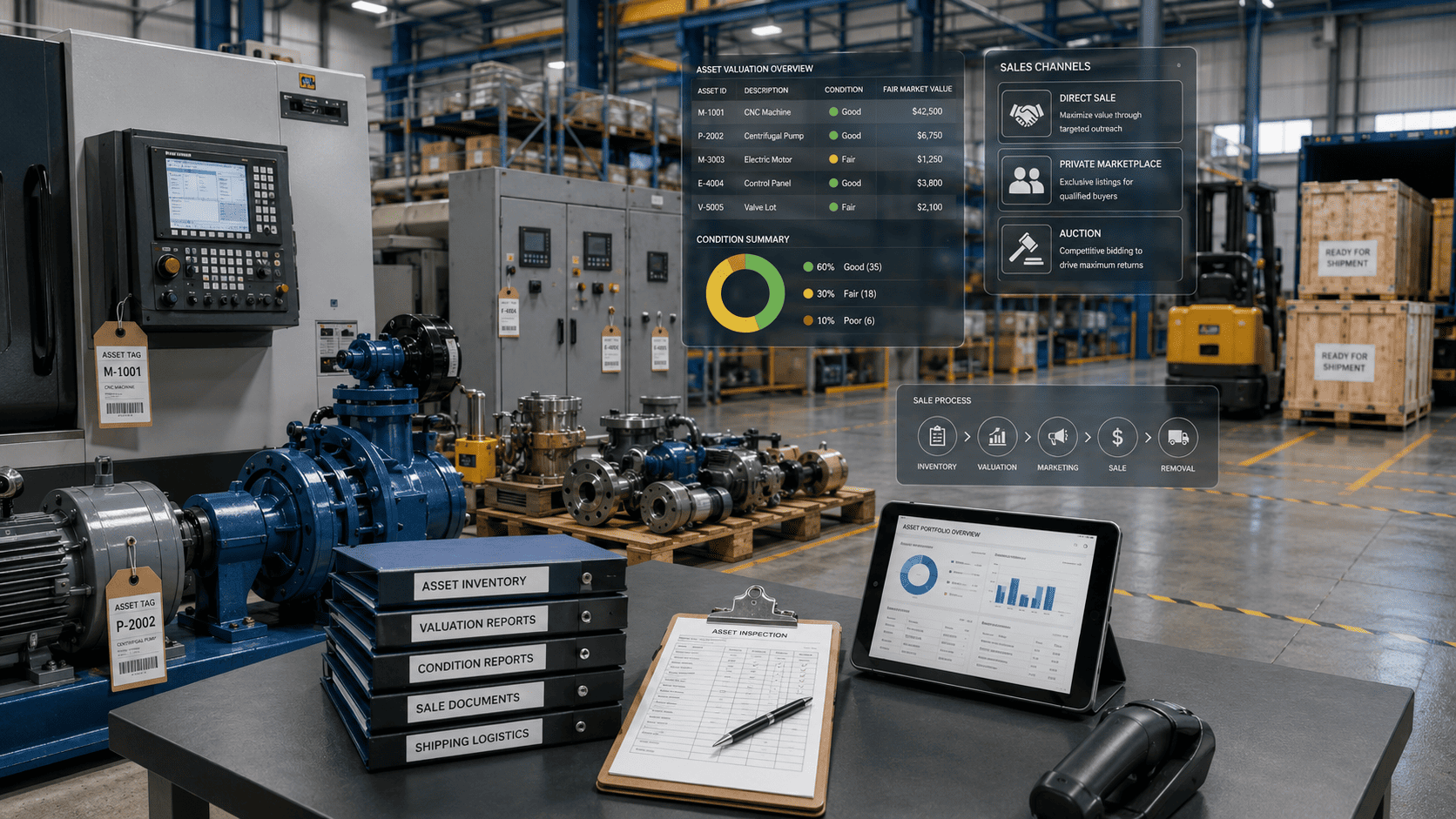
Managed industrial liquidation is a structured service where asset recovery firms handle the sale and removal of surplus equipment for industrial businesses. They manage valuation, documentation, identifying the right channel, marketing, buyer outreach, negotiations, and logistics to ensure assets are sold efficiently and for strong recovery value.
It differs from DIY efforts or basic marketplace listings because professionals use a data-driven multi-channel strategy and active buyer engagement rather than relying on limited internal contacts. It also goes beyond auction-only approaches by choosing the best sales method for each asset, whether direct sale, private marketplace, or auction.
Companies use managed liquidation during plant closures, consolidations, equipment upgrades, or when mothballed assets tie up capital. When no internal or in-house disposition team exists, partnering with an asset recovery firm provides the necessary expertise and reach to execute the process effectively.
Why Managed Industrial Liquidations Matter
As industrial operations change through plant upgrades, consolidations, or shifting production needs, companies often find themselves with surplus equipment and inventory. Recovering the inherent value of these recurring assets is crucial, but it requires specialized capabilities that internal teams typically lack.
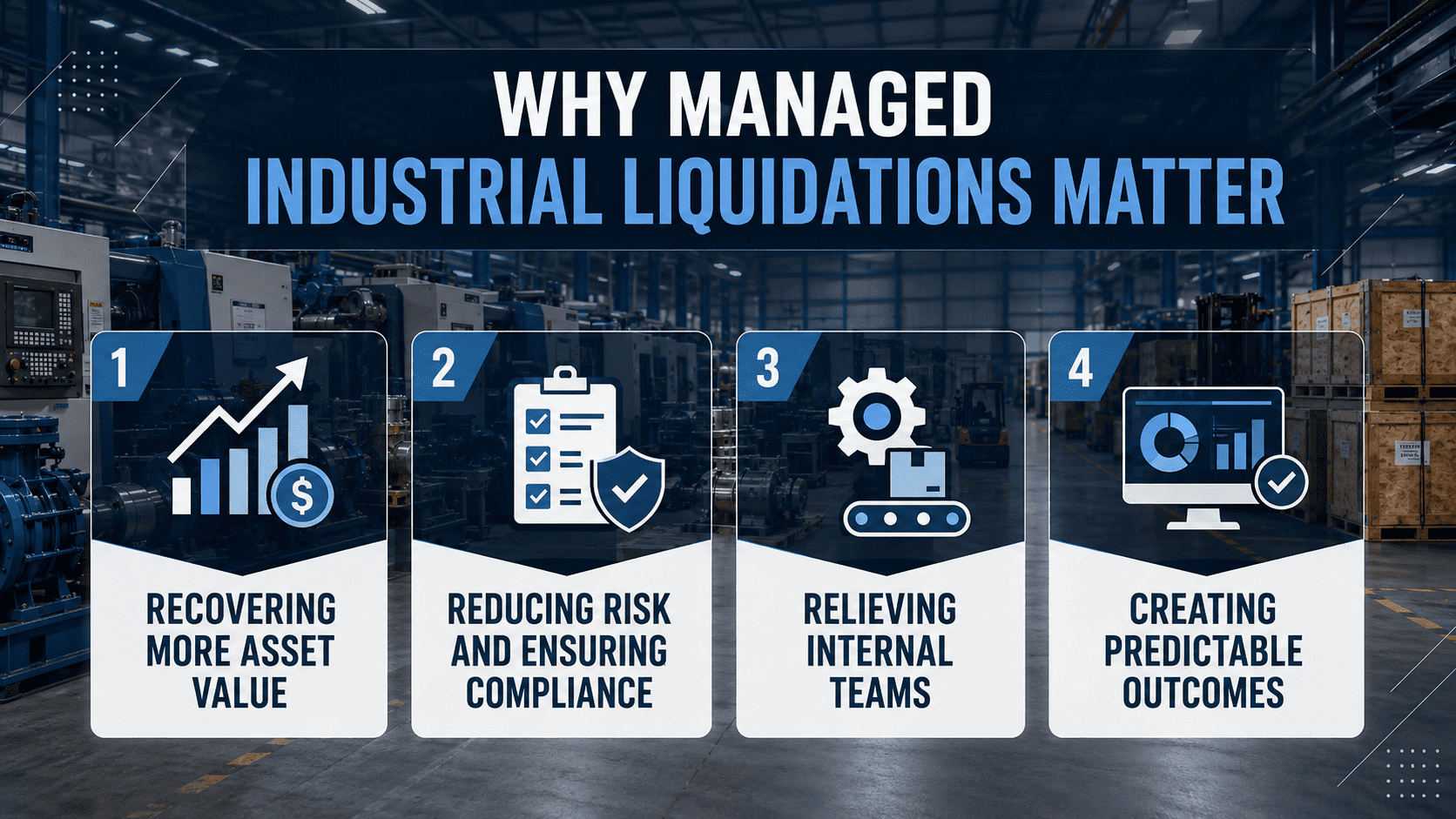
Here are the reasons why Managed Industrial Liquidations is essential:
1. Recovering More Asset Value
Managed liquidation applies professional valuation, market knowledge, and broader buyer access to ensure assets are positioned correctly and sold competitively. This structured approach consistently outperforms ad hoc selling by reducing underpricing and missed demand.
2. Reducing Risk and Ensuring Compliance
Industrial asset disposition involves safety, environmental, and regulatory considerations that can expose organizations to risk if handled incorrectly. Managed programs bring disciplined documentation, EHS alignment, and controlled removal processes that reduce compliance and operational exposure.
3. Relieving Internal Teams
Operations, procurement, and supply chain teams are focused on keeping facilities running—not managing resale, inspections, or logistics. By transferring execution to specialized partners, organizations eliminate distractions, keep internal teams focused on core responsibilities, and achieve more effective, higher-quality asset disposition.
4. Creating Predictable Outcomes
Without a defined process, liquidation efforts often suffer from delays and uncertainty. Managed industrial liquidation introduces clear timelines, milestones, and reporting, turning asset disposition into a predictable and measurable activity rather than a disruptive event.
How to Conduct a Managed Industrial Liquidation Easily (Step-by-Step)
Step 1 – Establish Objectives and Constraints

A managed liquidation begins with a precise understanding of what the organization aims to achieve.
This involves defining value recovery goals, setting timeline expectations tied to shutdowns or space requirements, and determining which assets are essential to keep versus those that can be removed. Having clarity at this stage ensures the process supports broader financial and operational priorities.
It is equally important to identify any constraints that could influence the liquidation plan. Site access, safety protocols, environmental requirements, and ongoing production conditions all shape how equipment can be prepared, marketed, and removed.
By establishing these parameters early, organizations create a realistic foundation for an efficient and disruption-free liquidation.
Step 2 – Create a Detailed Asset Inventory
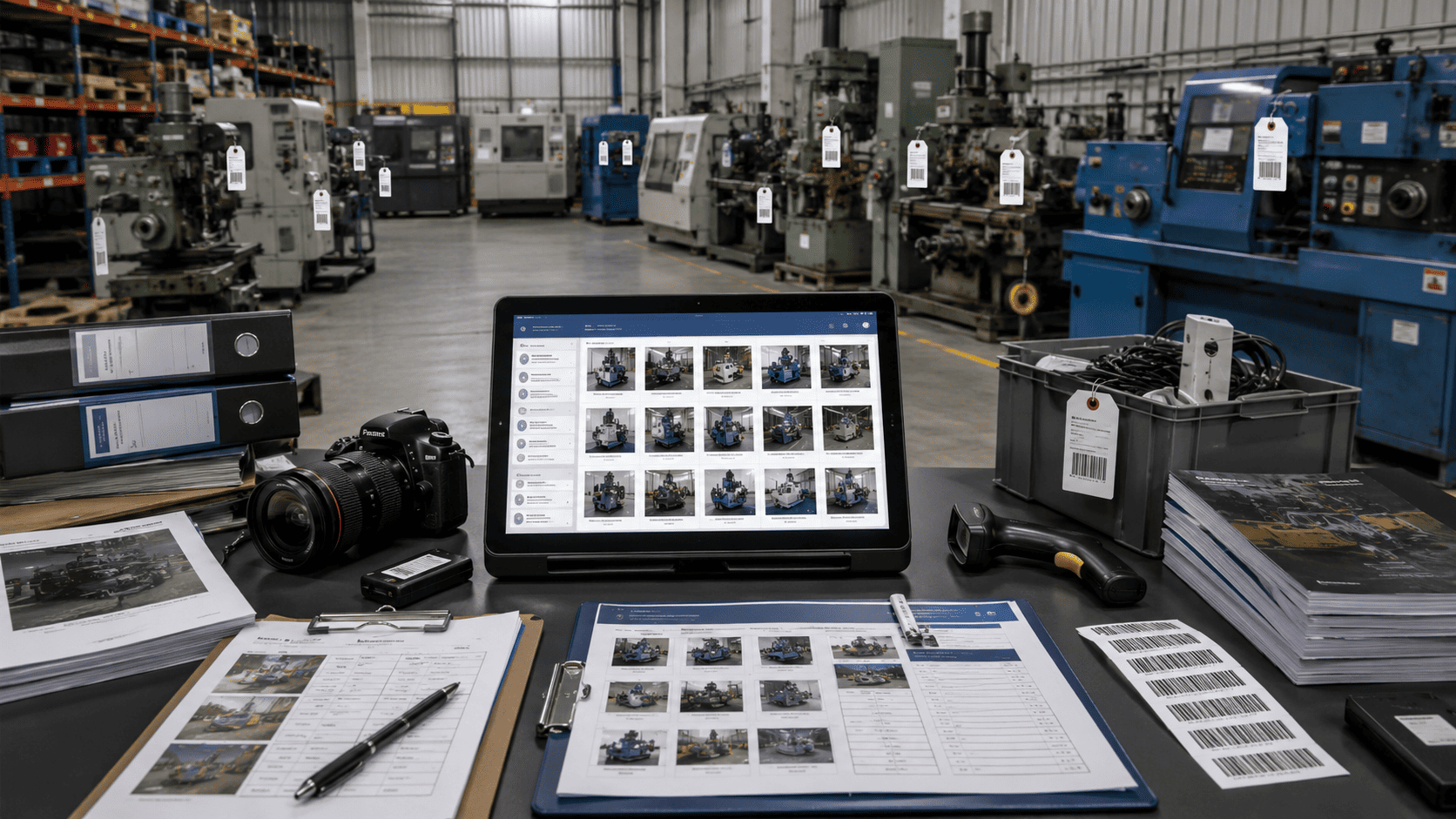
An accurate asset inventory is essential for any managed liquidation, as it forms the basis for valuation, marketing, and channel selection. This step involves listing all equipment and surplus items, tagging and categorizing them properly, and compiling the core information buyers need, such as specifications, manuals, and operating details. A clear inventory accelerates the appraisal process and reduces delays later in the project.
Along with documentation, visual and condition data play a crucial role. High-quality photos, condition assessments, maintenance history, and operational notes help buyers evaluate assets with confidence, improving both interest and final recovery value. A well-prepared inventory ultimately sets the stage for a smoother and more successful liquidation.
Step 3 – Choose a Qualified Liquidation Partner

Choosing the right liquidation partner is a foundational step in achieving a successful outcome. A strong partner brings market intelligence, established buyer relationships, and the operational capability to manage complex projects with minimal disruption to your facility. This expertise directly influences recovery value, speed, and overall project efficiency.
What to look for:
- Proven industry expertise with a track record of handling similar machinery, facility types, and liquidation scenarios. The partner should understand your equipment, its market demand, and the nuances of industrial value recovery.
- Access to relevant buyer networks that go beyond general marketplaces and reach qualified industrial buyers who actively purchase the types of assets you’re liquidating. A deeper network means stronger competition and better pricing.
- Multi-channel sales capabilities, including direct outreach, private B2B marketplaces, negotiated sales, and auction integration, as appropriate. A partner who can match the right channel to each asset will consistently outperform a single-channel approach.
- Comprehensive compliance and project management support to handle documentation, EHS requirements, site coordination, rigging, removal scheduling, and regular communication. This ensures the liquidation proceeds safely, transparently, and without burdening internal teams.
Step 4 – Align on Strategy and Timeline
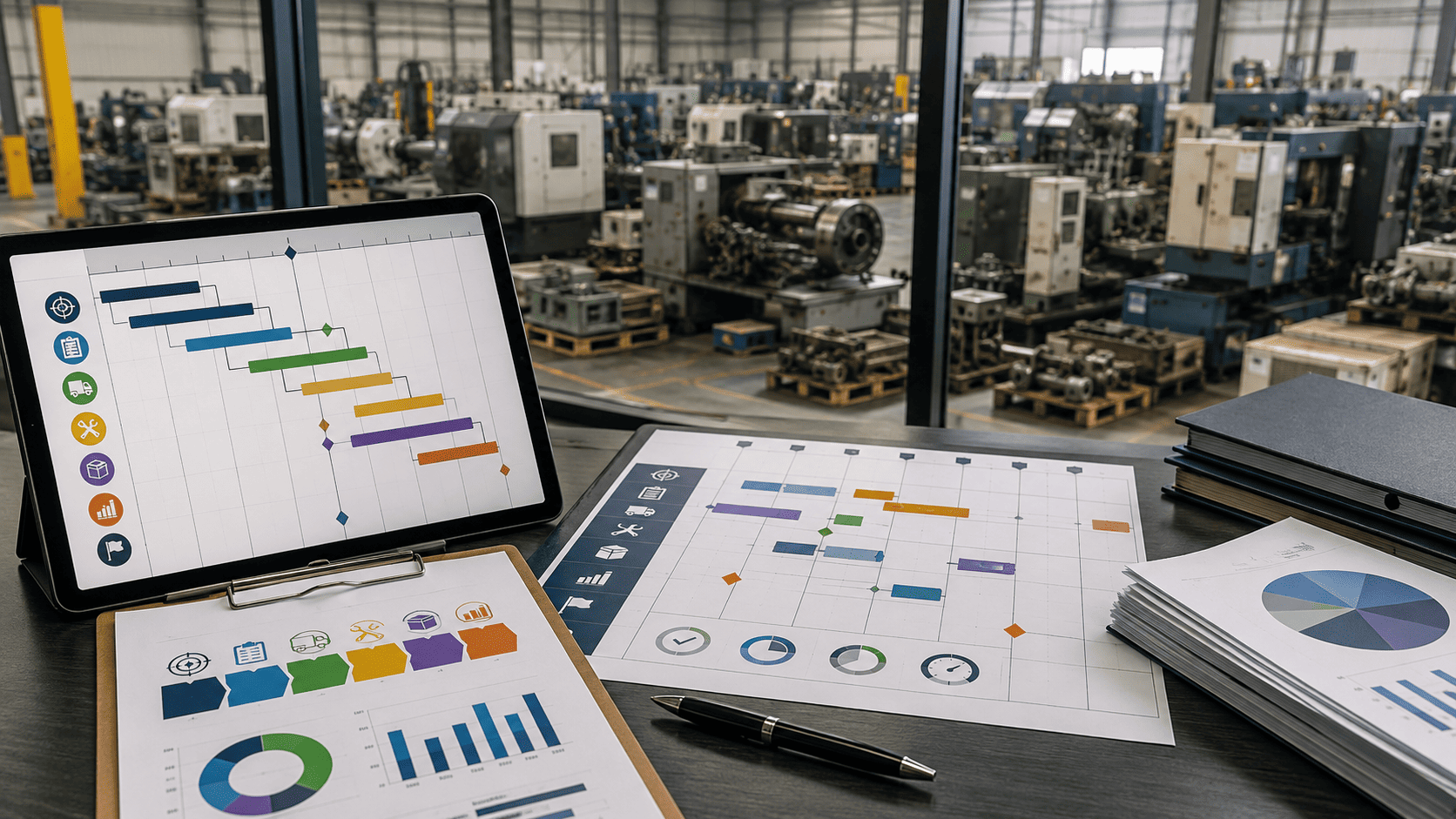
With a partner selected, the next priority is coordinating a clear liquidation strategy and timeline. This alignment ensures both teams understand how the assets will be marketed, which channels will be used, and what outcomes the project is targeting. A defined plan provides structure, reduces uncertainty, and keeps the liquidation moving efficiently.
To ensure everyone is on the same page, make sure to:
- Set clear milestones and deliverables including inventory completion, valuation, marketing launch, buyer outreach phases, offer review cycles, and removal timelines.
- Define KPIs and expected outcomes such as value recovery targets, sales cycle duration, buyer engagement benchmarks, and requirements tied to site access or production schedules.
Step 5 – Allow the Partner to Execute

Once the strategy is set, the liquidation partner takes over the execution phase. This includes preparing marketing materials, launching targeted outreach campaigns, and promoting assets across the selected sales channels to generate qualified buyer interest. Their goal is to create competitive demand while minimizing the workload on internal teams.
During execution, the partner manages all inquiries, schedules inspections, and handles offers as they come in. They lead negotiations, prepare necessary documentation, and coordinate contracting to ensure transactions move smoothly.
This professional oversight ensures consistency, transparency, and stronger recovery outcomes.
Step 6 – Coordinate Removal and Final Closeout
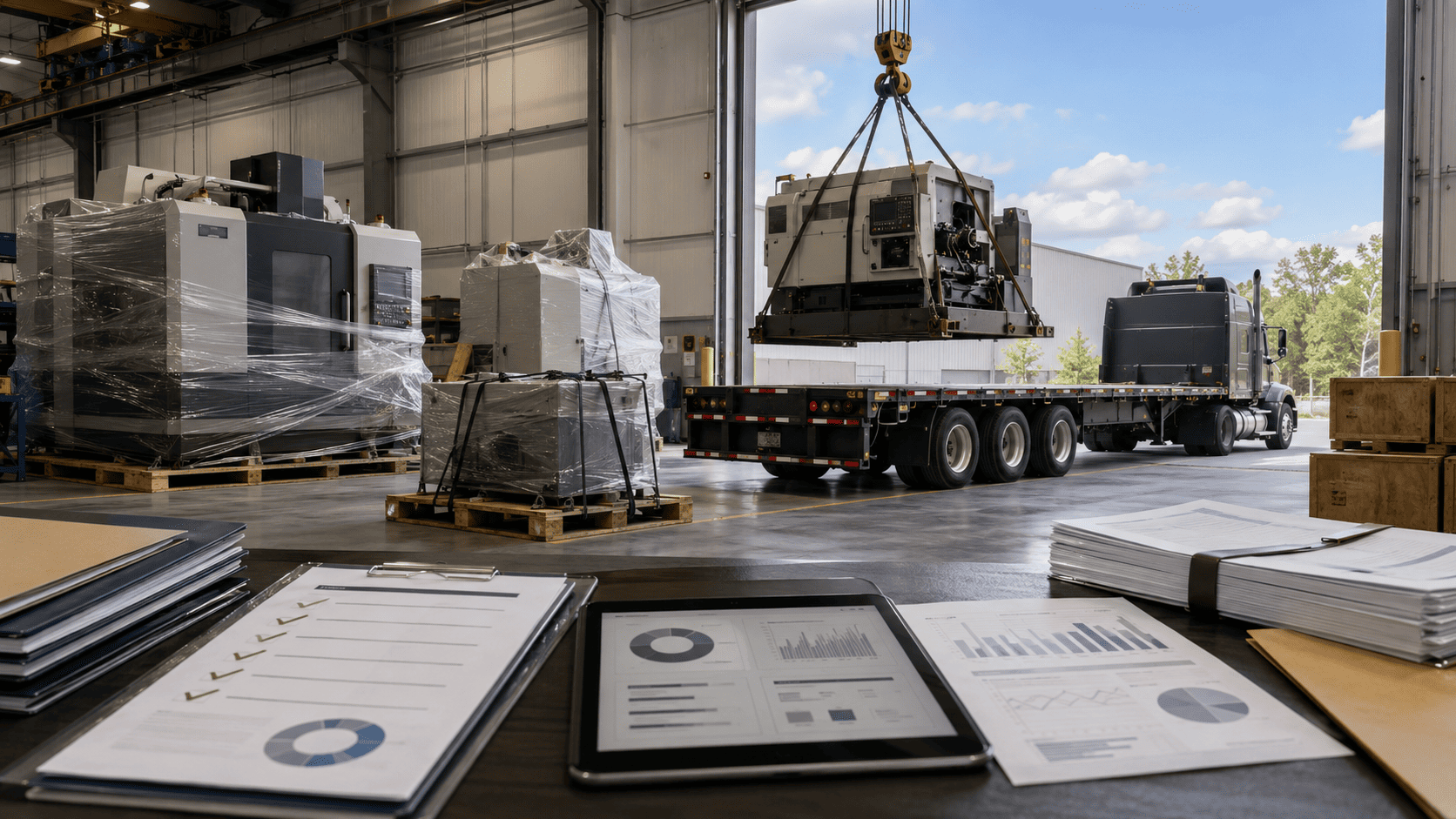
The final stage of a managed liquidation focuses on safely removing sold assets from the facility. This requires coordinating approvals, managing site access, and aligning with ongoing operations to avoid disruption. The partner oversees rigging, dismantling, and logistics planning to ensure all equipment is removed in compliance with safety and environmental requirements.
Once removal is complete, the project moves into closeout. This includes final reporting, financial reconciliation, and confirmation that all assets have been transferred properly.
A thorough closeout provides clarity for finance, operations, and compliance teams, ensuring the liquidation is completed cleanly and professionally.
How Amplio Makes Managed Industrial Liquidations Easy
Internal Redeployment for Maximum Savings
Before any liquidation begins, Amplio identifies equipment and spare parts that can be reused across your network. Our AI agents link data across sites, detect internal demand, and surface redeployment matches that reduce unnecessary CapEx and prevent duplicate purchases. This step ensures you extract full operational value from your assets before they ever reach the market.
AI-Powered Appraisal
Amplio’s liquidation programs start with an AI-driven appraisal that evaluates every item at the SKU and equipment level. The system analyzes market demand, historical pricing, and asset condition to deliver fast, accurate valuations. Expert oversight is built into the process to ensure every recommendation is grounded in operational reality. You get a clear disposition plan that highlights high-value items, low-demand categories, and assets that require alternative handling.
Multiple Liquidation Channels
Amplio uses multiple sales channels to maximize value recovery, combining direct outreach to strategic buyers with access to its private B2B marketplace for verified industrial purchasers. When speed or high-volume clearance is required, auction options are integrated seamlessly into the program. Each asset is matched to the most effective channel based on its type, condition, and demand, creating a unified and coordinated selling strategy that drives stronger, faster results.
Compliance and Logistics
Amplio manages compliance and logistics end-to-end, ensuring all documentation, asset data, and regulatory requirements are properly handled before any sale or removal begins. The team coordinates safety-approved rigging, dismantling, and transport while working around ongoing operations to minimize disruption. Every project follows a clear removal schedule and ends with a clean, transparent handover so facilities can transition smoothly to their next phase.
Get started with Amplio and unlock more value from every asset.