IT Asset Value Recovery: Process & Best Practices for Maximum ROI
Rising hardware costs, faster technology refresh cycles, and growing environmental compliance pressure have made IT asset value recovery a critical priority for modern enterprises. Every year, organizations hold millions of dollars’ worth of unused laptops, servers, and networking gear that lose value over time, tie up capital, increase data security risk, and reduce opportunities for value recovery.
According to industry research, the U.S. IT asset disposition market was valued at $11.38 billion in 2023 and is projected to nearly double, reaching $22.93 billion by 2032, with a steady compound annual growth rate of 8.1 percent (2024–2032).
In this guide, you’ll learn what IT asset recovery is, the step-by-step IT asset recovery process, and proven best practices to help your business recover value, reduce risk, and maximize the lifecycle value of your IT investments.
What Is IT Asset Value Recovery?
IT asset value recovery is the process of recovering maximum financial, operational, and sustainability value from decommissioned equipment, surplus technology assets, and retired IT assets at the end of their useful life in your business. These assets may include servers, laptops, desktops, networking gear, storage devices, and data center equipment that your company no longer uses.
This practice serves as a key part of IT asset disposition (ITAD) and asset lifecycle management. It helps organizations capture remaining asset value, lower their environmental footprint, and protect sensitive data through secure destruction.
After acquisition, deployment, and use, value recovery becomes the final strategic stage, helping your business avoid writing off retired hardware, sending usable equipment to landfill, or losing recovery value that could support maximum return on investment (ROI).
Why IT Asset Value Recovery Matters for Businesses

1. Recovering Value From Retired IT Equipment
Retired IT assets can still hold recovery value after your business stops using them. A clear IT asset recovery process helps you identify that remaining value, act before depreciation reduces ROI, and create cost savings by turning unused equipment into a measurable financial return.
2. Reducing E-Waste
IT asset value recovery helps reduce e-waste by keeping usable equipment out of landfills. When retired IT assets still have recovery potential, your business can extend their useful life instead of treating them as scrap. This approach supports environmental responsibility, responsible recycling, and circular economy goals.
3. Protecting Sensitive Data
Retired IT assets can still contain customer records, employee files, login credentials, and business data. A clear IT asset value recovery process helps you protect that data through secure data erasure, secure data destruction, and documented secure handling.
4. Supporting IT Asset Lifecycle Management
IT asset value recovery gives your business a clear final stage for asset lifecycle management. A structured process helps your IT departments track retired assets, review residual value, and decide what happens before equipment becomes an end-of-life liability.
The IT Asset Value Recovery Process
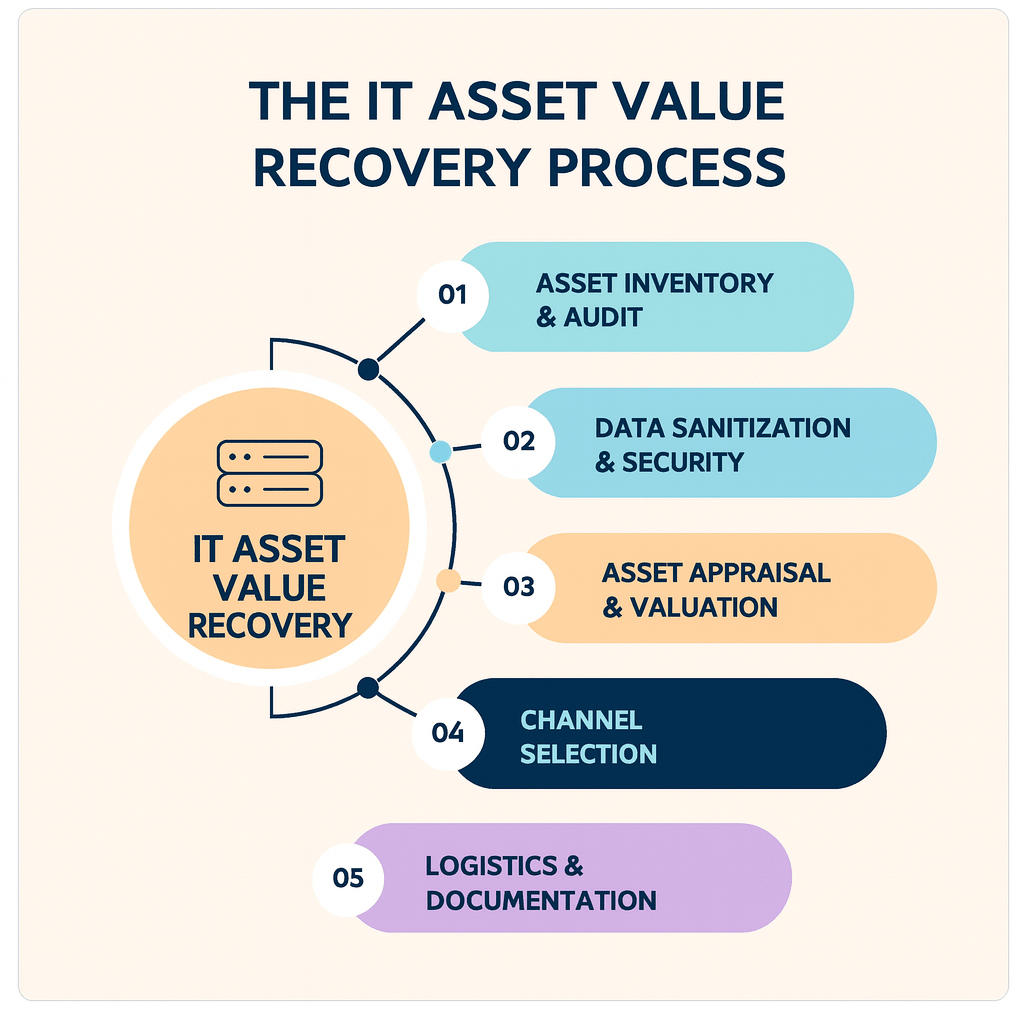
Maximizing returns on retired IT equipment takes a structured process. Successful value recovery is not just about reselling old devices. It means managing retired assets with clear tracking, secure handling, accurate valuation, and proper documentation.
Here are the key steps to follow:
Step 1: Asset Inventory & Audit
Start by cataloging every IT asset targeted for recovery, including laptops, servers, networking gear, storage devices, and data center equipment. Use asset management software, barcode labels, or asset tracking tools to build an accurate inventory.
Document each asset’s model, serial number, location, condition, ownership status, and usage history. Give extra attention to equipment that has been unused, idle, excess, or obsolete, since these assets often lose recovery value when they sit too long.
Step 2: Data Sanitization & Security
Before any IT asset leaves your facility, make sure all sensitive data is securely erased or physically destroyed. Use certified data erasure tools and documented secure data destruction processes to remove stored information and reduce data exposure risk.
This step helps your business support compliance with regulations such as the California Consumer Privacy Act and the Health Insurance Portability and Accountability Act. It also builds buyer confidence by proving that retired assets were securely handled before value recovery.
Step 3: Asset Appraisals & Valuation
Evaluate each IT asset based on its condition, age, potential resale value, and current market demand. Use recent data from secondary markets and consult professional appraisers to determine fair value.
Accurate appraisals help you identify which assets can be resold, reused internally, or sent for responsible recycling.
Step 4: Channel Selection for Value Recovery
Decide the best recovery path for each IT asset. Common value recovery options include:
- Redeployment: Move still-useful hardware to other departments or facilities to avoid new purchases and improve ROI.
- Resale: Sell valuable, marketable assets through trusted IT resellers, online platforms, or industrial liquidators to recover financial value and to meet your landfill diversion goals.
- Upcycling: Refurbish or reconfigure older equipment for new internal uses. For example, you can convert outdated desktops into thin clients, assign older laptops to training labs, or use older servers for non-critical workloads.
- Recycling: For non-functional or obsolete equipment, choose certified recyclers to safely recover materials and meet environmental regulations.
- Donation: Consider donating usable IT assets to schools, nonprofits, or community organizations, supporting corporate social responsibility and gaining potential tax benefits.
Note: Select each channel based on the asset’s age, condition, compliance needs, and your organization’s goals.
Step 5: Logistics & Documentation
Arrange secure packaging and transportation for IT assets to prevent damage, loss, theft, or unauthorized access during transfer. Maintain detailed records for every asset, including serial numbers, transfer dates, data destruction certificates, and final disposition outcomes.
Clear documentation streamlines audits, supports compliance, and creates a transparent chain of custody from initial inventory through final value recovery.
Best Practices for IT Asset Value Recovery

The following best practices help you recover more cash, improve compliance, and simplify every stage of the process.
1. Centralized Asset Management
To maximize value from your IT asset recovery efforts, start with a centralized asset management system. Keeping a single, real-time inventory of all hardware and software gives you full visibility into asset status, location, and condition.
With everything tracked in one place, you can quickly identify unused, idle, or surplus equipment, prepare assets for redeployment or resale, and reduce the risk of lost or unaccounted-for items. This clear overview also makes planning, reporting, and compliance much easier across your organization.
2. Use Certified Data Erasure Tools
Use certified data erasure tools to protect your business from compliance risks and data breaches. These tools remove sensitive information from IT assets in a verifiable way before they leave your organization.
Certified erasure methods help support compliance with regulations such as the California Consumer Privacy Act and the Health Insurance Portability and Accountability Act. Always verify that your data destruction partner uses certified tools and provides documentation for every asset processed.
3. Internal Redeployment
Internal redeployment can be your first step in IT asset value recovery. Before selling hardware to external buyers or liquidators, assess the current and future needs of other departments or business units.
Reusing viable equipment within your organization extends asset lifecycles, reduces capital expenses, and delays new purchases. Keep a centralized inventory and coordinate with department heads to identify and redeploy suitable assets where they are needed most.
4. Partner with Industrial Liquidators
When assets no longer have value for internal use, partner with professional industrial liquidators. These experts quickly identify surplus IT equipment, assess its resale potential, and connect you with a network of vetted industrial buyers.
Working with the right liquidation partner helps you recover more value in less time, reduce storage costs, and maintain proper documentation for audit and compliance. This channel is especially effective for large-scale hardware refreshes or during plant liquidations, where speed and accountability matter.
5. Documentation & Compliance
Keep detailed records for every IT asset as it moves through the recovery process. Log serial numbers, asset condition, data destruction certificates, transfer documents, and final disposition outcomes.
Maintain these audit trails for regulatory compliance, financial reporting, warranty claims, and insurance records. Strong documentation reduces risk, supports the chain of custody, and helps your team respond faster to audits or legal inquiries.
6. Secure Transportation and Logistics
Arrange safe, secure transport for IT assets, especially when moving high-value or sensitive equipment. Use proper packaging, asset tracking, and chain-of-custody records to prevent damage, loss, or theft.
If you do not have an in-house logistics team, partner with a trusted third-party logistics provider with experience in IT asset handling. This protects your assets in transit and keeps your value recovery process on track.
How Amplio Supports IT Asset Value Recovery
AI-Driven Internal Redeployment
Amplio’s AI tools help you identify and redeploy unused IT equipment within your organization. This cuts new purchases, minimizes waste, and helps reduce operational costs across all your facilities.
Access to a Network of Pre-Vetted Buyers
Amplio’s online platform gives you direct access to a broad network of vetted buyers. This speeds up sales, boosts your recovery rates, and ensures equipment finds a second life quickly.
End-to-End IT Asset Disposition Support
Our team acts as your in-house IT asset disposition experts. We handle identification, appraisal, redeployment, liquidation, and logistics, so you can focus on your core business while we maximize the value of your IT assets.
Contact us now to see how Amplio can streamline your IT asset value recovery and support your next disposition project.