Direct Industrial Liquidation Sale vs. Industrial Auction Sale: Which Delivers Better Returns?

Industrial companies may need to sell machinery, equipment, MRO inventory, or other surplus assets during plant closures, facility consolidations, equipment upgrades, or inventory reduction efforts.
In these situations, companies often choose between a direct industrial liquidation sale and an industrial auction sale. Both methods help recover value from idle assets, but they follow different sales processes. Direct liquidation involves negotiated sales with selected buyers, while an industrial auction uses competitive bidding.
This guide compares direct industrial liquidation sales and industrial auctions so you can understand how each process works, where each performs best, and which approach may produce better returns for your surplus assets.
What is a Direct Industrial Liquidation Sale?
A direct industrial liquidation sale is a method used by companies to sell surplus machinery, equipment, MRO inventory, or other industrial assets directly to selected buyers. Instead of placing the assets in an open auction, the seller contacts end users, dealers, resellers, or industry buyers who may have a direct need for the equipment.
The assets may be sold individually, grouped into equipment packages, or sold in bulk. Since the sale is negotiated privately, you have more control over the asking price, payment terms, removal schedule, and other terms of the sale.
This method often works well for high-value or specialized equipment that requires a buyer with specific technical knowledge or operational need.
What is an Industrial Auction Sale?
An industrial auction sale is a method companies use to sell machinery, equipment, MRO inventory, or other industrial assets through competitive bidding. Buyers register for the sale, review the available asset lots, and place bids during a set period.
The auction may take place through a live in-person sale, a live online auction, or a timed online auction. Some auctions use a reserve price, which sets the minimum amount the seller is willing to accept.
The final sale price depends on buyer demand and bidding activity. Strong competition among qualified buyers can push the price higher. Limited buyer interest can result in a lower sale price or leave the asset unsold.
Direct Industrial Liquidation Sale vs. Industrial Auction Sale Comparison
Direct industrial liquidation and industrial auction sales differ in how assets are marketed, priced, sold, and removed. The table below compares the main factors manufacturers should consider when choosing between the two methods.
How Does a Direct Industrial Liquidation Sale Work?
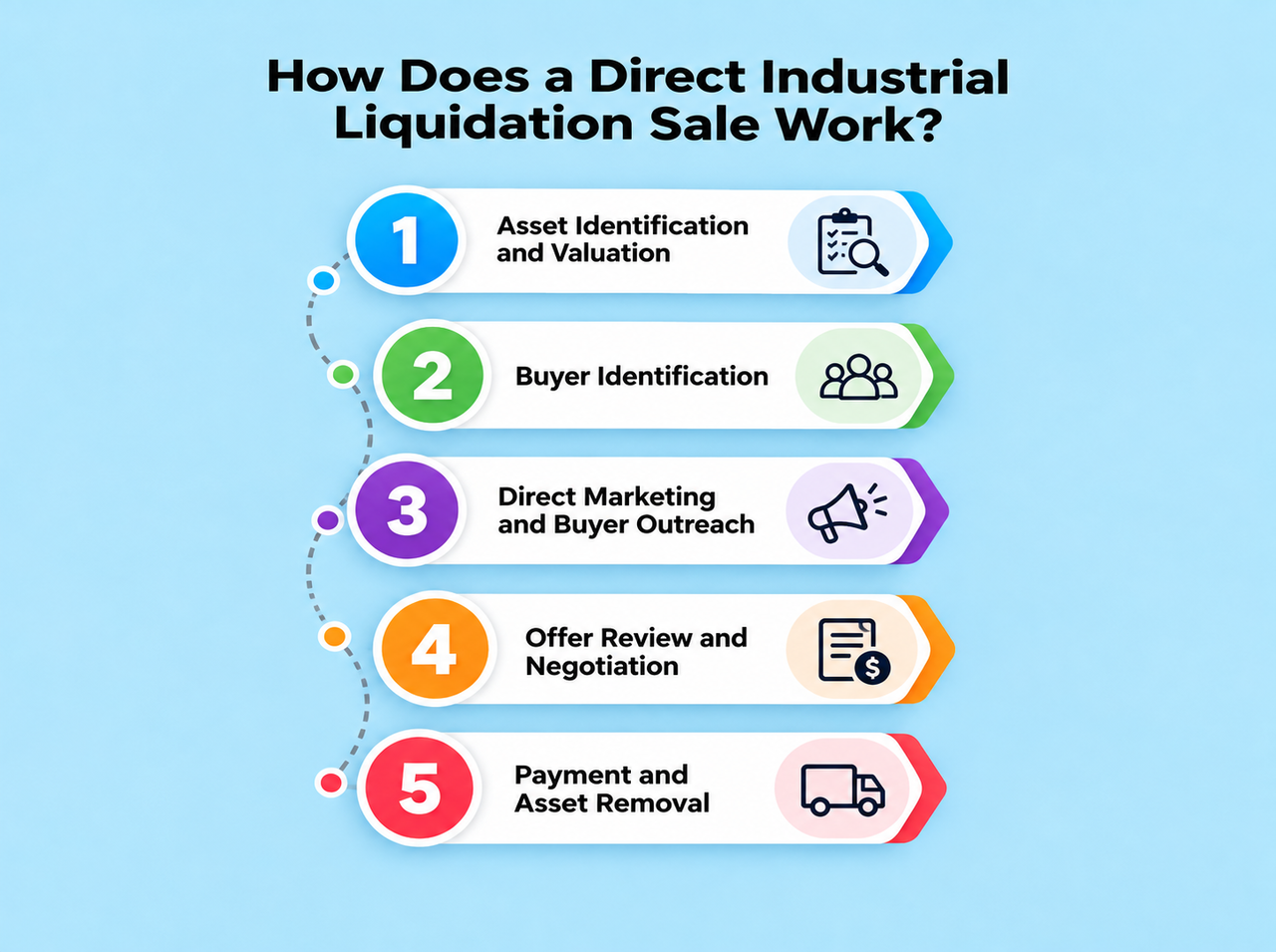
A direct industrial liquidation sale follows a structured process that helps the seller identify suitable buyers, review offers, and complete the sale on agreed terms.
1. Asset Identification and Valuation
The direct industrial liquidation process begins by creating a complete list of the assets available for sale. Each item should include clear details about its condition, age, technical specifications, operating history, and maintenance records.
The seller then estimates the current secondary-market value of each asset. This helps set realistic price expectations and shows which equipment may require targeted buyer outreach.
2. Buyer Identification
The next step is to find buyers who may have a direct need for the assets. These may include end users, equipment dealers, resellers, and companies operating in related industries.
Specialized equipment should be matched with buyers who understand its function, condition, and market value. Reaching the right buyer group can lead to stronger offers and reduce time spent on unsuitable inquiries.
3. Direct Marketing and Buyer Outreach
The seller creates clear equipment descriptions and gathers photos, videos, technical records, and maintenance details. These materials help qualified buyers evaluate the asset before submitting an offer.
The assets are then marketed directly to selected buyers based on equipment type, industry demand, location, and likely use.
4. Offer Review and Negotiation
The seller reviews each offer and compares the proposed price, payment terms, asset condition terms, removal schedule, and transportation responsibilities.
The seller can accept, reject, or negotiate the terms before completing the sale. Assets may be sold individually, grouped into equipment packages, or included in a bulk transaction based on buyer demand and recovery goals.
5. Payment and Asset Removal
Once an offer is accepted, both parties confirm the payment schedule and asset removal terms. The seller and buyer then coordinate rigging, loading, transportation, site access, and safety requirements.
The parties also complete required sale, ownership transfer, and compliance documentation according to the agreed transaction terms. This helps reduce payment disputes, removal delays, and site safety issues.
How Does an Industrial Auction Sale Work?
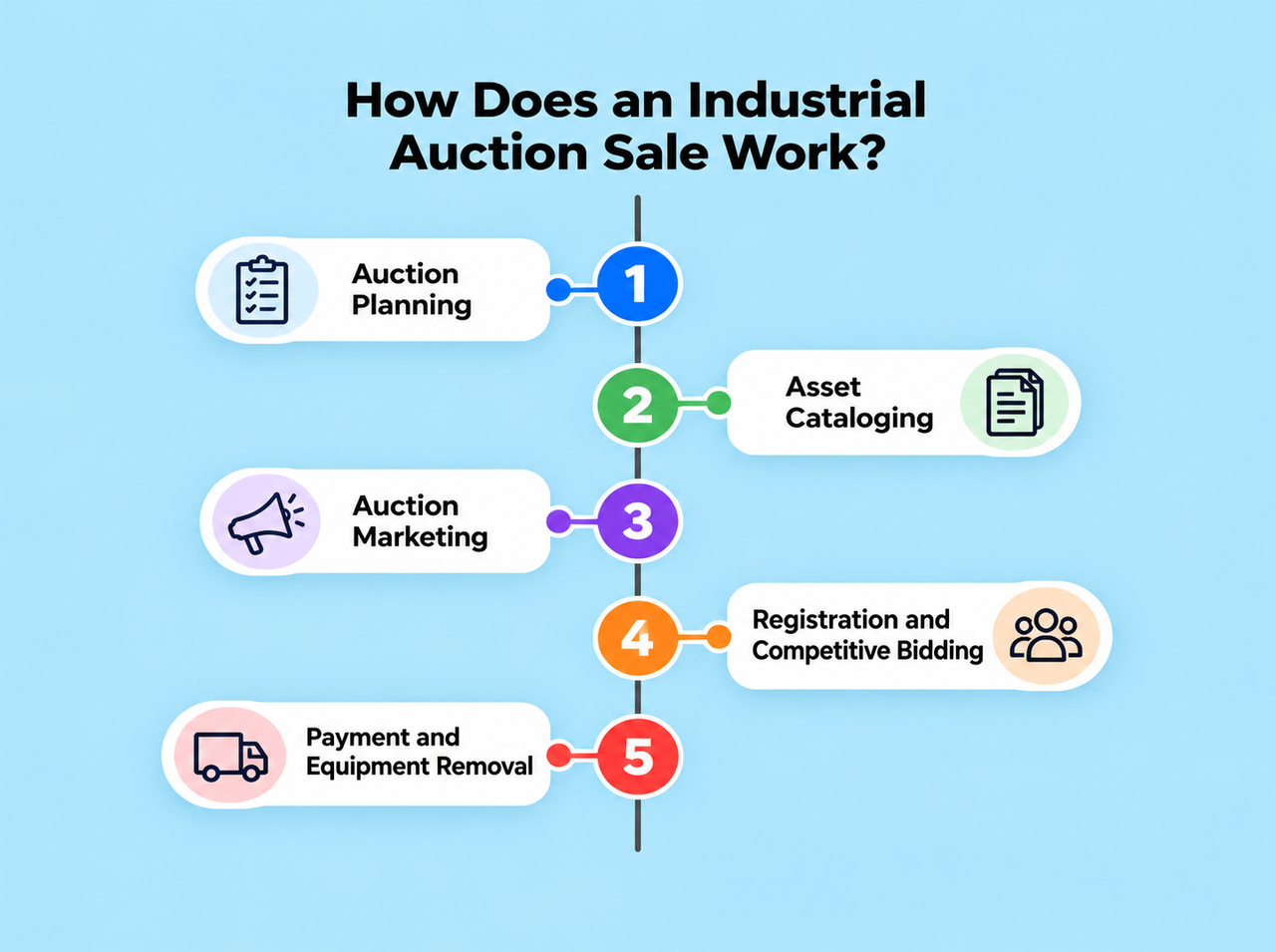
An industrial auction sale follows a structured process that helps sellers prepare assets, attract qualified bidders, and complete the sale within a defined timeline.
1. Auction Planning
The process begins by setting the auction date, bidding period, reserve terms, payment requirements, inspection schedule, and asset removal deadlines.
The seller and auction company also decide how the assets will be grouped, marketed, and presented to buyers. Clear sale terms help bidders prepare and reduce delays after the auction closes.
2. Asset Cataloging
The seller groups the assets into logical lots based on equipment type, value, condition, or intended use. Each listing should include a clear equipment description, technical specifications, photos, condition details, inspection information, and removal requirements.
Accurate listings give buyers the information they need to review each asset before bidding. They can also reduce questions, bidding errors, and disputes after the sale.
3. Auction Marketing
The auction is promoted through equipment databases, buyer networks, dealers, resellers, and industry contacts. This helps the sale reach buyers who may have a direct need for the machinery or asset lots.
Buyers should have enough time to review listings, inspect equipment, and understand the payment and removal terms before bidding begins. Clear information can attract more qualified bidders and support stronger bidding activity.
4. Registration and Competitive Bidding
Interested buyers register for the auction and agree to the bidding, payment, and removal terms. Some auctions may also require bidder approval, deposits, or other registration requirements.
Qualified bidders then compete during the scheduled bidding period. The final sale price depends on buyer demand, the number of active bidders, and the level of interest in each asset. Strong competition can raise the price, while limited participation can lead to lower bids.
5. Payment and Equipment Removal
The winning bidder completes payment according to the auction terms. Once payment requirements are met, the buyer arranges rigging, loading, freight, transportation, and equipment removal.
Purchased assets must be removed according to the deadlines stated in the sale terms. A clear removal schedule helps the seller manage site access, reduce delays, and complete facility clearance on time.
Advantages of a Direct Industrial Liquidation Sale

Direct industrial liquidation offers several advantages for companies selling surplus machinery, equipment, and other industrial assets. The benefits depend on the type of assets, buyer demand, and the goals of the sale.
1. Greater Control Over Pricing
You can set asking prices based on the condition of the asset, current buyer demand, and your recovery goals. You can accept, reject, or negotiate an offer before agreeing to the sale. This reduces the risk of selling valuable equipment at a price that does not meet your expectations.
2. Better Fit for Specialized Equipment
Some industrial assets require buyers with specific technical knowledge or production needs. Direct outreach helps connect this equipment with end users, dealers, and resellers who understand its purpose and resale value. An end user may be willing to place a stronger offer when the equipment fits an existing production need.
3. Flexible Sale Terms
A direct sale allows you to negotiate terms that fit your facility schedule and business needs. These terms may cover the payment schedule, sale date, equipment removal, transportation duties, and asset packaging. This flexibility can help reduce disruptions at an active facility.
4. More Flexibility for Buyer Due Diligence
A direct sale can give qualified buyers more time to inspect equipment, review maintenance records, and study technical documents before submitting an offer. Where site conditions allow, buyers may also inspect or test the equipment before completing the purchase. This can give them more confidence in the asset condition and expected performance.
5. Ability to Sell Assets Separately
High-value machinery can be marketed and sold on its own rather than grouped with lower-value assets. Selling equipment separately can protect its resale value and help you reach buyers with a direct need for that specific asset.
Limitations of a Direct Industrial Liquidation Sale

Direct industrial liquidation can create challenges that affect sale timing, internal workload, and net recovery. These limitations matter more when assets must be sold and removed within a fixed schedule.
1. Longer Selling Period
Finding a qualified buyer can take longer when the equipment is specialized or has a smaller secondary-market buyer pool. A longer sale period may delay asset removal and extend the overall disposition process.
2. Growing Carrying Costs
Unsold assets continue to create expenses for your business. These carrying costs may include storage, insurance, security, maintenance, and other holding expenses. As these costs increase, they reduce net recovery. A higher selling price may provide less financial benefit if the asset remains on-site for an extended period.
3. Potentially Lower Buyer Competition
Direct outreach may create less competitive pressure than a broadly marketed auction. Fewer active buyers can result in fewer offers and less incentive for buyers to increase their proposed price.
4. More Negotiation
Direct transactions may require several discussions, inspections, internal approvals, and offer revisions. Your team may also need to review payment terms, liability provisions, transportation responsibilities, and removal schedules. This can increase internal workload and extend the transaction process.
5. Less Predictable Site Clearance
Assets sold through direct liquidation may leave the facility at different times. Staggered removal can make it harder to manage a plant liquidation, meet a lease deadline, or clear production space by a set date.
Advantages of an Industrial Auction Sale

Industrial auctions can offer several benefits when companies need to sell surplus machinery, equipment, and other industrial assets within a defined sales process.
1. Competitive Price Discovery
Multiple qualified buyers can bid on the same asset during the auction. Strong buyer demand can create pricing pressure and raise the final sale price. The bidding process also provides a market-based indication of what active buyers are willing to pay at that time.
2. Defined Sale Timeline
An industrial auction follows a set schedule for marketing, buyer registration, bidding, payment, and equipment removal. This schedule can help you coordinate the sale with a plant closure or facility consolidation, or a lease-exit deadline. It also gives your internal team clear dates for each stage of the sale.
3. Wider Buyer Exposure
Online auction platforms can promote equipment to buyers across several regions. This wider reach may bring in end users, dealers, resellers, and other industrial buyers who may not be reached through direct outreach. More qualified bidders can increase competition for your assets.
4. Efficient Sale of Mixed Assets
A single auction can include machinery, tools, MRO inventory, warehouse equipment, and facility assets. Selling these assets through one event can reduce the time and internal work required to manage separate transactions for each item.
5. Faster Facility Clearance
Auction terms often include firm removal deadlines for purchased assets. These deadlines create a clear schedule for rigging, loading, and collection. This can help you clear the facility faster and meet closure, consolidation, or lease-exit dates.
Limitations of an Industrial Auction Sale

Industrial auctions can be an effective way to sell surplus assets, but they also come with trade-offs that companies should review before selecting this sale method.
1. Less Control Over Final Pricing
The final sale price depends on buyer interest, market demand, and bidding activity. Once the auction begins, the seller has less control over the final price than in a negotiated direct sale. Reserve pricing can provide some protection, but it does not guarantee that an asset will reach the seller’s expected recovery value.
2. Risk of Weak Bidder Competition
An auction depends on qualified buyers competing for the same assets. If participation is limited, bidding pressure may remain low. Poor promotion, a narrow buyer pool, or incomplete asset information can also reduce bidder interest and lead to weaker offers.
3. Auction and Preparation Costs
Industrial auctions may involve commissions, cataloging fees, advertising costs, photography, site preparation, and sale administration expenses. These costs reduce net recovery and should be considered when comparing auction proceeds with other sale methods.
4. Unsold or Underperforming Lots
Some assets may receive limited interest or fail to meet reserve requirements. Others may sell below expectations when demand is weak. Specialized machinery, older equipment, or assets with a narrow secondary-market buyer base may face a higher risk of underperformance.
5. Fixed Sale Deadlines
Industrial auctions operate within a defined schedule for inspections, bidding, payment, and removal. A fixed timeline can support faster execution, but it may give some qualified buyers less time to inspect equipment, review technical records, or secure internal approval before bidding closes.
Which Option Delivers Better Returns?
Neither direct industrial liquidation nor an industrial auction delivers the highest return in every situation. The better option depends on the assets being sold, buyer demand, available time, and the total cost of completing the sale.
When selling used industrial equipment, companies should compare net recovery rather than gross sale price alone. A higher selling price can lose some of its advantage once commissions, carrying costs, storage, internal labor, rigging, transportation, and other transaction expenses are included.
Direct industrial liquidation may produce better returns when specialized or high-value assets can be matched with qualified buyers and the seller has enough time to negotiate. An industrial auction may perform better when several qualified buyers are likely to compete, and the assets need to be sold within a defined timeframe.
The better option is the sales method that produces the highest net recovery after all sale, holding, and disposition costs are considered.
How Amplio Supports Industrial Liquidation and Auction Sales
At Amplio, we help manufacturers choose the right sales strategy for surplus machinery, equipment, MRO inventory, and other industrial assets. We support both direct negotiated sales and industrial auctions based on asset type, buyer demand, timeline, and recovery goals.
- We identify the most suitable sales channel for each asset or asset group.
- We connect specialized and high-value equipment with qualified buyers through direct outreach and negotiated sales.
- We support public and private industrial auctions when competitive bidding offers a better path to recovery.
- We can begin with a private negotiated sale period and move assets to auction when broader market exposure supports a better recovery outcome.
Get in touch with Amplio to determine the right sales approach for your surplus industrial assets.