7 Signs Your Company Needs a More Structured Surplus Asset Management Process

Production changes, equipment upgrades, facility consolidation, and plant closures often leave companies with machinery, tools, and other industrial assets they no longer need. Managing these surplus assets becomes more difficult as equipment accumulates across multiple departments and facilities.
Individual equipment decisions can appear manageable, even as weaknesses develop in the company's overall approach to surplus asset management. Identifying these weaknesses requires reviewing how departments and facilities manage surplus equipment.
The following seven signs can help you determine if your company needs a more structured surplus asset management process.
1. Surplus Equipment Continues to Accumulate Across Your Facilities

Idle machinery, unused tooling, and obsolete equipment can remain in warehouses, storage areas, or production facilities long after they are no longer needed. As production requirements change and new equipment arrives, these idle assets continue to take up space and incur carrying costs.
Without a clear plan for reuse, sale, or disposal, surplus equipment can remain on-site for extended periods. This accumulation often results from irregular equipment reviews and the absence of defined disposition timelines.
Equipment that is no longer required may remain in storage for months without being formally identified as surplus or assigned for further action.
When this pattern repeats across facilities, it suggests surplus identification and disposition are handled individually rather than through a consistent company-wide process.
2. Surplus Asset Locations and Conditions Are Difficult to Track

Tracking surplus assets becomes difficult when equipment inventories are incomplete, records are outdated, and facilities use different methods to document machinery and tooling. A machine listed at one location may have been transferred, placed in storage, or taken out of service without updating its records.
Maintaining accurate asset information across multiple facilities can be challenging. In a 2025 investigation, the U.S. Government Accountability Office found errors in 116 of 270 asset records tested at three defense contractor locations, showing how inaccuracies can occur in even tightly monitored equipment tracking systems. In Amplio’s experience, a majority of enterprise manufacturers have entire storerooms in facilities with untracked spares and equipment.
Even when equipment locations are known, missing details about condition, ownership, and operational status create further problems. For example, an inventory may list a machine without indicating if it is operational, disconnected, damaged, or awaiting inspection. Without reliable records, asset managers cannot readily determine which equipment is available for sale or requires further evaluation.
These information gaps delay disposition decisions and make it harder to identify equipment with resale potential. As a result, valuable surplus machinery can remain overlooked, reducing opportunities for timely asset recovery.
3. Equipment Storage and Maintenance Costs Continue to Increase

Surplus equipment can create ongoing expenses long after it leaves production. Companies must allocate warehouse or storage space, arrange periodic inspections, and maintain machinery to prevent deterioration.
Beyond storage and maintenance, moving and handling large industrial assets adds further expenses, particularly when equipment is transferred between facilities.
Without timely decisions about future use, companies continue spending money on machinery that no longer contributes to production. Our clients report annual carrying costs ranging from 10% to 25% of asset value. For a company holding $1 million in surplus assets, this equates to $100,000 to $250,000 in annual operating expenses for inventory they don’t need.
Prolonged storage increases the risk of equipment deterioration and reduced resale value. Machinery stored in unsuitable environments or without proper preservation may develop corrosion, electrical problems, or damage to sensitive components. These issues can increase repair costs and reduce the amount companies recover when selling their equipment.
4. Asset Disposition Procedures Vary Across Departments

Operations, procurement, finance, and maintenance departments often have different responsibilities when managing surplus inventory. Without a shared process, each department may follow its own procedures for identifying, approving, or disposing of unused assets.
For example, a maintenance department may identify machinery as surplus, while finance requires documentation before approving its sale. When approval requirements and responsibilities are not established in advance, the equipment can remain idle while departments determine the next steps.
Poor communication creates further problems when asset information, approval requests, and disposition decisions are not shared consistently. This can lead to duplicated efforts, incomplete documentation, and delays in equipment transfers or sales.
Recurring disagreements over responsibilities and approval requirements indicate that the company lacks standardized asset disposition procedures. Without clear guidelines, managing surplus equipment across multiple departments becomes increasingly difficult.
5. New Equipment Is Purchased While Usable Assets Remain Idle

Companies sometimes purchase new machinery or replacement equipment without checking if similar assets are available at other facilities. As a result, usable equipment remains idle while additional capital is spent on assets the company already owns.
This often happens when plants maintain separate equipment inventories and rarely communicate about available surplus assets. Without a shared inventory, procurement teams have limited visibility into machinery that could be transferred and reused at another location.
For example, a manufacturing plant may purchase a new CNC machine to expand production, even though another facility has a similar machine sitting idle. If the existing equipment meets the receiving plant's technical and operational requirements, redeploying it eliminates the need for a new purchase.
When equipment purchases are made without reviewing internal availability, asset redeployment is often overlooked during procurement planning. This prevents companies from making full use of existing machinery and allocating capital to other operational needs.
6. Surplus Assets Are Sold Without Proper Valuation
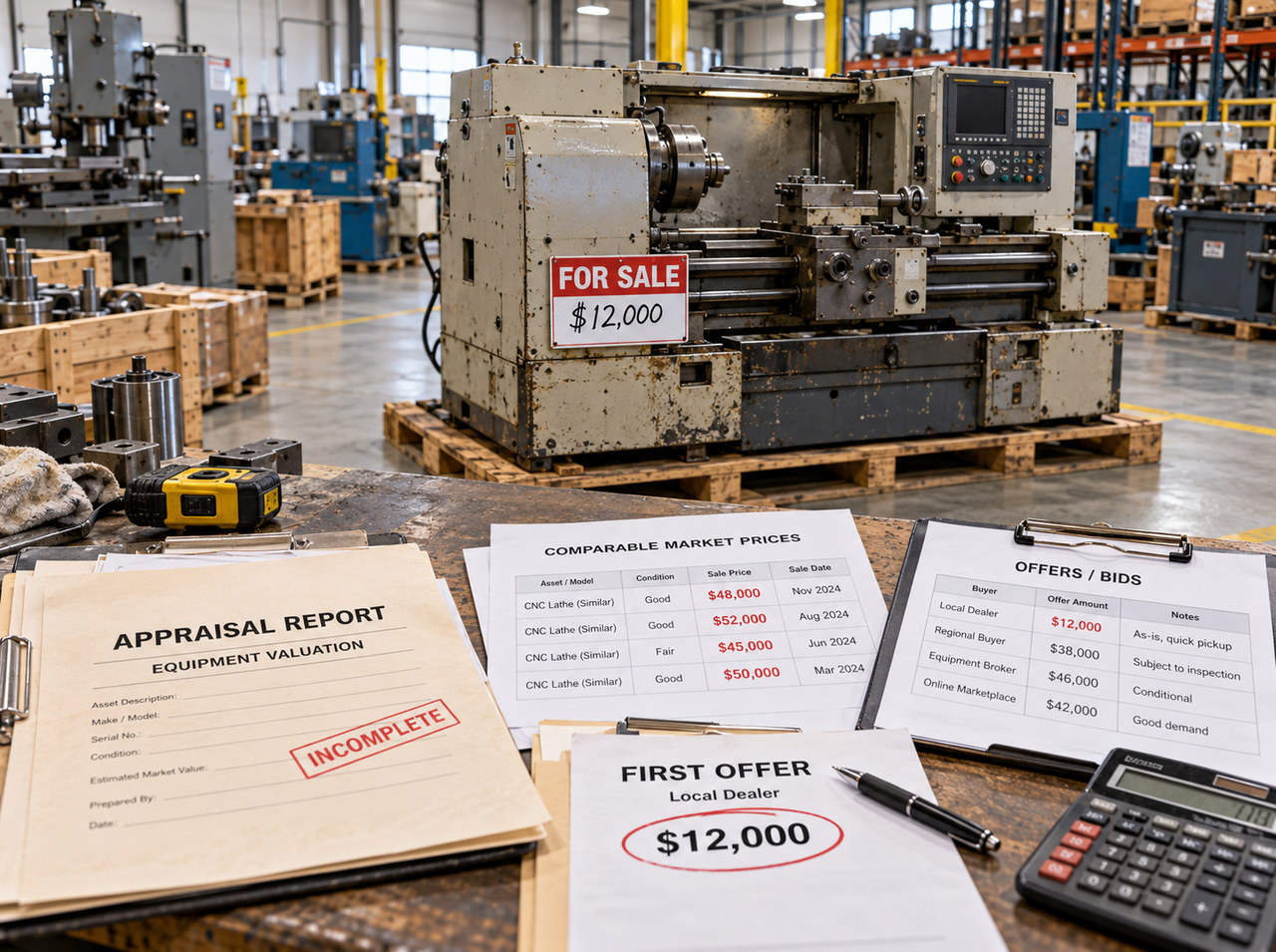
Companies sometimes sell surplus machinery without assessing its current secondary-market value. This often happens when disposition decisions rely on internal estimates rather than recent market data, comparable sales, or a machinery and equipment appraisal.
Book values and original purchase prices do not always reflect what industrial equipment can sell for in the used machinery market. Factors such as equipment condition, age, specifications, and buyer demand influence resale value. Relying on outdated pricing information can result in assets being sold for less than their potential market value.
Limited buyer exposure can further affect sale proceeds. For example, accepting the first offer from a local equipment dealer without comparing other bids can prevent companies from identifying buyers willing to pay more.
When valuation methods and sales procedures differ across facilities, companies lack a consistent basis for pricing and selling surplus equipment. This makes it difficult to evaluate offers and achieve reliable asset recovery results.
7. Surplus Asset Recovery Performance Is Not Properly Measured
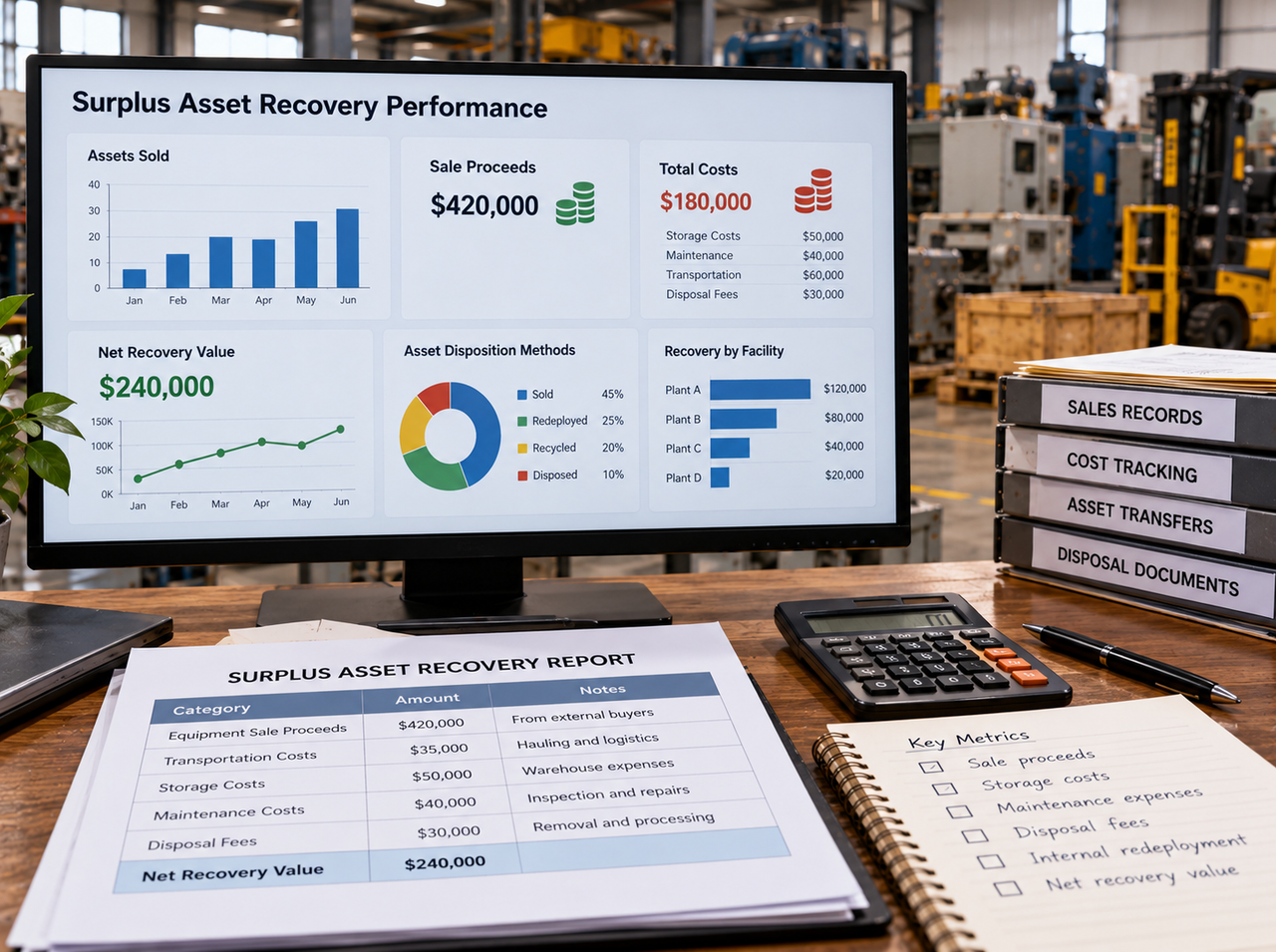
Companies often struggle to evaluate their surplus asset recovery performance when reporting is incomplete or inconsistent across facilities. Without reliable records, management cannot accurately determine how much value is recovered from unused machinery and equipment.
Missing information about equipment sale proceeds, storage costs, maintenance expenses, and disposal fees makes it difficult to calculate net recovery. Failing to track internal redeployment also makes it difficult to estimate avoided equipment purchases and associated cost savings.
For example, a facility may report the revenue generated from selling surplus equipment without accounting for transportation, storage, or removal costs. This can create an inaccurate picture of the financial results of the sale.
When companies lack consistent performance measurements, they struggle to compare recovery results across facilities and identify weaknesses in their disposition practices. Consistent reporting helps management assess financial outcomes and improve future disposition decisions.
Conclusion
Recognizing the warning signs of poor surplus asset management is the first step toward improving how unused equipment is handled. Accurate asset records, consistent disposition procedures, and timely decisions can help companies reduce unnecessary costs and recover more value from surplus machinery.
Addressing these weaknesses also helps manufacturers coordinate equipment redeployment, resale, and disposal across multiple facilities.
If your company is facing these challenges, Amplio's surplus asset management services can help with asset cataloging, equipment valuation, internal redeployment, and resale.
Contact us to discuss your surplus asset management needs.