15 Metal Fabrication Machines Used in Modern Manufacturing

Metal fabrication machines are the backbone of modern manufacturing. Without the right fabrication machinery, you lose valuable time, waste material, and slow down production. This pressure on speed and quality is pushing U.S. manufacturers to invest more in metalworking equipment. The Association For Manufacturing Technology (AMT) reported $5.74 billion in U.S. metalworking machinery orders in 2025, up 22.5% from 2024.
Those investments make sense because these metalworking machines handle the full sheet metal fabrication process. They cut, bend, punch, roll, and join metal with speed, accuracy, and repeatable quality. That matters when you need consistent parts, predictable lead times, and fewer rework cycles.
In this guide, you will learn what each fabrication machine does, where it performs best, and the most common uses in the metal fabrication industry.
What Are Metal Fabrication Machines?
Metal fabrication machines are equipment used to cut, form, join, and finish metal parts for manufacturing. These machines support metal fabrication processes that produce components for industrial equipment, construction systems, automotive parts, and many other B2B applications.
They are built for production speed, accuracy, and repeatable quality, traits shared with many other essential manufacturing machines used across industrial production. This capability allows fabricators to run consistent output across sheet metal fabrication, plate work, and heavy equipment fabrication without sacrificing quality.
At a practical level, metal fabrication machines help manufacturers turn sheet metal and raw stock into reliable parts that meet real-world production requirements.
1) CNC Laser Cutting Machine
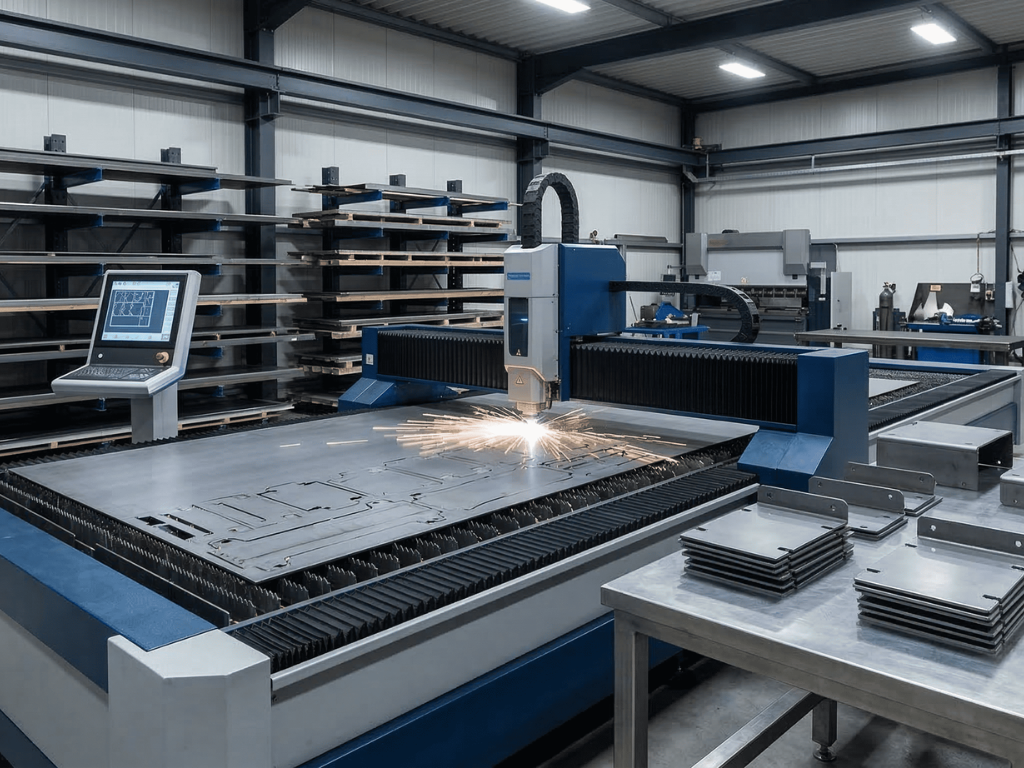
A CNC laser cutting machine is one of the most widely used metal fabrication machines in modern manufacturing. It uses computer numerical control to cut sheet metal at high speed and with high precision, making it a core component of many CNC sheet metal machines.
Where it Performs Best
- Sheet metal cutting with tight tolerances
- Clean edges that reduce secondary grinding work
- Repeatable precision across production runs
- Short lead times when you need speed without sacrificing quality
Common Applications
- Electrical and industrial panels
- Brackets and mounting plates
- Sheet metal enclosures and covers
- Parts that need a consistent fit-up before bending on press brakes
2) CNC Plasma Cutting Machine

A CNC plasma cutting machine is a metal processing machine designed for fast cutting on thicker metals. Many fabrication shops use it as a practical alternative to laser when the job involves heavy plate, larger parts, or when edge finish is less critical.
Where it Performs Best
- Cutting a thicker plate at high speed
- Cost-effective cutting when price matters more than a polished edge
- Heavy equipment fabrication work, where parts go to welding and grinding next
- Fabrication yard production where throughput matters
Common Applications
- Base plates and mounting plates
- Structural parts and steel frames
- Brackets for heavy-duty equipment
- Plate components prepared for welding and machining
3) Waterjet Cutting Machine
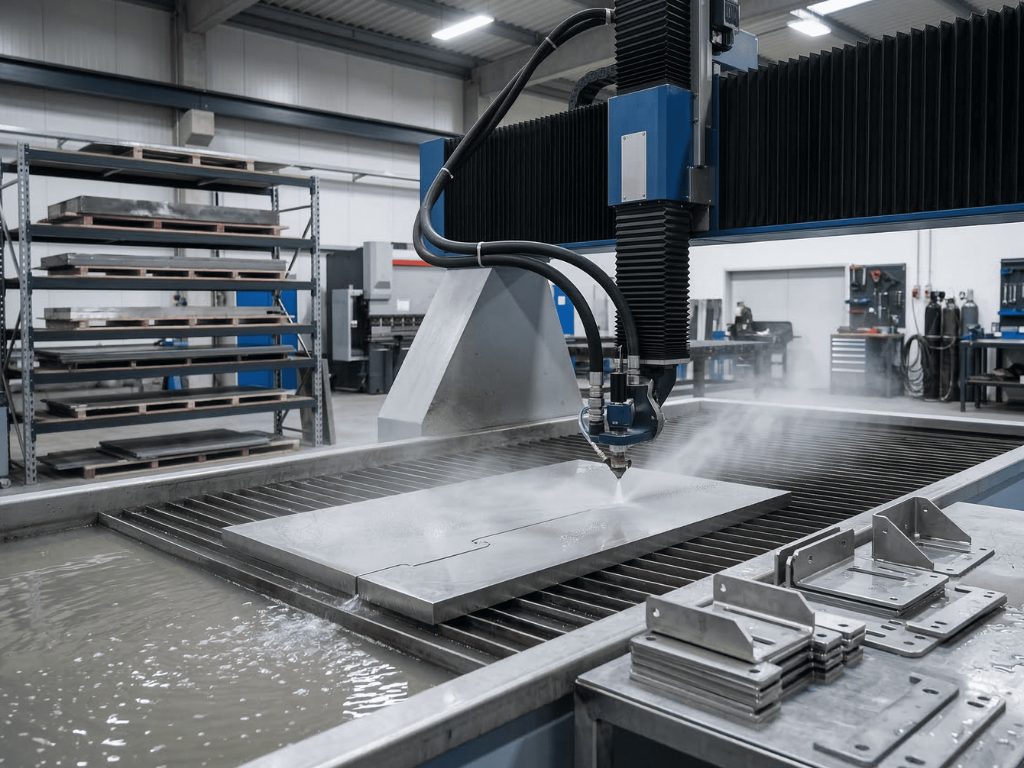
A waterjet cutting machine is a metal fabrication machine that uses a high-pressure stream of water, often mixed with abrasive media, to cut metal without heat. This makes it one of the most reliable metal processing machines when you need clean results and tight control.
It is widely used in the metal fabrication industry because it avoids warping, burn marks, and heat distortion. That gives you more consistent parts, especially when you are cutting thick plate or heat-sensitive materials.
Where it Performs Best
- Cutting materials where heat distortion is a problem
- Thick plate cutting with controlled edge quality
- Mixed material production in one machine
- Jobs requiring a minimal heat-affected zone
Common Applications
- Stainless steel fabrication
- Aerospace and defence components
- Precision-cut brackets and plates
- Custom manufacturing with tight edge requirements
4) Sheet Metal Shearing Machine

A sheet metal shearing machine, also called a guillotine shear, is one of the most practical sheet metal fabrication machines in a fabrication yard. It makes fast, straight cuts on sheet metal without CNC programming, which helps your shop move stock quickly and keep production running.
Many industrial equipment fabricators still rely on shears because they reduce costs on simple cutting jobs. When you need repeated blanks for press brakes, a shear can outperform slower setups and save valuable time.
Where it Performs Best
- Fast straight cuts on sheet metal
- High throughput cutting for repeated sizes
- Shops that process large sheets daily
- Lower operating cost compared to CNC cutting for simple cuts
Common Applications
- Blank cutting before press brake bending
- Sheet prep for enclosures
- Flat stock cutting for ducting and trays
- General fabrication work requiring straight edges
5) Horizontal Band Saw
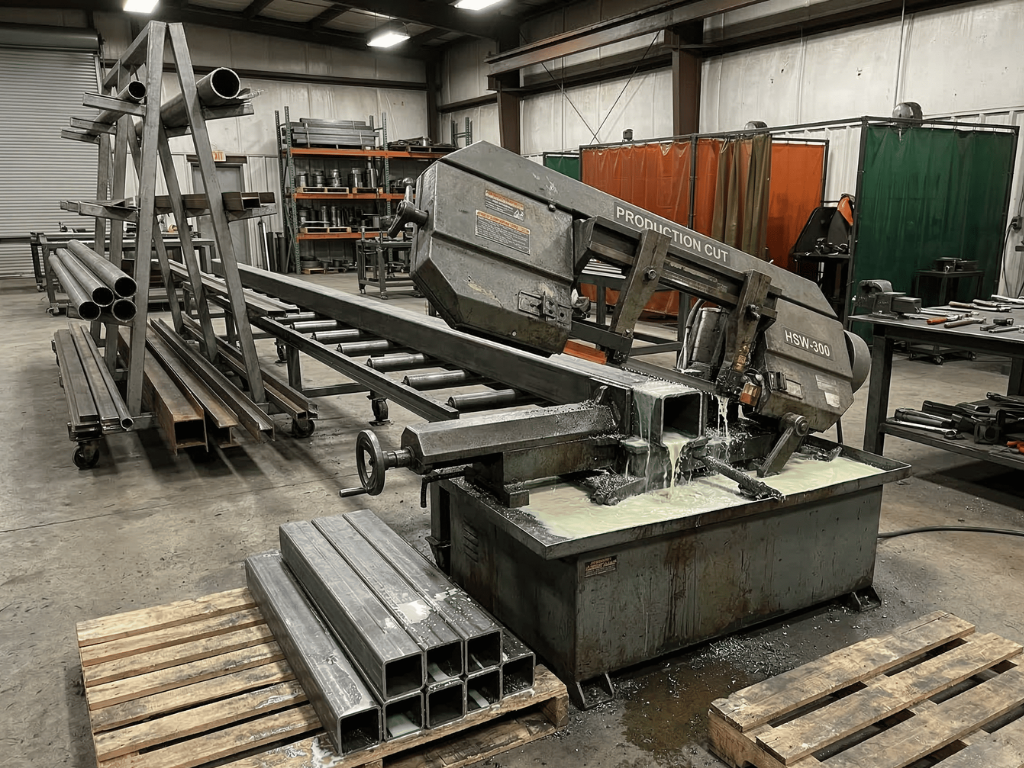
A horizontal band saw is one of the most common metal fabrication machines in modern fabrication because it handles daily cutting work with speed and consistency. It is a reliable fabrication machine for cutting bar stock, tube, and structural shapes before the parts move into welding, drilling, or metal fabrication machining.
Many manufacturers use a horizontal band saw to keep production moving without tying up higher-cost CNC sheet metal machines. It is also a practical choice in heavy equipment fabrication, where you need repeat cuts on thick material and raw stock.
Where it Performs Best
- Cutting bar stock, tube, and structural shapes
- High repeat cutting for production flow
- Lower-cost cutting for tube fabrication
- Facilities that weld frames and structural assemblies
Common Applications
- Cutting tube for frames
- Cutting steel bar for brackets and supports
- Preparing stock for welding and machining
- Structural steel fabrication workflows
6) CNC Turret Punch Press
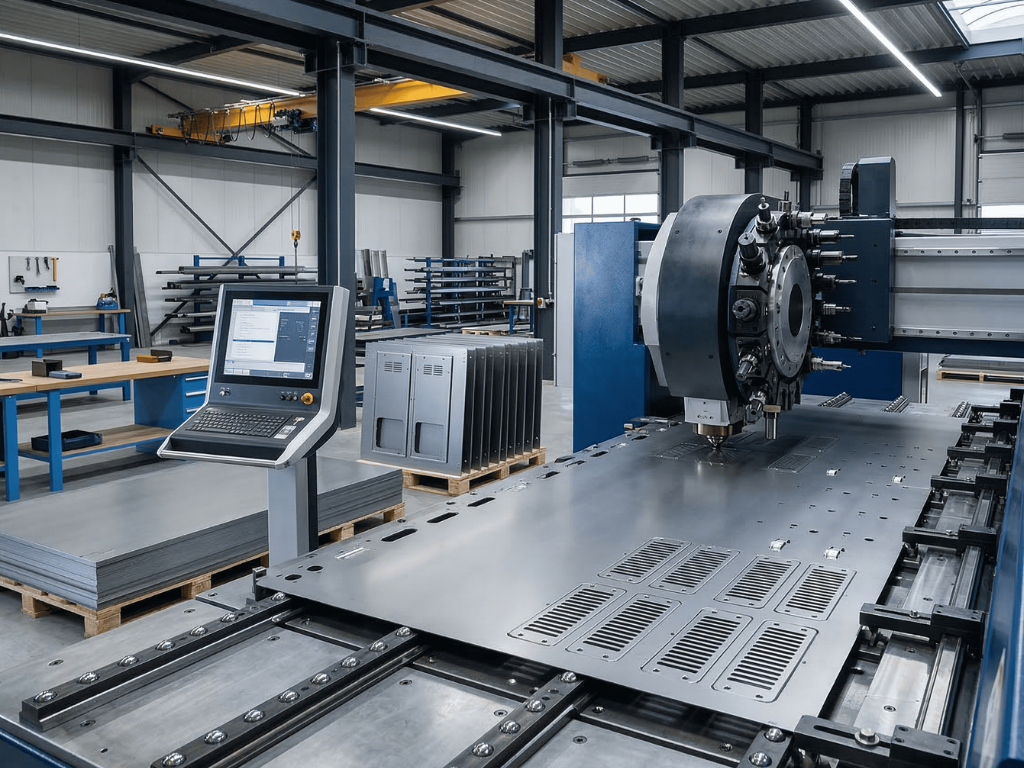
A CNC turret punch press is one of the most productive sheet metal fabrication machines for high-speed punching, forming, and holemaking. It uses computer numerical control to move sheet metal across a turret of tooling, allowing fast punching patterns with consistent accuracy.
This fabrication machinery is a strong fit for sheet metal work that relies on hole patterns, cutouts, and formed features. It also supports operations like louvers, knockouts, and embossing, which many metal fabrication tools cannot produce efficiently with cutting alone.
Where it Performs Best
- High-speed hole punching in sheet metal
- Producing repeated sheet metal parts at scale
- Adding forms like louvers and embossing
- Facilities that run enclosure and cabinet production
Common Applications
- Electrical and control cabinets
- HVAC panels and duct parts
- Sheet metal covers and housings
- Repetitive hole patterns for Original Equipment Manufacturer (OEM) parts
7) Ironworker Machine
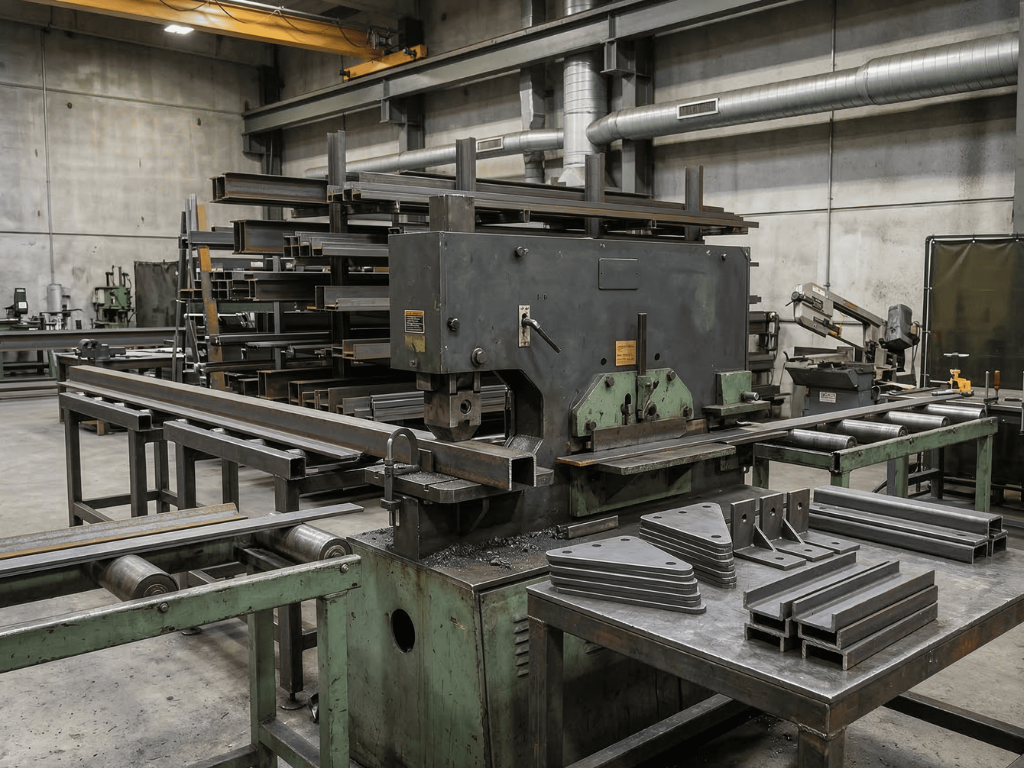
An ironworker machine is a heavy-duty fabrication machine designed for fast punching, shearing, and notching of structural steel. It combines multiple functions into one station, which makes it a valuable piece of fabrication machinery for high-throughput work on thick material.
Many industrial equipment fabricators rely on ironworkers because they simplify structural prep work without computer numerical control. When you work with angle iron, flat bar, and channel, an ironworker helps you move from raw stock to weld-ready parts with less handling and fewer setup steps.
Where it Performs Best
- Structural steel fabrication
- Punching, shearing, and notching in one station
- Working with angle, flat bar, and channel
- Fast fabrication without CNC programming
Common Applications
- Brackets and gussets
- Handrail and stair fabrication
- Steel frame prep work
- Structural fabrication for construction supply
8) Pipe Notcher
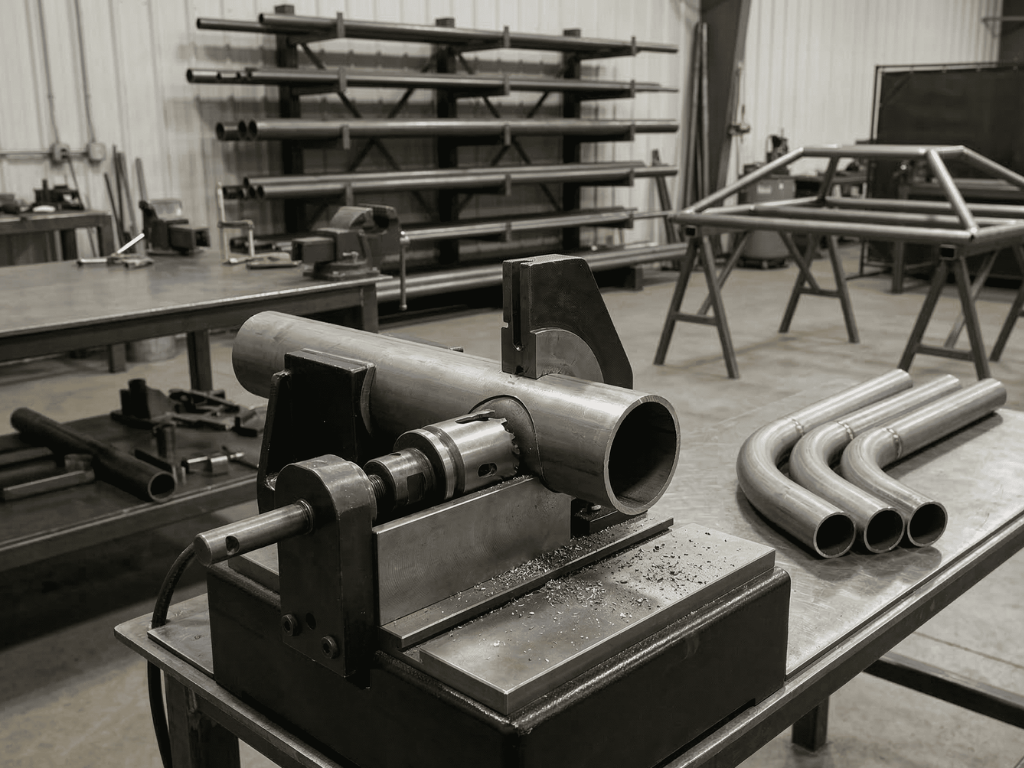
A pipe notcher is a fabrication machine used to notch a tube for a clean joint fit-up before welding. This type of metal fabrication machinery improves speed and consistency in equipment fabrication because it reduces manual marking, grinding, and rework.
It is especially useful when you need tight joints on tube frames and structural assemblies. Better fit-up leads to stronger welds, faster assembly, and less cleanup. That saves valuable time across production.
Where it Performs Best
- Tube notching for tight fit-up joints
- Reducing grinding time before welding
- Production work where consistency matters
- Facilities producing frames and rails
Common Applications
- Tube frames and roll cages
- Handrails and balustrades
- Structural tube assemblies
- Welded tube components for industrial equipment
9) CNC Press Brake
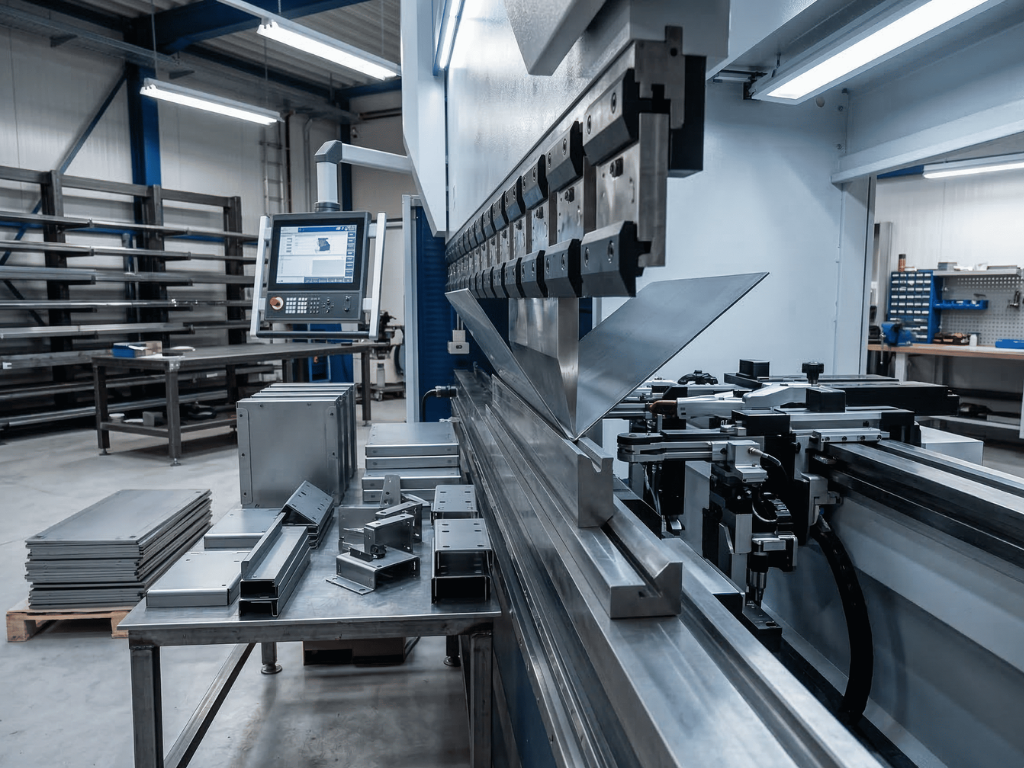
A CNC press brake is one of the most important sheet metal fabrication machines because it controls bending with accuracy and repeatability. It uses computer numerical control to position the sheet, control the ram, and manage backgauges, which helps you produce consistent bends across production.
This metal forming tool is essential when parts must fit correctly after cutting and punching. If bend angles drift, assembly slows down, panels do not align, and hardware holes miss their targets. A CNC press brake reduces those issues and supports tight bend tolerances for OEM supply.
Where it Performs Best
- Accurate bending for sheet metal parts
- Repeatable bends for production runs
- Complex multi-bend parts using CNC backgauges
- Tight bend tolerances for OEM supply
Common Applications
- Brackets and channels
- Electrical enclosures
- Panels, frames, and sheet metal supports
- Industrial cabinet manufacturing
10) Plate Rolling Machine
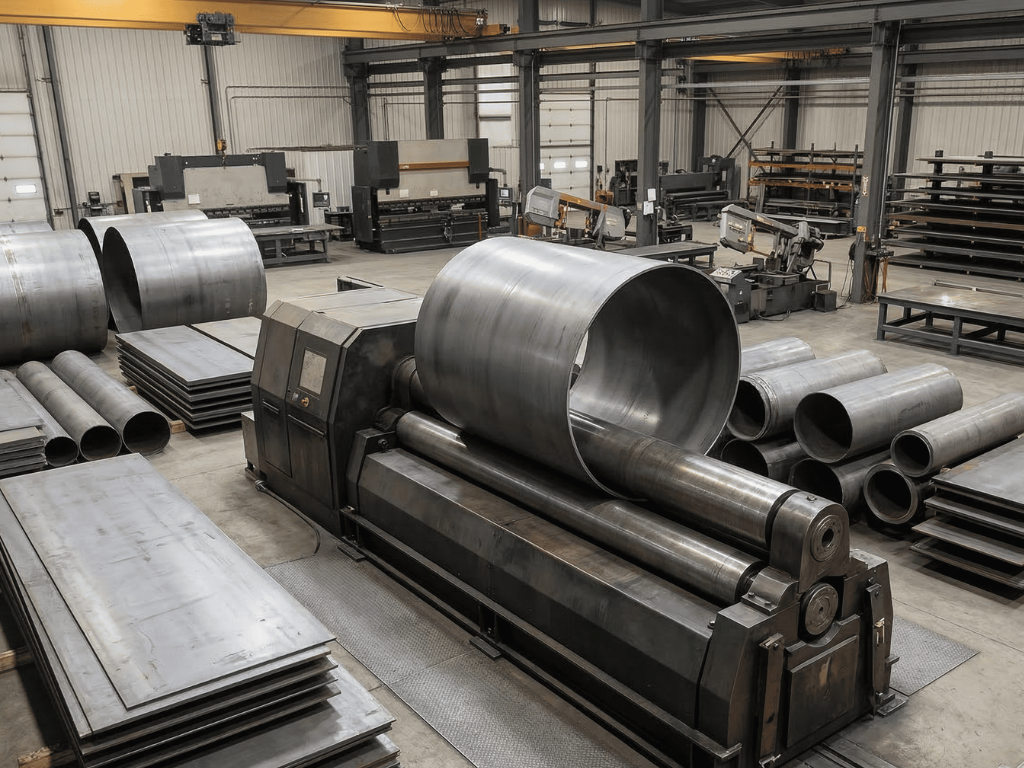
A plate rolling machine is a metal fabrication machine used to roll sheet metal and plate into smooth cylinders and controlled curves. It is one of the most common types of metal fabrication equipment for round parts because it produces consistent shapes without pie-cut welding or excessive forming steps.
This fabrication machinery is especially valuable in heavy equipment fabrication and industrial builds where curved components must match the same diameter across production. When the curve is consistent, fit-up improves, welding becomes faster, and final assembly stays on schedule.
Where it Performs Best
- Rolling sheet and plate into cylinders
- Fabrication requiring round shapes and shells
- Medium to heavy fabrication work
- Producing consistent curves for repeated parts
Common Applications
- Tank shells and vessel bodies
- Rolled ducting sections
- Pipe jackets and sleeves
- Curved panels for industrial equipment
11) Section Bender
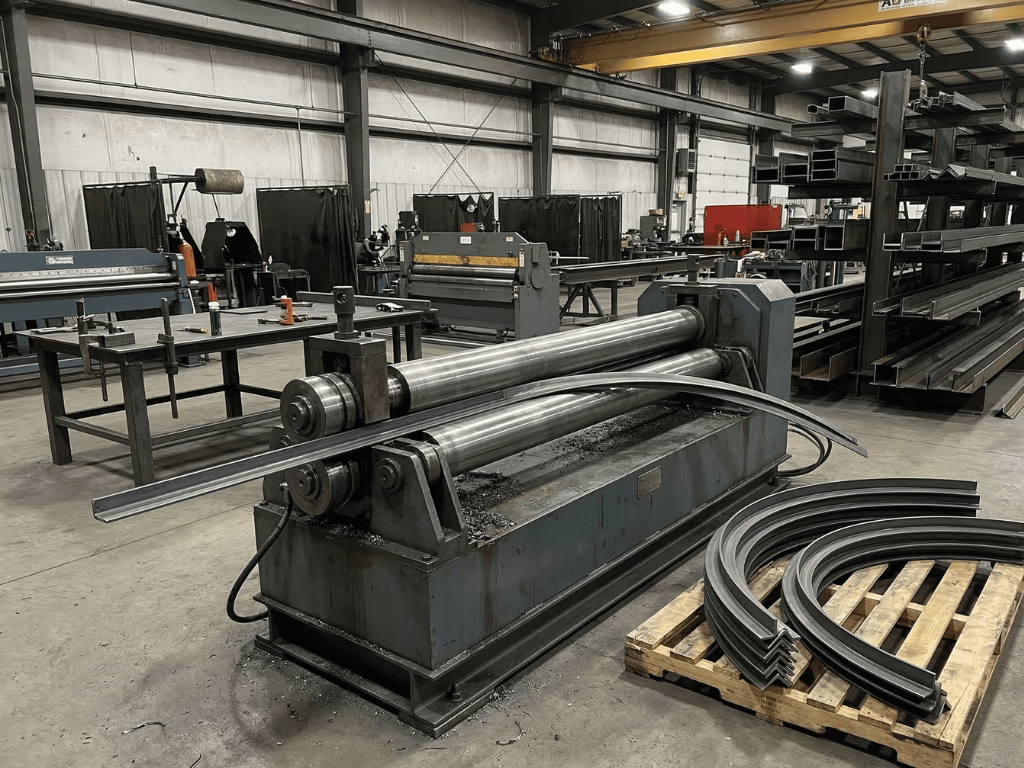
A section bender, also called an angle roll, is a metal fabrication machine used to roll structural shapes into smooth curves. It is different from plate rolls because it works on angle, channel, flat bar, and tube instead of sheet metal.
This fabrication machinery is essential when curved frames must stay strong and consistent. Instead of cutting and welding multiple segments, you can form a continuous curve that improves load handling, fit-up, and finished appearance. It is a practical solution for structural fabrication where accuracy matters.
Where it Performs Best
- Rolling structural shapes like angle, channel, and tube
- Fabrication requiring curved frames
- Stronger curved components than bent segments
- Structural and architectural fabrication
Common Applications
- Curved handrails
- Arches and structural frames
- Trailer and transport frames
- Architectural metal fabrication projects
12) Tube Bending Machine
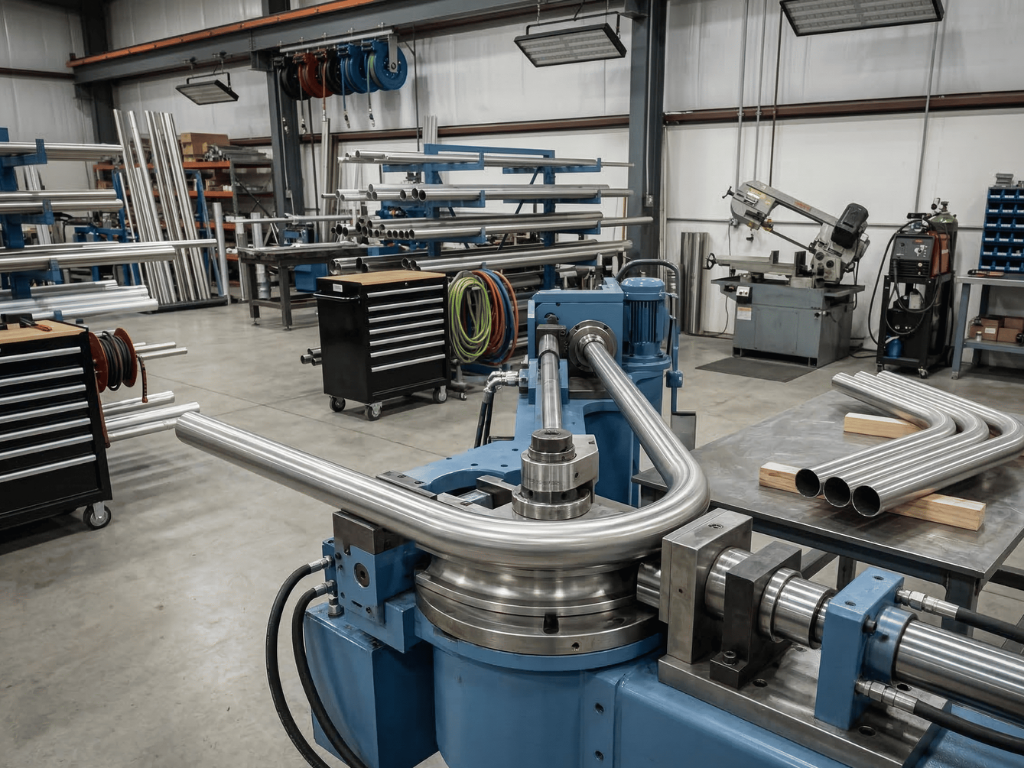
A tube bending machine, also called a mandrel bender, is a fabrication machine built to form tube into precise bends without crushing or collapsing the material. It is one of the most important metal forming tools when you need clean bends that still hold strength and a consistent diameter.
This type of advanced fabricating machinery is widely used in metal fabrication machining workflows because it supports repeat production. When bends stay consistent, your parts fit faster, weld prep improves, and final assemblies stay accurate across production runs.
Where it Performs Best
- Tight-radius bends without tube collapse
- High repeatability for tube parts
- Stainless steel and aluminium tube bending
- Production runs for frames and piping
Common Applications
- Automotive exhaust and tubing
- Handrails and balustrades
- Furniture manufacturing
- Industrial pipe and frame components
13) Hydraulic Press
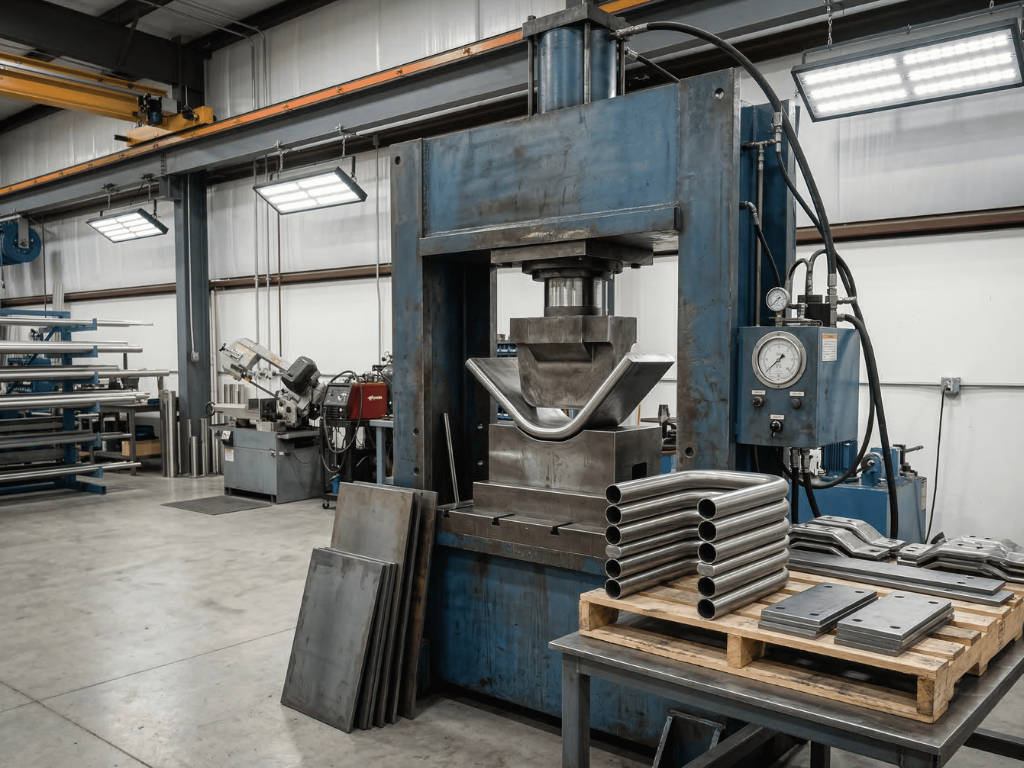
A hydraulic press is a fabrication machine that uses controlled hydraulic force to form, stamp, and shape metal. It is one of the most versatile types of metal fabrication machinery because it supports both production work and custom jobs that require special tooling.
This metal processing machine is also widely used for straightening and press-fit assembly. When parts bend during welding or handling, a hydraulic press helps you bring them back into tolerance. That improves quality, reduces scrap, and keeps equipment fabrication moving.
Where it Performs Best
- Forming, stamping, and pressing operations
- Straightening bent metal components
- Custom tooling-based fabrication work
- Jobs requiring high force and controlled pressure
Common Applications
- Custom-formed brackets and parts
- Straightening plates and structural pieces
- Stamping and shaping work
- Assembly tasks like press-fit components
14) Welding Systems
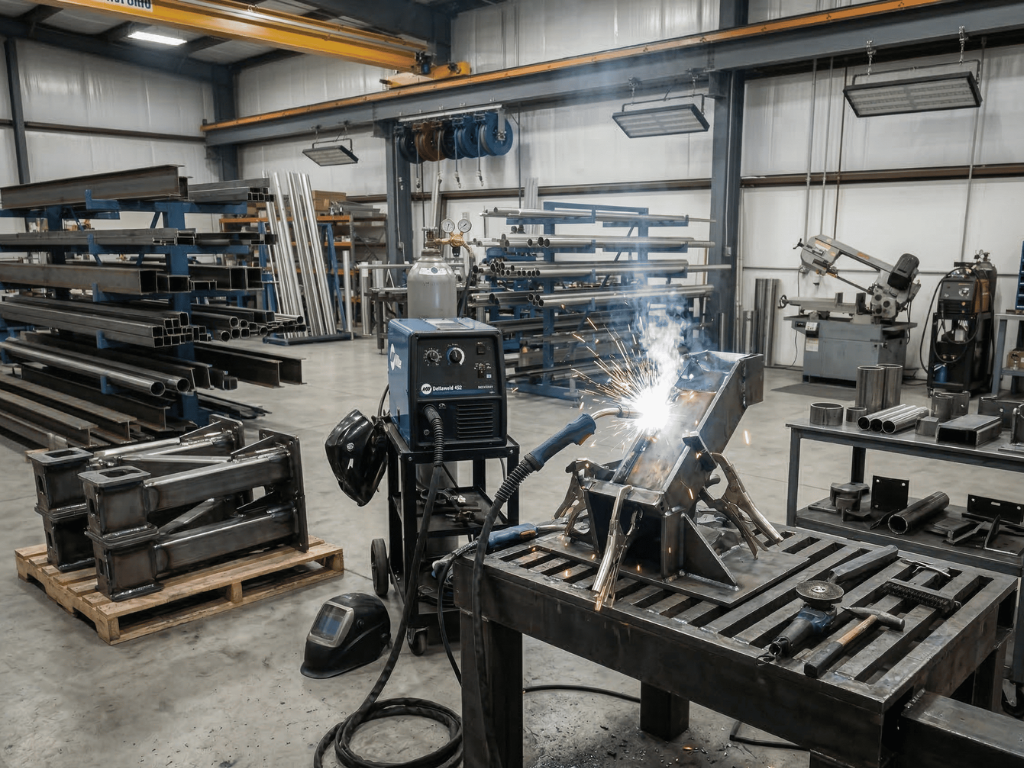
Welding systems are core metal fabrication tools because they join parts into finished assemblies. In modern manufacturing, welding often determines the final strength, reliability, and service life of the product. That is why welding remains one of the most important types of metal fabrication, even as cutting and forming technology improves.
Most manufacturers rely on Metal Inert Gas welding (MIG), Tungsten Inert Gas welding (TIG), or stick welding for daily fabrication work. When production volume increases and assemblies stay consistent, robotic welding becomes a practical upgrade. It improves repeatability, reduces rework, and helps keep production running with predictable quality.
Where it Performs Best
- Joining steel, stainless steel, and aluminium
- Producing welded assemblies at scale
- Structural fabrication and industrial builds
- Robotic welding for high-volume repeat assemblies
Common Applications
- Frames, skids, and support structures
- Industrial equipment manufacturing
- Sheet metal assemblies
- Automotive and production welding lines
15) Deburring and Edge Rounding Machine
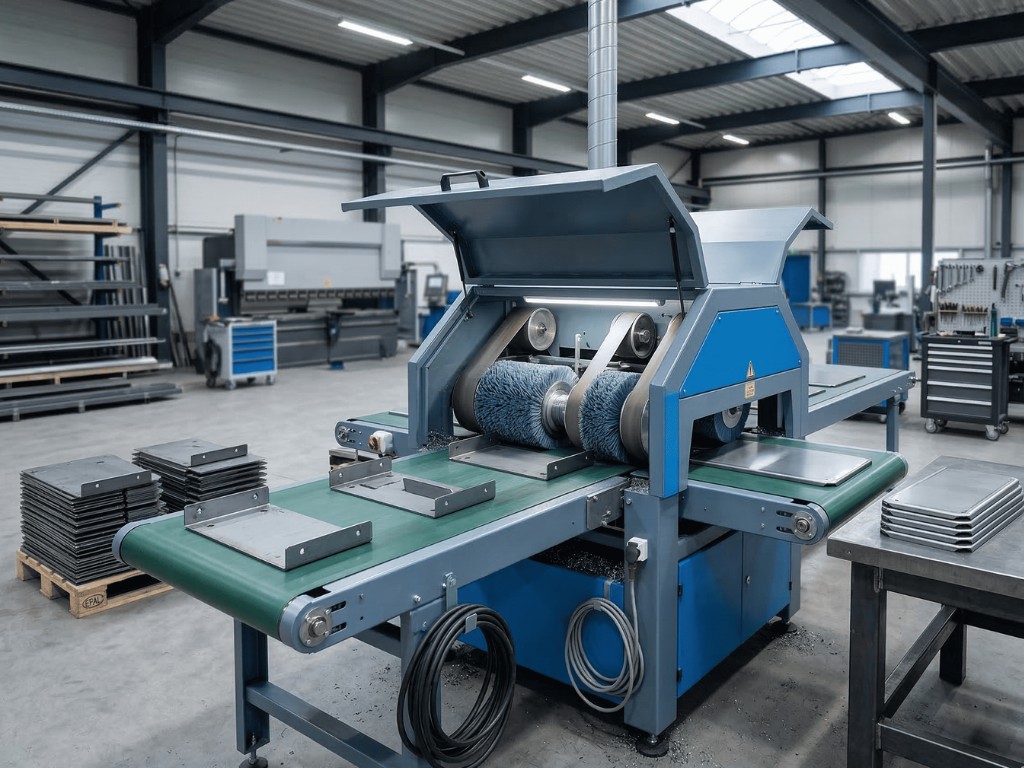
A deburring and edge rounding machine is a metal fabrication machine used to remove sharp edges, burrs, and slag after cutting. It is one of the most overlooked types of metal fabrication machinery, even though it directly impacts safety, fit-up, and final part quality.
This fabrication machine becomes essential when production volume increases. Manual grinding takes valuable time and creates inconsistent results across parts. A deburring system improves efficiency by producing clean, uniform edges on sheet metal and plate, which helps downstream steps like bending, welding, and powder coating stay consistent.
Where it Performs Best
- Removing burrs after laser cutting, plasma cutting, and shearing
- Edge rounding for safer handling and better assembly
- Reducing manual grinding time in production
- Preparing parts for welding, painting, or powder coating
Common Applications
- Sheet metal enclosures and cabinet parts
- Brackets, base plates, and mounting plates
- Stainless steel panels requiring a clean finish
- Parts prepared for coating and final assembly
Final Thoughts
The right metal fabrication machines are the ones that match your daily work. Start with your material type, thickness range, and production volume. That approach helps you invest in sheet metal fabrication equipment and machinery that improve output, rather than create bottlenecks.
Focus first on a workflow that covers cutting, forming, and joining with reliable accuracy. Once those steps stay consistent, automation becomes the smart next move. CNC upgrades, robotic welding, and higher-throughput fabrication machinery make the biggest impact when repeat orders and tight lead times are already part of your business.