6 Ways to Source EOL Components Without Getting Burned

Introduction
Sourcing end-of-life (EOL) components can put real pressure on procurement, engineering, and supply chain management teams. One rushed purchase from an unverified broker can lead to counterfeit parts, inflated costs, long lead times, or production delays.
Once a component reaches end of life, it can become harder to find, more expensive to purchase, and riskier to use in prototype or production units. This is where EOL sourcing needs a more controlled process, especially when production schedules depend on legacy components or older electronic parts.
In this article, we’ll cover six practical ways to source EOL components without costly sourcing mistakes, so you can protect production schedules, control costs, and reduce the risk of component obsolescence.
What Are EOL Components?
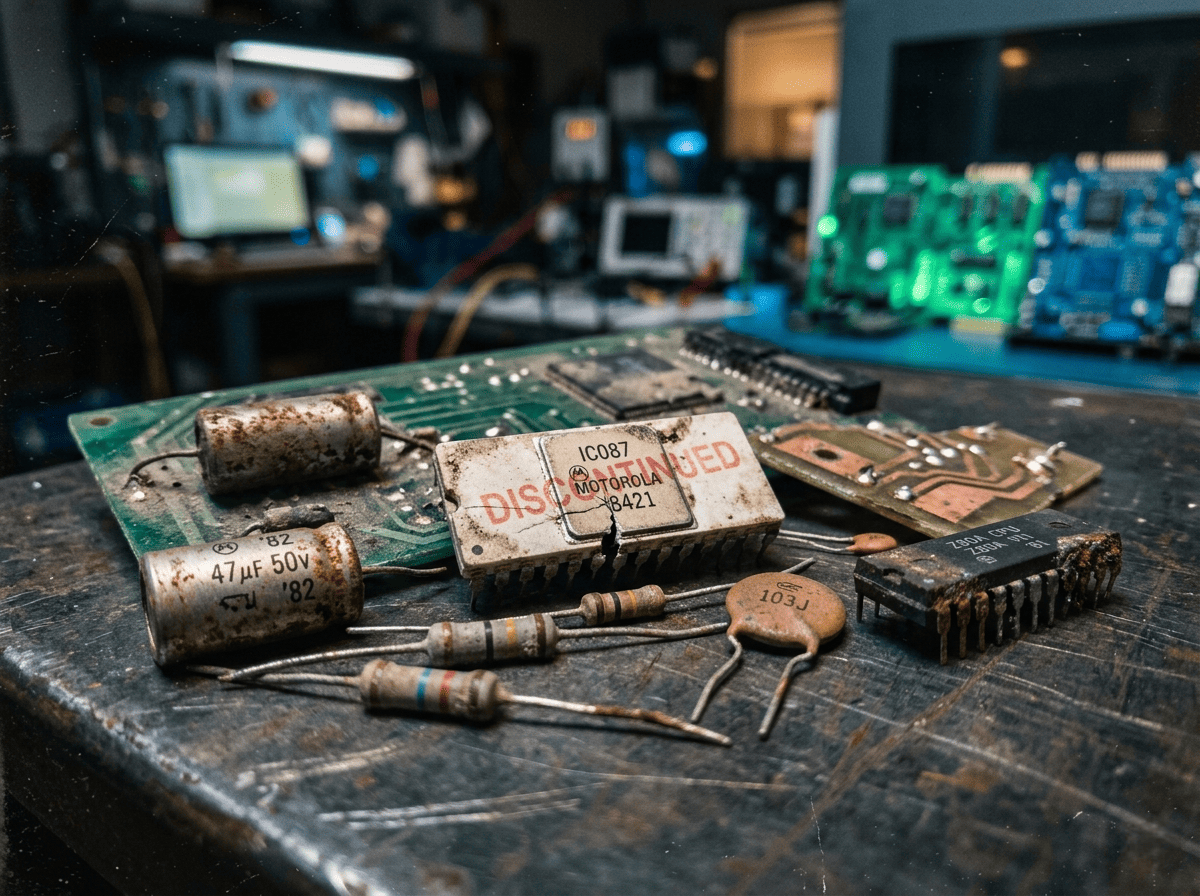
EOL components are electronic components that the original manufacturer no longer produces, sells, or supports. Once a part reaches the end of life, new factory stock becomes limited or unavailable through normal authorized channels.
Components usually reach EOL because demand has dropped, materials have become harder to source, production costs have increased, or the manufacturer has moved to a newer version. In some cases, component manufacturers phase out an older component as part of broader changes in component life cycles across an entire product line.
Key Risks When Sourcing EOL Components
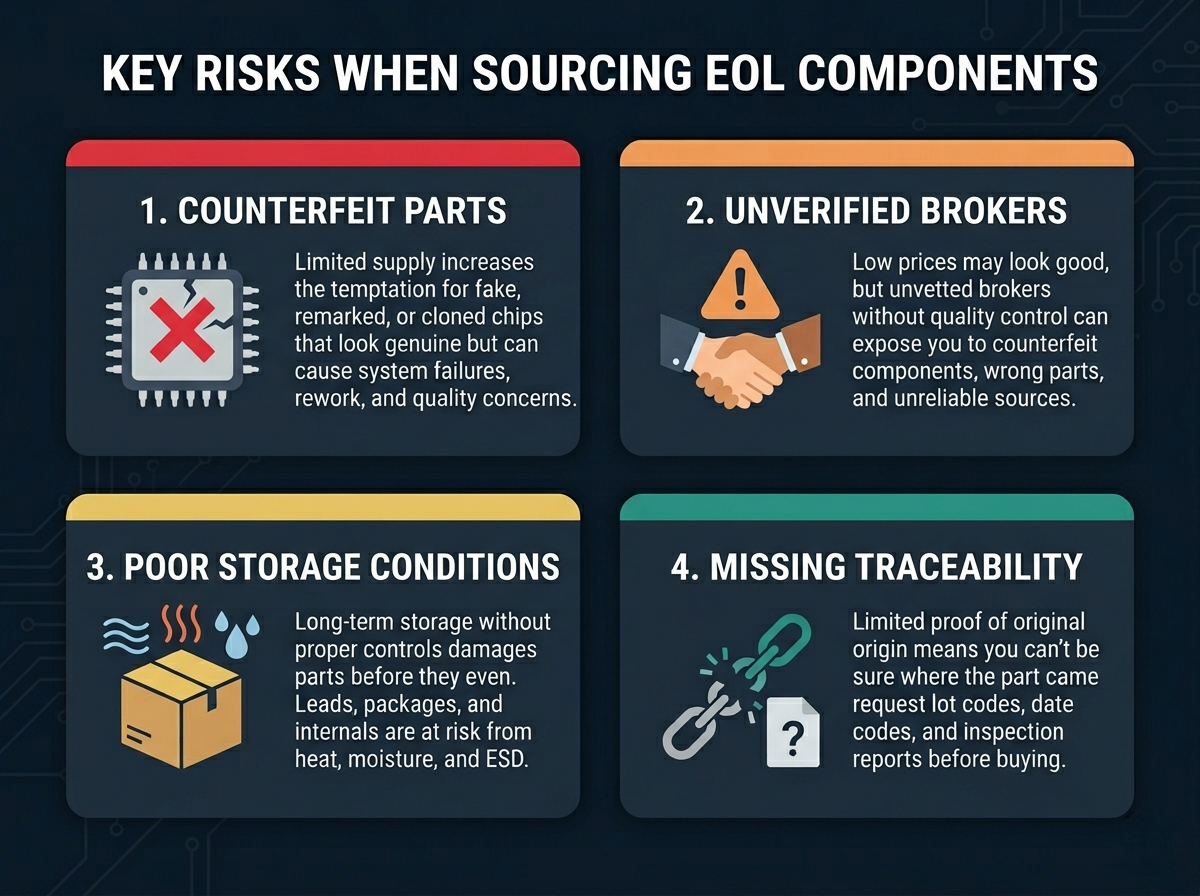
EOL components are not always risky, but the risk increases when supply becomes limited, and buying decisions are made under pressure. Below are the key risks you need to watch before buying from secondary markets, component brokers, or other non-authorized sources.
1. Counterfeit Parts
Counterfeit parts are one of the most common EOL risks.
When electronic components become harder to find, unreliable sellers may offer fake, remarked, cloned, or altered parts as genuine stock. This risk often increases for integrated circuits, microcontrollers, sensors, and other high-demand electronic parts.
A counterfeit part, especially an obsolete part with limited supply, may look acceptable during a basic visual check, but it can fail during testing, PCB assembly, or field use. That can create rework, production delays, warranty issues, and quality concerns.
2. Unverified Brokers
Component brokers can help you find replacement parts for EOL components when authorized supply is gone.
The risk starts when the broker has no clear sourcing history, quality process, or return policy. A low price may look useful at first, but it can expose your procurement team to counterfeit parts, incorrect parts, or poor documentation.
Before you buy, check the broker’s references, testing process, certifications, and track record in the electronics industry.
3. Poor Storage Conditions
EOL components may sit in storage for months or years before resale.
That becomes a problem when the seller cannot prove how the parts were stored. Heat, humidity, moisture exposure, dust, weak packaging, and electrostatic discharge can affect component reliability before the parts reach your facility.
Even genuine parts can cause quality failures if poor storage damages the leads, packaging, terminals, or internal structure.
4. Missing Traceability
Traceability shows where a part came from and how it moved through the supply chain.
Without it, you have limited proof that the component came from the original manufacturer, an authorized distributor, or a trusted surplus source. This is a serious issue in secondary markets, where stock may pass through several sellers before it reaches you.
Ask for lot codes, date codes, original labels, packing records, certificates of conformance, inspection reports, and test results before approving the purchase.
Six Ways to Source EOL Components Safely
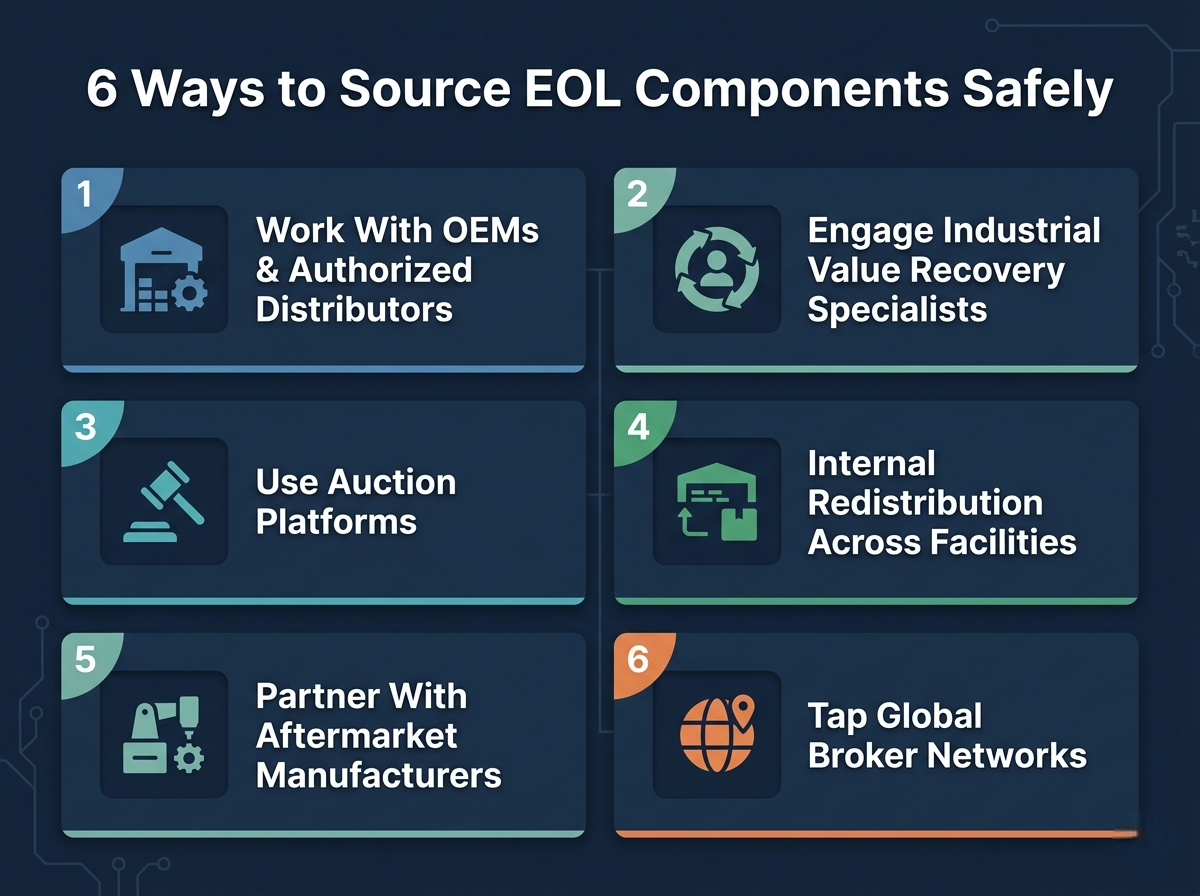
Safe EOL sourcing is part of component obsolescence management. It helps your team plan around supply limits, replacement options, documentation needs, and future production risk.
Below are six practical ways to source EOL components with more control and fewer costly sourcing mistakes.
1. Work Directly With OEMs and Authorized Distributors
The most reliable way to source EOL components is to go straight to the original equipment manufacturer (OEM) or their authorized distributors once an end-of-life notice is issued. These channels provide the strongest assurance of authentic, compliant parts backed by clear documentation, reducing the risk of counterfeits or quality issues.
By securing last-time buys directly from OEM-approved sources, you can lock in critical stock before production officially ends. The challenge is timing. OEMs often provide limited purchase windows, and minimum order quantities may apply. Still, this remains one of the safest paths to avoid costly disruptions.
Note: OEMs and authorized distributors can only support you if you act when part EOL notifications or EOL notices are issued. Once that window closes, they will not be able to supply the component.
2. Engage Industrial Value Recovery Specialists
Industrial value recovery specialists maintain networks of enterprises actively selling surplus. They often source from plants, warehouses, manufacturers, and facility closures, helping functional assets move back into productive use instead of sitting idle.
When one operation no longer needs a component, these specialists can recover it, verify key details, and make it available to companies still using that equipment or product line.
By working with them, you can access recovered inventories and discontinued components that OEMs may no longer supply. This creates a dependable secondary supply chain of EOL parts while also reducing the risks tied to counterfeit or unverified sources.
3. Use Auctions Platform
Auction platforms offer another way to secure EOL components when OEM supply becomes limited or unavailable. These platforms often list surplus inventory, discontinued components, and excess electronic parts from businesses that no longer need them.
This approach often makes hard-to-find components available at competitive prices. It may also give you access to bulk lots that support a production run, repair program, or long-term maintenance need.
The key is verification. Before you bid, check the part number, manufacturer, quantity, photos, condition, storage history, and available documentation. A low auction price can become costly if the parts arrive without traceability, testing, or proof of authenticity.
4. Internal Redistribution Across Facilities
One of the most overlooked ways to source EOL components is to start with your own surplus inventory.
Many companies hold unused or excess spares at one site while another facility struggles to find the same part.
By redistributing inventory across locations, you can use existing stock more effectively and avoid urgent, high-cost external purchases of EOL components.
A centralized inventory tracking tool makes this easier by giving your teams visibility into what is available company-wide. This helps critical EOL components move to the facilities that need them most.
5. Partner With Aftermarket Manufacturers
When OEM production ends, aftermarket manufacturers can provide equivalent or replacement parts. These third-party producers may manufacture discontinued components or approved alternatives so equipment, products, or legacy systems can remain operational.
This approach is often more cost-effective than chasing rare original parts, but it requires careful vetting.
Quality, safety, compliance, and comparative performance must be verified before any component change is approved. This confirms that the component replacement meets operational and regulatory standards.
Aftermarket sourcing is especially valuable for high-demand or long-lifecycle equipment, where parts will be needed for years even after the OEM has moved on.
6. Tap Global Broker Networks
Reputable global brokers maintain sourcing connections across multiple regions and industries.
By using these networks, companies can track down rare or discontinued EOL components that are not available through standard local channels.
Because global brokers often deal with multiple suppliers at once, they can quickly locate parts in different markets and consolidate orders.
The key is to work only with trusted brokers who provide transparency, traceability, and quality checks to avoid counterfeit risk.
Conclusion
Sourcing EOL components is one of the toughest challenges for manufacturers and supply chain teams. With OEM production ending and availability shrinking, the risks of inflated costs, counterfeits, and downtime grow higher the longer companies wait to act.
The six approaches outlined here—ranging from OEMs and recovery specialists to aftermarket suppliers and broker networks—show that safe and reliable options do exist. The key is knowing which channels to trust and combining multiple methods to cover both immediate and long-term needs.
By treating EOL sourcing as part of obsolescence management instead of a last-minute scramble, businesses can maintain continuity, protect customer trust, and reduce costly sourcing mistakes.