How to Source Hard-to-Find Electronic Components

Sourcing hard-to-find electronic components is one of the biggest challenges facing manufacturers today. Whether it’s semiconductors, connectors, or obsolete parts, supply chain shortages can stall production and drive costs higher.
For OEMs and procurement teams, the real issue isn’t just scarcity — it’s knowing where and how to reliably find these parts when you need them most.
In this guide, we’ll explore practical methods to source hard-to-find electronic components.
Why Sourcing Hard-to-Find Quality Electronic Parts Is a Challenge
.png)
Finding reliable electronic components has become one of the toughest tasks for procurement teams. Demand is rising across high-growth sectors like IoT, automotive, and computing, while global supply chains remain vulnerable to disruption. The result is persistent shortages and greater risk when sourcing quality parts.
Key reasons sourcing is so difficult include:
- Parts Discontinuation: When manufacturers announce End-of-Life (EOL) for a component, demand spikes as buyers rush to secure remaining stock. Without a plan for managing electronic parts obsolescence, enterprises can suddenly face critical shortages.
- Demand Spikes from High-Growth Industries: Rapid expansion in IoT, automotive electronics, and computing often overwhelms production capacity, even with small surges in demand.
- Geopolitical and Trade Tensions: Tariffs, export restrictions, and regional instability disrupt the global flow of components and create bottlenecks across supply chains.
- Natural Disasters and Manufacturing Disruptions: Earthquakes, floods, factory fires, or pandemics can halt production at critical sites and highlight the fragility of supply networks.
- Counterfeit or Low-Quality Parts: During shortages, the risk of counterfeit or substandard components entering the market increases, putting product reliability and safety at risk.
Plan for Hard-to-Find Electrical Parts Sourcing
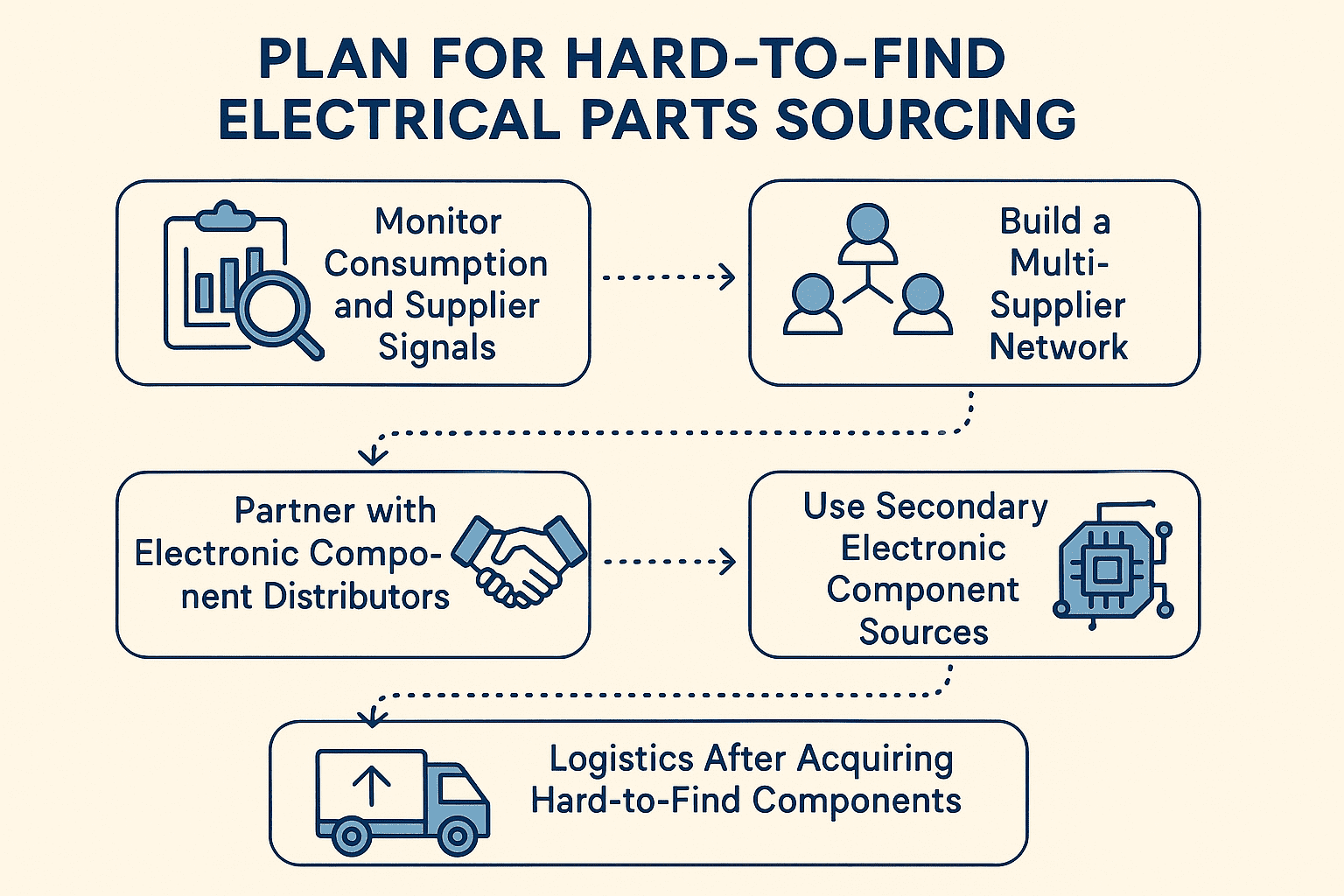
Tackling shortages of electronic components requires more than last-minute fixes — it calls for a structured approach. By following the steps below, procurement teams can develop a secondary supply chain to source quality hard-to-find electronic parts.
This sequence ensures that hard-to-find parts are not only acquired but also delivered securely and managed effectively within the supply chain.
1. Monitor Consumption and Supplier Signals
The first step in sourcing hard-to-find electrical parts is having visibility into risks before they turn into shortages.
Tracking historical usage of critical components and watching supplier lead times helps identify early warning signs. If demand is climbing or manufacturers signal delays, procurement teams can act before the shortage impacts production.
Note: Identifying early signs of shortages through data analysis is critical. Acting before the limited supply turns into complete unavailability gives procurement teams a chance to secure quality parts and avoid costly disruptions.
2. Build a Multi-Supplier Network
Once risks are identified, the next step is to secure reliable sources. Depending on a single vendor makes procurement fragile, so building a diversified supplier base strengthens resilience and ensures that hard-to-find components are available when needed.
Relying on one supplier creates a single point of failure.
By partnering with suppliers across different geographies, OEMs reduce exposure to disruptions like natural disasters, trade restrictions, or shipping bottlenecks. If one region experiences a shortage or delay, another supplier in a different market can step in to fill the gap, keeping production on track.
3. Partner with Electronic Component Distributors
Authorized distributors of electronic components should always be the first point of contact during shortages.
They provide full traceability, manufacturer warranties, and quality assurance that protect against counterfeit risks.
When components are obsolete, discontinued, or in extremely limited circulation, specialized distributors play a critical role. These partners maintain deep market networks and reserve stockpiles, enabling them to supply rare or end-of-life parts quickly and reliably.
Engaging both authorized and specialized distributors ensures coverage across current demand and legacy requirements, making it a core strategy for any resilient sourcing plan.
Note: A strong, long-term relationship also increases your chances of securing priority allocation when demand outstrips supply.
4. Use Secondary Electronic Component Sources
When primary suppliers fall short, secondary electronic component sources provide a critical backup for procurement teams.
These sources help bridge urgent supply gaps by offering access to surplus, discontinued, or hard-to-find components that aren’t available through traditional distribution.
However, since quality and reliability vary across sources, careful evaluation is essential to avoid counterfeit risks and ensure compliance.
Types of Secondary Sources you can tap:
- Open Market Platforms → Global listings with broad availability, but they carry higher risks of counterfeit or misrepresented parts.
- Specialized Electronics Marketplaces → Industry-specific platforms with stricter vetting, stronger trade protections, and higher quality assurance.
- Enterprise Liquidations → Direct purchases from large enterprises selling surplus stock in bulk, providing authentic, traceable components.
- Auctions → Competitive bidding on lots can deliver lower prices, though quality and warranties vary.
- Working With Specialized Industrial Liquidator → Partner with liquidators that operate peer-to-peer surplus networks connecting OEMs, contract manufacturers, and qualified resellers. These networks move hard-to-find parts fast, but they rely on trust and validation at every step..
5. Logistics After Acquiring Hard-to-Find Components
Sourcing rare components is only half the challenge — making sure they arrive safely and on time is just as important. Without the right logistics plan, even successfully purchased parts can face delays, damage, or compliance issues that disrupt production.
Proper packaging and handling are critical. Sensitive parts like semiconductors and passives often require antistatic bags, moisture barrier protection, and controlled environments. Ensuring suppliers follow these requirements preserves component quality.
Customs and regulatory compliance also play a big role. Importing electronic parts may involve export restrictions, certifications, or special documentation. Partnering with logistics providers who specialize in electronics reduces the risk of clearance delays.
Finally, tracking and visibility keep procurement aligned with production schedules. Real-time updates on shipments allow teams to plan builds confidently and react quickly if issues arise in transit.