11 Essential Pharmaceutical Manufacturing Equipment Used in Modern Drug Production

Every medicine depends on a controlled production process. From raw material handling to packaging the finished product, manufacturers must protect product quality, maintain dosage accuracy, reduce contamination risks, and deliver consistent results from one batch to the next. The right pharmaceutical processing equipment helps meet these demands while keeping production safe, controlled, and efficient.
The volume of production across the pharmaceutical industry makes equipment reliability and capacity critical. According to the U.S Bureau of Labor Statistics, pharmaceutical and medicine manufacturing produced about $346.7 billion in output in 2024. At this level of production, pharmaceutical companies need machinery that can support high demand without reducing product quality or slowing operations.
Below are eleven essential types of pharmaceutical manufacturing equipment used across modern drug production facilities.
1. Pharmaceutical Reactor
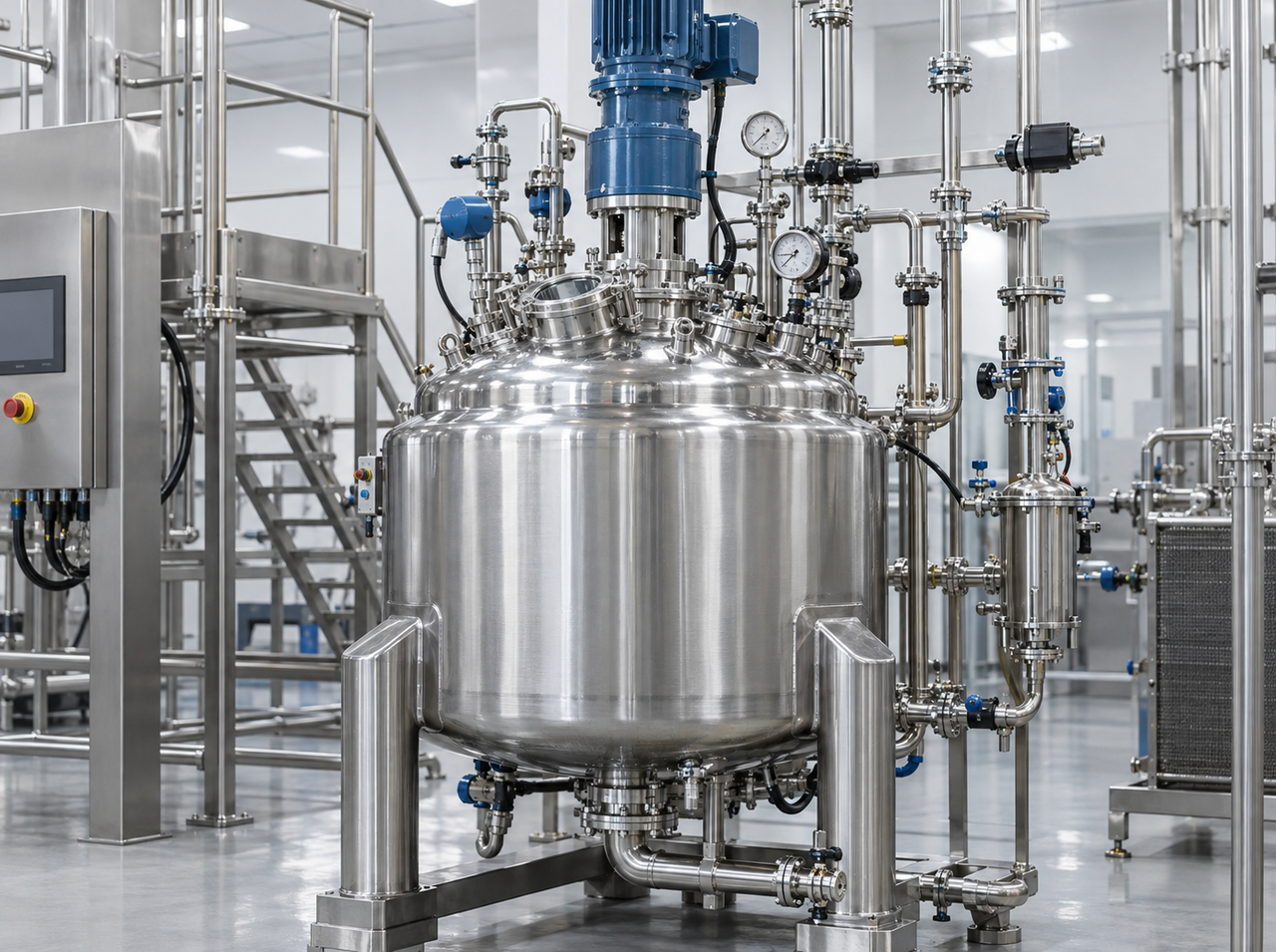
A pharmaceutical reactor is a closed processing vessel used to carry out chemical reactions under controlled conditions. It allows manufacturers to process active pharmaceutical ingredients, intermediates, liquids, and other materials within one system.
Heating and cooling jackets regulate temperature, while sensors and valves monitor pressure and other operating conditions. An agitator keeps materials mixed throughout the batch, helping maintain consistent reaction results.
Common Applications
Pharmaceutical manufacturers use reactors for:
- Chemical synthesis of active pharmaceutical ingredients
- Production of pharmaceutical intermediates
- Crystallization of drug substances
- Hydrogenation reactions in pressure-rated systems
- Neutralization processes
- Preparation of pharmaceutical solutions
- Solvent distillation and recovery when connected to suitable condensation and collection systems
Main Benefits
- Better control over temperature, pressure, mixing, and reaction time
- Lower contamination risk through closed-vessel processing
- More consistent results across production batches
- Safer handling of reactive or sensitive materials
- More efficient cleaning when the reactor includes a cleanable design or validated clean-in-place system
- Improved process monitoring through sensors and automated controls
2. Pharmaceutical Mixer
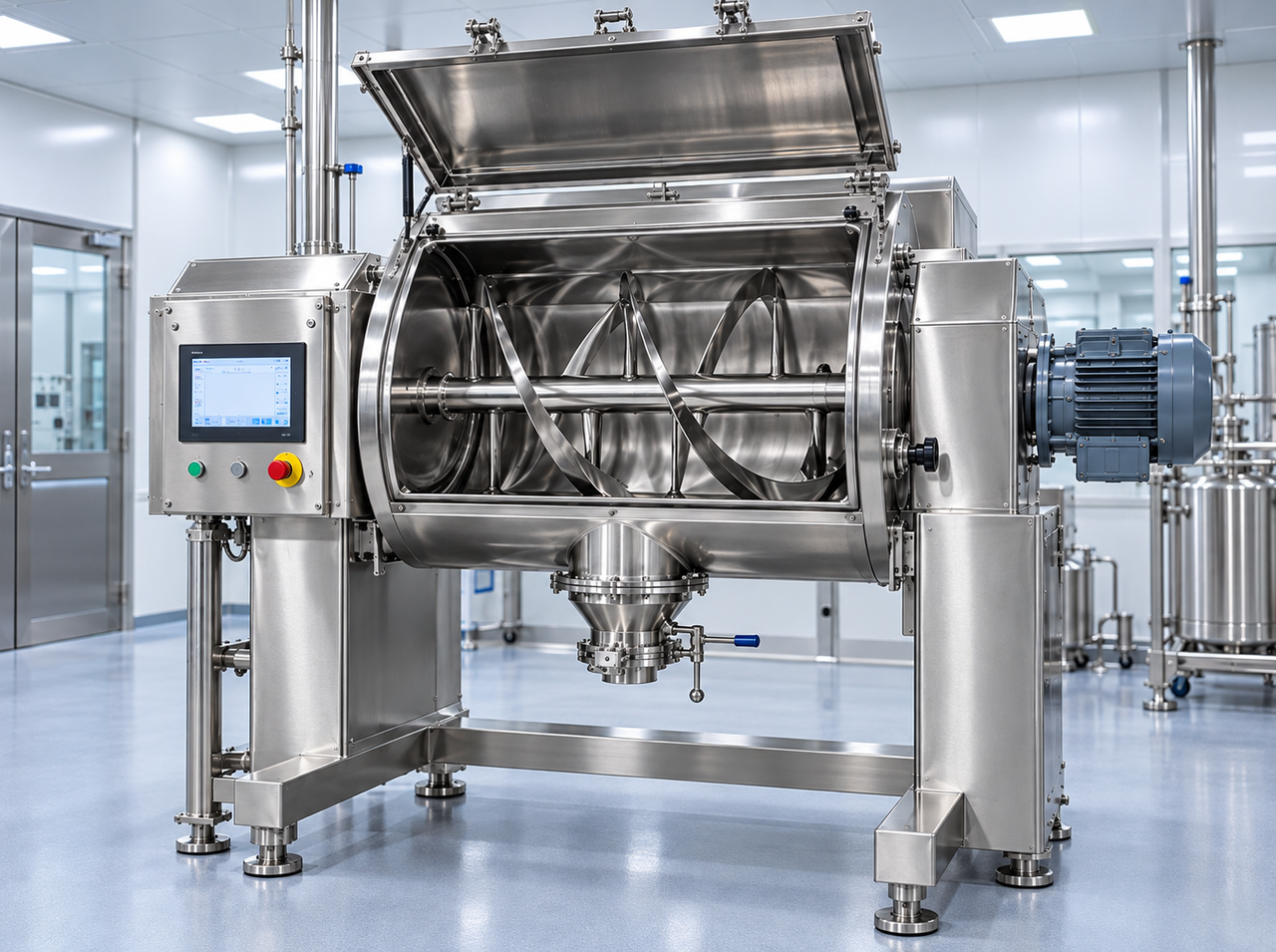
A pharmaceutical mixer is a processing machine designed for uniform mixing of powders, granules, liquids, or semi-solid materials. Manufacturers use it to distribute active pharmaceutical ingredients and excipients evenly before the next production stage.
Mixers may use paddles, ribbons, blades, or impellers based on the material and required mixing action. Controlled mixing speed and time help maintain blend consistency and reduce variation between production batches.
Common Applications
Pharmaceutical manufacturers use mixers for:
- Blending active pharmaceutical ingredients with excipients
- Preparing powder blends for tablet compression
- Mixing powders or granules before capsule filling
- Combining liquids for syrups and oral solutions
- Preparing creams, gels, and ointments
- Producing suspensions and emulsions
- Adding binders during wet granulation
Main Benefits
- More even distribution of active ingredients and excipients
- Better control over mixing speed, time, and intensity
- More consistent material properties between production batches
- Reduced manual handling through enclosed or automated systems
- Faster preparation of powders, liquids, and semi-solid products
- Lower contamination exposure when using closed and cleanable mixer designs
3. Pharmaceutical Milling Machine
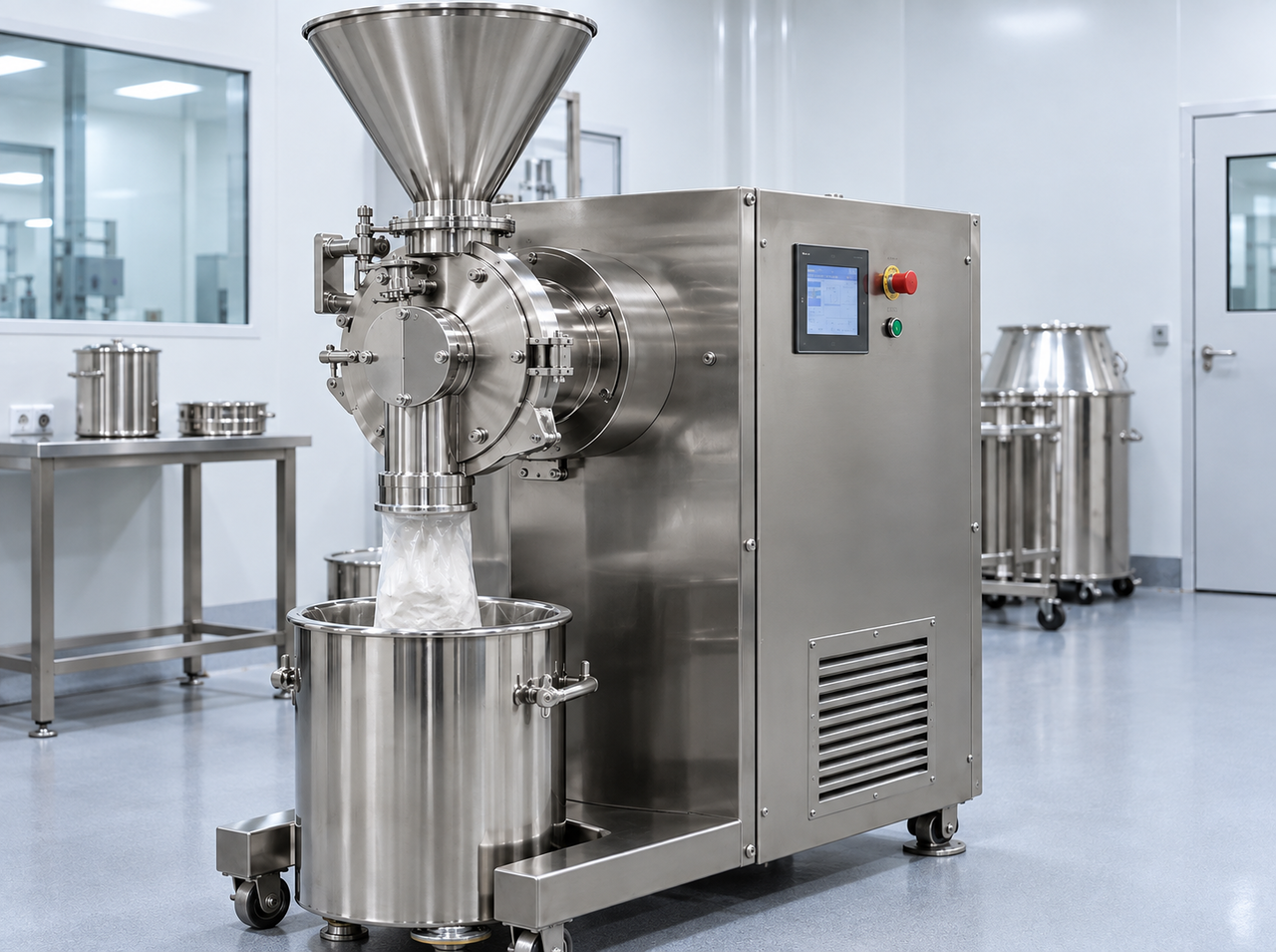
A pharmaceutical milling machine reduces powders, granules, and solid ingredients to a controlled particle size. It helps manufacturers improve particle uniformity and prepare materials for further processing.
The machine may use blades, hammers, pins, or impellers inside a milling chamber. Screen size, rotor speed, feed rate, and material properties help control the final particle size.
Common Applications
Pharmaceutical manufacturers use milling machines for:
- Reducing the particle size of active pharmaceutical ingredients
- Milling excipients before blending
- Sizing granules after wet or dry granulation
- Removing lumps and oversized particles
- Preparing materials for tablet compression
- Preparing powders for capsule filling
- Producing smaller particles for selected formulations
Main Benefits
- More consistent particle size
- Better powder flow during processing
- Fewer lumps and oversized particles
- Greater control over granule size
- Improved blending consistency
- More consistent feeding during tablet compression and capsule filling
4. High Shear Granulator
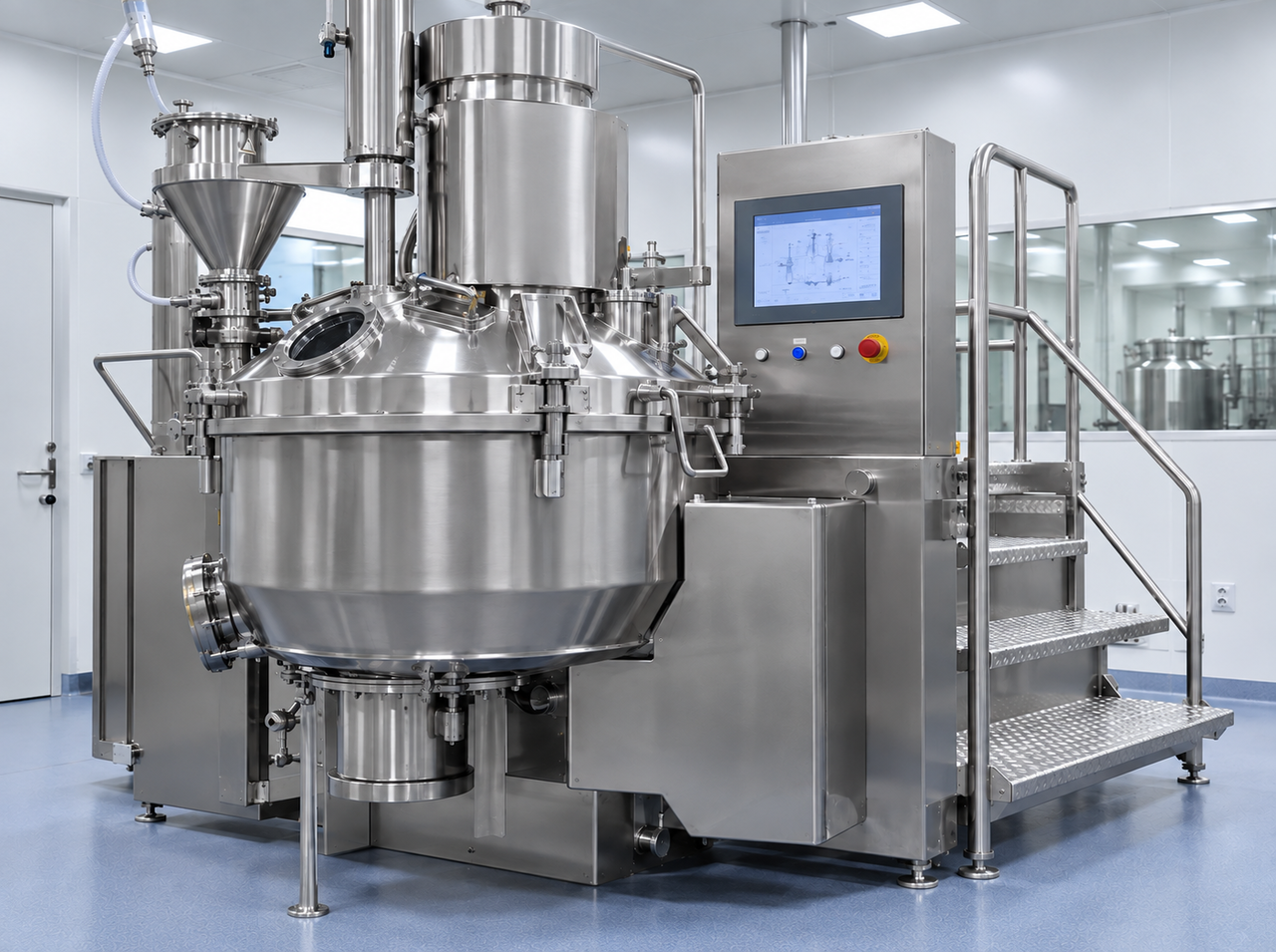
A high-shear granulator combines pharmaceutical powders with a liquid binder to form dense, uniform granules. Manufacturers use it mainly during wet granulation to improve the physical properties of powder blends.
The machine uses a fast-moving impeller to mix the ingredients and a chopper to break down large agglomerates. Impeller speed, binder addition rate, mixing time, and batch size help control granule formation.
Common Applications
Pharmaceutical manufacturers use high-shear granulators for:
- Wet granulation of pharmaceutical powder blends
- Adding and distributing liquid binders
- Preparing granules for tablet compression
- Preparing granules for capsule filling
- Producing wet granules before drying
- Processing cohesive or poorly flowing powders
- Granulating effervescent formulations
Main Benefits
- Faster mixing and wet granulation
- More even distribution of liquid binders
- More consistent granule size and density
- Improved powder flow during later processing
- Better compressibility for tablet production
- Lower segregation risk during material handling
5. Fluid Bed Dryer
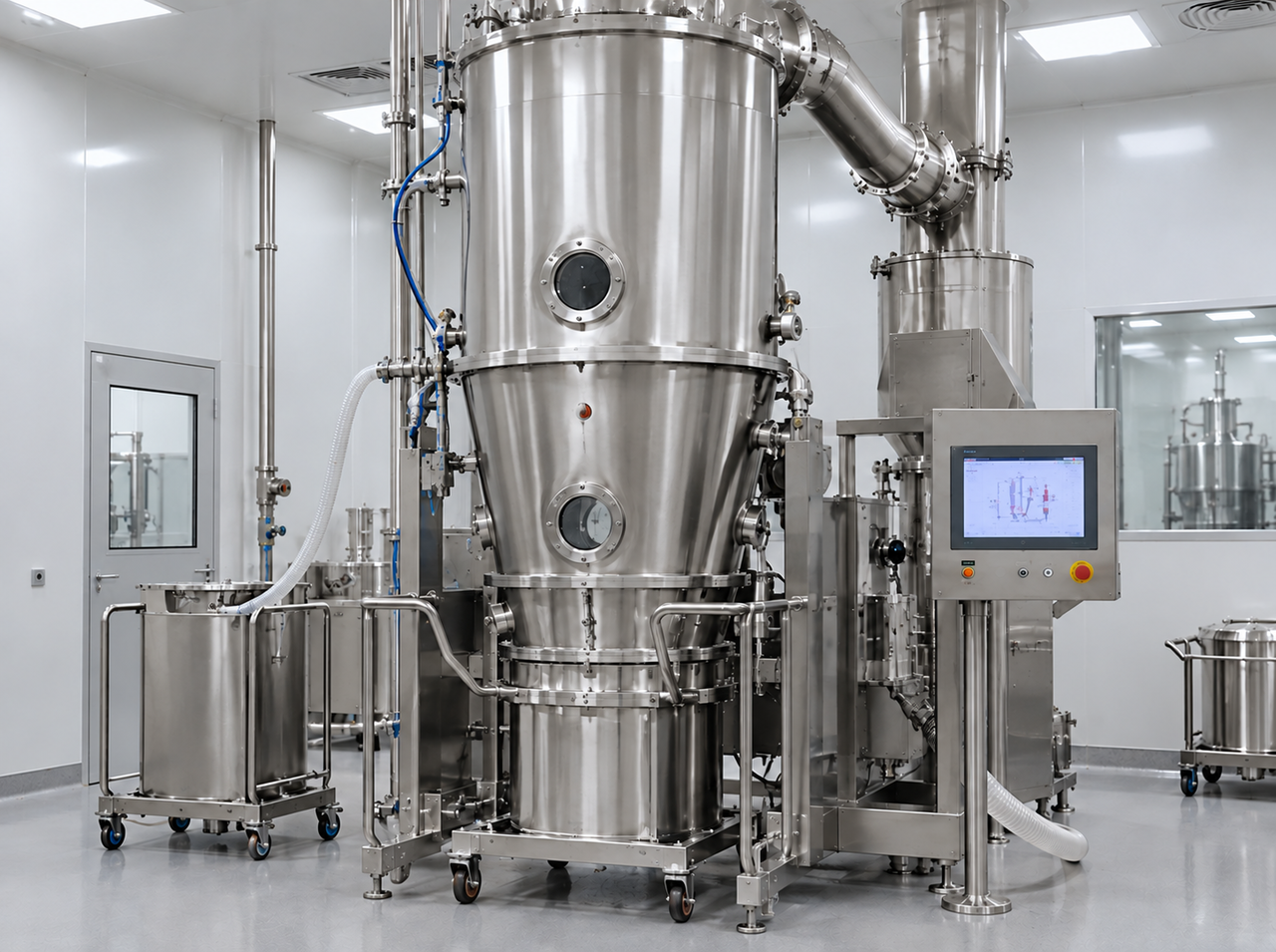
A fluid bed dryer removes moisture from wet pharmaceutical granules and powders using a controlled stream of heated air. The airflow suspends the material inside the chamber, allowing heat to reach the particles from multiple directions.
Operators control inlet air temperature, airflow rate, drying time, and product temperature during the process. These settings help achieve a consistent moisture level without exposing the material to excessive heat.
Common Applications
Pharmaceutical manufacturers use fluid bed dryers for:
- Drying wet granules after high-shear granulation
- Removing moisture from pharmaceutical powders
- Drying suitable heat-sensitive materials at controlled temperatures
- Reducing moisture before milling or final blending
- Drying particles and pellets after coating
- Preparing granules for tablet compression
- Preparing granules or pellets for capsule filling
Main Benefits
- More uniform drying across the batch
- Precise control over air temperature and airflow
- Shorter drying times than many static drying methods
- Better control over final moisture content
- Improved powder and granule handling after drying
- Reduced manual handling through enclosed processing
6. Tablet Compression Machine
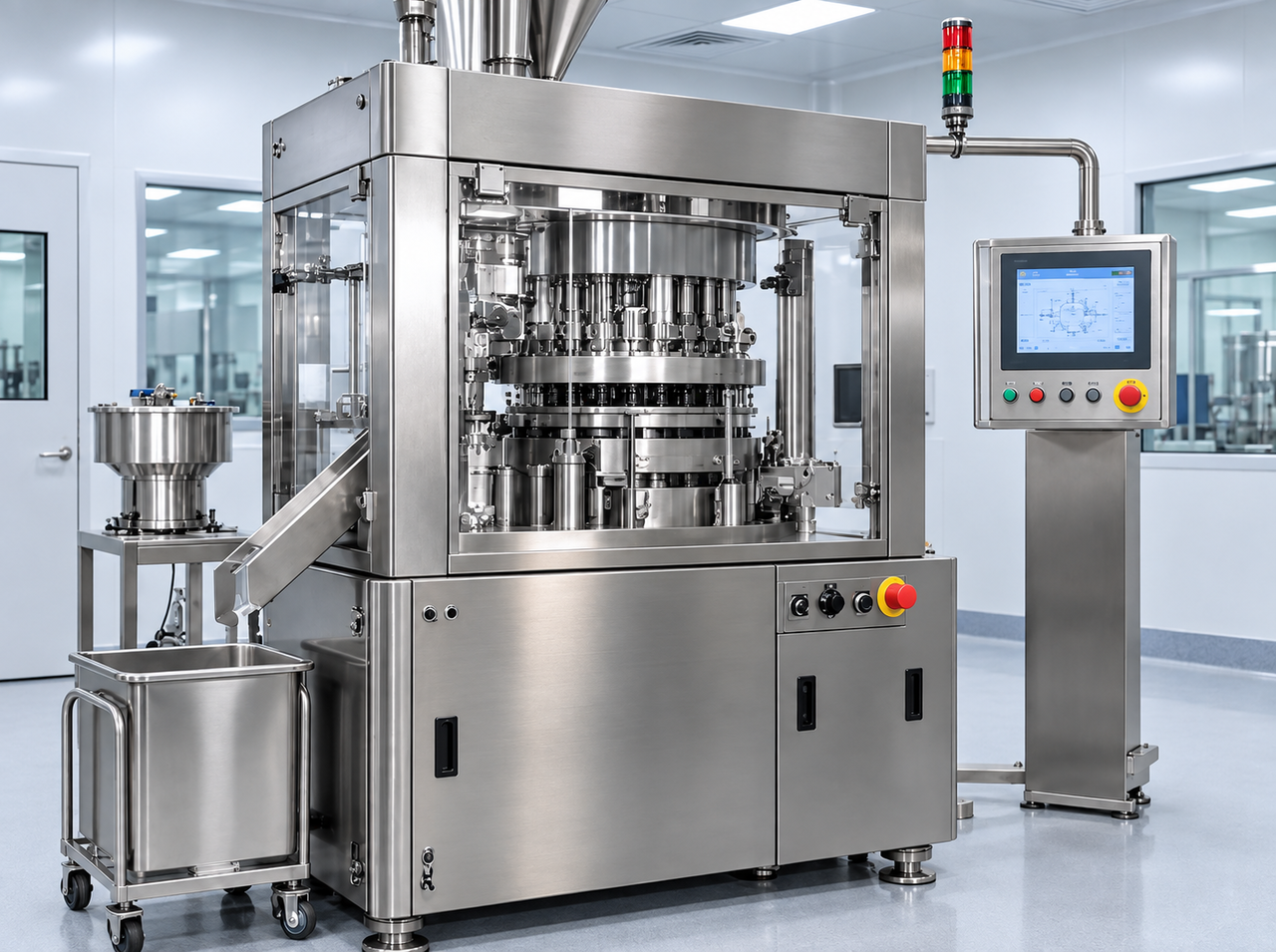
A tablet compression machine forms pharmaceutical powders or granules into tablets of a controlled size, shape, weight, and thickness. Manufacturers use it during tablet manufacturing to produce solid oral dosage forms.
Material enters a die cavity before upper and lower punches apply pressure to form the tablet. Fill depth helps control tablet weight, compression force affects hardness and thickness, and turret speed influences production rate. Modern machines can also monitor compression force and other operating parameters during production.
Common Applications
Pharmaceutical manufacturers use tablet compression machines for:
- Producing standard immediate-release oral tablets
- Producing tablet cores for film or sugar coating
- Manufacturing chewable tablets
- Producing effervescent tablets
- Compressing controlled-release formulations
- Manufacturing orally disintegrating tablets
- Forming multilayer tablets with a suitable tablet press
Main Benefits
- More consistent tablet size and weight
- Accurate control over compression force
- Better control over tablet hardness and thickness
- Faster production of large tablet volumes
- Reduced manual handling through automated operation
- Flexible production of different tablet shapes and sizes
7. Capsule Filling Machine
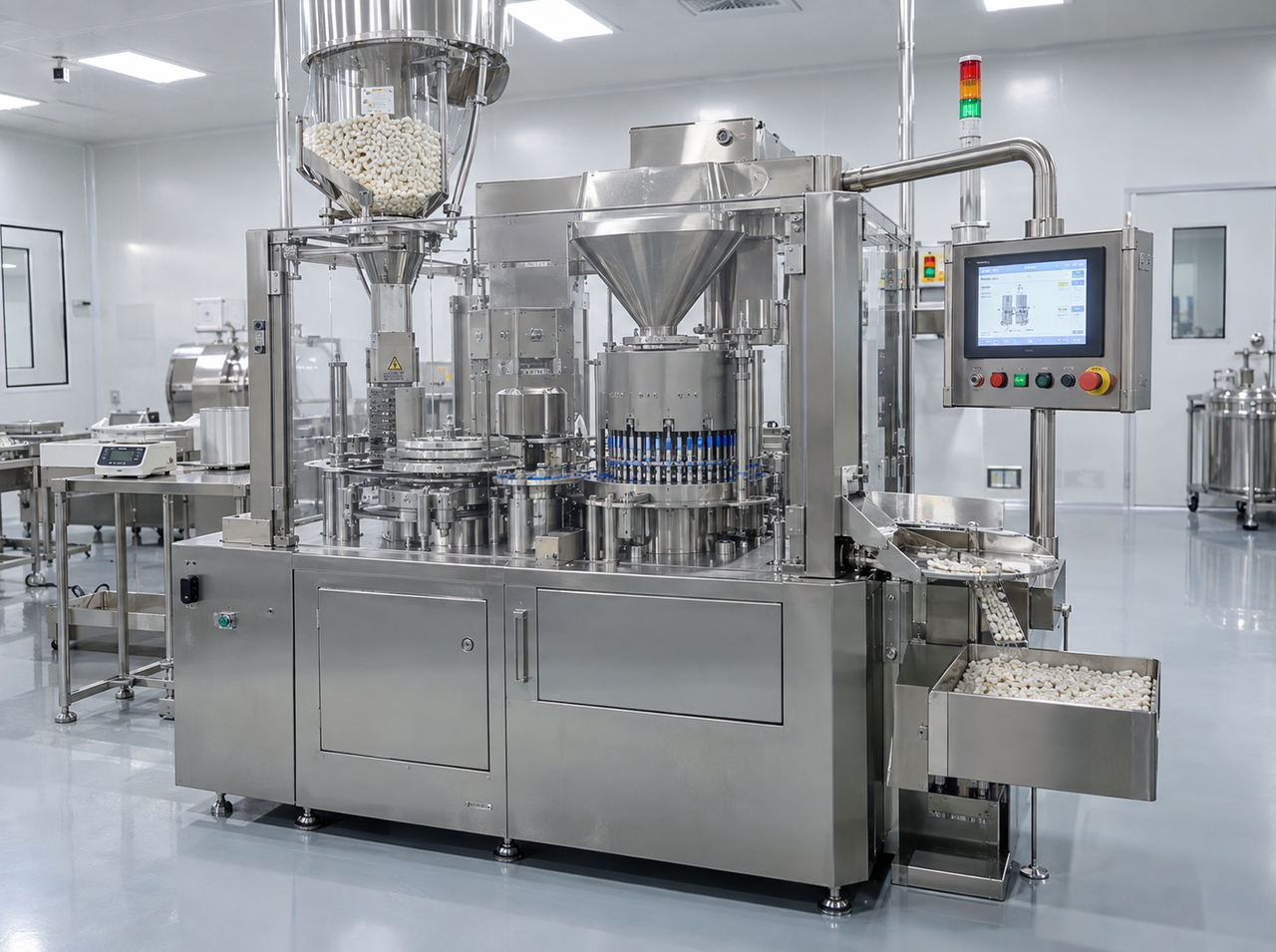
A capsule filling machine fills hard gelatin or vegetarian capsules with powders, granules, pellets, or selected liquid formulations. It separates the capsule body and cap, measures the required dose, fills the body, and closes the capsule.
Capsule fillers may operate manually, semi-automatically, or through a fully automated production line. Machine speed, dosing system, capsule size, and material flow affect dosing precision and production consistency.
Common Applications
Pharmaceutical manufacturers use capsule filling machines for:
- Filling hard gelatin capsules with powder formulations
- Filling Hydroxypropyl Methylcellulose (HPMC) or vegetarian capsules with dry formulations
- Dosing granules and pellets into capsule shells
- Filling capsules with mini-tablets or combination products
- Filling suitable liquid or semi-solid formulations with specialized equipment
- Producing immediate-release capsule products
- Producing modified-release capsule products
Main Benefit
- Controlled dosing of powders, pellets, granules, and suitable liquids
- More consistent capsule fill weight across each batch
- Faster production than manual capsule filling
- Reduced manual handling through automated operation
- Support for different capsule sizes with suitable change parts
- Lower contamination exposure in enclosed or contained filling systems
8. Tablet Coating Machine
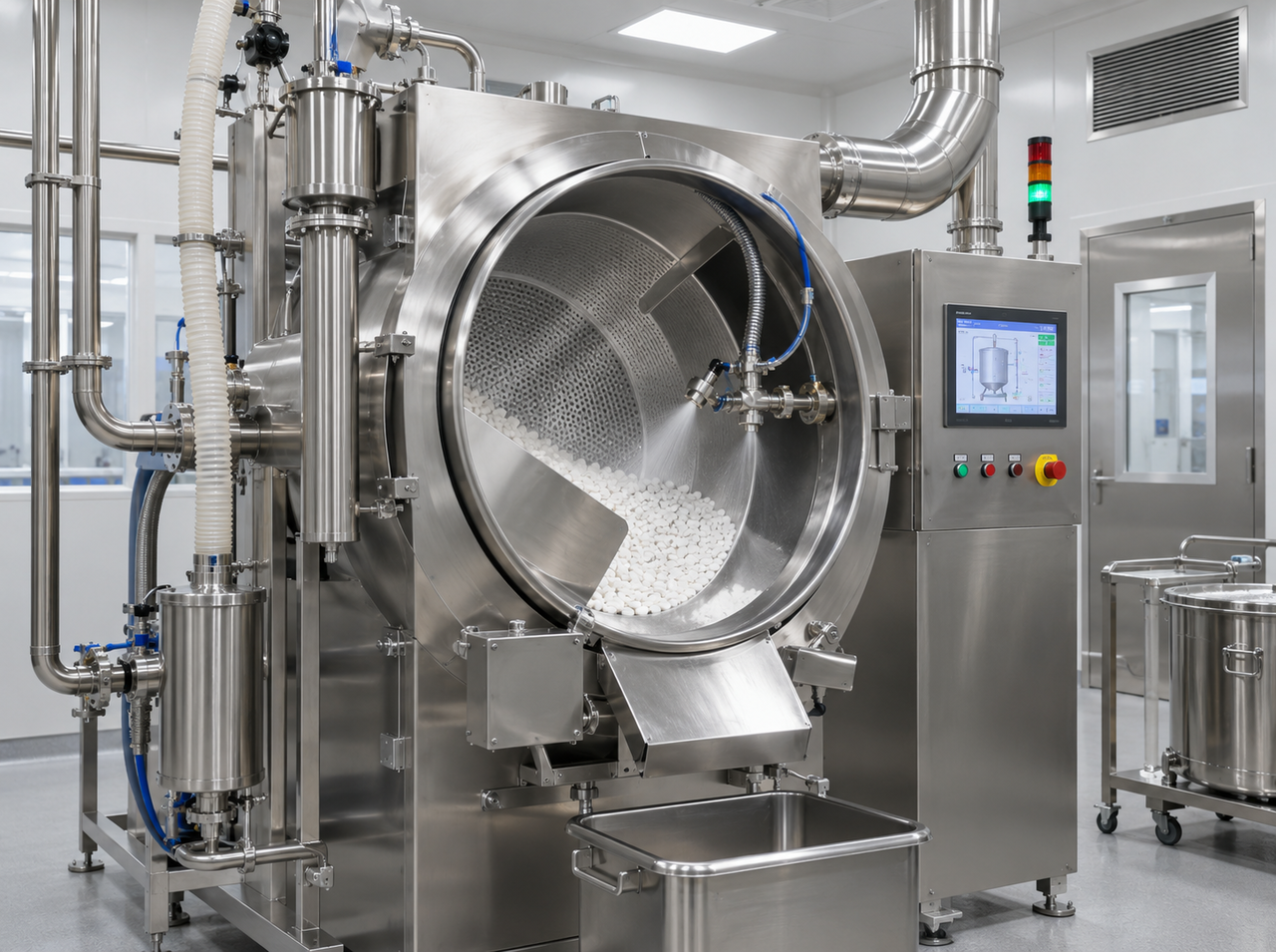
A tablet coating machine applies a controlled layer of coating material to pharmaceutical tablet cores. Depending on the formulation, the coating can protect the product, mask an unpleasant taste, improve swallowing, add identification, or change how the drug releases.
Tablets rotate inside a coating drum while spray guns apply the coating suspension. Controlled inlet air dries the coating as it forms. Drum speed, spray rate, airflow, atomization, and product temperature help control coating thickness and uniformity.
Common Applications
Pharmaceutical manufacturers use tablet coating machines for:
- Applying film coatings to tablet cores
- Applying suitable sugar coatings
- Producing enteric-coated tablets
- Producing modified-release tablets
- Masking unpleasant tastes and odors
- Applying moisture-barrier coatings
- Adding color or identification coatings
Main Benefits
- More uniform coating across the tablet batch
- Better control over coating thickness and weight gain
- Consistent application of functional coating formulations
- Improved taste masking with a suitable coating
- Added protection from moisture with a suitable barrier coating
- Better process control through automated spraying and drying
9. Aseptic Filling machine
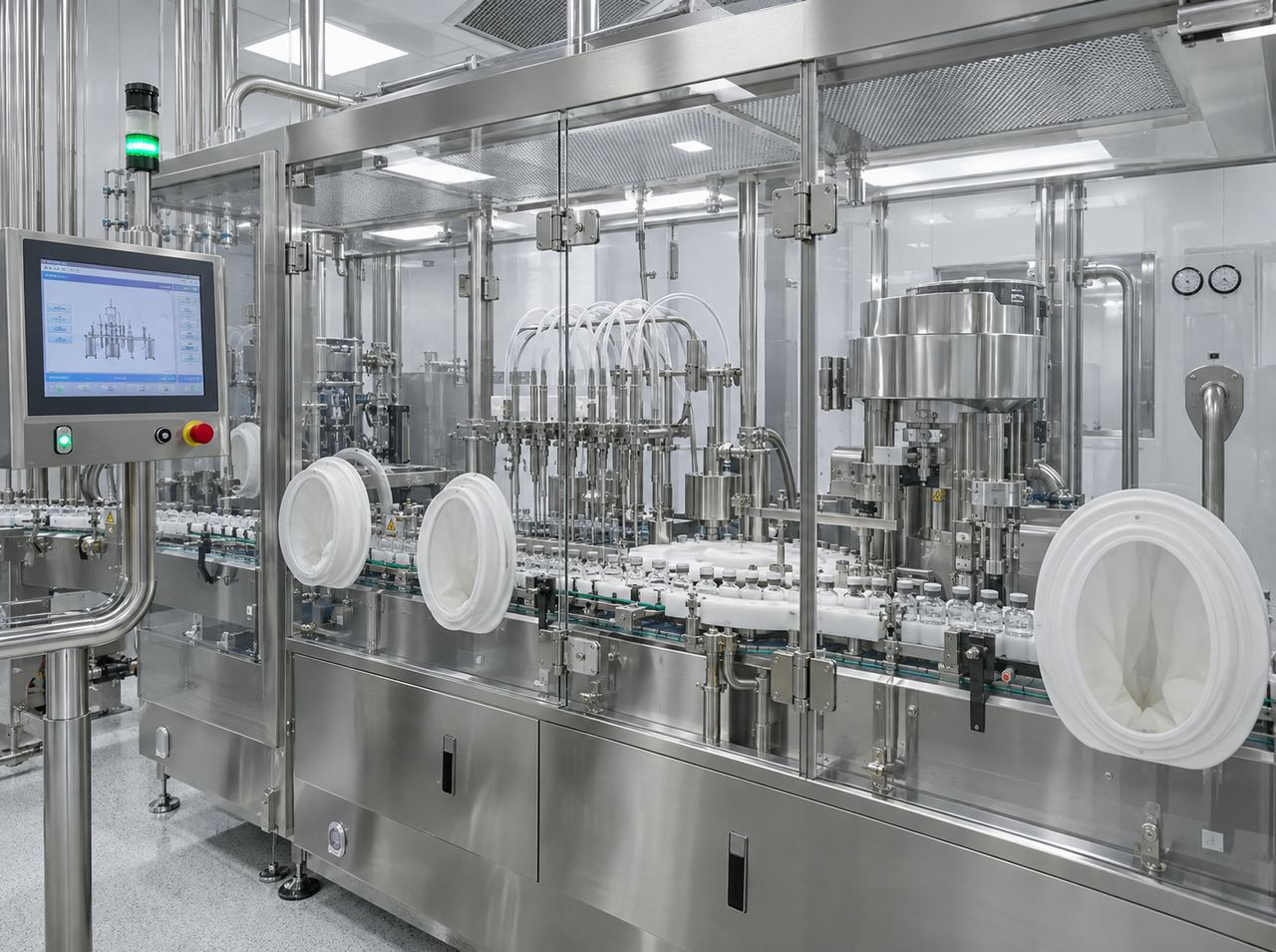
An aseptic filling machine fills sterile pharmaceutical products into prepared containers under controlled conditions. It helps maintain a sterile environment around the exposed product and open container during filling and closure. Manufacturers use it for medicines that cannot undergo terminal sterilization after filling.
The machine meters each dose, fills the container, and applies a closure while limiting exposure to operators and the surrounding environment. Modern systems may operate inside an isolator or restricted access barrier system to reduce contamination risk.
Common Applications
Pharmaceutical manufacturers use aseptic filling machines for:
- Filling sterile liquids into vials
- Filling injectable products into ampoules
- Producing prefilled syringes
- Filling cartridges for injection devices
- Filling intravenous bags and bottles
- Filling sterile ophthalmic products
- Filling vials before freeze-drying
Main Benefits
- Lower contamination exposure during filling
- More consistent and controlled fill volumes
- Reduced manual intervention in critical processing areas
- Faster production than manual filling methods
- Consistent container handling and closure placement
- Support for isolators and restricted access barrier systems
10. Tube Filling Machine
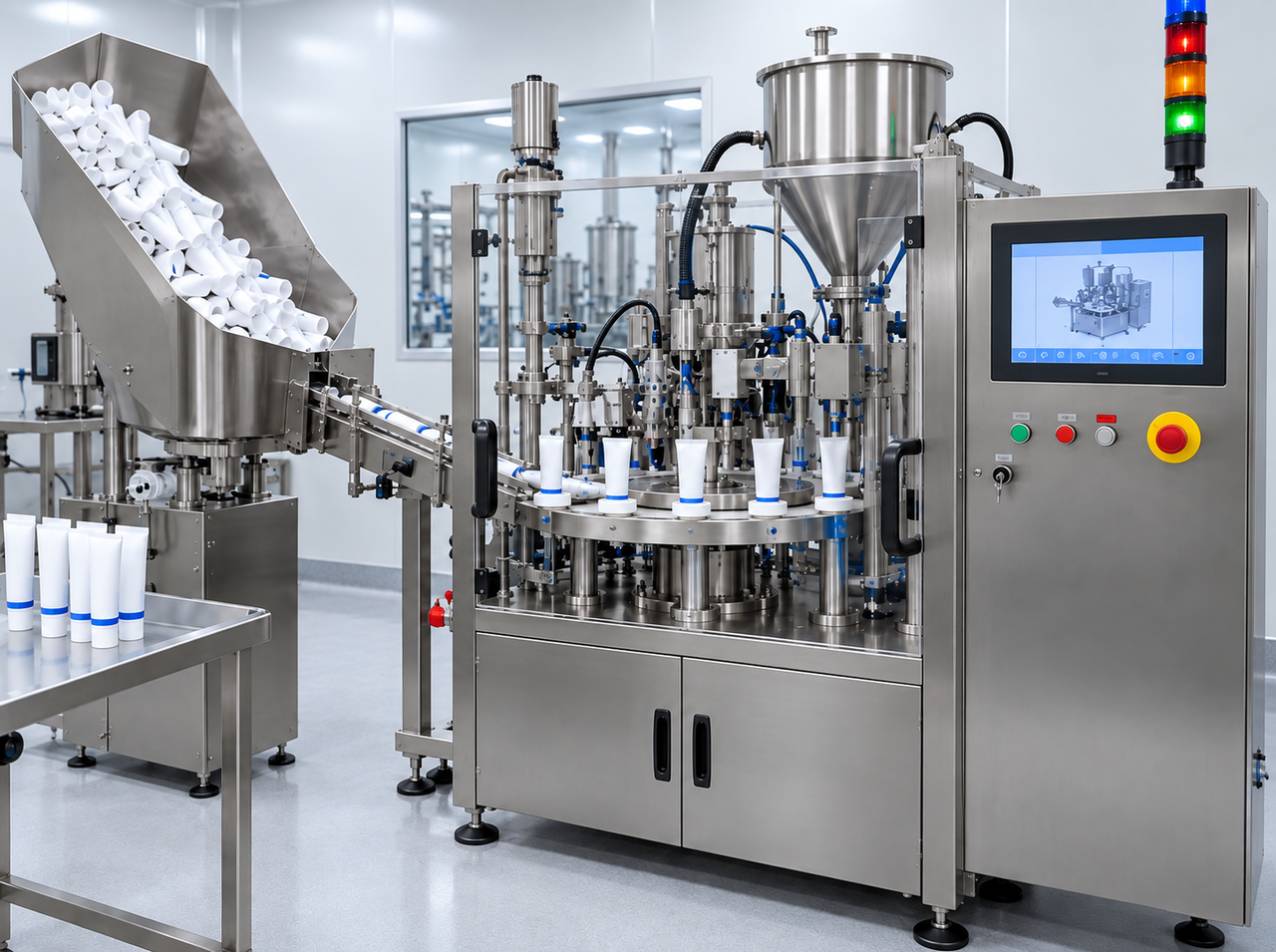
A tube filling machine is a type of pharmaceutical packaging equipment used to fill creams, gels, ointments, pastes, and other suitable formulations into preformed tubes. Depending on its configuration, the machine can process aluminum, plastic, or laminate tubes.
During operation, tube fillers load and position empty tubes before dispensing a measured amount of product through a filling nozzle. They then fold or crimp aluminum tubes or heat-seal plastic and laminate tubes. Fill quantity, product viscosity, tube alignment, and sealing settings help control packaging quality.
Common Applications
Pharmaceutical manufacturers use tube filling machines for:
- Packaging topical creams
- Filling pharmaceutical ointments
- Packaging medicated gels
- Filling pharmaceutical pastes
- Packaging dermatological formulations
- Filling dental and oral gels
- Packaging sterile formulations with equipment designed for aseptic filling
Main Benefits
- More consistent fill quantities across each production batch
- Faster packaging than manual tube filling
- Reduced manual handling through automated operation
- Support for different tube materials with a suitable machine configuration
- More consistent tube sealing, folding, or crimping
- Lower contamination exposure with enclosed and cleanable designs
11. Blister Packaging Machine
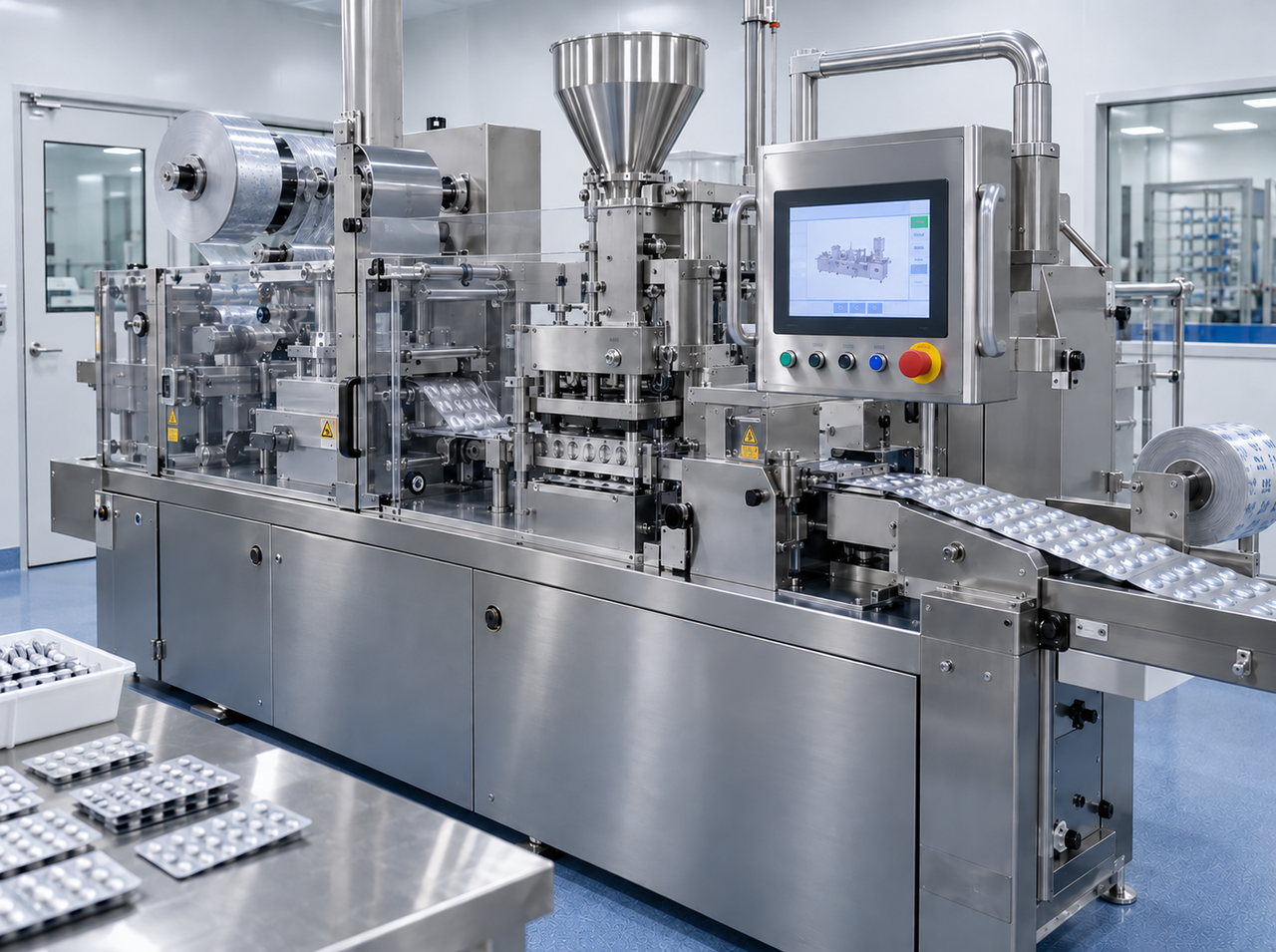
A blister packaging machine is a type of pharmaceutical packaging equipment used to seal tablets, capsules, and other solid-dose products inside individual cavities. It forms the blister pockets, positions each product, and seals the pack with a lidding material.
Machines may use thermoformed plastic or cold-formed aluminum to create the cavities. Heat, pressure, sealing time, and material alignment help control pack quality and protect the product during storage and distribution.
Common Applications
Pharmaceutical manufacturers use blister packaging machines for:
- Packaging tablets in individual cavities
- Packaging hard and soft capsules
- Producing unit-dose medication packs
- Packaging chewable tablets and lozenges
- Producing hospital and clinical trial packs
- Creating sample and short-course medication packs
- Packaging moisture-sensitive products with suitable barrier materials
Main Benefits
- Better protection from moisture, dust, and handling
- Individual sealing of each tablet or capsule
- Easier dose tracking for patients
- Lower contamination exposure after opening the pack
- Better product identification through printed lidding material
- Faster packaging through automated forming, filling, and sealing
Conclusion
Pharmaceutical manufacturing relies on specialized machinery to control each stage of drug production. The right equipment helps manufacturers maintain product quality, dosage accuracy, process consistency, and contamination control.
Equipment selection should match the dosage form, material properties, production volume, cleaning requirements, and regulatory standards. Working with a qualified pharmaceutical equipment manufacturer can help you compare machine specifications and choose a system that suits your facility and production needs.
A clear understanding of each machine can help manufacturers improve production planning, reduce processing errors, and support safe and efficient operations.