Machinery Asset Valuation: Key Factors to Consider and a Step-by-Step Guide

Introduction
Machinery asset valuation is the process of determining the current market value of your equipment, whether it's used for production, construction, or other business purposes.
This valuation helps businesses understand how much their machinery is worth, and with accurate numbers, you can make informed decisions on the right disposition channels, such as selling, redeploying, or upgrading your assets.
In this article, you’ll learn the key factors that influence machinery value and a step-by-step process to determine accurate valuations that support informed business decisions.
Why Machinery Asset Valuation Matters
Accurate machinery asset valuation is essential for businesses to make informed decisions regarding their equipment. Whether you're buying, selling, or managing assets, knowing the true value of your machinery helps you avoid costly mistakes and ensures you are making sound financial choices.
Key Reasons
- Ensures Fair Pricing: Helps buyers avoid overpaying and sellers get the right price when buying or selling equipment.
- Supports Financial Compliance: Essential for audits, tax reporting, and insurance purposes.
- Guides Asset Management: Aids in effective asset planning, determining when to replace, repair, or upgrade machinery.
- Maximizes Surplus Recovery: Helps businesses recover value from surplus or underutilized machinery.
Key Factors to Consider in Asset Valuation

Infographic showing five key asset valuation factors: age, market demand, technology, brand reputation, and safety compliance.
1. Age, Condition and Usage
The age, condition, and usage of machinery are key factors in its valuation.
- Age
The age of a machine significantly impacts its value. Older machines naturally depreciate, as they have less remaining useful life. Newer machines typically hold higher value due to their longer lifespan and fewer repairs needed, although well-maintained older models can still retain good value.
- Condition
A machine’s condition is a key factor in its value. Well-maintained machines that are regularly serviced tend to hold more value than those showing signs of neglect. Poor condition or unaddressed maintenance issues can lead to lower valuations.
- Usage
The amount of use a machine has undergone, usually measured by operating hours, also affects its value. More hours typically mean more wear and tear, reducing the machine’s value. Machines with fewer operating hours are considered to have more life left and are valued higher.
2. Market Demand
Machines that are in high demand typically retain a higher value. When there is consistent demand for specific equipment, whether due to industry trends or technological advantages, prices remain strong.
On the other hand, when there is an oversupply of similar machinery in the market, prices tend to decrease. An abundance of used equipment can reduce competition and drive down the resale value of machines, even if they are in good condition.
3. Technology and Features
Modern machines equipped with advanced technology, such as automation and Internet of Things (IoT) capabilities, tend to have a higher value. These features improve efficiency, productivity, and reliability, making the equipment more desirable in the market.
As industries move towards smarter, more automated systems, machines with these capabilities become more valuable due to their ability to integrate seamlessly into modern production environments.
On the other hand, machinery with outdated technology generally sees a decline in resale demand. Older machines that lack modern features, such as automation or connectivity, may be harder to sell as businesses increasingly seek more efficient, cost-effective solutions.
As technology advances, machines without these updated features can quickly become obsolete, reducing their appeal and market value.
4. Brand Reputation
Machines from premium brands typically hold better resale value due to their reputation for reliability and quality. Well-established brands are trusted for their durability, performance, and the availability of parts and services, which makes them more appealing to buyers.
As a result, equipment from top-tier manufacturers is often more sought after and can command higher prices in the market.
Reliable models from these trusted brands also tend to attract more buyers. Since these machines are known for their long-lasting performance, potential buyers are more confident in their investment, knowing they can rely on the equipment for years.
5. Compliance / Safety Standards
Machines that meet current compliance and safety standards generally have a higher value because they require fewer upgrades and are less risky to operate.
Buyers prefer equipment that adheres to industry regulations, as it ensures smooth operations and avoids potential legal issues.
In contrast, non-compliant machines can be harder to sell and may have little to no value. They often require costly modifications to meet regulations, making them less attractive to buyers and reducing their resale potential.
Step-by-Step Guide to Valuing Machinery
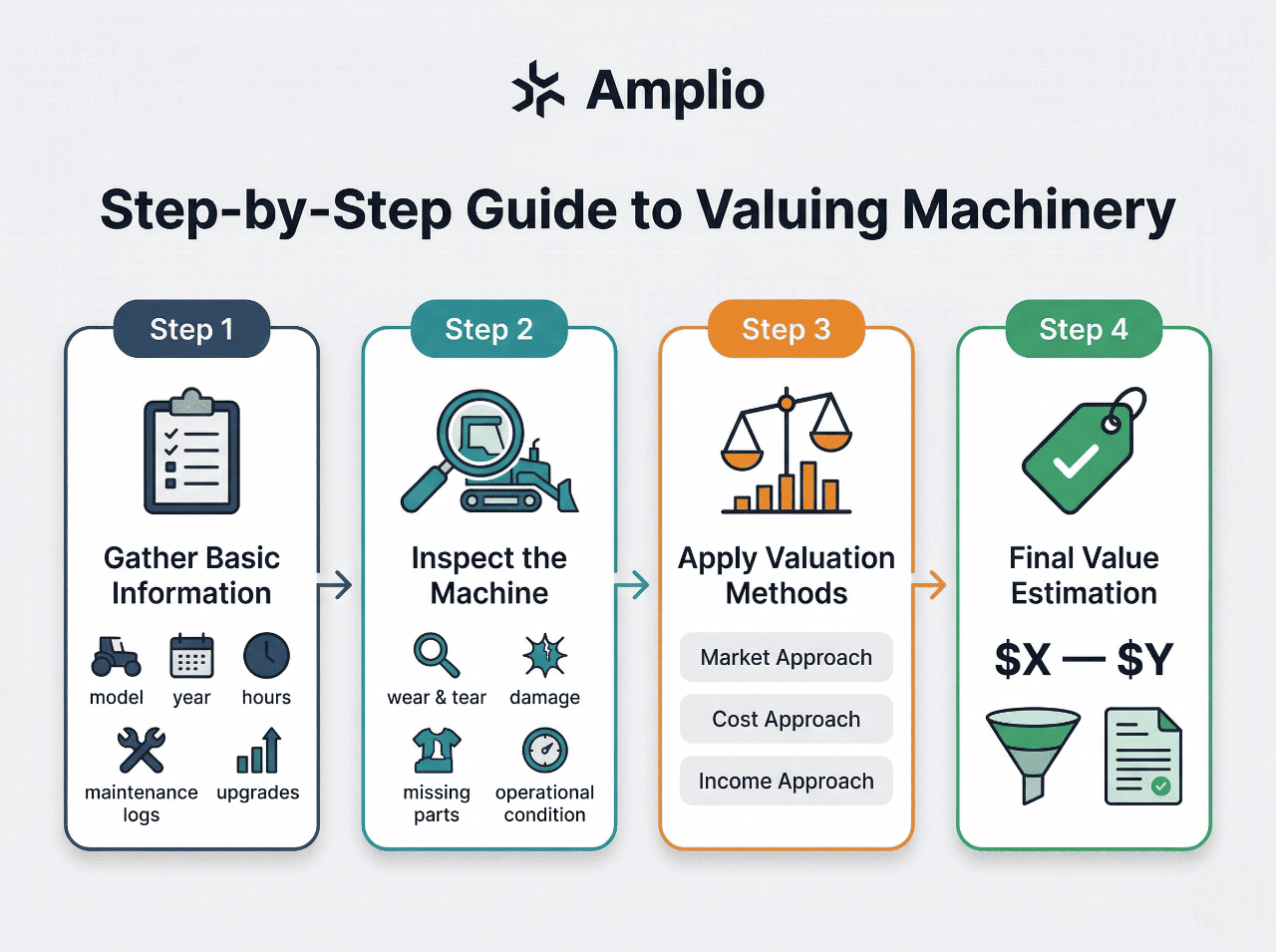
Step 1: Gather Basic Information
Before you can begin valuing your machinery, it's important to gather all relevant details about the equipment. This initial information serves as the foundation for any accurate valuation and helps you assess the equipment’s worth based on its key characteristics.
Here's what you need to collect:
- Model and Make: The specific model and manufacturer of the machinery, as this determines its value compared to similar models in the market.
- Year of Manufacture: The age of the equipment, which significantly impacts its depreciation and remaining useful life.
- Operating Hours: The number of hours the machine has been used, which affects its wear and tear and helps estimate remaining life.
- Condition: A detailed assessment of the machine's current state, including any visible damage, wear, or signs of poor maintenance.
- Maintenance Logs: Documentation of past maintenance, repairs, and servicing, which can support a higher valuation for well-maintained equipment.
- Upgrades or Modifications: Any updates or enhancements made to the machinery, such as new technology or features, that could increase its value.
Step 2: Inspect the Machine
Inspecting the machine thoroughly is a crucial step in the valuation process. This physical check helps determine its current condition and identify any issues that could affect its value. By evaluating the machine’s wear and operational status, you can assess the level of maintenance it requires and estimate its remaining useful life.
Here’s what to look for during the inspection:
- Wear and Tear: Check for any signs of excessive wear on critical components, such as engines, gears, or belts, which can reduce the machine's performance and value.
- Damage: Look for visible damage like cracks, rust, or dents that may require costly repairs or indicate a history of poor maintenance.
- Missing Parts: Identify any missing or replaced parts, as this can affect the machine's functionality and resale potential. Replacement parts may increase repair costs for a new owner.
- Operational Condition: Test the machine’s functionality by running it, if possible. Ensure that it operates as expected and assess its performance, noting any issues such as unusual noises or sluggish performance.
Step 3: Apply Valuation Methods: 3 Major Approaches
To accurately value machinery, it's important to choose the right approach based on the type of equipment and available data.
The three most common valuation methods are the Market Approach, Cost Approach, and Income Approach, each suited to different situations and types of machinery.
1. Market Approach:
The Market Approach is one of the most commonly used methods for valuing machinery. It involves comparing your equipment with similar machines in the market to determine its value.
This approach is ideal when there are many comparable assets available for sale and provides a good estimate of what the equipment would likely sell for in today’s market.
Example of the Market Approach
Consider a manufacturer looking to determine the market value of a 2018 CNC turning center. To estimate its value, the company reviews recent sales of comparable machines from reputable auction platforms and equipment dealers.
The reviewed comparables include three CNC turning centers from the same model line, all manufactured between 2017 and 2019. Their sale prices range from 110,000 to 130,000, depending on condition, operating hours, and available tooling packages.
The subject machine has moderate operating hours, a documented maintenance history, and standard features consistent with the comparables. Based on these market indicators, a supported valuation would fall near the midpoint of the range, at approximately 120,000.
2. Cost Approach:
The Cost Approach is ideal when there are few comparables or for specialized machinery. This method determines the value based on the cost to replace the machine, minus depreciation for wear, age, and obsolescence.
Example of the Cost Approach
Consider a packaging machine that originally cost 180,000 when new. Today, a comparable new machine costs 200,000.
The machine is five years old and has an expected useful life of 10 years. Using straight-line depreciation, the annual depreciation is:
200,000 ÷ 10 years = 20,000 per year
After five years of use, the accumulated depreciation is:
20,000 × 5 = 100,000
To estimate its current value under the Cost Approach:
Replacement Cost (200,000) – Depreciation (100,000) = 100,000
The machine’s estimated value today is 100,000, based on what it would cost to replace it and how much useful life it has already consumed.
Note: Use manufacturer’s price lists, supplier quotes, and industry standards to get an accurate estimate of the replacement cost.
3. Income Approach:
The Income Approach is used for income-generating equipment, such as rental machinery or power-generating assets. This method estimates the equipment’s value based on the future revenue it is expected to produce or the cost savings it will generate over its remaining useful life.
Example of the Income Approach
To understand how the Income Approach works, take the example of a power-generating machine that reduces your facility’s electricity costs. The machine saves you 40,000 per year and has five years of useful life remaining.
To estimate its value, you project those annual savings and discount them to their present value. A 10 percent discount rate is applied to account for risk and expected return. After discounting each year of savings and adding them together, the total comes to about 151,000. This represents the economic benefit the machine will deliver over the rest of its life.
Step 4: Final Value Estimation
After applying the appropriate valuation methods and factoring in depreciation, the final step is to estimate the machine’s true value.
- Combine all factors and methods: Consider the insights from the Market Approach, Cost Approach, and Income Approach, along with the adjustments for depreciation, condition, and usage.
- Define a value range: Based on the data collected and calculations, establish a realistic value range (e.g., $X to $Y) that reflects the machine's market worth. This range helps you understand the likely selling price or purchase price, giving you flexibility in negotiations.
How Amplio Helps With Better Machinery Valuation
AI-Powered Equipment Appraisal
Amplio uses AI agents to analyze your machinery list at the component, system, and SKU levels. The platform evaluates specifications, historical demand, and real market data to determine accurate valuations. This gives you a clear view of what each asset is truly worth before you make any operational or financial decision.
Expert Verification for High-Confidence Results
AI-generated valuations are paired with analyst review to ensure every equipment value is technically accurate and commercially realistic. This combination reduces guesswork and eliminates pricing inconsistencies that often appear in manual valuation processes.
Resale Readiness Through a Private Marketplace
For assets better suited for liquidation, Amplio prepares them for sale through its private marketplace of verified industrial buyers and liquidators. Each listing includes accurate technical details and documentation derived from the valuation process, ensuring faster and more reliable recovery.
Audit-Ready Documentation
Every valuation includes traceable documentation for internal approval, finance teams, and compliance requirements. This ensures transparency throughout consolidation, decommissioning, or capital planning workflows.
To apply this valuation process to your own equipment, use our free equipment and machinery appraisal service to understand what your assets may be worth before making a redeployment, sale, or disposition decision.
Contact us to get an AI-driven machinery valuation, understand the true value of your equipment, and identify the right disposition channels across your network.