Inventory Disposition: What Is It and How to Execute It

Introduction
Inventory that stops moving starts creating friction. It occupies valuable space, locks up funds, and adds carrying costs that quietly grow month after month. In a warehouse or fulfillment center, slow moving stock can also increase exposure to damage, shrink, and obsolescence.
Inventory disposition matters because it brings order to that problem. With a structured process, businesses can recover value, free space, and keep tracking and documentation aligned with operational needs and financial reporting.
In this blog, we will explain what it is and how to execute it to recover value.
What Is Inventory Disposition?

Inventory disposition is the formal, documented process a business uses to manage inventory that is no longer needed for operations and sales. It typically applies to excess inventory, obsolete items, or unsold stock sitting in a warehouse or fulfillment center, where ongoing costs and handling responsibility remain with the company after the original purchase and investment.
At its core, inventory disposition is about maintaining control and accurate tracking as inventory (and in some cases related assets) is reviewed, removed from active stock, and recorded as disposed of with clear accountability. This ensures the organization can support internal approvals, confirm ownership and quantities, and keep records aligned as items reach the end of their useful life or no longer match current demand.
How to Execute Inventory Disposition to Recover Value
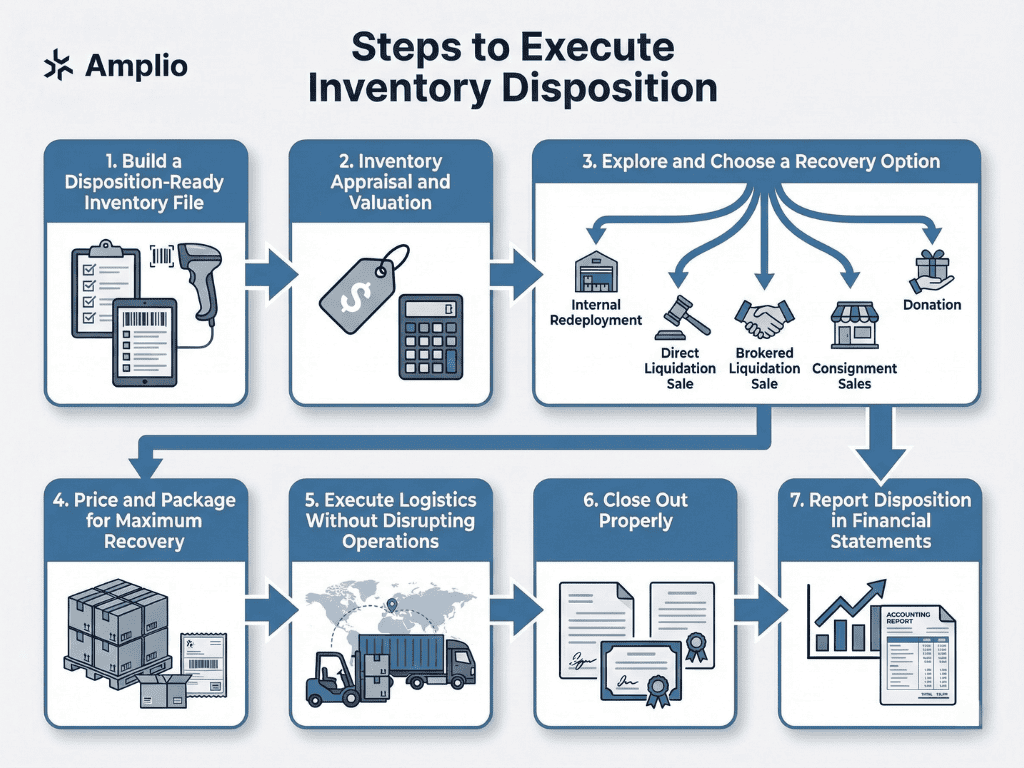
Step 1: Build a Disposition-Ready Inventory File
Create one disposition-ready file that captures what you have and where it is. List unit counts, exact locations, condition notes, photos, and any serial numbers or lot IDs. Confirm ownership status so there are no delays when items are ready to be transferred, sold, or disposed.
Include the operational and compliance details needed to move items safely and correctly. Add handling requirements, access notes, packaging status, and any applicable restrictions such as warranty constraints, sensitive labeling, or security requirements for equipment.
Step 2: Inventory Appraisal and Valuation
After your inventory file is complete, the next step is appraisal and valuation. This is where you confirm what the inventory and equipment is realistically worth today based on condition, useful life, and current demand in the open market.
Use valuation to set a target and floor price, prioritize high value items first, and decide which lots are worth selling versus moving through other disposition outcomes. A clear appraisal also strengthens documentation for internal approvals and financial reporting.
Step 3: Explore and Choose A Recovery Option
These are the key strategies to move inventory out of the warehouse, recover value, and keep documentation aligned for a clean disposition process.
1. Internal Redeployment
Internal redeployment moves excess inventory to another site or team that can use it quickly, which makes it one of the fastest ways to recover value. It works best when demand already exists and the items still have useful life.
2. Direct Liquidation Sale
A direct liquidation sale is when the company sells surplus inventory itself instead of using a third party to run the process. This works best for standard, in-demand items where you already have access to buyers or can list quickly in the open market.
3. Brokered Liquidation Sale
A brokered liquidation sale is when you work with a liquidation partner or asset recovery specialists to sell surplus inventory through their established buyer network or auctions, rather than selling it directly yourself. This approach is useful when you want access to qualified buyers and a more controlled selling process without relying on a deadline driven auction.
4. Consignment Sales
Consignment sales work by placing your equipment with a consignment partner who markets it to qualified buyers and manages inquiries, negotiations, and screening. Instead of forcing a quick sale through an auction, the asset stays available until the right buyer is found, which often improves outcomes for specialized items with a narrower buyer pool.
5. Donation
Donation can be a practical disposition option for usable, non-restricted inventory when resale is not worth the effort or introduces added risk. It helps clear space quickly while keeping the process controlled and accountable.
Note: If items are donated to an eligible organization and properly documented with recipient acknowledgment, item descriptions and condition, quantities, and the date of transfer, the donation may also help capture potential tax benefits depending on applicable rules.
Step 4: Price and Package For Maximum Recovery
To maximize recovery, package inventory in a way buyers can purchase quickly. Build lots by category, unit type, and condition so the value is clear and the transaction is easy to complete.
Set a target price and a floor price before you go to market, and avoid one off selling that consumes time and increases costs. Make it simple for buyers to act by offering clear pickup windows, palletized loads when possible, and descriptions that match the actual condition and quantities.
Step 5: Execute Logistics Without Disrupting Operations
Plan the movement like an operations project, not an afterthought. Confirm whether the buyer will handle pickup or you will arrange shipping, then lock dock schedules and packaging requirements so inventory can move out without slowing day to day work.
Follow site rules for safety, access control, and any equipment removal plans, especially when forklifts, rigging, or restricted areas are involved. For every transfer or disposal, maintain chain of custody documentation so quantities, dates, and responsibility are clear for operations, security, and compliance.
Step 6: Close Out Properly
Close out the disposition process with clear documentation, including proof of sale or transfer, recycling certificates, or destruction certificates when applicable. This protects the business, supports compliance, and makes reconciliation easier for finance and operations.
Then update inventory systems, ownership records, and storage allocation so stock is accurately removed and space is released. Finally, run a short post-mortem to identify what created the excess inventory and adjust purchasing, planning, or controls to prevent repeat.
Step 7: Report Disposition in Financial Statements (Sale of Equipment)
After the sale, capture the key details so Finance can record the entry correctly: asset tag/serial + description, sale date, buyer, proceeds, and any disposal/removal costs.
Summarize original cost, accumulated depreciation, net book value, and the resulting gain/loss, then reconcile to the fixed asset register (confirm the asset is retired and depreciation stops as of the disposal date).
Attach support (bill of sale/invoice, proof of payment, approvals, and any shipping/transfer docs) to keep reporting accurate and audit-ready.
Note (SEC registrants only): If a disposition involves a significant portion of a business (e.g., a divestiture), consult the SEC Division of Corporation Finance Financial Reporting Manual – Topic 3 (Section 3120) for pro forma reporting considerations.
How Amplio Helps You Dispose Excess Inventory
AI-Powered Appraisal
Amplio combines AI agent with experienced appraisal specialists to value your inventory and equipment quickly and accurately. This helps you set realistic recovery targets, prioritize what to move first, and support pricing with clear documentation. With a defensible appraisal upfront, you reduce rework and speed up buyer decisions.
Internal Redeployment
Amplio helps you identify which excess inventory can be redeployed internally across plants or warehouses instead of being sold. The team matches items to internal demand, coordinates transfers, and ensures tracking is updated from the sending site to the receiving site. This keeps usable stock in circulation and protects value before it declines..
A Complete Liquidation Support
Amplio acts as your managed liquidation partner through a vetted private marketplace and auctions, connecting you with qualified buyers to sell surplus inventory efficiently. We recommend the best channel for your timeline and item type, coordinate logistics and removal, and provide closeout documentation so the disposition is completed cleanly and traceably.
If you need support managing excess inventory, our inventory disposition services help you move excess inventory through the right recovery channels.
Contact us to get an inventory disposition plan tailored to your needs.