End-of-Life Asset Management: What It Is and How to Do It
Introduction
Every unused piece of equipment or outdated operational asset sitting in your facility is silently costing your business. From tied-up capital to unexpected downtime, end-of-life (EOL) assets create hidden inefficiencies that can ripple across operations.
Ignoring them isn’t an option—strategic management of EOL assets can unlock value, free up space, and transform operational risks into opportunities.
In this article, we’ll dive into how industrial organizations can handle these assets efficiently, maximize returns, and maintain compliance.
What Is End-of-Life Asset Management?
End-of-life (EOL) assets are items that have reached the end of their useful support period, are outdated, or are no longer aligned with operational requirements. Importantly, EOL doesn’t always mean the asset is non-functional—it may still operate, but it carries limitations and maintenance costs.
End-of-life asset management is the proactive approach organizations take to handle EOL assets efficiently. Proper EOL management ensures that businesses recover value, maintain compliance, and reduce operational inefficiencies.
In industrial sectors, EOL assets typically include machinery, spare parts, and equipment, whereas in IT and technical operations, they may include hardware components or devices that are nearing obsolescence. Regardless of the sector, the goal remains the same: minimize risk while maximizing asset value throughout the lifecycle.
Why End-Of-Life Asset Management Matters
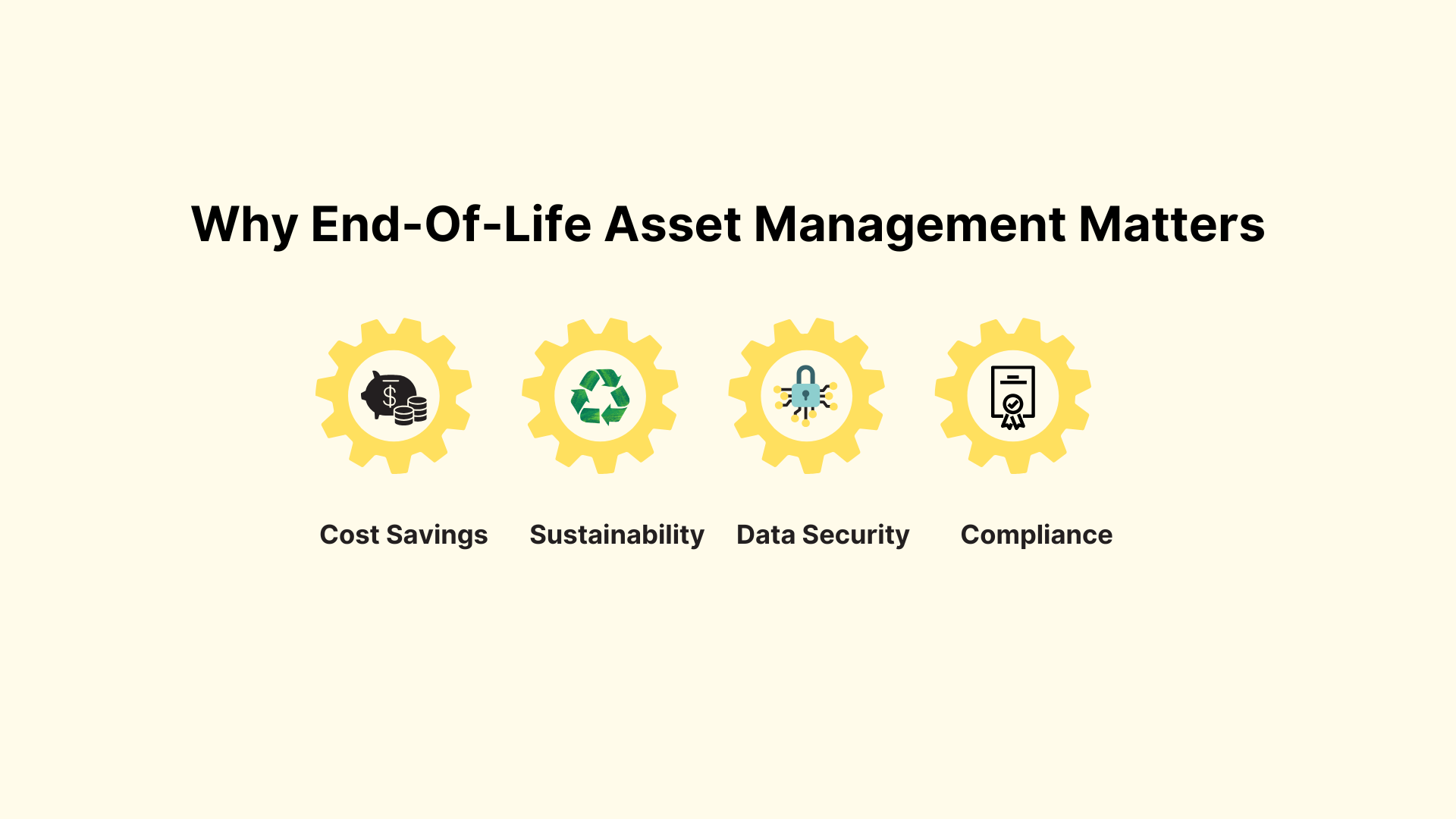
Effective end-of-life (EOL) asset management is vital for businesses, offering key benefits:
1. Cost Savings
By identifying EOL machinery, equipment, and components, organizations can resell, redeploy, or refurbish assets instead of letting them sit idle. This approach recovers capital, reduces unnecessary purchases, and maximizes the value of operational investments.
2. Sustainability
Responsible recycling of EOL assets reduces environmental impact by minimizing waste and promoting circular economy practices. Proper material handling ensures that metals, plastics, and electronics are recovered or disposed of safely, supporting corporate sustainability goals.
3. Data Security
For assets that store sensitive information, such as industrial controllers or operational hardware, proper data sanitization is critical. Secure erasure or destruction is a key step in EOL asset management, and it helps prevent unauthorized access and mitigate cybersecurity and compliance risks.
4. Compliance
End-of-life asset management ensures adherence to regulatory requirements, including e-waste laws, environmental standards, and industry-specific rules. Meeting these regulations avoids fines, audits, and reputational damage while maintaining operational integrity.
How To Do EOL Asset Management: Step-by-Step Guide

Effectively managing end-of-life operational assets requires a structured approach.
The following step-by-step guide helps organizations recover value from aging equipment while minimizing risks and maximizing operational efficiency.
Step 1: Inventory Assessment
Begin by auditing all operational assets to identify end-of-life items. A thorough inventory provides visibility into idle, outdated, or surplus equipment, allowing organizations to prioritize actions and make informed decisions.
Key activities include:
- Conduct a full audit of machinery, spare parts, and equipment.
- Categorize assets by age, usage, and operational relevance.
- Use tools or AI-driven systems to evaluate condition and value.
- Highlight assets approaching obsolescence or exceeding lifecycle expectations.
Step 2: Risk Evaluation
Assessing the risks linked to end-of-life assets is essential to prevent operational disruptions and financial losses. Risk evaluation helps prioritize which assets need immediate attention and which can follow standard retirement procedures.
Key considerations include:
- Identify security vulnerabilities in aging or unsupported equipment.
- Analyze potential operational downtime or workflow interruptions.
- Evaluate financial exposure, including maintenance costs and replacement impact.
- Determine regulatory or compliance risks associated with retiring assets.
Step 3: Internal Coordination Between Cross-Functional Teams
Successful EOL management requires seamless coordination across departments. Establish dedicated cross-functional teams that include IT, operations, procurement, finance, and compliance stakeholders. These teams must work in lockstep to develop asset-specific transition plans, synchronize replacement schedules, and align budget allocations.
The key is creating clear communication channels and defined responsibilities for each department. Without this coordinated approach, EOL transitions become fragmented, leading to operational disruptions and cost overruns.
Step 4: Decommissioning
Next, decommissioning end-of-life operational assets ensures safe removal from active operations while maintaining compliance and operational integrity.
Key actions include:
- Safely remove machinery, equipment, or spare parts from production or facilities.
- Sanitize any data or control systems embedded in operational equipment.
- Recover transferable licenses or certifications associated with assets.
- Follow legal, environmental, and safety compliance protocols.
Step 5: Disposition and Recovery
Selecting the right disposition channel is critical for maximizing value and efficiency.
Key strategies include:
- Internal Redeployment: Relocate idle machinery, equipment, or spare parts to areas with high demand within the organization. This is less likely to be the optimal choice with EOL assets, but it’s still worth considering for hard-to-source parts in good working order.
- Secondary-Market Resale: Sell functional assets through certified B2B marketplaces or with the help of asset recovery specialists to recover capital and free storage space.
- Recycling & Scrap Recovery: Salvage materials from non-functional or obsolete equipment, ensuring environmental compliance and partial monetary recovery.
- Donation: Contribute usable assets to nonprofits or community initiatives, supporting corporate social responsibility and sustainability goals.
How Amplio Helps You Handle End-of-Life Asset Management
Internal Redeployment of Operational Assets
Amplio’s AI-powered centralized inventory management tools enable organizations to seamlessly relocate idle or underutilized equipment across plants, warehouses, and facilities. By redeploying operational assets where they are most needed, companies reduce unnecessary purchases, minimize downtime, and maximize the value of existing inventory without disrupting operations.
End-of-Life Asset Liquidation
Amplio's platform streamlines EOL equipment liquidation through a vetted buyer network. Organizations can monetize surplus and retired assets while Amplio handles compliance documentation, logistics coordination, and buyer qualification. Our approach maximizes asset recovery value, eliminates storage costs, and ensures proper chain-of-custody throughout the disposal process.
Contact us to explore an end-of-life asset disposition strategy aligned with your business objectives and unlock the full value of your operational assets.