How to Sell a Mothballed Plant for Maximum Value (Step-by-Step Guide)
.png)
Introduction
A mothballed manufacturing plant sits in an uncomfortable in-between state. It is no longer producing, yet it still consumes capital through taxes, insurance, maintenance, and ongoing management attention.
Equipment remains in place, utilities may be partially active, and on paper, the site looks like an option for the future. In reality, it often becomes an expensive question mark that slowly erodes value.
In this article, we walk through a clear, step-by-step process you can use to move from a dormant plant to a clean, value-maximized exit.
Step 1 – Align on Objectives and Constraints
Before any valuation or sale activity, it is important to align internally on what “success” means for the mothballed plant. This clarity will guide your strategy, the pace of execution, and the trade-offs you are prepared to make between value, speed, and risk.
Key points to define at this stage:
- Decide whether the primary objective is speed of exit, maximum value recovery, risk reduction, or a balanced combination. This determines which sales routes are realistic and how aggressive you need to be.
- Identify time-related constraints such as financial year-end targets, corporate transaction deadlines, lease expiries, or carrying-cost pressures. These factors directly influence how much time you have to prepare and market the assets.
- Decide whether to work with liquidation specialists as your disposition partner or to set up an internal disposition team, recognizing that disposition in manufacturing requires dedicated expertise.
- Confirm which stakeholders must be involved from the beginning. Typically, finance (value expectations), operations (equipment knowledge), real estate (site considerations), and EHS (compliance and risk) all play critical roles in shaping the plan.
Step 2 – Understand Your Strategic Options (Whole Site vs. Break-Up vs. Hybrid)
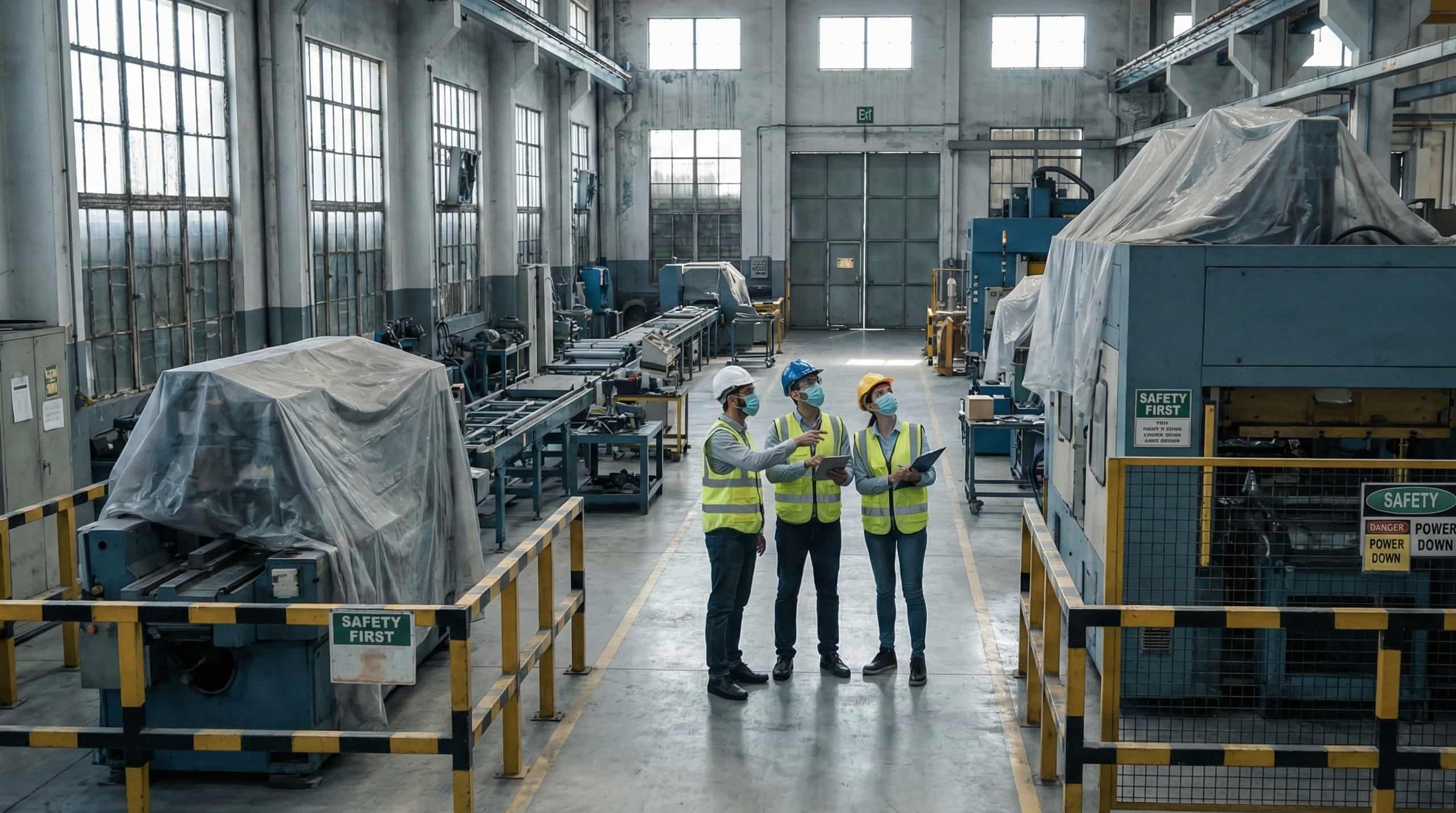
After defining objectives and constraints, the next step is choosing how to sell the mothballed plant. The focus should be on unlocking value from equipment, machinery, and utilities, while managing real estate separately.
You have three options: selling the entire site, breaking up assets into components, or using a hybrid approach.
The table below summarizes the three main strategies, when they make sense, and the key watchouts to keep in mind.
Step 3 – Build an Accurate Picture of the Plant
In this next step, focus on building a complete and reliable picture of the mothballed plant. Having detailed, accurate information about your machinery and equipment is essential buyers base their offers on facts, not assumptions.
Without it, they will either discount aggressively or walk away altogether. A clear equipment inventory and supporting documentation form the foundation for every later stage of valuation and sale.
Key tasks to follow:
- Create a detailed asset inventory that lists all major production equipment, utilities, and key MRO items. Include descriptions, model numbers, serial numbers, and photos so potential buyers can quickly understand the scope and quality of the assets.
- Capture condition and readiness for each critical asset by noting whether it is stored or installed, powered and testable, and when it was last operated. Include maintenance records, service history, or any notes on decommissioning to give buyers confidence in equipment reliability.
- Collect essential EHS and environmental documentation, such as reports, permits, and records of any known issues. Providing this information early reduces perceived risk, builds buyer trust, and prevents delays later in due diligence or closing.
Step 4 – Value the Major Plant Assets (Valuation)
The focus here is on understanding the order-of-magnitude value of the key equipment, production lines, and utilities in your mothballed plant. Precise valuations for every asset are not necessary, but having a clear understanding of where the real value lies is crucial for prioritizing effort and selecting the appropriate sales channels.
This valuation helps ensure that you focus on high-value assets and make informed decisions on selecting the right disposition channel based on their market potential.
Here are some of the key points to consider:
- Use market comps and recent sales to value key production lines and utilities, looking at what similar assets have sold for by age, brand, capacity, and condition. This gives you a grounded range instead of wishful thinking based on original purchase price.
- Flag high-value assets that merit individual marketing, such as flagship lines, critical utilities, or specialized systems. These often justify targeted outreach or stand-alone listing strategies because they can drive a disproportionate share of total recovery.
- Identify low or negative-value assets where removal, decommissioning, or environmental remediation costs outweigh likely sale proceeds. These items should be planned for bulk sale, scrap, or disposal so they don’t quietly erode your net recovery.
Step 5 – Choose Sale Channels for Each Asset Bucket
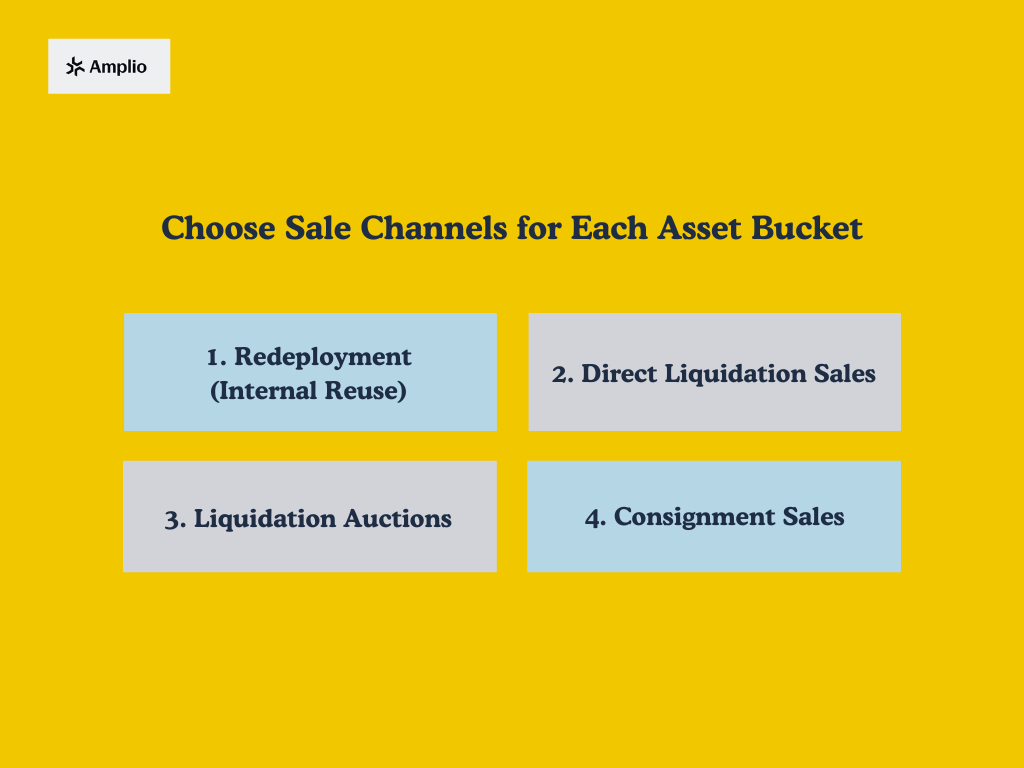
This step involves matching each asset group to the most suitable sales channel. Since different asset types rarely perform best through a single route, it’s important to combine several channels to maximize overall recovery.
Here are some channels to follow:
1. Redeployment (Internal Reuse)
Redeployment is the right strategy when equipment in a mothballed manufacturing plant can create more value within your own network than it would on the open market. It is most effective when there is a clear, near-term need at another site and the assets are still aligned with current products, standards, and operating practices.
When the total cost of relocation and recommissioning is demonstrably lower than buying new, and the equipment is relatively standard, such as conveyors, packaging machinery, or core utilities, redeployment is often the highest-return option.
2. Direct Liquidation Sales
Direct liquidation sales make sense when you want to turn equipment from a mothballed manufacturing plant into cash by selling it directly to interested buyers and know there is active demand for those specific assets.
This approach works best when key machines or systems are attractive on a stand-alone basis to end users, dealers, or familiar industry buyers. It is a good fit when you don’t need the simplicity of a whole-site sale, but also don’t want to rely solely on auctions.
Direct liquidation can capture stronger pricing on selected higher-value assets while you continue progressing the broader plan to sell the mothballed manufacturing plant and reduce holding costs.
3. Liquidation Auctions
Liquidation auctions are a strong option when you need to move a large volume of mixed equipment from a mothballed manufacturing plant quickly. They work best for mid- and lower-value assets, MRO, and support equipment, where one-by-one marketing is not practical but there is broad buyer interest.
This strategy is useful when speed, site clearance, and predictable timelines matter as much as price.
A well-run auction with solid cataloging, photos, and reach can efficiently turn a diverse asset pool into cash while you focus on higher-touch efforts on premium equipment and the overall exit from the mothballed manufacturing plant.
4. Consignment Sales
Consignment sales are effective when there’s a strong market demand for specific equipment, and you want to retain ownership until it sells. In this model, a third party (such as a dealer or auction house) markets and sells the asset on your behalf, and you only pay fees when it sells.
This strategy works well when equipment is in demand, and you want broader or specialized buyer exposure while maintaining control of pricing. However, it’s less effective when demand is low, leading to slow sales and value depreciation.
Step 6 – Prepare the Plant and Documentation for Buyers
Once the appropriate sales channels are selected, the next step is to focus on presentation and clarity.
Strong presentation and clear information directly influence how buyers price a mothballed manufacturing plant. When the site looks controlled, and the documentation is easy to work with, perceived risk drops, and serious buyers are more willing to stretch on value. The aim here is to make it simple for buyers to understand what they are getting and to visualize restarting or removing assets.
Here is what you need to ensure:
- Clean and stage key areas by removing scrap and clutter so the plant looks maintained, not abandoned.
- Ensure safe, straightforward access for inspections with clear routes and basic safety measures in place.
- Prepare a concise information pack covering a plant overview, key equipment list, utilities summary, and current photos.
- Highlight positive differentiators such as permits, available capacity, location advantages, and recent upgrades.
Step 7 – Close, Decommission, and Hand Over Cleanly
A clean exit from a mothballed manufacturing plant protects both value and reputation. This means clear contracts, no loose ends on site, and no surprises for either party once the deal is signed.
You should spell out exactly what is included and excluded in the sale, plan the sequence for equipment removal and site handover, and be explicit about who pays decommissioning and related costs, which are often but not always covered by the buyer.
EHS obligations and any remediation responsibilities also need to be clearly defined so post-closing liability is understood.
Pro-Tip: Once the transaction is complete, take time to capture lessons learned on valuation, channels, communication, and execution. Those insights become the playbook you use to handle future plant closures or mothballed sites with less friction and better outcomes.
Common Mistakes To Avoid While Selling a Mothballed Plant
Many companies lose millions when they sell a mothballed manufacturing plant because of avoidable, repeatable errors. Most of these issues have nothing to do with the underlying assets and everything to do with timing, information quality, and process discipline.
Here are the key mistakes that you should avoid:
- Waiting too long to choose a strategy forces last-minute decisions and weakens your negotiating position.
- Relying on original purchase price instead of current market data leads to unrealistic expectations and stalled deals.
- Ignoring environmental and EHS questions early, so buyers price in extra risk or walk away during diligence.
- Dumping everything into a single auction with no strategy causes high-value assets to be lost in a sea of low-value lots.
- Using poor photos and incomplete data that make serious buyers doubt the asset condition and avoid the opportunity.
- Assigning your procurement team to lead the disposition of a mothballed plant, even though successful divestment requires specialist asset recovery, valuation, and channel expertise rather than sourcing skills.
Streamline Your Liquidation of Mothballed Plant Assets with Amplio’s Asset Recovery Process
AI-Powered Appraisal for Fast, Accurate Asset Valuation
Amplio uses advanced AI to quickly evaluate your mothballed plant’s machinery and inventory, identifying high-value assets for resale or redeployment. Our system classifies each item at the SKU and equipment level, ensuring a data-driven plan for liquidation and recovery. This eliminates guesswork, speeds up decision-making, and maximizes asset value from the very beginning of the process.
Redeployment of Critical Assets
Amplio's AI agents identify valuable assets that can be redeployed across your organization. By matching excess or mothballed equipment with facilities that can still utilize it, we help you preserve value and reduce waste. This strategy maximizes the lifespan of critical assets and minimizes the need for new purchases.
Private Marketplace for Verified Buyers
Amplio’s private marketplace connects you with a vetted network of industrial buyers, liquidators, and enterprise partners who are actively seeking high-quality, operational assets. Every item listed is backed by verified data, clear documentation, and transparent pricing, ensuring that your plant’s equipment reaches the right buyers quickly, safely, and at optimal value.
Seamless Logistics and Compliance Management
We also manage the logistics and legal requirements of plant asset sales, from transportation to removal and compliance documentation. Our expert team ensures smooth execution of the entire liquidation process while maintaining safety, legal, and financial compliance, so you don’t have to worry about anything but seeing the return on your assets.
With Amplio’s AI-powered workflows, access to verified buyers, and end-to-end management, you can recover maximum value from every asset in your mothballed plant.
Our mothballed plant liquidation services provide the support needed to move from asset recovery planning through final plant clearance.
Contact us now to get a custom disposition plan for your mothballed manufacturing plant.