Distressed Inventory: What Is it and How to Manage it

In today’s unpredictable market landscape, distressed inventory has become a top concern for manufacturers, distributors, and supply chain leaders. As global disruptions, shifting demand patterns, and supply chain delays persist, more businesses are facing the reality of stock that is losing value, becoming obsolete, or simply not moving as planned.
Distressed inventory isn’t just an accounting headache; it’s a direct threat to profitability and operational efficiency. In fact, a 2023 study by Kearney estimates that excess inventory represents a $250 billion-plus issue for U.S. high-tech businesses alone, while the global value of idle stock runs into the trillions. Excess and unsellable stock tie up working capital, inflate storage costs, and may even lead to compliance or safety issues if left unmanaged.
In this article, you’ll find a clear definition of distressed inventory, explore its root causes, and discover practical strategies to manage and mitigate risk.
What Is Distressed Inventory?
Distressed inventory refers to unsold, obsolete, expired, or excess stock that has lost significant value and is unlikely to be sold at its original price. This can include products that are out of date, discontinued, damaged, or tied to projects or customer orders that never materialized.
Distressed inventory is different from standard excess or surplus stock. While surplus inventory may still have potential for regular sale or use, distressed inventory requires urgent action. It often carries a higher risk of write-downs, forced liquidation, or disposal, making it a critical concern for businesses focused on financial performance and operational efficiency.
Causes of Distressed Inventory
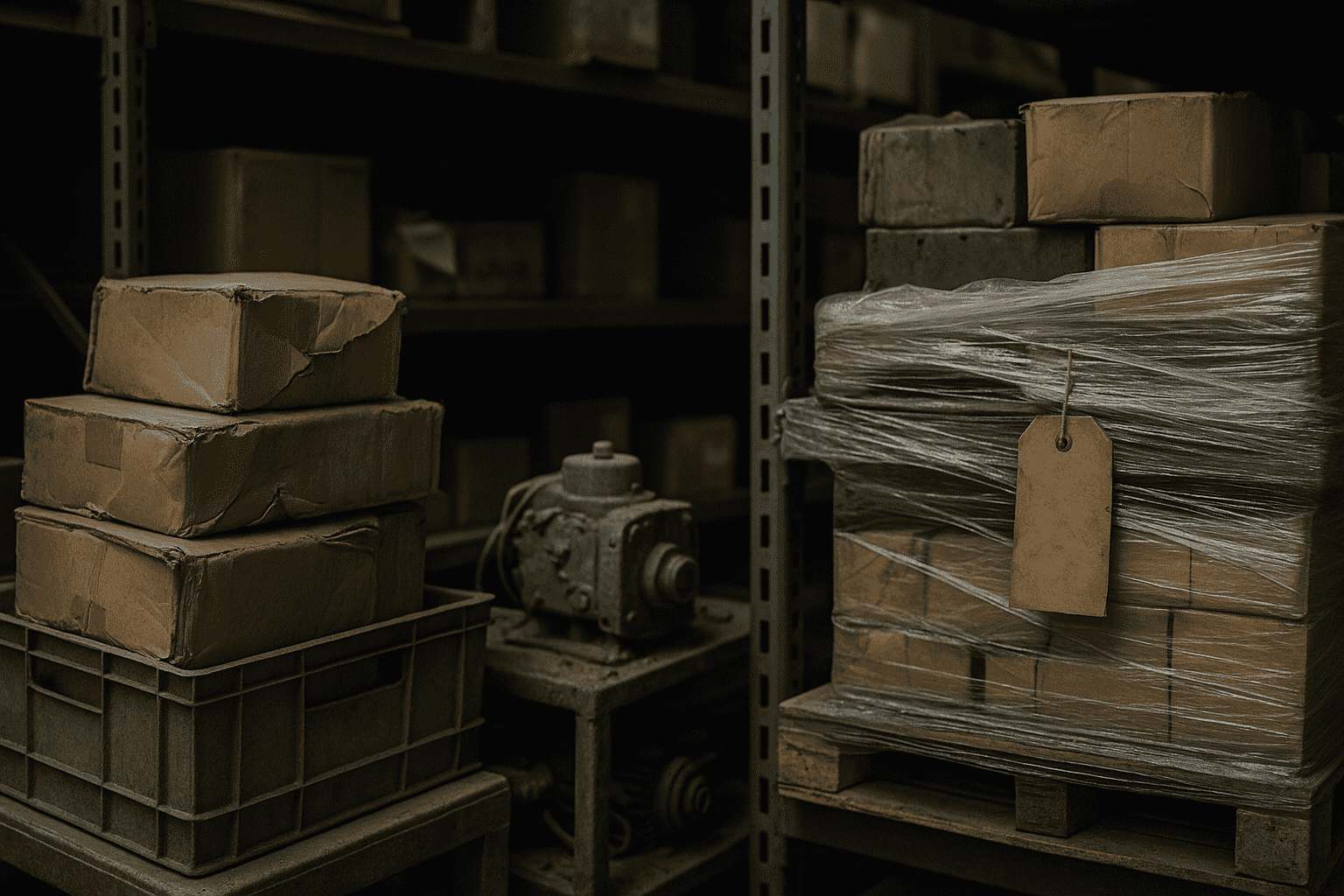
Several factors can quickly turn valuable inventory into a financial burden. Below are the primary causes of distressed inventory in industrial and manufacturing environments.
1. Demand Shifts
Sudden or unexpected changes in customer demand are a leading cause of distressed inventory. When market preferences evolve or economic conditions change, products that once moved quickly can become slow-moving or obsolete.
If your forecasting or procurement processes don’t adapt quickly enough, you may be left with excess inventory that cannot be sold at its original value. Demand shifts often result from trends, seasonality, regulatory updates, or shifts in end-user industries.
2. Supply Chain Disruptions
Disruptions in the supply chain can quickly lead to distressed inventory. Delays in raw material deliveries, transportation issues, or supplier shortages can result in stock arriving late or in excess. When materials or products miss their intended production or sales window, they are at risk of becoming obsolete or unsellable.
Unexpected disruptions may also force you to hold more inventory than planned as a buffer, increasing the likelihood of excess stock.
3. Quality Issues
Quality issues are a common source of distressed inventory in industrial and manufacturing operations. When products fail to meet required standards, specifications, or customer expectations, they are often deemed unsellable or must be removed from active inventory. Defects, damage during handling, or inconsistencies in production can cause entire batches to lose market value.
As a result, businesses are left with stock that cannot be sold at full price—or at all. Over time, unresolved quality problems can lead to a build-up of obsolete or excess inventory, tying up capital and increasing storage costs.
4. Inventory Obsolescence
Inventory obsolescence is a major driver of distressed inventory. As technology evolves or industry standards change, products and components that were once in demand may become outdated. Inventory that remains unsold for extended periods is especially at risk of losing relevance and market value.
Once inventory becomes obsolete, it is difficult to sell through standard channels and often requires markdowns, liquidation, or disposal. The longer the stock sits unused, the higher the likelihood that it will transition from surplus to distressed, creating financial loss for the business.
Strategies for Managing and Disposing of Distressed Inventory
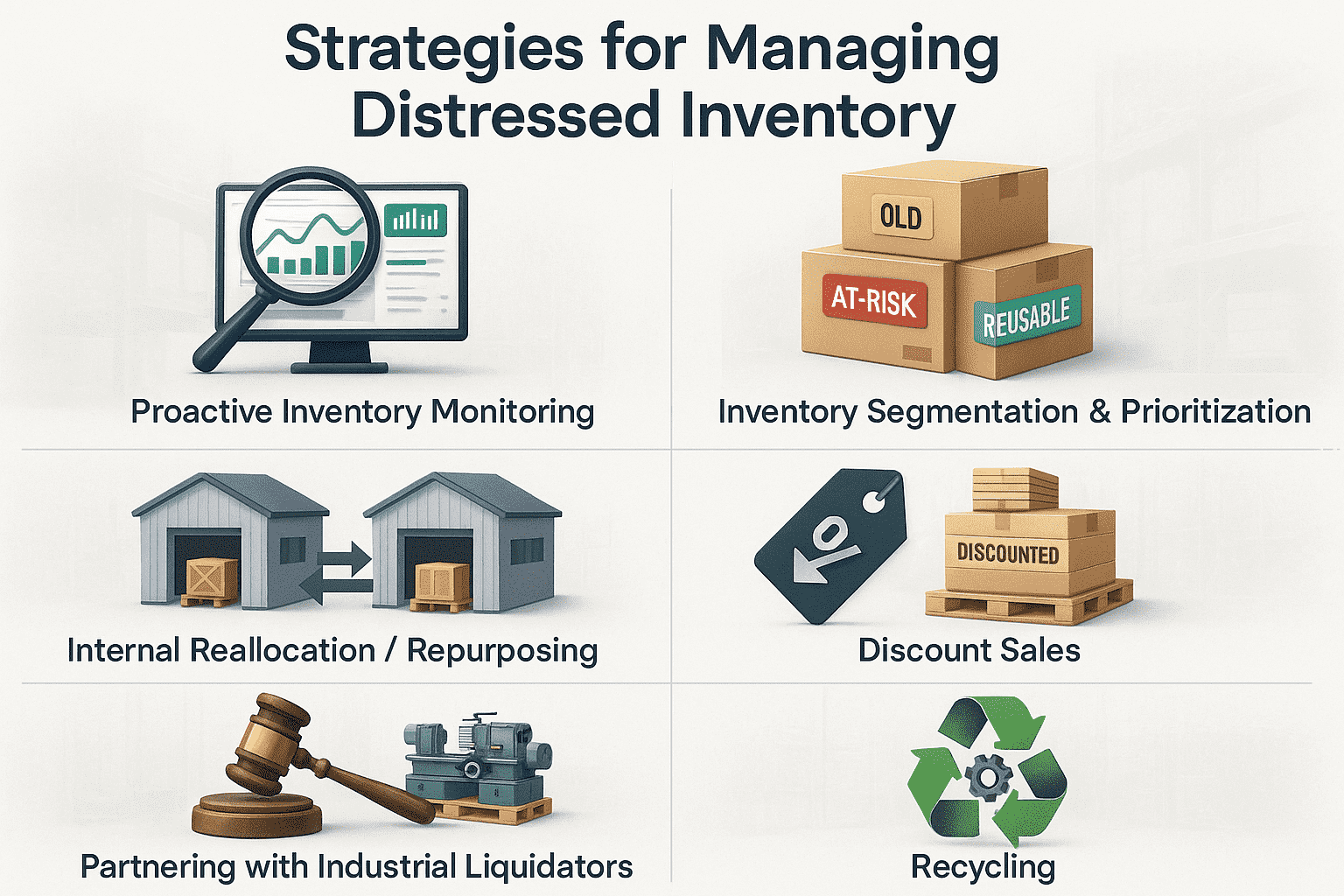
Effectively managing distressed inventory requires a proactive and structured approach. The following strategies can help you recover value, minimize losses, and streamline inventory disposition in your organization.
1. Proactive Inventory Monitoring
Proactive inventory monitoring is essential for identifying distressed inventory early. Real-time tracking systems provide continuous visibility into stock levels, movement, and aging. By monitoring these data points, you can spot slow-moving or at-risk items before they lose significant value.
Regular audits help ensure your records match physical inventory, making it easier to detect discrepancies or emerging problems. Forecasting tools enable you to anticipate changes in demand and adjust procurement or production plans accordingly. With these proactive measures, you can reduce excess, minimize financial losses, and maintain tighter control over your inventory.
2. Inventory Segmentation and Prioritization
Segmenting your inventory allows you to manage distressed stock more effectively. By classifying items based on age, demand, and recoverability, you gain a clearer view of which assets require urgent action. Older stock and items with low demand should be prioritized for review, markdown, or disposal.
Segmentation also highlights which inventory can be repurposed, reallocated, or sold through secondary channels. This targeted approach helps you allocate resources efficiently, reduce storage costs, and focus efforts where recovery or liquidation is most likely to succeed.
3. Internal Reallocation or Repurposing
Internal reallocation or repurposing gives you an opportunity to extract value from distressed inventory without turning to external liquidation. By systematically reviewing items for potential use in other departments, projects, or business units, you can often find productive applications for surplus materials or equipment.
This process helps reduce unnecessary procurement, optimize resource utilization, and limit write-offs. Reallocating inventory internally also supports cost control and sustainability by keeping usable assets in circulation and minimizing waste.
4. Implement Discount Sales
Discount sales offer a direct way to move distressed inventory out of storage and recover a portion of your investment. By pricing items below their original cost, you can attract buyers who are willing to purchase goods that may be discontinued, seasonal, or nearing their expiration date.
Careful planning of discount sales—whether through flash promotions or bulk deals—helps minimize financial losses and free up warehouse space. This strategy enables you to convert stagnant stock into immediate cash flow and reduce the ongoing costs associated with holding unsellable inventory.
5. Partnering with Industrial Liquidators
Collaborating with industrial liquidators gives your organization access to industry expertise and established channels for disposing of distressed inventory. These partners can manage valuation, marketing, and resale processes, ensuring you achieve the best possible return on surplus or obsolete assets.
Working with industrial liquidators also helps streamline compliance and logistics, reducing the administrative burden on your internal teams. By utilizing external support, you can recover value from inventory that would otherwise remain idle or require costly disposal.
6. Recycling
Recycling offers a practical solution for disposing of distressed inventory that cannot be sold or reused internally. By sending obsolete materials or products to certified recycling facilities, you ensure that valuable components are recovered and waste is minimized.
This process helps your organization reduce landfill usage, comply with environmental regulations, and demonstrate a commitment to sustainable business practices. Recycling also allows you to manage unsellable inventory in a way that supports both operational efficiency and corporate responsibility.
How Amplio Helps You Manage Distressed Inventory
- Real-Time Asset Visibility
Amplio’s digital platform provides a centralized view of inventory across all locations, making it easy to identify distressed, excess, or slow-moving stock before it becomes a larger liability. Powerful analytics allow you to quickly assess which items are at risk and prioritize timely action.
- Data-Driven Valuation
Amplio utilizes real-time market data and advanced analytics to deliver accurate valuations for your distressed and surplus assets. With clear insight into asset value, you can make informed decisions about redeployment, liquidation, or retention—ensuring optimal value recovery and capital efficiency.
- Access to Verified Industrial Buyers
Amplio connects your business to a trusted network of pre-vetted industrial buyers, accelerating the sale of distressed inventory. This streamlines the disposition process, helps secure competitive offers, and reduces time-to-cash, all while maintaining transaction security and compliance.
Contact us now to streamline your distressed inventory management, recover maximum value, and strengthen your operational efficiency.