4 Proven Strategies for Rapid Asset Recovery

Introduction
Surplus equipment, unused inventory, and idle assets drain resources and slow your business. When these assets sit too long, they tie up capital, take up space, and add carrying costs that can reach 20% to 30% per year in many inventory environments. Rapid asset recovery gives you a way to recover value quickly from these underused assets.
In simple terms, rapid asset recovery means moving underused assets into the right recovery channel without delay. The goal is to recover value on a short timeline while improving liquidity, freeing up floor space, and keeping your operation responsive.
In this guide, you’ll learn four practical strategies for rapid asset recovery. These approaches can help you move assets faster, reduce losses, and put capital back to work without losing control of documentation, compliance, or recovery planning.
1. Redeployment

Before turning to outside buyers, assess what your business can still use internally. Redeployment means identifying surplus or idle assets and transferring them to sites, teams, or departments that have an immediate need for them.
Redeployment is often one of the fastest asset recovery strategies because it keeps the process inside your organization. You do not have to wait for buyers, listings, negotiations, or extended selling cycles. If another facility can use the asset now, you can recover value much faster.
Benefits of Redeployment
- Faster recovery because you avoid delays tied to external sales
- Lower procurement costs when one site can use assets another site no longer needs
- Better use of existing equipment, spare parts, and inventory
- Fewer operational bottlenecks across locations with uneven demand
- Stronger internal coordination across multi-site operations
- Supports sustainability efforts by diverting usable equipment from landfills
When Redeployment Works Best
Redeployment is often a strong option when your business has:
- Multiple facilities or operating sites
- Clear visibility into asset condition and internal demand
- Surplus equipment at one location and purchasing needs at another
- Plant consolidations, shutdowns, or production shifts underway
- Maintenance planning needs that create uneven inventory demand
- Capital upgrades that leave usable assets available for reuse elsewhere
Actionable Tip: Use centralized inventory management tools to gain visibility across all sites. This enables you to quickly identify surplus, match it to internal demand, and coordinate transfers. Data clarity is a challenge for many enterprises, which is why Amplio’s AI agents can compare surplus inventory across different facilities with different ERPs to find matches.
2. Industrial Liquidators
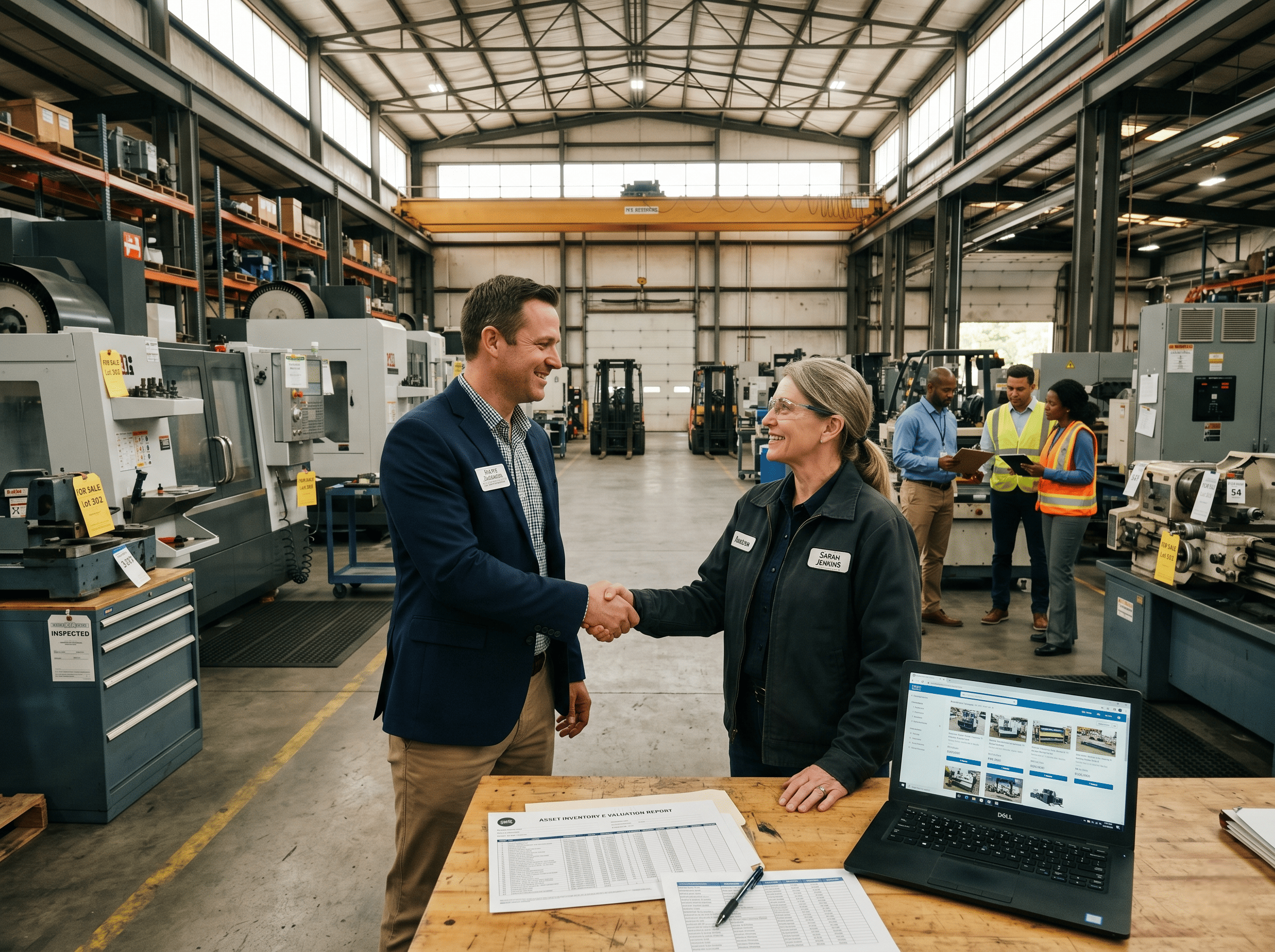
Industrial liquidators help businesses move surplus, idle, or retired assets quickly by purchasing them directly or managing the sale process on a short timeline.
When you work with a professional liquidator, you get support across the full recovery process. This can include asset inventory, valuation, appraisals, targeted marketing, buyer outreach, negotiation, and final logistics.
Industrial liquidators can support rapid asset recovery because they already have buyer networks, market knowledge, and established sales processes. Instead of listing assets one by one and waiting for interest, your business can work with a partner that knows how to move equipment and inventory more efficiently.
Benefits of Using Industrial Liquidators
- Faster sales through established buyer networks
- Less internal effort spent on valuation, marketing, and negotiation
- Better handling of large volumes of equipment, machinery, or MRO inventory
- Stronger support for site clear-outs, plant closures, and time-sensitive recovery projects
- Faster release of cash and storage space tied up in surplus assets
When Industrial Liquidators Make Sense
Working with industrial liquidators often makes sense when your business has:
- Large volumes of surplus or retired assets that need to be moved quickly
- A plant closure, site shutdown, or facility consolidation in progress
- Limited internal bandwidth to manage the recovery process directly
- Equipment that must be sold within a defined timeline
- A stronger need for speed and operational efficiency than for maximum resale value
Pro Tip: Engage liquidators early in your planning. The sooner they can assess your inventory and market conditions, the faster you’ll see cash returns.
3. Online Industrial Marketplaces

Online industrial marketplaces help businesses expand buyer reach beyond their immediate network. By listing industrial surplus equipment, spare parts, or unused inventory on B2B platforms, you can connect with end-users, resellers, brokers, and other qualified buyers who are already searching for available assets.
This can support rapid asset recovery by putting assets in front of a larger pool of potential buyers. For many businesses, online marketplaces work best when the goal is to move marketable assets faster without relying only on direct sales or liquidators.
Benefits of Online Industrial Marketplaces
- Broader access to buyers across regions and industries
- More exposure for surplus equipment, spare parts, and industrial inventory
- Greater flexibility than relying on a single buyer or local sales channel
- Better chances of finding demand for niche or specialized assets
- More pricing insight based on buyer interest and listing activity
When Online Industrial Marketplaces Work Best
This route is often a strong option when your business has:
- Surplus assets with clear resale demand
- Accurate specifications, condition details, and photos available
- Standardized equipment, spare parts, or inventory that buyers can evaluate easily
- Enough time to manage listings, buyer questions, and transaction follow-up
- A need to reach buyers outside your immediate region or contact base
Pro Tip: Before listing, invest time in preparing your assets for sale. Upload clear, high-quality photos from multiple angles, include up-to-date maintenance logs, and provide accurate technical specifications that clearly reflect the state of the asset.
4. Auction Platforms

Auction platforms help businesses move surplus, idle, or retired assets on a defined timeline. Instead of waiting through a longer sales process, you place assets into a structured sale window where buyers compete within a set timeframe.
That structure can support rapid asset recovery because it creates urgency. Buyers know they have limited time to act, which can help move assets faster. Competitive bidding can also improve asset recovery value when demand is strong, though results are less favorable when buyer interest is limited.
Benefits of Auction Platforms
- Faster sale timelines with defined start and end dates
- Competitive bidding that can increase buyer activity
- A structured sales process for deadline-driven recovery projects
- Faster movement of surplus equipment, machinery, and industrial inventory
- Quicker release of storage space tied up in unused assets
When Auction Platforms Work Best
Auction platforms are often a strong option when your business has:
- Assets that must be sold within a fixed timeframe
- A site shutdown, plant closure, or facility consolidation in progress
- Equipment upgrades or operational changes that create surplus assets
- Large volumes of equipment or mixed-condition inventory to clear quickly
- Assets with enough market demand to attract competitive bidding
Pro Tip: Work with auction partners who have a strong track record in your industry and provide full logistics support.
How Amplio Helps in Rapid Asset Recovery
Rapid asset recovery works best when you can quickly decide what should be redeployed, sold, or removed. That gets harder when inventory is spread across sites, data sits in different systems, and internal teams do not have time to manage the full recovery process. This is where Amplio helps.
AI-Powered Appraisal
Amplio uses AI-powered appraisal to review inventory data and identify the right recovery path for each asset. Our team helps you determine what should be sold, redeployed, or liquidated without relying on a slow manual review process.
AI-Powered Internal Redeployment
Amplio supports internal redeployment by comparing inventory across facilities and surfacing opportunities to move usable assets where they are still needed. For enterprises with multiple locations or different ERP systems, our approach makes it easier to reduce duplicate purchases and recover value internally before turning to outside sales channels.
Access to a Verified Buyer Network
When redeployment is not the right fit, Amplio helps move assets through a private network of verified industrial buyers. This gives your business access to qualified demand without relying only on public listings or slower one-off outreach.
Contact us today to reduce delays, recover value faster, and improve visibility across your asset recovery process.