10 Must-Have Commercial Meat Processing Machines for Plants

Commercial meat processing relies on a diverse range of specialized machinery built to manage high-volume production with precision, safety, and consistency. From initial cutting and grinding to forming, cooking, and chilling, each machine plays a critical role in ensuring product quality, hygiene, and operational efficiency.
Understanding the core equipment used in commercial meat processing plants enables production teams to make informed decisions about investment, compliance, and maximizing the value of their processing lines.
This guide examines the ten essential commercial meat processing machines that drive modern facilities.
Essential Meat Processing Machines for Commercial Plants
1. Industrial Meat Saws
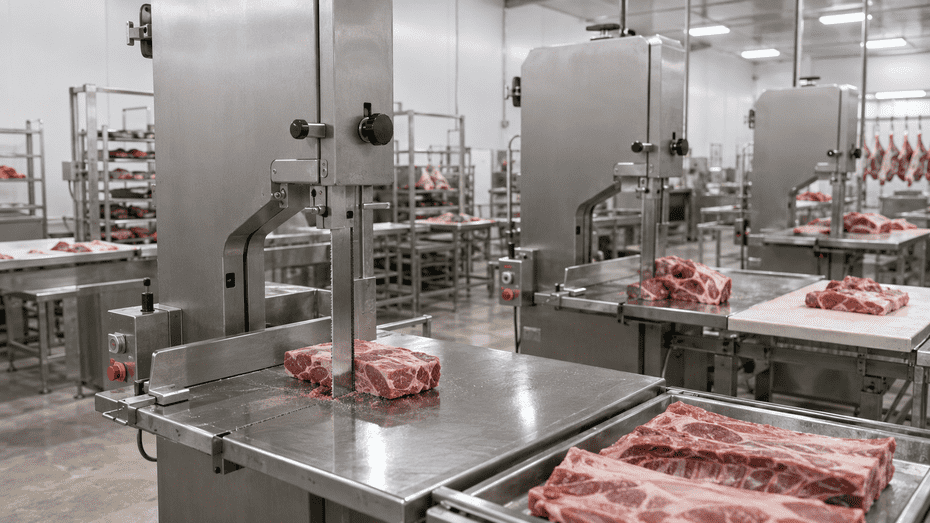
Industrial meat saws are core cutting systems in commercial processing plants. You use them to break down carcasses, portion large primals, and prepare product for equipment that handles grinding, mixing, or forming. These saws provide controlled cuts, steady output, and clean surfaces that support food safety programs.
Beef, pork, and poultry plants rely on industrial meat saws for tasks that call for accuracy and dependable throughput. The machines hold tight tolerances, manage demanding workloads, and support repeatable portion standards that your operation needs for consistent production.
2. Industrial Meat Grinder
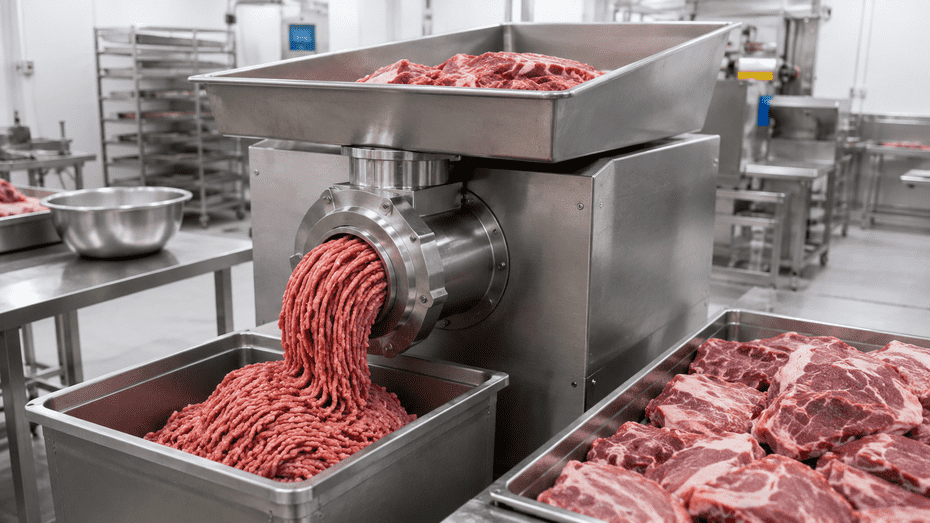
An industrial meat grinder turns whole muscle, trim and frozen blocks into uniform particles that support high-volume production. You use it to manage texture control, particle definition and ingredient distribution for items such as burgers, sausages and blended formulas. Its cutting action keeps output steady and helps you maintain the product standards required in large processing runs.
Beef, pork and poultry plants rely on grinders for dependable throughput and batch consistency. The equipment handles heavy workloads, maintains stable temperatures and gives you control over particle size across multiple grind plates.
3. Industrial Meat Slicer
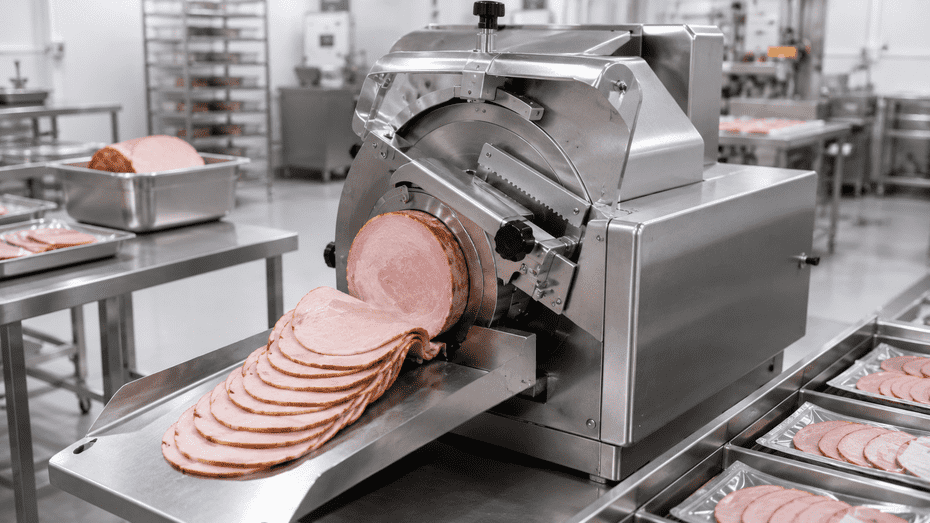
Industrial meat slicers handle cooked, chilled and tempered products with controlled speed and cutting force. You use them to set precise slice thickness, manage portion weight and keep visual quality uniform across each run.
Their high-torque motors and calibrated drive systems keep the blade at a stable cutting rate, which helps you produce clean, repeatable slices even with dense or chilled products.
Plants depend on these slicers in deli meat, ready-to-eat and retail packaging lines. The machines maintain throughput during long shifts, protect surface integrity and reduce trim loss during continuous operation. You can manage blade speed, product feed and hold-down pressure to match the demands of different meats, from hams and loins to emulsified logs.
4. Industrial Meat Mixer
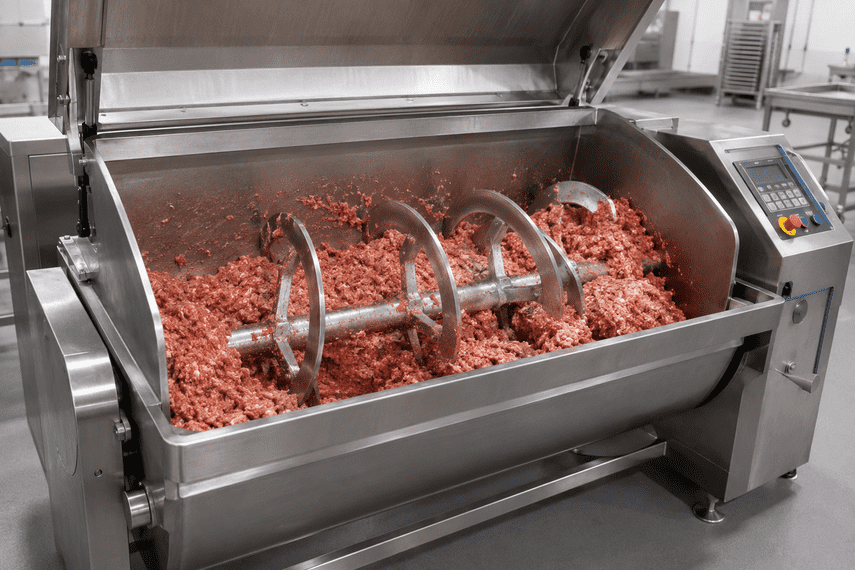
An industrial meat mixer blends meat, spices and additives into even batches. It supports steady production and helps plants keep texture and flavor consistent across every run. Mixers reduce manual work and improve accuracy in large facilities.
Its design supports high-capacity operations. Strong paddles or ribbons move ingredients smoothly through the chamber. Stainless steel surfaces, sealed components and stable controls help the mixer run through long shifts without performance issues.
Plants use mixers for sausages, patties and seasoned blends. The mixer prepares meat for forming, stuffing or cutting. It helps teams maintain product quality, reduce waste and keep workflow steady during continuous production.
5. Industrial Bowl Cutter
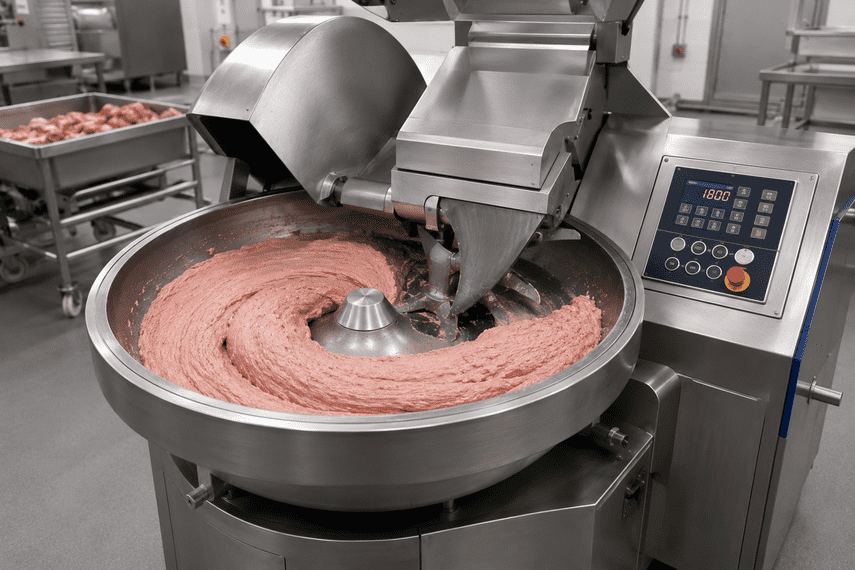
An industrial bowl cutter creates fine, uniform emulsions for products like hot dogs, bologna and smooth processed meats. Its rotating bowl and high-speed knives break meat into very small particles, helping plants control texture and maintain consistent results.
The machine’s smooth surfaces and open-access layout support fast cleaning and help teams meet hygiene standards.
Plants use bowl cutters when they need smooth pastes or finely processed blends. The cutter prepares mixtures for forming, stuffing or cooking in large-scale operations. It reduces processing time, improves product quality and supports steady output during busy production schedules.
6. Industrial Sausage Forming Machine
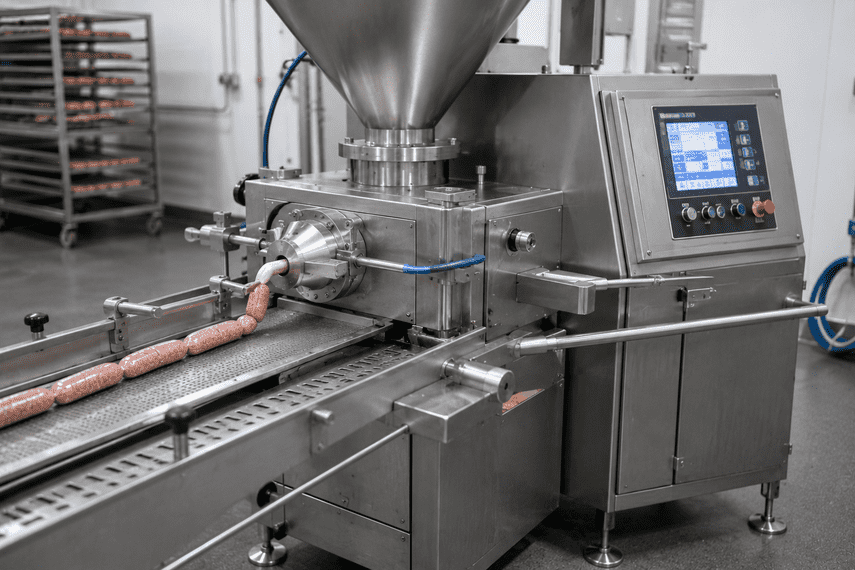
An industrial sausage forming machine shapes ground and seasoned mixtures into uniform portions with controlled feed and forming pressure.
You use it to maintain exact portion weights, stable product dimensions and consistent texture during high-volume production. Its drive system and forming molds keep output steady even with dense or high-viscosity mixes.
Processing plants rely on these machines to raise line speed and reduce manual handling in sausage operations. The equipment prepares formed portions that move directly into linking, stuffing or thermal processing. It keeps batch flow stable, limits variation and lowers rework across large runs.
7. Smoking Oven
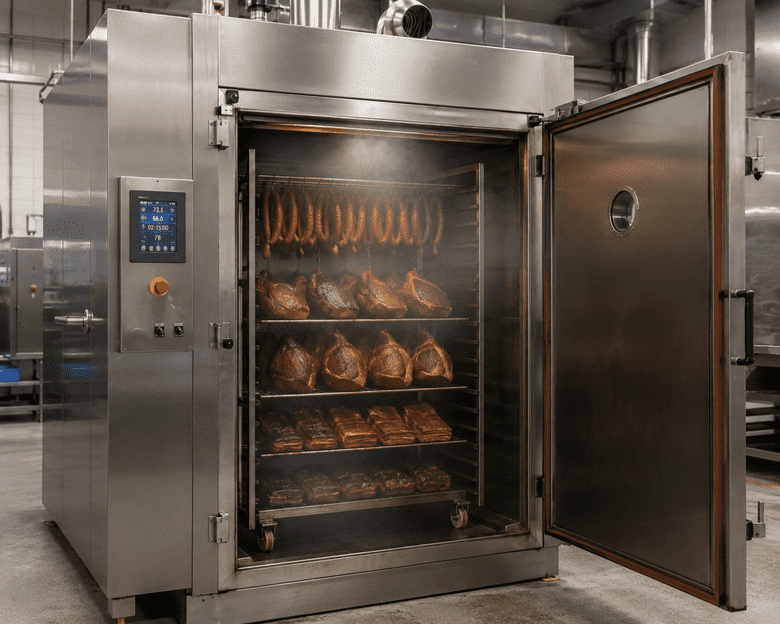
An industrial smoking oven is a machine used in industrial meat processing to smoke, cook and dry products under controlled conditions.
You use it to manage smoke application, surface color, internal temperature and moisture levels for items such as sausages, hams, bacon and poultry. Its control system regulates heat, humidity, airflow and smoke output to deliver consistent results across large batches.
In a processing plant, this machine supports high-capacity production and helps you meet food safety targets. It keeps cooking parameters stable, protects yield and prepares products for chilling, slicing or packaging with steady performance throughout each cycle.
8. Industrial Blast Freezer
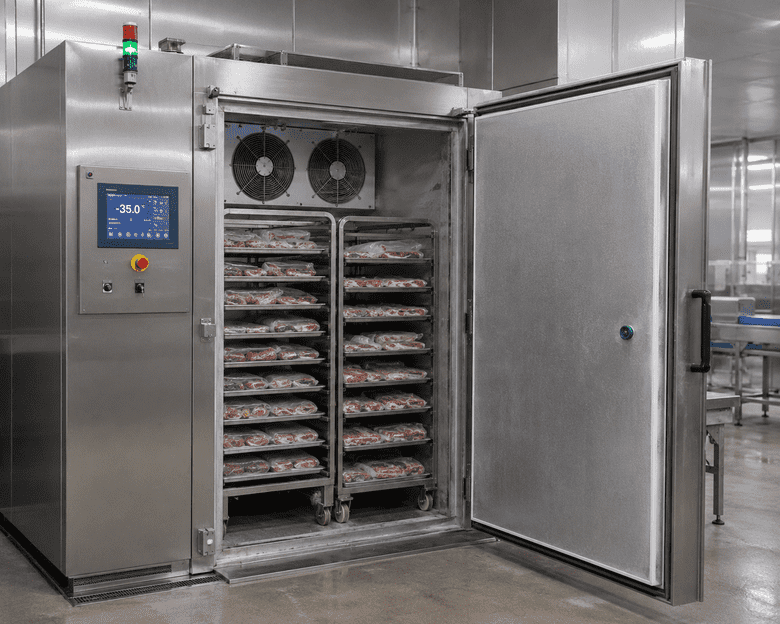
An industrial blast freezer is a high-capacity machine used in meat processing to freeze products fast and protect quality.
You use it to push extremely cold, high-velocity air across carcasses, cuts or formed items. This rapid freezing process limits ice crystal growth, which helps you maintain texture, moisture and color during long-term storage.
Processing plants rely on blast freezers for fresh, cooked and value-added meat. The machine lowers product temperature in a controlled time frame, supports food safety goals and keeps yield loss under control. It prepares meat for packaging, distribution or extended holding while keeping production flow steady.
9. Industrial Tenderizer Machine
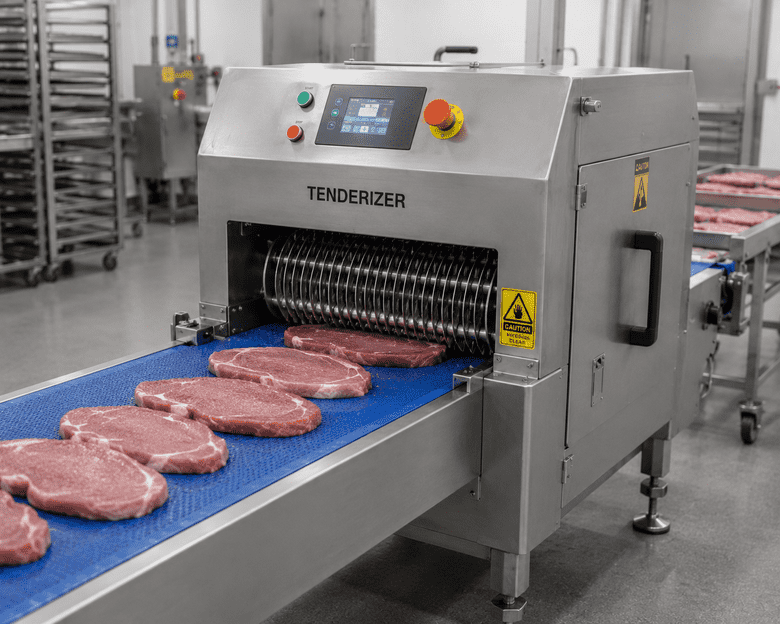
An industrial tenderizer machine softens meat by cutting small slits into the surface with rotating blades.
This process improves texture, reduces cooking time and helps plants keep products consistent across large batches. It supports steady workflow and prepares meat for further processing.
Plants use tenderizers for beef, pork and poultry products that need a softer bite or better marinade absorption. The machine helps teams improve product quality, reduce manual labor and support fast production in high-volume environments.
10. Industrial Vacuum Packing Machine
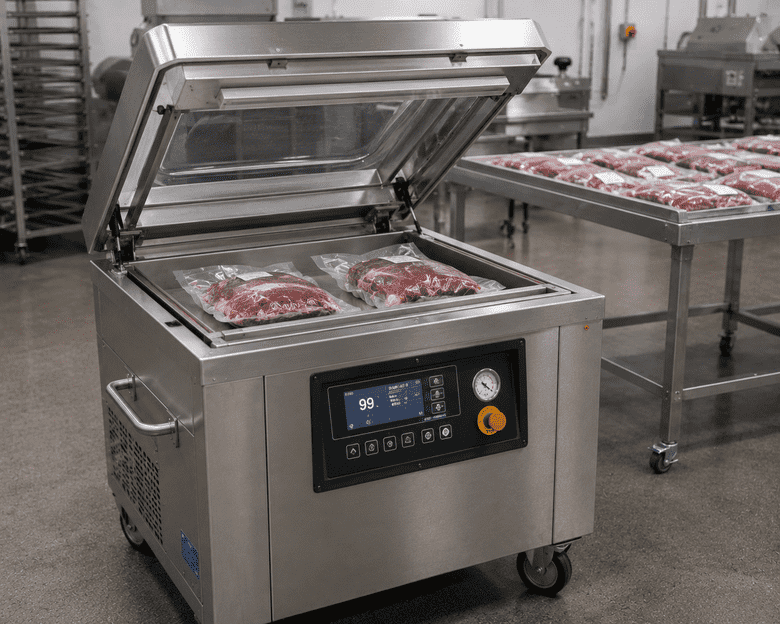
Reliable packaging plays an important role in protecting meat quality during large-scale production.
An industrial vacuum packing machine removes air from packaged meat to protect freshness and extend shelf life. You use this machine to secure each pack with a controlled seal that holds up during storage, handling and transport. Its vacuum and sealing system supports uniform pack weight, clean presentation and consistent packaging standards.
Processing plants rely on vacuum packing machines for fresh, cooked and frozen meat. The equipment lowers the risk of spoilage, keeps oxygen exposure under control and supports product integrity across long production runs. With steady output and repeatable sealing performance, it helps your team prepare products for distribution without slowing the line.
Conclusion
Commercial meat processing plants depend on specialized industrial equipment to maintain throughput, product quality, and food safety. Systems such as tenderizers, mixers, slicers, forming machines, and vacuum packaging units all contribute to reliable production and consistent output. Understanding these machines allows operators to refine workflows, extend equipment life, and invest with greater accuracy.
As operations evolve, equipment needs change. Some plants look to upgrade or expand, while others accumulate surplus machines that still hold strong market value. This creates opportunities for both buyers seeking dependable equipment and sellers looking to recover capital.
Amplio supports both sides of this process. Buyers gain access to verified industrial machinery with accurate specifications and transparent documentation. Sellers benefit from structured resale workflows, AI-supported valuation, and a network of qualified industrial buyers.