Resource Efficiency: What It Is & How to Improve It

Resource efficiency is a growing priority for manufacturers and industrial teams under pressure to control costs, meet sustainability targets, and remain competitive. As operating expenses climb and supply chains become more complex, organizations are looking for new ways to do more with less—reducing waste, maximizing asset use, and improving operational performance at every level.
With rising input costs and higher expectations for environmental responsibility, companies face increasing pressure to make every resource count. According to the U.S. Department of Energy, manufacturers participating in the Better Plants program have collectively saved over $11.8 billion in energy costs by improving efficiency.
In this article, you’ll learn what resource efficiency means, why it matters for your costs and output, and which proven strategies can help you deliver measurable improvements across your operation.
What Is Resource Efficiency?

Resource efficiency means using energy, machinery, equipment, materials, space, and labor to produce goods and maintain operations with less waste and lower environmental impact. In industrial and manufacturing environments, resource efficiency is more than a cost-saving measure—it’s a core driver of operational performance, regulatory compliance, and sustainability.
At its core, resource efficiency focuses on three principles:
- Maximizing output: Achieve the highest possible production or service level from your equipment, people, and systems.
- Minimizing input: Reduce the raw materials, energy, and time needed to complete the same work.
- Reducing waste: Eliminate unnecessary losses, scrap, downtime, and inefficiencies throughout the operation.
Types of Resource Efficiency
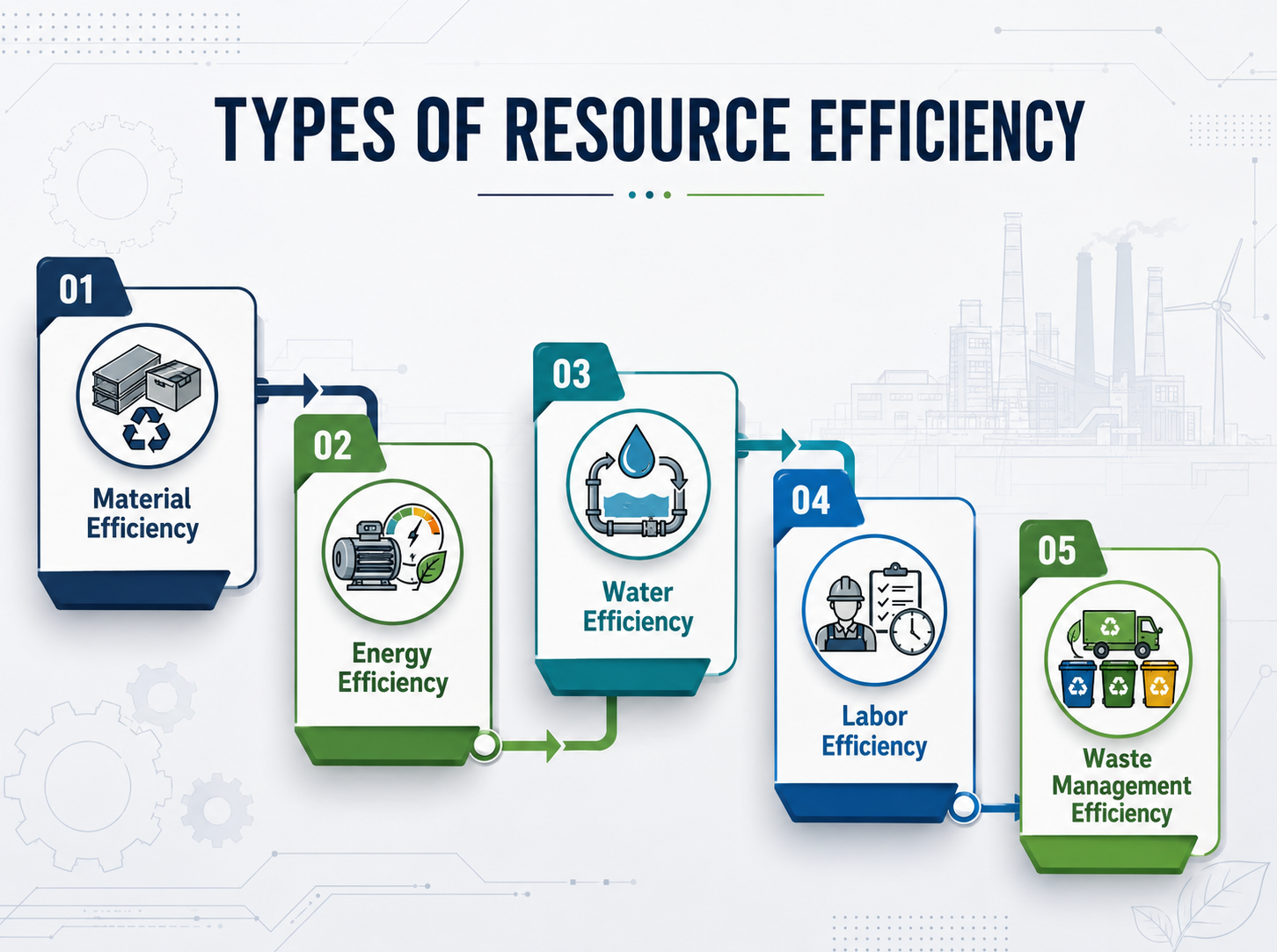
Resource efficiency takes different forms across an industrial operation. Each type focuses on a specific resource your business uses to produce goods, store inventory, move materials, or recover value.
1. Material Efficiency
Material efficiency helps you get more value from material resources before they become waste. In industrial operations, this means better material planning, lower scrap rates, reuse of surplus stock, recycling, and circular economy practices. These steps help reduce dependence on raw material extraction and keep valuable materials in use longer.
2. Energy Efficiency
Energy efficiency reduces the power, fuel, steam, and process heat needed to keep operations running. Industrial teams improve it through equipment maintenance, smart metering, efficient motors, heat recovery systems, and better load planning.
3. Water Efficiency
Water efficiency focuses on reducing water use across cleaning, cooling, processing, and facility operations. This includes leak detection, flow monitoring, water reuse, closed-loop systems, and better process controls that help reduce waste without affecting production output.
4. Labor Efficiency
Labor efficiency reduces wasted time, rework, delays, and unclear handoffs across daily operations. Clear processes, better training, and stronger task planning help teams complete work with fewer interruptions and greater productivity.
5. Waste Management Efficiency
Waste management efficiency focuses on reducing waste before it becomes a cost issue. Industrial teams use better sorting, reuse, recycling, resale of surplus assets, and safe disposal for materials, parts, or assets that cannot return to production.
Why Resource Efficiency Matters?
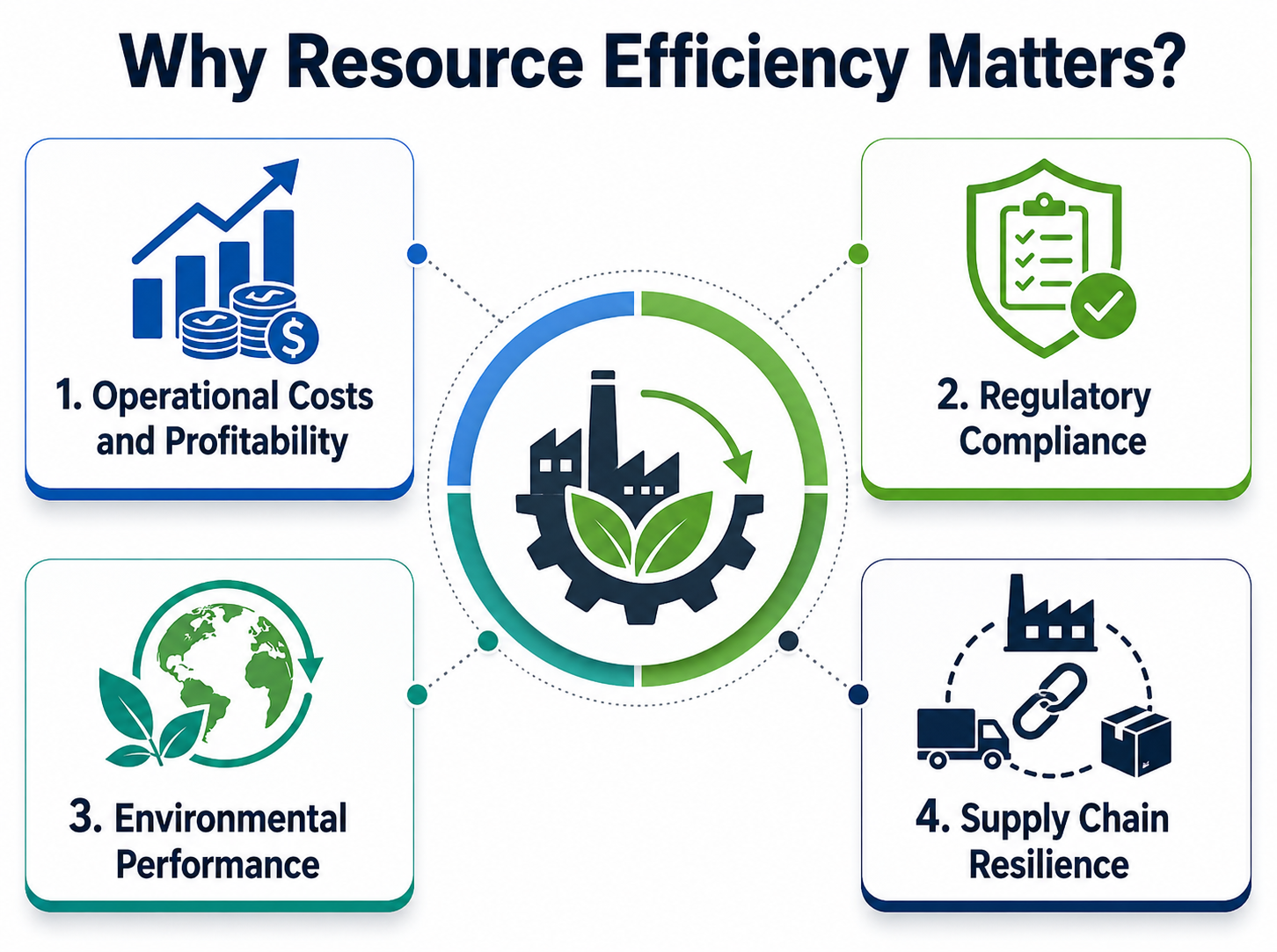
The advantages of resource efficiency extend well beyond immediate cost savings. Treating efficiency as a core strategy lays the foundation for stronger performance across your operation. The benefits you realize will depend on your organization's priorities and operational challenges.
1. Operational Costs and Profitability
Every resource that goes unused or wasted reduces profit. When you control energy use, reduce material loss, and streamline daily processes, you lower operating expenses. These improvements create economic value by supporting stronger margins, better cash flow, and greater financial stability.
For manufacturers, even small gains in scrap reduction, equipment uptime, or inventory control can create measurable savings without reducing product quality.
2. Regulatory Compliance
Resource efficiency supports compliance with environmental laws, industry standards, and internal reporting requirements. When you manage energy, materials, and water with better control, you create clearer records for waste handling, emissions tracking, and resource use.
This helps your team prepare for audits, reduce compliance gaps, and lower the risk of violations or penalties. A disciplined resource management process also helps your organization adjust as regulations change.
3. Environmental Performance
Improving resource efficiency helps strengthen environmental performance across the operation. Efficient processes generate less waste, use fewer natural resources, and help lower greenhouse gas emissions.
This reduces environmental impact and contributes to sustainable development by supporting climate change goals, sustainability reporting, and stakeholder expectations. For industrial teams, better control over materials, energy, water, and waste also makes environmental targets easier to track and manage.
4. Supply Chain Resilience
Resource efficiency strengthens your ability to manage supply chain disruptions. When you manage materials with better control, reduce waste, and recover usable assets, your operation becomes less exposed to shortages and price spikes.
Efficient processes help you adjust to supply changes, protect production schedules, and reduce unnecessary purchasing pressure. This supports business continuity and helps build a more resilient economy by keeping valuable resources in active use.
Proven Strategies to Improve Resource Efficiency
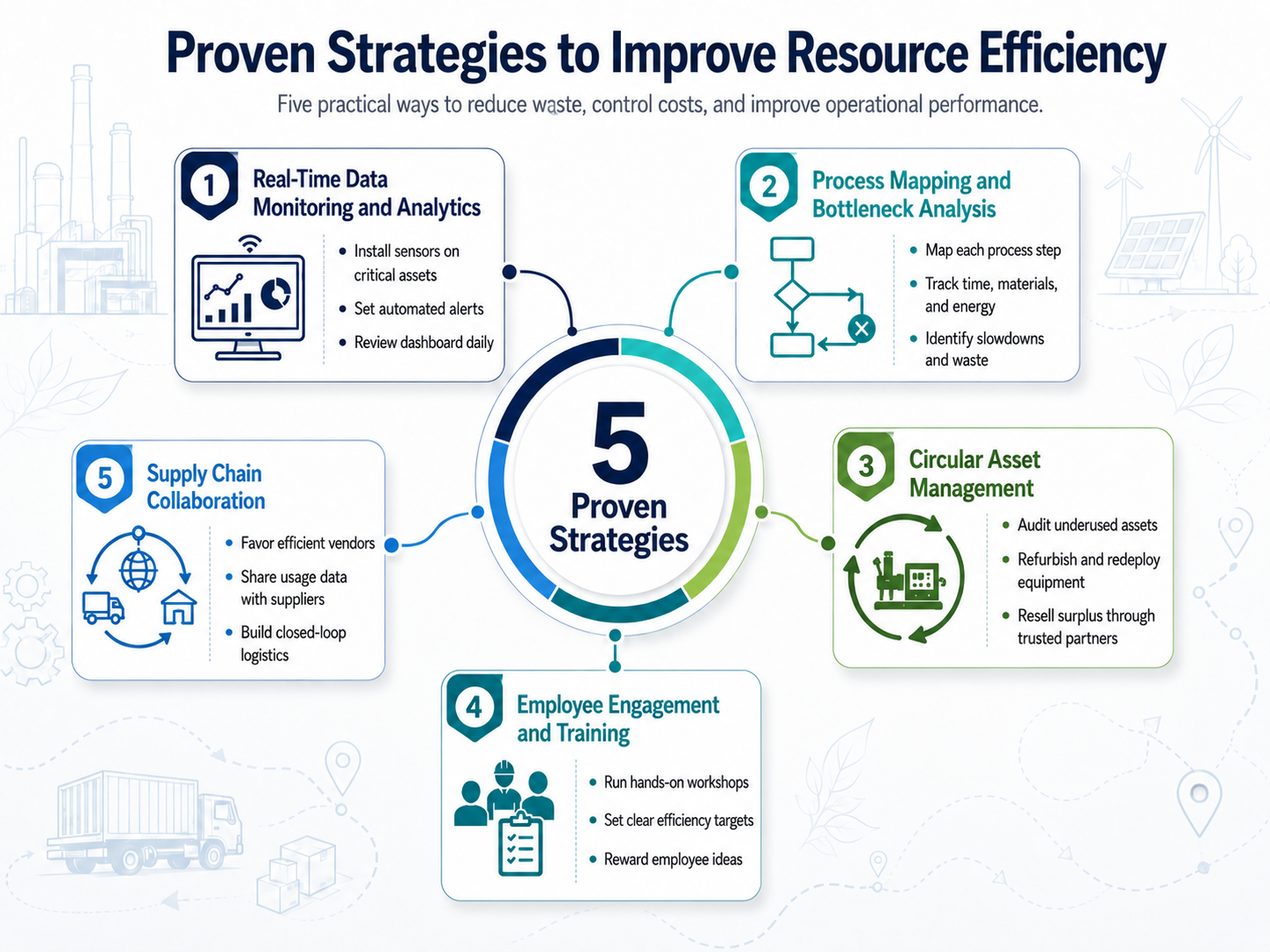
Successful implementation starts with clear priorities, accurate data, and a practical plan for reducing waste across your operation. Below are five strategies you can use to improve resource efficiency across your facility.
1. Real-Time Data Monitoring and Analytics
Start by using technology to track how your facility uses resources. Install sensors and IoT devices on equipment that consumes the most energy or water, then connect production, inventory, and material-use data into a centralized dashboard.
This gives your team real-time visibility into resource consumption. If a machine starts drawing more power than usual, material usage rises, or a water line develops a leak, you can catch the issue early and address it before it turns into higher costs, waste, or production delays.
Action Steps:
- Equip critical assets with sensors that track usage and performance.
- Set up automated alerts for abnormal consumption patterns.
- Review your dashboard daily to spot and resolve inefficiencies.
2. Process Mapping and Bottleneck Analysis
Map each step in your core production or operational process. Use simple diagrams or flowcharts to visualize how materials, energy, and work move through your facility.
With a clear process map, you can identify bottlenecks where delays, backups, or resource waste repeat. These constraint points often lead to downtime, higher energy consumption, wasted materials, and slower output.
Action Steps:
- Break down your main process into individual steps and document each one.
- Track the time, materials, and energy used at every stage.
- Look for repeated slowdowns, backups, or areas with unusually high waste.
3. Circular Asset Management
Circular asset management focuses on extending the useful life of your equipment, machinery, and materials. Instead of following a traditional linear model—buy, use, dispose—you recover more value from usable assets through reuse, refurbishment, redeployment, and responsible resale.
This approach supports responsible consumption, lowers procurement costs, and keeps valuable resources in circulation. It’s a proven way to meet both financial and sustainability targets.
Action Steps:
- Audit your current inventory to identify underutilized or idle assets.
- Establish procedures for refurbishing and redeploying equipment within your organization.
- Partner with reputable industrial liquidators or resellers to remarket surplus machinery.
Case Study
A global paper and forest products manufacturer was holding more than $30M in excess inventory across 20 sites, tying up capital and warehouse space. Using Amplio's AI appraisal tool to set the best path for each item—redeploy, resell, or responsibly dispose—the company cut quarterly carrying costs by roughly $3M and diverted about 4,285 tons of CO₂e from the atmosphere. The result kept usable materials in circulation while turning idle stock back into working capital.
4. Employee Engagement and Training
Your team is the front line of resource efficiency. Well-trained employees are more likely to spot waste, follow standard operating procedures, and act quickly when they see a problem.
Invest in regular training on efficient operating procedures, equipment use, and waste reduction. Build role-specific expertise so each team understands how daily decisions affect materials, energy, labor, and asset use. Encourage employees to share suggestions and report inefficiencies as soon as they see them.
Action Steps:
- Run hands-on workshops focused on resource-saving techniques for specific equipment or processes.
- Set clear efficiency targets and communicate them across your operation.
- Recognize and reward employees who contribute ideas or take actions that enhance efficiency.
5. Supply Chain Collaboration
Resource efficiency depends on what happens across your supply chain, not just inside your facility. Working closely with suppliers, logistics partners, and customers allows you to identify new ways to reduce waste, cut costs, and optimize the flow of materials. This collaboration is essential for building a resilient supply chain that can adapt to disruptions and changing market demands.
Share data and set joint goals for resource use, recycling, and packaging. Ask suppliers for more efficient options and hold partners accountable for meeting agreed standards. Look for opportunities to consolidate shipments, return packaging, and coordinate production schedules to cut unnecessary transport and resource waste.
Action Steps:
- Review contracts and purchasing guidelines to favor resource-efficient vendors.
- Exchange usage data with key suppliers to uncover shared efficiency opportunities.
- Develop joint initiatives, such as closed-loop packaging or shared logistics, to cut waste.
How Amplio Helps Industrial Organizations Improve Resource Efficiency
- Strategic Disposition:
Amplio facilitates the efficient sale, auction, or redeployment of surplus assets. By connecting sellers with a network of qualified buyers, the platform reduces time-to-sale and maximizes recovery value.
- AI-Powered Valuations:
Utilizing daily market data and advanced analytics, Amplio benchmarks your idle assets and surplus inventory to deliver accurate, real-time valuations. This empowers smarter decisions on redeployment, resale, or scrapping—improving resource allocation.
- Responsible Resource Allocation
With an AI-powered asset tracking tool, Amplio provides the insights needed to identify underutilized resources and make informed decisions. This ensures that every asset is managed efficiently internally, reducing excess inventory and supporting responsible resource allocation.
Contact Amplio now to reduce operational waste and safeguard your production with smarter resource allocation.