Obsolescence Management: What It Is, Why It Matters, and How to Start

Introduction
Obsolescence occurs when parts, equipment, or materials become outdated, unavailable, or no longer supported by suppliers. In manufacturing and supply chain operations, this can create major challenges if critical components are suddenly difficult to source.
The problem is growing as technology advances more rapidly and product lifecycles shorten, leading to increased frequency of global supply disruptions. This also leaves factories with stranded equipment and unused stock.
In this article, we will explain what obsolescence management is, why it matters, and practical steps you can take to reduce risks and keep your operations running smoothly.
What Is Obsolescence Management?
Obsolescence management is the practice of identifying, controlling, and mitigating risks associated with parts, equipment, or materials that become unavailable. It ensures factories and supply chains can continue operating smoothly even when certain components are no longer produced or supported by Original Equipment Manufacturers (OEMs).
The scope of obsolescence management encompasses electronic components, industrial spare parts, industrial machinery, and MRO (Maintenance, Repair, and Operations) supplies. Each of these categories plays a critical role in keeping production lines running, and any disruption can lead to costly downtime.
Why Obsolescence Management Matters
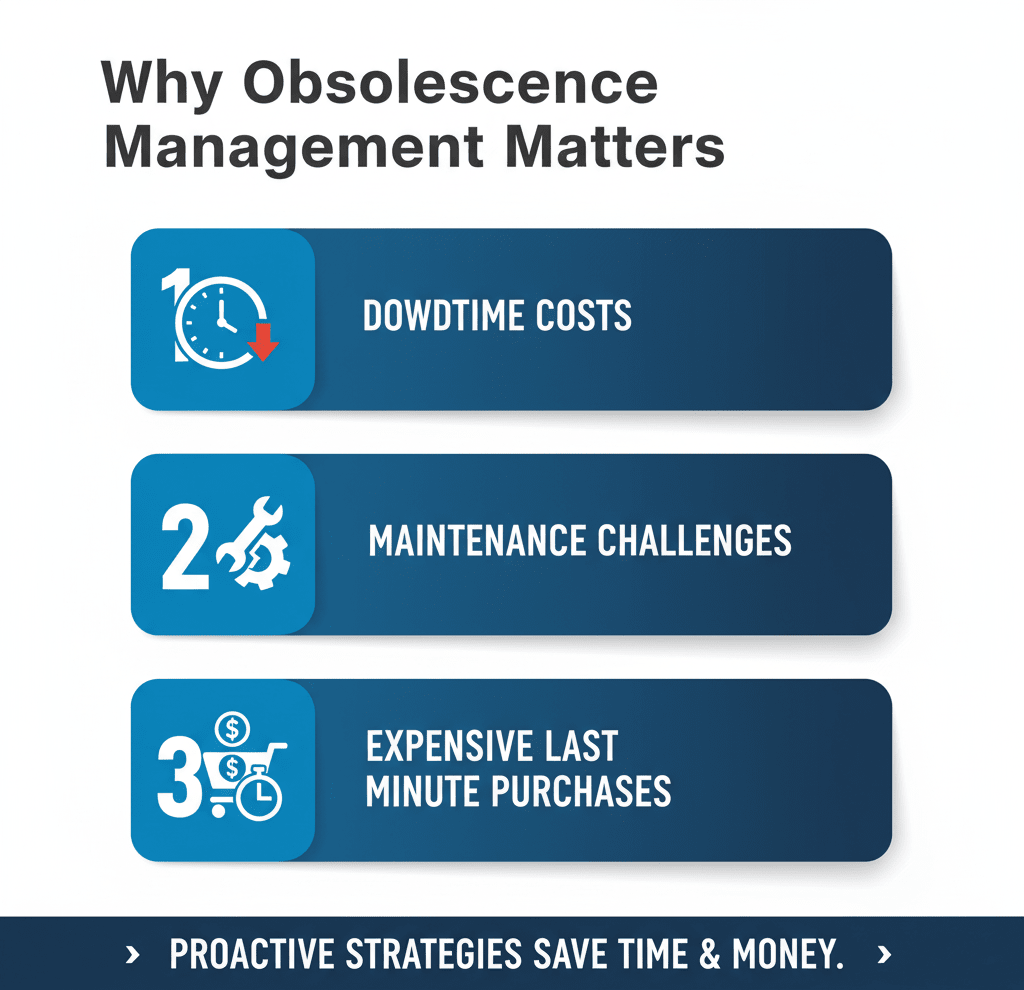
Ignoring obsolescence creates hidden costs and risks. The impact can be seen in several key areas:
1. Downtime costs
When no replacements are available for machinery parts, production comes to a standstill. These stoppages quickly translate into lost output and wasted labor hours.
Unplanned downtime also drains capital that could have been directed toward growth or innovation.
2. Maintenance Challenges
When components are no longer manufactured, maintenance teams lose access to certified parts. They are forced to depend on costly substitutes or equipment cannibalization.
These temporary fixes drive up maintenance costs and extend downtime. Over time, they erode equipment reliability and shorten asset lifecycles.
3. Expensive Last Minute Purchases
If obsolescence is not managed, companies often end up with costly purchases. Critical components may run out just when they are needed most, forcing expensive last-minute purchases from unreliable sources.
With proper obsolescence management, inventory stays balanced—enough critical parts are available to protect operations without tying up money in parts that will never be used.
How to Start With Obsolescence Management
Obsolescence management requires a balanced approach that considers what to do before parts become unavailable and how to respond once they are. By planning and preparing for both situations, companies can keep machines running, reduce costly disruptions, and make better use of their existing inventory.
Pre-Obsolescence Management Strategies
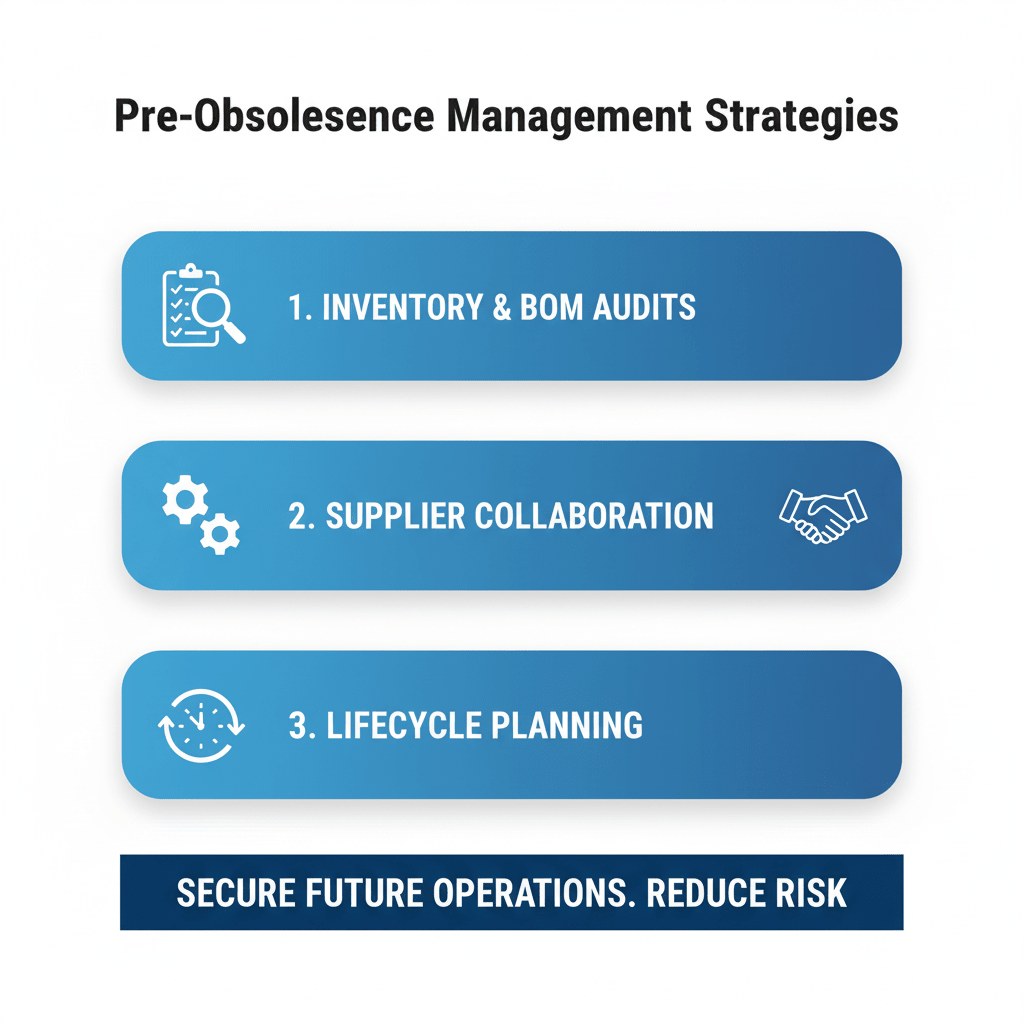
1. Inventory & BOM Audits
Auditing both inventory and Bills of Materials (BOM) helps identify high-risk and single-source parts before they become a problem. By reviewing which components are tied to only one supplier or are nearing end-of-life, companies can take early action to secure alternatives.
This approach strengthens supply chain resilience, reduces dependency on vulnerable sources, and ensures production is not disrupted when certain parts are discontinued.
2. Supplier Collaboration
Building strong relationships with suppliers is one of the most effective ways to prepare for obsolescence. By staying in close contact, you can secure end-of-life (EOL) notices early and gain visibility into when a part will be discontinued. This advanced warning gives your team time to plan alternatives rather than scrambling when shortages hit.
Suppliers can also offer last-time buy opportunities, allowing you to purchase enough stock to cover future needs before production ends. In some cases, they may recommend substitute components. Treating suppliers as partners, rather than just vendors, ensures you’re not caught off guard when critical parts disappear from the market.
3. Lifecycle Planning
Tracking the expected life of machine components is essential to staying ahead of obsolescence. By mapping out lifecycle stages—purchase, use, end-of-support, and discontinuation—you can anticipate when parts will no longer be available. This foresight prevents sudden surprises and gives maintenance teams time to prepare.
With clear lifecycle visibility, companies can schedule replacements, plan redesigns, or arrange last-time buys before disruptions occur. A structured plan ensures critical machines remain supported throughout their lifespan and reduces the risk of downtime caused by unavailable parts.
Post-Obsolescence Management Strategies
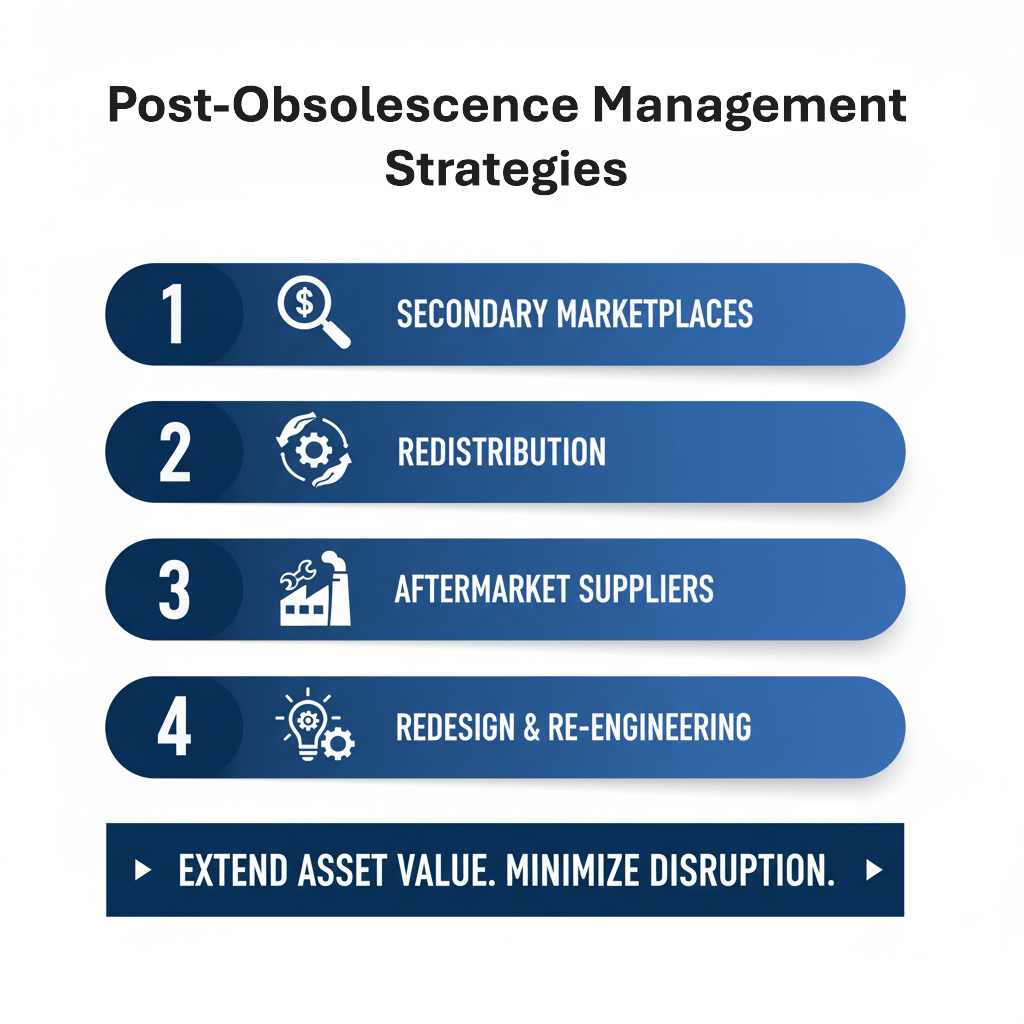
When a part is no longer produced, companies need reactive strategies to keep machines running. Below are some of the most practical options in this stage.
1. Secondary Marketplaces
When machine parts are no longer available from OEMs, secondary marketplaces provide a reliable safety net. These platforms give businesses access to discontinued components through multiple sourcing channels, ensuring machines stay operational. They not only speed up sourcing but also offer flexibility in price and availability.
Here are some popular channels you can use:
- Online Surplus Marketplace – Platforms where surplus or discontinued parts are listed for competitive bidding, enabling quick sourcing at favorable prices.
- Industrial Value Recovery Specialist – Marketplace channels that provide access to recovered and stocked obsolete parts, helping buyers quickly source critical components when regular supply is unavailable.
- Private Exchanges – Closed networks where vetted buyers and sellers securely trade hard-to-find components.
2. Redistribution
Redistribution helps companies get more value from existing inventory by shifting spare parts across different facilities. Instead of leaving items idle in storage, they can be redeployed where they are needed most.
This approach reduces waste, keeps machines running, and minimizes the urgency of sourcing discontinued parts. By treating inventory as a shared resource, businesses can cut downtime and extend the useful life of their assets.
3. Aftermarket Suppliers
When OEMs stop manufacturing a part, aftermarket suppliers can step in with compatible replacements. These third-party manufacturers specialize in producing equivalents for discontinued components, ensuring machines remain operational without major redesigns.
Partnering with aftermarket suppliers provides a cost-effective and timely solution, especially for high-demand parts.
While quality and compliance checks are essential, these alternatives often extend the usable life of equipment and reduce dependence on a single-source OEM supply.
4. Redesign & Re-engineering
As a last resort, when discontinued parts can no longer be sourced from suppliers or secondary markets, redesign becomes the only option to keep equipment operational.
This may involve re-engineering the obsolete component, modifying the machine to accept alternative parts, or updating the system entirely.
Although redesign and re-engineering require time and investment, they provide a long-term solution that eliminates dependence on parts that are unavailable.
Note: Not all industrial equipment is suited for redesign. In highly specialized or regulated operations, altering equipment may introduce compliance risks or compromise performance. In such cases, redesign must be approached with caution and evaluated against operational, safety, and regulatory requirements.
How Amplio helps in Obsolescence Management
AI-Powered Internal Redeployment To Treat Obsolescence
We use AI to monitor your inventory and help you better understand your surplus. Our agents analyze data at scale, flagging parts at risk, recommending redeployment opportunities, and valuing parts on the secondary market. Our obsolete inventory management solutions help you address surplus and aging inventory before it creates greater cost or operational risk.
Contact us to reduce obsolescence risk, recover value from surplus, and source critical components when you need them.