Industrial MRO: What It Is and Ways To Source It

Introduction
In industrial settings, smooth operations depend on more than raw materials and finished goods. Behind every production line, logistics hub, or energy facility, industrial MRO forms the backbone that keeps equipment running and facilities safe. These supplies and services may not appear in the end product, but without them, entire operations can come to a standstill.
The hidden costs of MRO in the shape of unplanned downtime and emergency repairs often go unnoticed until they impact productivity and profitability. A single missing bearing, lubricant, or safety item can disrupt manufacturing schedules and delay customer deliveries.
In this article, you’ll learn what Industrial MRO is, the common types, and the most effective ways to source it.
What Is Industrial MRO?
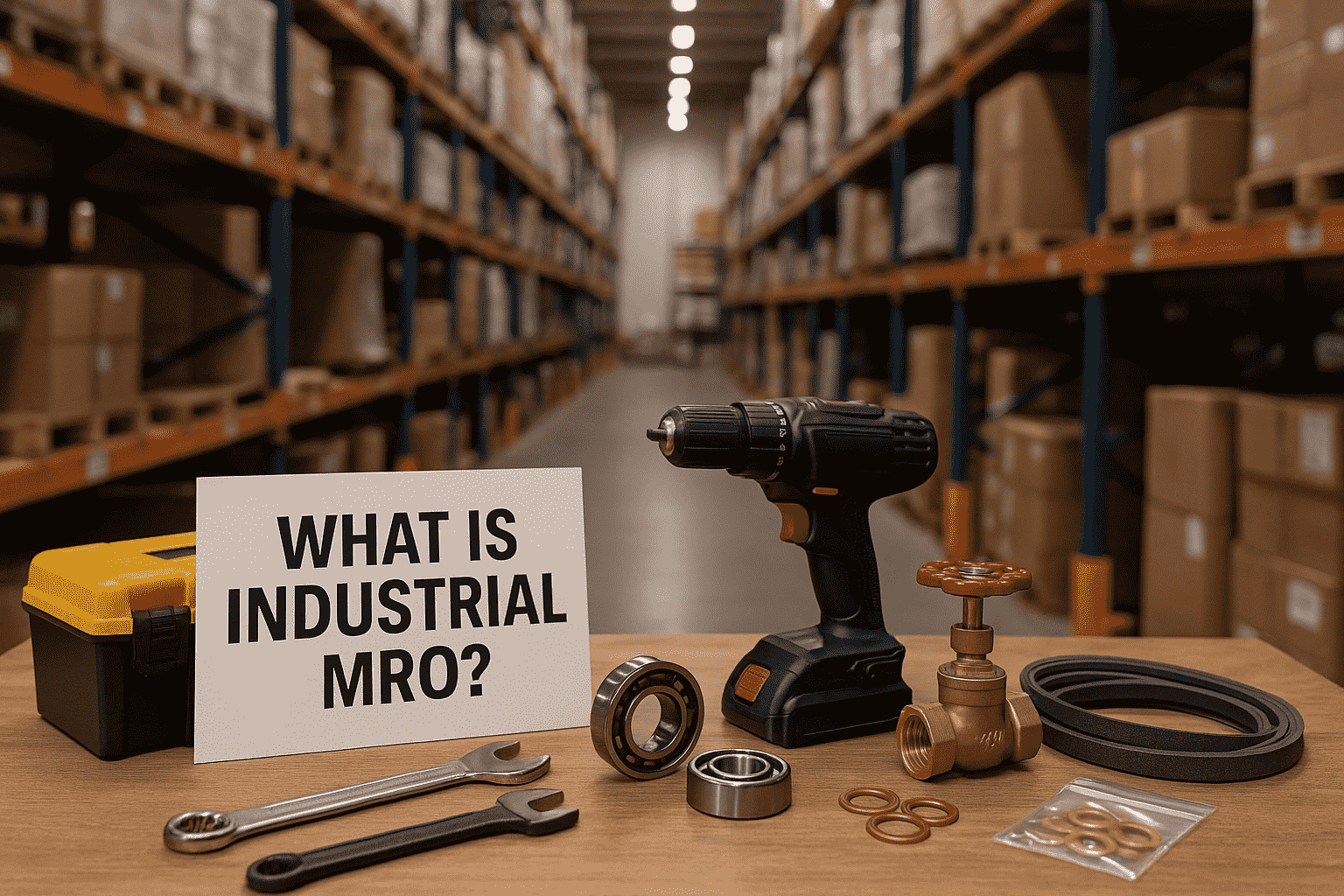
Industrial MRO, short for Maintenance, Repair, and Operations, refers to the supplies, spare parts, consumables, and services that keep industrial and manufacturing equipment, facilities, and infrastructure in working order.
Unlike direct materials that go into a finished product, industrial MRO ensures that machines operate efficiently, safety standards are upheld, and day-to-day operations continue without disruption.
Types of Industrial MRO
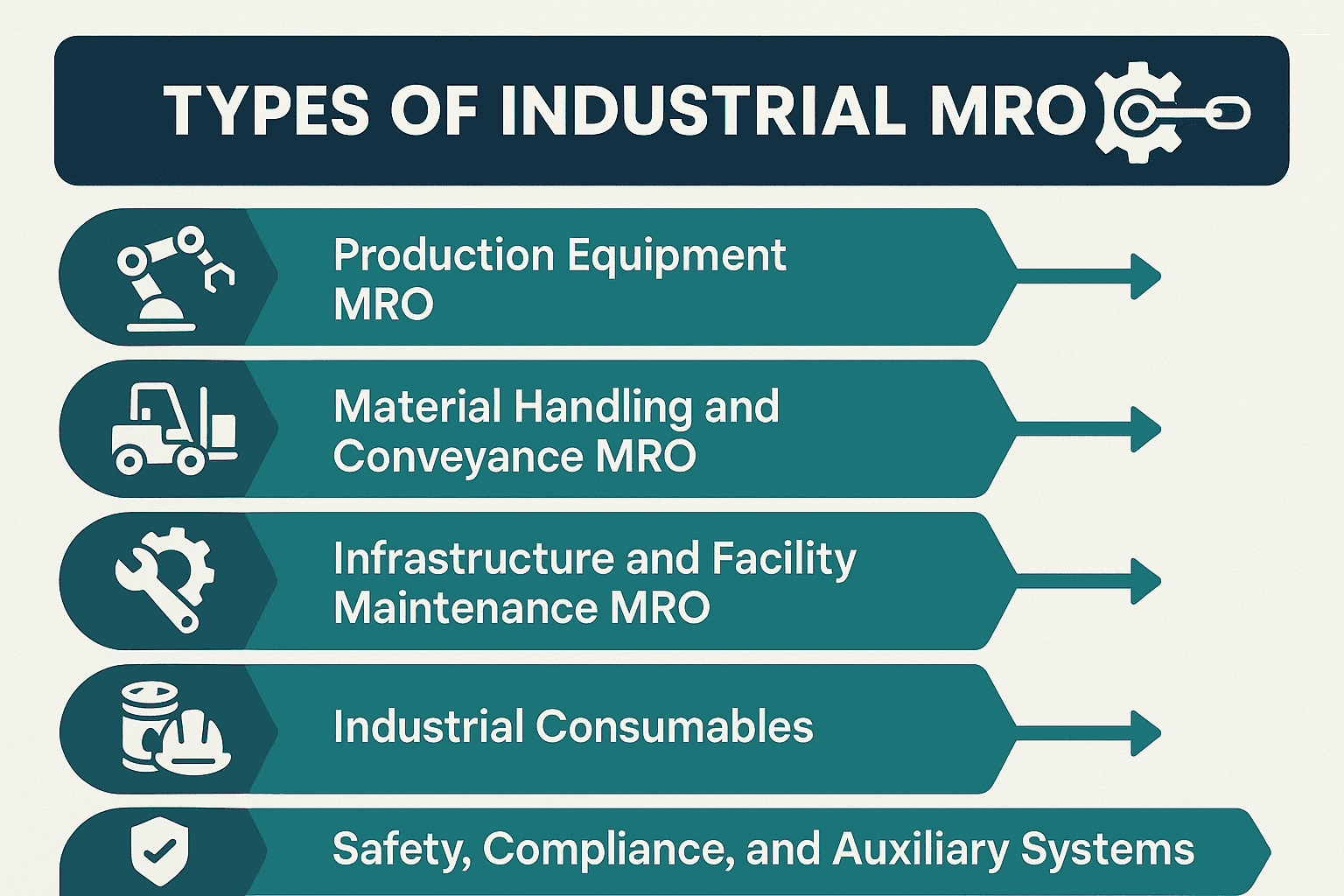
Industrial MRO is a broad category that covers everything from machinery upkeep to safety systems. To better understand its scope, it can be grouped into different types based on the equipment, facilities, and functions it supports.
1. Production Equipment MRO
This type of MRO focuses on the industrial machines directly used in manufacturing, such as CNC machines, presses, or mixers.
They are vital for the regular servicing, replacement of parts, and timely repairs to keep production lines running smoothly and prevent costly breakdowns.
For example, changing worn bearings or replacing filters in a factory ensures equipment efficiency and extends its operating life.
2. Material Handling and Conveyance MRO
Material handling and conveyance systems include equipment like forklifts, conveyors, pallet systems, and cranes that keep raw materials and finished goods moving.
When these assets are well-maintained, they prevent bottlenecks and ensure a steady flow across production and distribution.
For instance, regular servicing of conveyors in a warehouse can minimize breakdowns that would otherwise slow down the entire supply chain.
3. Infrastructure and Facility Maintenance MRO
This category of MRO covers the upkeep of buildings and site infrastructure, including HVAC systems, power supply, plumbing, and lighting. While these systems don’t contribute directly to production, they are essential for creating safe and reliable working conditions.
For example, maintaining HVAC units in a manufacturing plant ensures proper ventilation and temperature control, which protects both equipment and workers.
4. Industrial Consumables
Industrial consumables include everyday items such as lubricants, adhesives and small tools that support production and maintenance work.
Though inexpensive on their own, these materials represent a significant collective cost when used across large industrial operations.
For instance, a factory may spend heavily on industrial lubricants and cleaning agents to keep machines running efficiently and in compliance with safety standards.
5. Safety, Compliance, and Auxiliary Systems
This category includes fire suppression systems, alarms, pumps, chillers, and other auxiliary equipment that ensure safety and regulatory compliance.
While not directly tied to production, these systems are critical for protecting both employees and assets.
For example, regular testing of fire alarms or maintaining industrial chillers helps companies meet compliance requirements while avoiding costly operational disruptions.
Ways to Source Industrial MRO
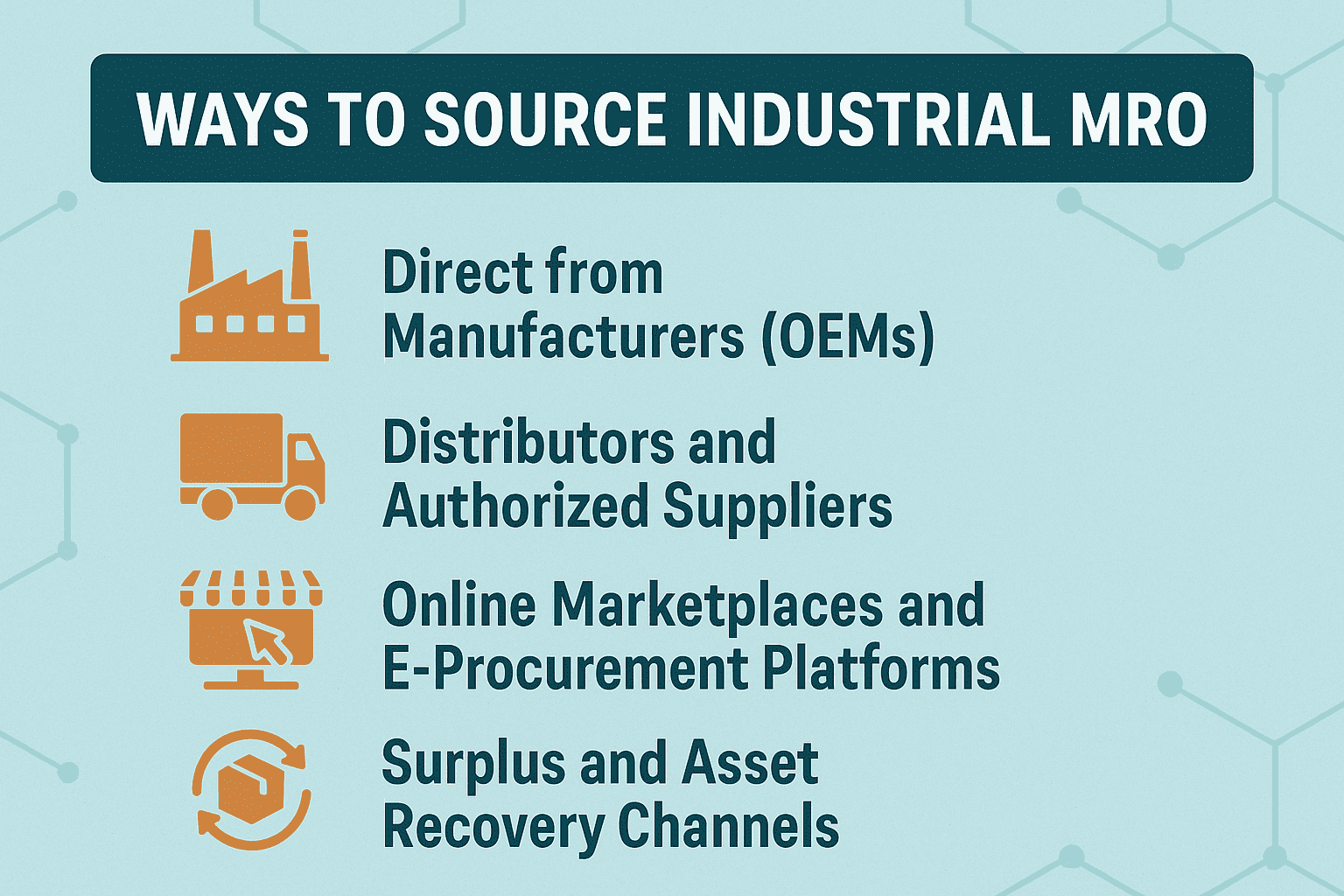
Sourcing industrial MRO effectively is just as important as maintaining it. The right sourcing strategy can reduce costs, prevent downtime, and improve supply chain reliability. Below are the most effective ways businesses can secure Industrial MRO.
1. Direct from Manufacturers (OEMs)
One option is sourcing industrial MRO parts directly from original equipment manufacturers (OEMs). This method is often preferred for critical or specialized components because it ensures compatibility, quality, and warranty support. For industries where equipment uptime is vital, OEM parts provide peace of mind.
However, relying solely on manufacturers can be expensive and may involve longer lead times. Businesses typically use this method for high-value, hard-to-replace components while balancing other sourcing strategies for routine or lower-cost items.
2. Distributors and Authorized Suppliers
Working with distributors and authorized suppliers is a common way to source industrial MRO because it offers convenience and reliability. These suppliers typically carry a wide range of products, allowing businesses to consolidate orders and reduce the complexity of managing multiple vendors.
Another advantage is the ability to access bulk discounts and maintain a steady availability of frequently used items.
For example, a manufacturer may rely on an authorized distributor to supply bearings, fasteners, and lubricants in consistent volumes, ensuring production is never interrupted.
3. Online Marketplaces and E-Procurement Platforms
Online marketplaces and e-procurement platforms give businesses access to a broader range of industrial MRO supplies with the convenience of quick comparison shopping.
This approach is especially useful for common or non-specialized items, where speed and cost efficiency matter most.
With digital platforms, buyers can place orders quickly, track deliveries, and even automate recurring purchases.
For instance, a logistics company may source packaging supplies or safety gear through an e-procurement system to ensure consistent availability without the need for extensive supplier management.
4. Surplus and Asset Recovery Channels
Sourcing through surplus and asset recovery channels allows businesses to access quality industrial MRO parts from idle or decommissioned inventory at a discounted rate.
These secondary markets often provide significant cost savings compared to buying new, while still delivering reliable components for ongoing operations.
They are often a critical source for securing hard-to-find or discontinued components needed to keep manufacturing equipment running. Their availability helps prevent costly disruptions and supports sustainability by keeping valuable resources in use rather than letting them go to waste.
How Amplio Helps Businesses Source MRO
Access to Surplus Industrial MRO
At Amplio, our online platform gives industrial businesses direct access to surplus industrial MRO supplies across numerous categories. By sourcing from surplus, companies can reduce costs, secure hard-to-find items, and avoid the long lead times for hard-to-find production equipment often seen with traditional suppliers.
Quality-Appraised Equipment You Can Trust
Every piece of equipment listed on Amplio has been appraised for quality and value. This ensures your procurement teams are sourcing from verified surplus, reducing the risk of counterfeit or unreliable parts and giving you confidence in every purchase.
Contact us to source quality surplus industrial MRO equipment and strengthen your supply chain.