Industrial Liquidation Sourcing: Where to Buy and What Actually Profits

Introduction
The liquidation market remains fragmented and unpredictable. Industrial surplus buyers often face limited transparency, inconsistent asset data, and uncertain quality, making it difficult to distinguish genuine opportunities from costly risks.
In this article, we’ll explore what liquidation sourcing is, why it matters, where to buy, and the key factors that truly drive profitability, helping liquidators identify reliable sources and make smarter, data-backed decisions.
What Is Liquidation Sourcing?
At its core, liquidation sourcing involves purchasing excess, obsolete, or closing-out inventory from other businesses at a discount.
In industrial settings, this can include MRO parts, spare equipment, tools, and engineered systems that remain in usable condition but are no longer wanted by their owners.
Best Channels for Liquidation Sourcing (Where to Buy)
.png)
Here are a few channels that you can use for liquidation sourcing:
1. Direct Liquidation Auction
Liquidation auctions provide open access to surplus and closing inventory from various industries. They are a common entry point for buyers looking to secure equipment, spare parts, or materials at competitive prices through open bidding.
While these auctions can offer significant savings, success depends heavily on the buyer’s ability to assess listings and manage potential risks independently.
Pros:
- Wide selection of assets across categories
- Potential for low-cost deals through competitive bidding
Cons:
- Limited verification and traceability
- Unclear product condition or missing documentation
- Higher buyer risk with no guaranteed recourse
2. Direct Manufacturer or Distributor Sales
In some cases, OEMs, suppliers, or distributors sell their own excess or discontinued stock directly to buyers. This channel is often more transparent than public auctions, offering known product history and proper documentation.
It also creates opportunities to form stronger supplier relationships that may lead to future sourcing advantages. However, availability is often limited, and transactions can require more time and manual coordination to complete.
Pros:
- Known product history and original documentation
- Opportunity to build long-term supply relationships
Cons:
- Small, irregular volumes
- Negotiation-heavy and manual process
- Limited visibility into available stock across multiple sellers
3. Liquidation Marketplaces
Liquidation marketplaces operate as organized online platforms where multiple sellers list surplus or discontinued industrial assets for sale. These sites make it easier for buyers to browse verified listings, compare pricing, and purchase directly or through a live auction. They often cover a wide range of categories, from spare parts and MRO items to heavy equipment.
However, most active sellers on these platforms are not the original equipment owners. In many cases, they are industrial liquidators or resellers who have purchased surplus in bulk or on consignment and are relisting it for profit. This layered resale model can drive up prices, add intermediary margins, and make it harder to confirm the asset’s true origin or usage history.
Pros:
- Centralized access to diverse surplus inventory
- Easier product comparison and direct purchasing
- Wider reach across industries and asset types
Cons:
- Verification and documentation standards vary by seller
- Most listings are resold by intermediaries, adding extra costs
- Platform and transaction fees can reduce overall savings
- Limited visibility into true asset history or operational condition
4. Asset Recovery Firms
Asset recovery firms work directly with industrial enterprises as their specialized disposition teams, managing the full lifecycle of surplus and idle assets. These firms handle everything from equipment appraisal and documentation to resale or liquidation, helping their partners recover maximum value from excess inventory.
Because they manage surplus on behalf of large manufacturers, asset recovery firms often have access to extensive industrial surplus inventories — including machinery, spare parts, and MRO equipment.
This makes them a primary source for high-quality, appraised assets that have been professionally evaluated, documented, and priced transparently.
Pros:
- Verified listings with detailed condition reports
- Centralized, traceable inventory from trusted sellers
- Transparent pricing and structured transactions
- Faster, more reliable pricing
Cons:
- Limited to verified sellers and buyers
What Actually Profits in Liquidation Sourcing
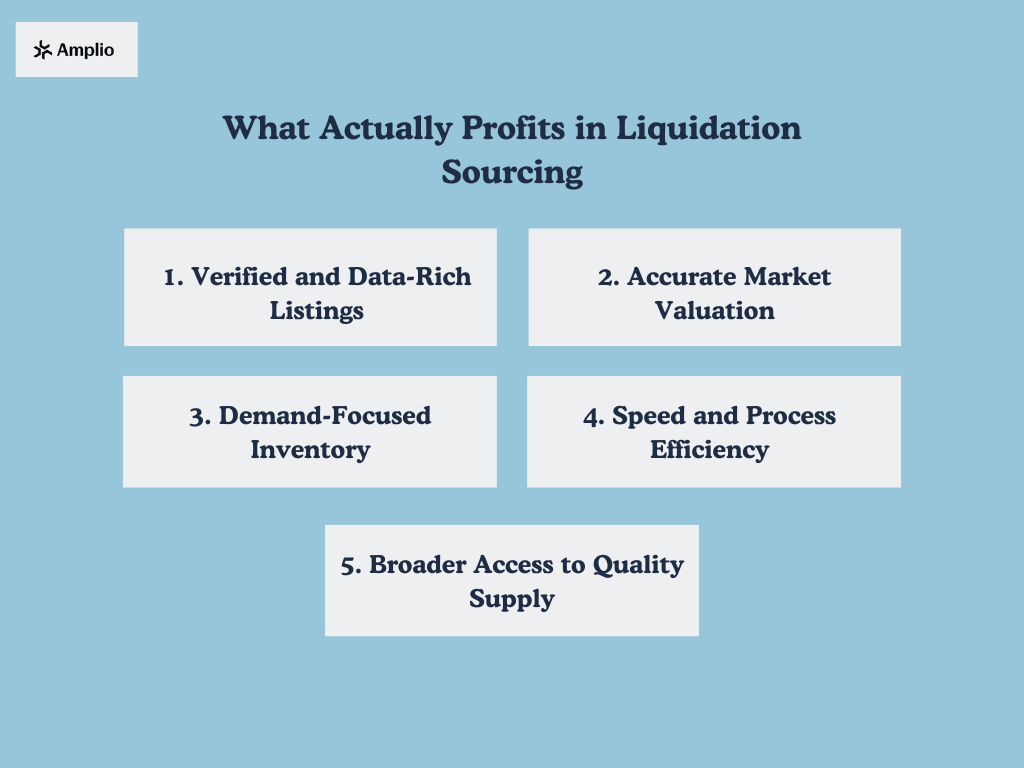
The following are key areas that matter most for generating profit in liquidation sourcing. Each plays a direct role in determining whether a purchase creates real value or results in hidden loss.
1. Verified and Data-Rich Listings
Profit starts with visibility and accuracy. When the condition, specifications, and documentation of an asset are verified, buyers gain a clear understanding of what they are purchasing.
Reliable data prevents unexpected issues after acquisition, reduces the chance of hidden costs, and ensures that the true value of each transaction is protected.
2. Accurate Market Valuation
Profitable sourcing depends on understanding fair market value, not just finding the lowest price.
When assets are evaluated using real-time market data, demand trends, and fair-value benchmarks in the secondary market, buyers can identify true opportunities instead of speculative bargains.
Accurate valuation helps prevent overpayment, supports competitive resale pricing, and ensures that every purchase contributes to sustainable profit.
3. Demand-Focused Inventory
The strongest returns come from sourcing assets that align with active demand.
Equipment and components that remain relevant to current production, maintenance, or resale markets generate faster movement and hold their value over time.
Focusing on demand-driven categories using secondary market transactions ensures that purchases translate into practical use or quick resale rather than idle inventory.
4. Speed and Process Efficiency
Time plays a decisive role in profitability. The quicker assets are verified, sold, and delivered, the sooner value is realized.
Efficient processes that minimize delays in inspection, approval, and logistics help maintain momentum and prevent capital from sitting idle.
Faster turnaround not only protects margins but also improves overall cash flow within the sourcing cycle.
5. Broader Access to Quality Supply
Profit increases when buyers have access to a wide range of reliable inventory. Channels that offer diverse, high-quality assets across multiple industries create more opportunities to find the right equipment at the right price.
Broader reach enhances flexibility, allowing buyers to respond quickly to changing operational needs and capture value where demand is strongest.
How Amplio Simplifies and Optimizes Liquidation Sourcing for Industrial Liquidators
1. Access to Enterprise-Grade Surplus Through a Private Liquidation Marketplace
Amplio’s online Private Liquidation Marketplace connects industrial liquidators directly with enterprise-owned surplus. Each listing originates from verified asset recovery programs supported by AI-powered agents, ensuring that every item has undergone professional appraisal, compliance checks, and full documentation. This closed ecosystem gives buyers access to high-quality inventory that isn’t available on public platforms — eliminating competition with unverified sellers and reducing sourcing uncertainty.
2. Verified Data and Transparent Transactions
Every asset listed on Amplio is backed by reliable data — including condition reports, specifications, and traceable origin information. Transparent pricing ensures liquidators understand asset value upfront, allowing them to make informed sourcing decisions and build stronger resale margins.
Contact us to learn how Amplio’s Private Liquidation Marketplace can help your team access verified enterprise surplus, improve margins, and accelerate growth in the secondary industrial market.