What Is Indirect Material? Types, Use Cases, and Cost Drivers

Introduction
Indirect materials often fly under the radar in procurement discussions, yet they account for a significant portion of business expenses. Unlike direct materials that go into finished products, these supporting items quietly drive day-to-day operations and can heavily influence efficiency and costs.
Industries such as manufacturing, logistics, and energy depend on indirect materials to keep equipment running, maintain safety standards, and ensure smooth workflows. Without proper management, these seemingly small purchases can create hidden costs and supply chain challenges.
In this article, you’ll learn what indirect materials are, the main types, common use cases in industry, and what drives their costs.
What Are Indirect Materials?
Indirect materials are items used in business operations that do not become part of the final product.
These materials are usually consumable, supportive, and low in per-unit cost, but their overall spend can be surprisingly large. When overlooked, they create hidden expenses, yet when managed strategically, they improve efficiency and reduce operational waste.
Difference Between Direct and Indirect Materials
Direct materials are the raw inputs that physically become part of the finished product and are easy to trace to it. For example, in textile manufacturing, linen or cotton fabric is a direct material because it is woven or sewn directly into the garments produced.
Indirect materials, in contrast, are used to support the production process but are not directly traceable to individual products. For instance, machine lubricants, cleaning supplies, or safety gloves are necessary for operations but do not form part of the fabric or clothing delivered to customers. Packaging materials used to ship the finished goods are also considered indirect.
Types of Indirect Materials
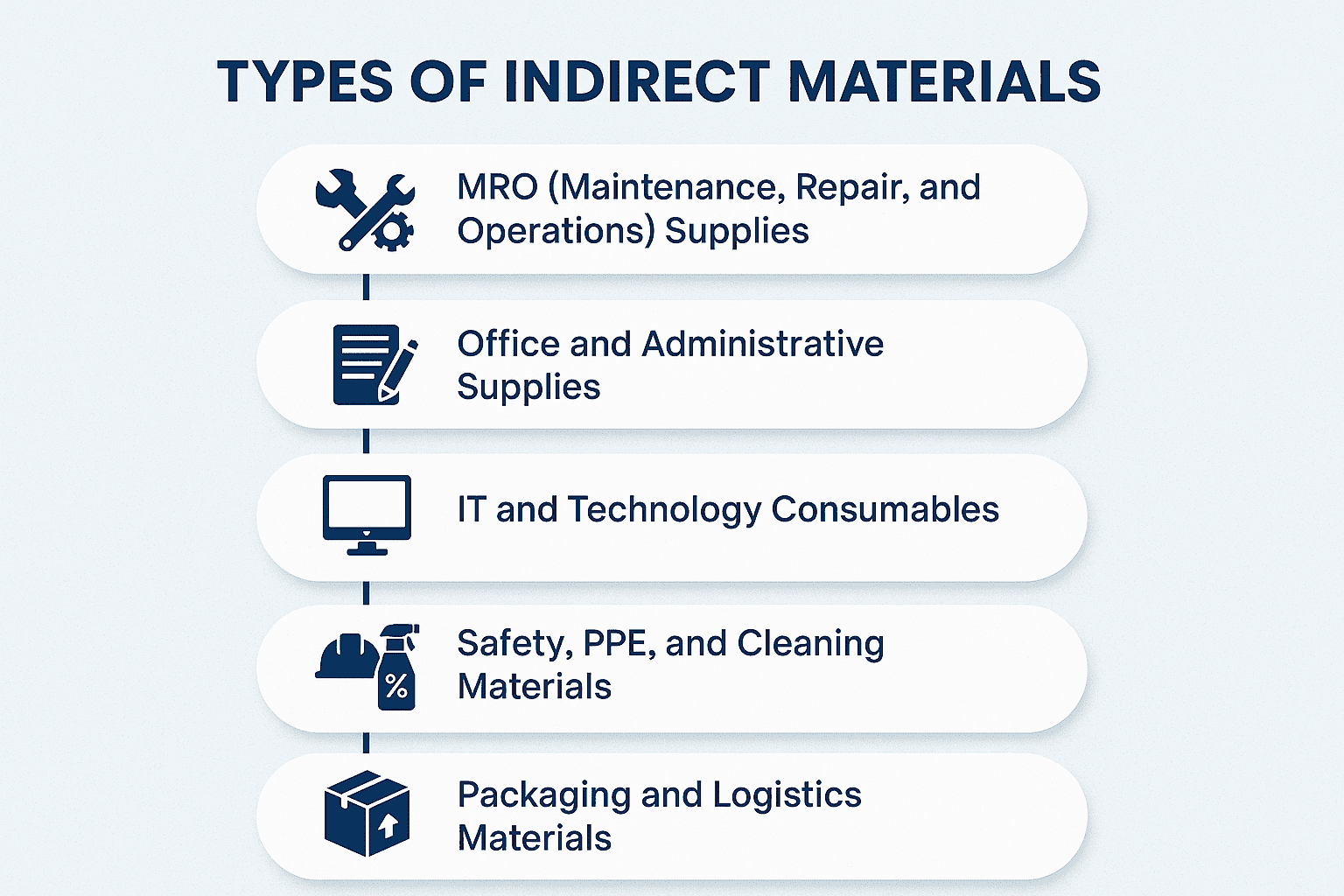
Indirect materials come in many forms, and their role often depends on the nature of the industry. The following categories highlight the most common types of indirect materials used across businesses and supply chains.
1. MRO (Maintenance, Repair, and Operations) Supplies
MRO supplies include spare parts, lubricants, tools, and other consumables needed to keep equipment running efficiently. They are not part of the finished product but are essential for maintaining production lines and preventing downtime.
For example, in a manufacturing facility, bearings, filters, and industrial oils are common MRO items that ensure machinery operates smoothly. Without them, even minor equipment failures could cause costly delays and interruptions.
2. Office and Administrative Supplies
Office and administrative supplies cover the everyday items that keep business operations running but don’t directly contribute to production. These include stationery, office furniture, and consumables like printers, paper, or ink.
In industries such as logistics or energy, offices and administrative teams rely on these supplies to support scheduling, documentation, and communication. While small in unit cost, these items accumulate into a notable expense when spread across large organizations.
3. IT and Technology Consumables
IT consumables include the cables, peripherals, small devices, and accessories that keep digital operations running smoothly. These materials don’t end up in a finished product but are critical for supporting communication, data management, and system connectivity.
For example, a logistics company may rely on barcode scanners, replacement cables, and computer accessories to manage inventory effectively. In large organizations, the steady demand for these items makes them a significant part of indirect procurement.
4. Safety, PPE, and Cleaning Materials
Safety equipment, personal protective equipment (PPE), and cleaning materials are critical indirect materials that ensure workplace safety and compliance. Items such as gloves, helmets, masks, and cleaning agents don’t contribute to the final product but are essential for protecting workers and maintaining standards.
In industries like manufacturing and energy, PPE is mandatory for day-to-day operations, while cleaning supplies are necessary to keep machinery and facilities in proper condition. These costs may seem routine but are vital for meeting safety regulations and avoiding costly disruptions.
5. Packaging and Logistics Materials
Packaging and logistics materials include pallets, cartons, labels, and protective wrapping used to move and store products safely. While they don’t form part of the product itself, they are indispensable for handling, transportation, and delivery.
For example, manufacturers rely on durable pallets and protective wrapping to secure heavy equipment during shipping, while warehouses use cartons and labeling systems to manage inventory flow. These materials add efficiency to supply chains and help prevent damage or loss during distribution.
Use Cases in Industry
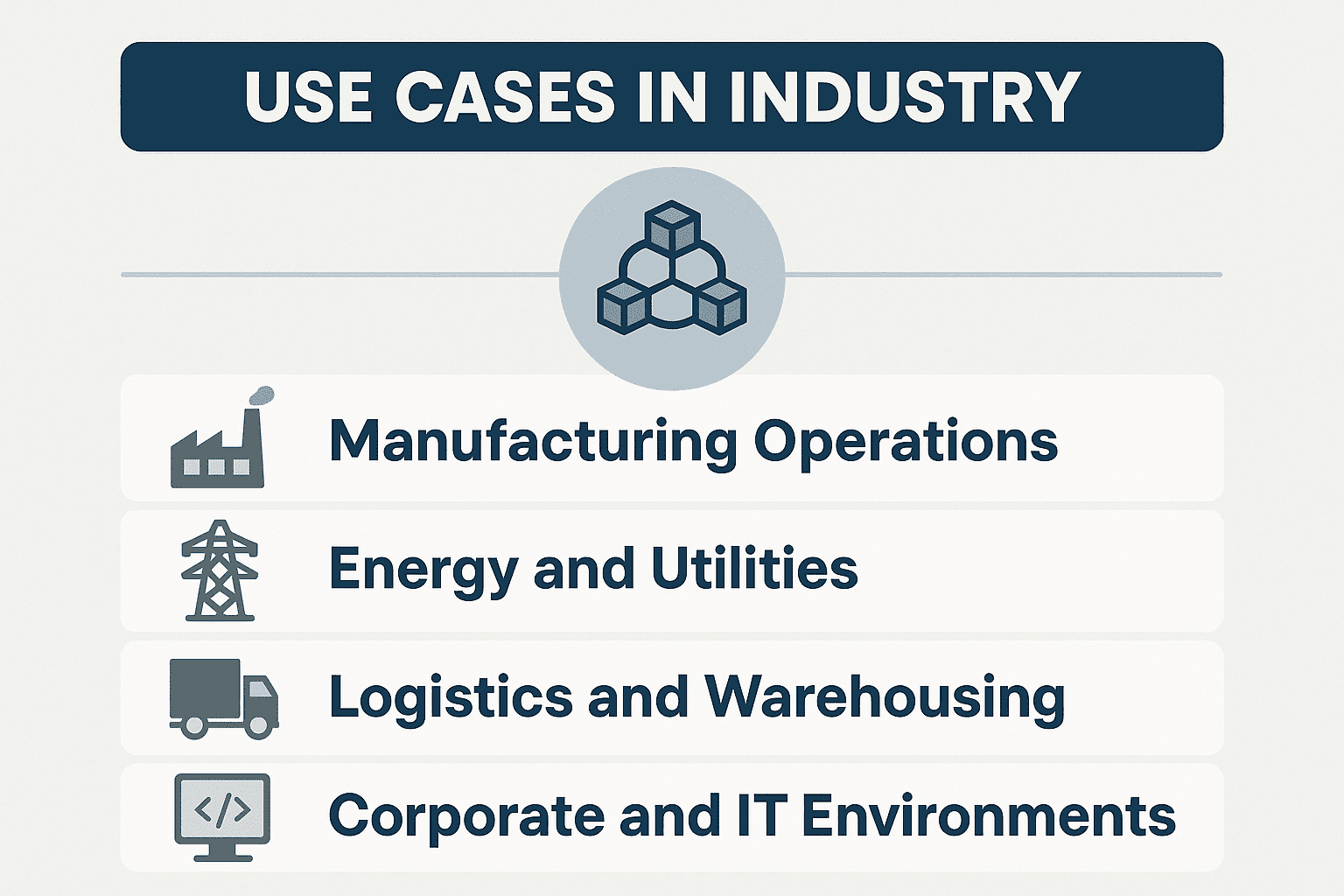
Indirect materials may look similar across businesses, but their applications vary depending on the sector. The following examples highlight how different industries depend on indirect materials in their daily activities.
1. Manufacturing Operations
In manufacturing, indirect materials are essential for keeping machines and production lines running smoothly. Items such as lubricants, spare parts, and cleaning supplies ensure that equipment remains in good condition and downtime is minimized.
For example, without regular use of MRO supplies like filters or industrial oils, machinery performance can decline, leading to costly delays. While these materials are not part of the finished goods, they play a vital role in maintaining efficiency and productivity on the factory floor.
2. Energy and Utilities
In the energy and utilities sector, indirect materials are critical for ensuring safety and operational continuity. PPE such as helmets, gloves, and protective clothing keeps workers safe, while lubricants and maintenance items help maintain heavy machinery and power systems.
For example, a power plant depends on regular use of lubricants to keep turbines running efficiently and cleaning agents to prevent buildup that could affect performance. These indirect materials may not be visible in the end service delivered to customers, but they are indispensable for an uninterrupted energy supply and regulatory compliance.
3. Logistics and Warehousing
In logistics and warehousing, indirect materials play a key role in the safe storage and movement of goods. Packaging materials, pallets, and labels are essential for organizing inventory and protecting items during handling and transport.
For example, warehouses rely on sturdy pallets to support bulk shipments and on protective wrapping to safeguard equipment during transit. Even small items like labels and barcodes ensure accurate tracking, helping to maintain efficiency across the supply chain.
4. Corporate and IT Environments
Corporate offices and IT environments rely heavily on indirect materials to support daily operations. Items such as IT consumables, office supplies, and peripherals enable employees to work efficiently and maintain consistent communication.
For example, replacement cables, printers, and stationery may seem minor, but without them, essential business functions like reporting, coordination, and data management would be disrupted. These indirect materials provide the backbone for administrative and technical tasks that keep organizations running.
Key Cost Drivers of Indirect Materials

While indirect materials may seem like small, routine purchases, the factors influencing their total cost can be complex. Procurement methods, storage practices, and usage patterns all shape how much businesses spend. Understanding these cost drivers is essential for controlling expenses and improving operational efficiency.
1. Supplier and Procurement Complexity
One of the biggest cost drivers of indirect materials is the complexity of managing multiple suppliers. Because these items are often purchased in small quantities and from different vendors, procurement becomes fragmented and difficult to control.
Frequent, low-value purchases not only increase administrative overhead but also reduce a company’s ability to negotiate better pricing. Over time, this scattered approach can inflate costs and create inefficiencies across the supply chain. Consolidating suppliers and standardizing purchases is often necessary to keep expenses under control.
2. Storage, Handling, and Overstock Issues
Indirect materials may be inexpensive per unit, but storing them in large volumes quickly adds to overall costs. Excess stock requires additional warehouse space, careful handling, and regular monitoring, all of which raise operational expenses.
Overstocking also increases the risk of inventory obsolescence, as items may expire, become outdated, or sit unused. This ties up working capital that could be invested elsewhere. Effective surplus inventory management is therefore crucial to balance availability with cost efficiency.
3. Demand Variability and Forecasting Challenges
The demand for indirect materials is often unpredictable, with usage patterns changing based on operational needs or sudden equipment issues. Spikes in demand can occur without warning, forcing businesses to make urgent purchases at higher costs.
On the other hand, inaccurate forecasting may lead to understocking, resulting in delays or disruptions when critical items are unavailable. Striking the right balance requires reliable data and careful planning to ensure that essential supplies are available without creating unnecessary inventory burdens.
4. Compliance and Quality Requirements
In many industries, indirect materials must meet strict compliance and safety standards. Certified items such as protective gear, cleaning agents, or specialized lubricants are often more expensive but necessary to ensure worker safety and regulatory adherence.
Using uncertified or low-quality alternatives can lead to risks such as equipment damage, workplace accidents, or failed inspections, all of which are far costlier than the savings from cheaper materials. As a result, businesses must carefully manage procurement to balance cost efficiency with quality and compliance.
Conclusion
Indirect materials may not appear in the final product, but their impact on cost, efficiency, and operational reliability is significant. From MRO supplies to PPE and packaging, these resources keep production lines running, protect workers, and ensure supply chains flow without disruption.
For enterprises, the challenge is not identifying indirect materials — it’s managing them strategically.
Leaders who approach indirect materials with the same rigor applied to direct procurement gain an edge: lower costs, stronger compliance, and greater supply chain resilience. The organizations that succeed are those that recognize indirect materials as a critical lever for operational excellence, not just background spend.